Artwork
L'accident imprevu
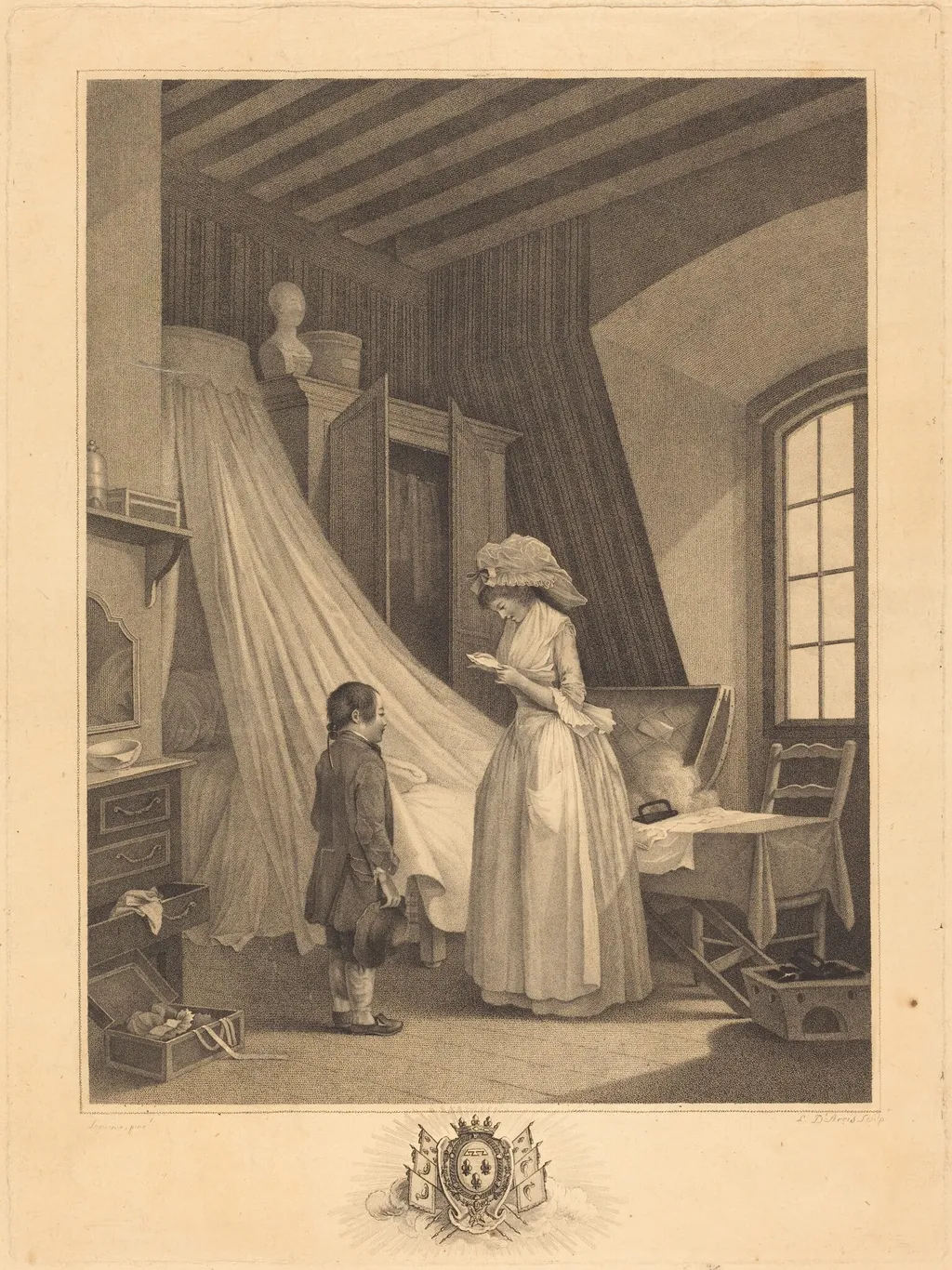
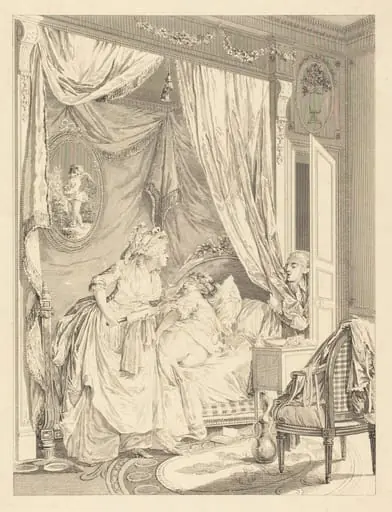
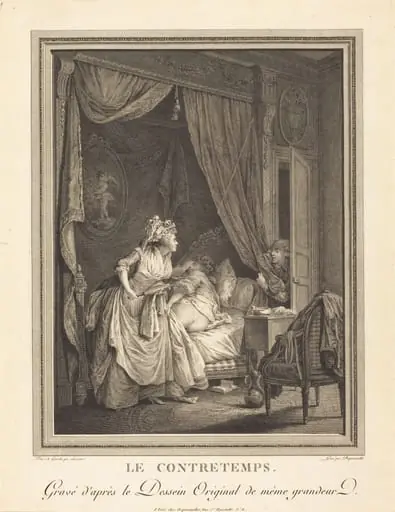
L'accident imprevu is an ink print by the Romanticist artist J.-Louis Darcis. It dates from 1789 and is held in the collection of the National Gallery of Art. L’Accident Imprévu, executed in 1789 by the French printmaker J.
About this work
Overview
L’Accident Imprévu, executed in 1789 by the French printmaker J.-Louis Darcis, is a stipple etching combined with engraving. The work presents a compact interior scene rendered in monochrome, typical of late‑eighteenth‑century print techniques.
Subject & Meaning
The composition depicts a woman in a long dress, poised near a window and holding a sheet of paper, while a young boy in period attire gazes upward at her. A bust rests on a shelf, a table and chair occupy the foreground, and a curtain hangs in the corner, suggesting a domestic, perhaps instructional, moment.
Technique & Style
Darcis employs stipple etching to achieve delicate tonal gradations, complemented by line engraving for sharper contours. The interplay of light and shadow—particularly on the curtain and wall—creates a sense of depth and three‑dimensionality within the limited space of the print.
History & Provenance
Created in the year of the French Revolution, the print reflects the era’s interest in genre scenes of everyday life. It has been documented in several nineteenth‑century print collections, though its precise ownership trail before entering public holdings remains sparse.
Context
The work aligns with the broader eighteenth‑century French tradition of domestic genre prints, which often illustrated moral or educational themes. Its modest scale and detailed interior echo the period’s fascination with the private sphere and the role of women as caretakers or educators.
Legacy
While not widely reproduced, L’Accident Imprévu illustrates Darcis’s skill in merging stipple and engraving, contributing to the technical evolution of printmaking in the pre‑Romantic era and offering insight into contemporary visual culture.
Artist & collection