Artwork
L'Optique (The Optical Viewer)
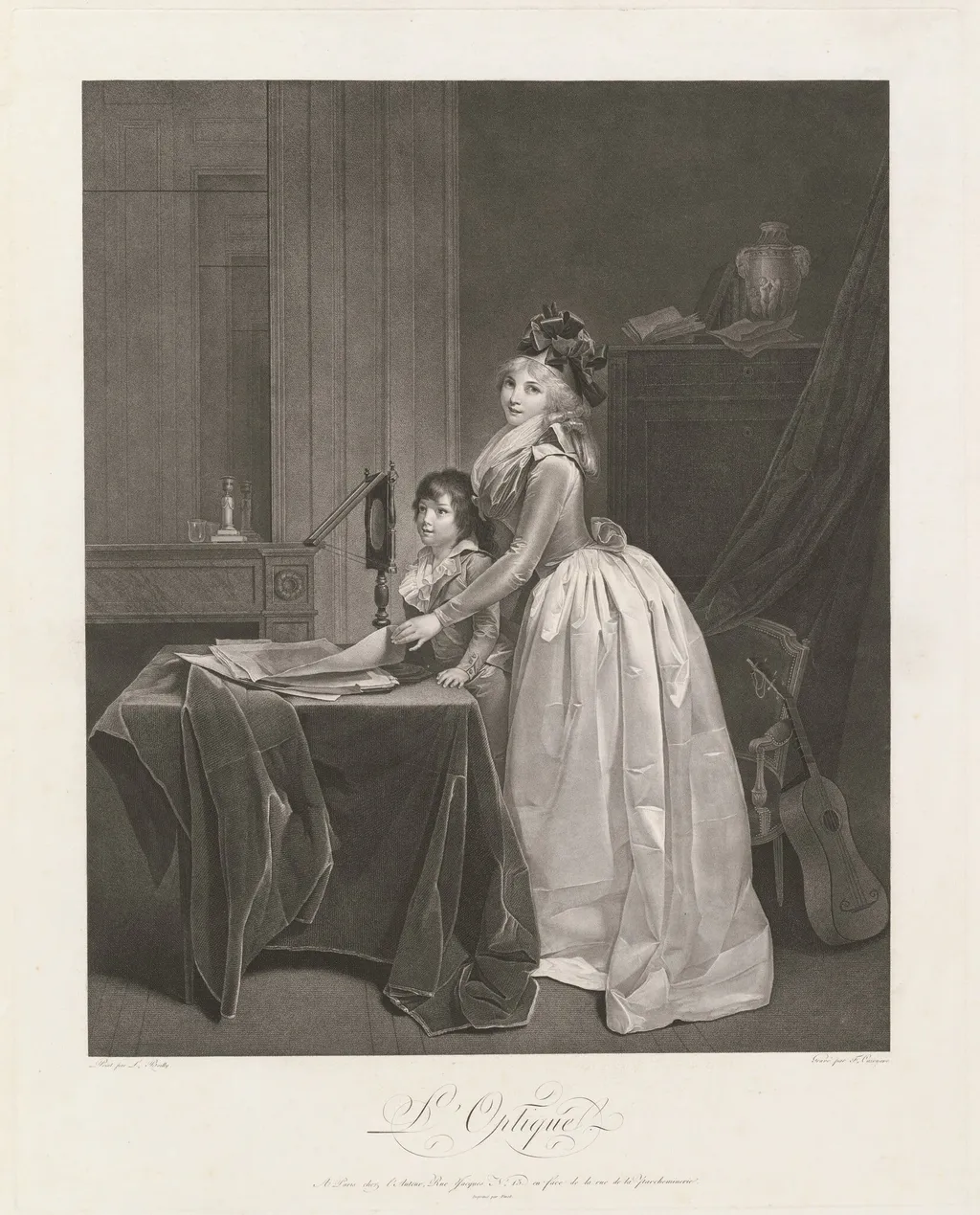
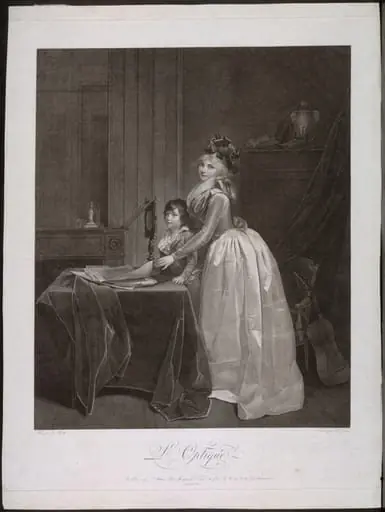
L'Optique (The Optical Viewer) is an ink print by the Romanticist artist Frédéric Cazenave. It dates from 1793 and is held in the collection of the National Gallery of Art.
About this work
Overview
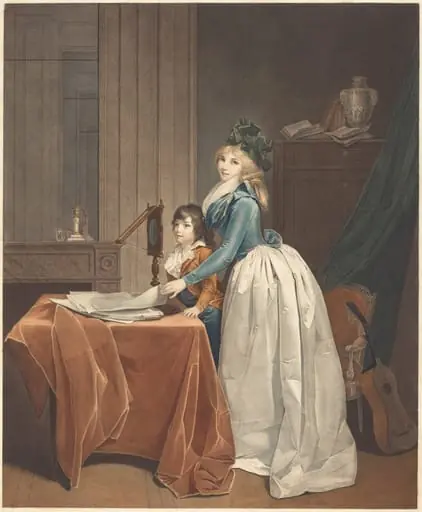
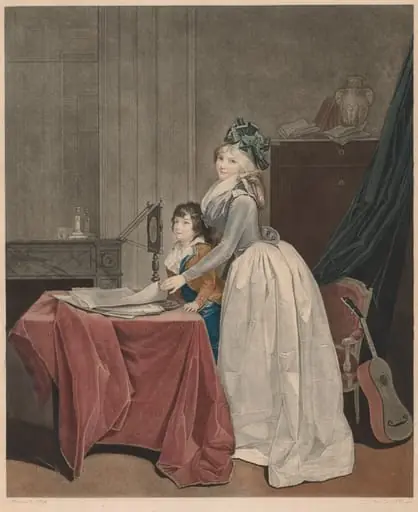
L’Optique, an etching printed in black and wash, dates to around 1793 and is attributed to French artist Frédéric Cazenave. The work presents a dimly lit interior where a woman in a flowing dress stands beside a small boy. A wooden cabinet, a cloth‑covered table, a guitar propped against the wall, and a telescope‑like instrument complete the scene, all rendered in monochrome line and tone.
Subject & Meaning
The composition centers on the interaction between the adult female figure and the child, who peers through a device resembling a camera obscura.
The composition centers on the interaction between the adult female figure and the child, who peers through a device resembling a camera obscura. The woman leans toward the boy, suggesting guidance or shared curiosity. The title, L’Optique, underscores the theme of visual investigation, reflecting the late‑eighteenth‑century fascination with scientific apparatuses that could project images and expand perception.
Technique & Style
Cazenave employed traditional etching combined with a wash technique, allowing for both precise line work and broader tonal areas. The black‑and‑white palette emphasizes contrast between illuminated surfaces and shadowed corners, creating a sense of depth within the confined space. The delicate handling of the wash adds atmospheric softness, while the etched outlines define the figures and objects with clarity.
Context
Produced during the Enlightenment, the print aligns with contemporary interests in optics, experimentation, and the dissemination of knowledge. Devices such as the camera obscura were popular among scholars and artists for studying perspective and light. By depicting such an instrument within a domestic setting, Cazenave links scientific curiosity to everyday life, a common motif in late‑18th‑century French visual culture.
History & Provenance
The work is catalogued as a print by Cazenave and is known primarily through museum collections and scholarly references. No specific ownership trail is recorded in the available documentation, and the piece remains a representative example of his printmaking output from the early 1790s.
Artist & collection