Artwork
Kuronushi from the series The New Six Immortal Poets
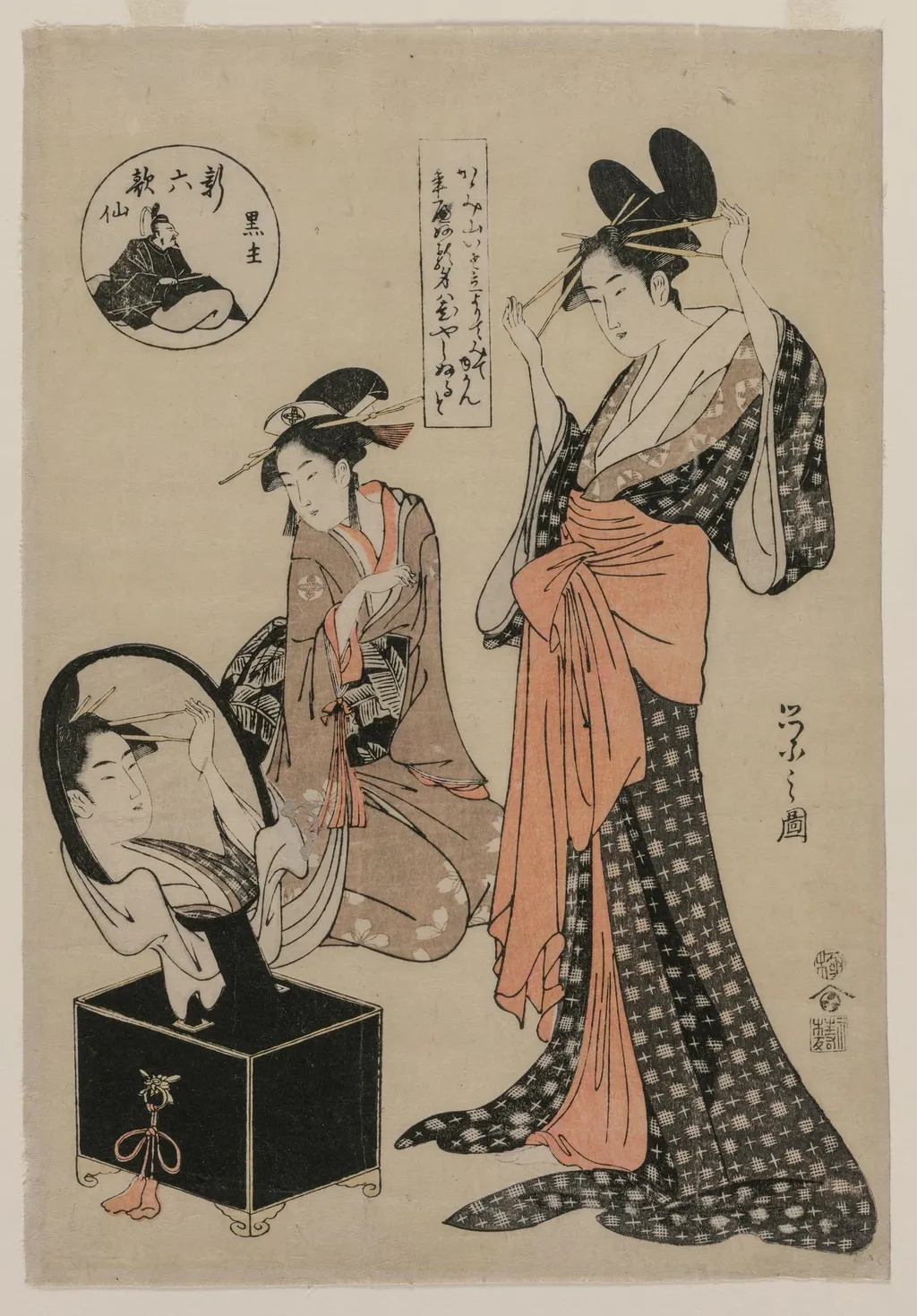
Kuronushi from the series The New Six Immortal Poets is a print by the Romanticist artist Chôbunsai Eishi. It dates from 1795 and is held in the collection of the Cleveland Museum of Art. The print depicts a courtesan seated before a mirror, carefully arranging her hair while an attendant watches nearby.
About this work
The poem is from the Anthology of Ancient and Modern Verse, a collection of old Japanese poems.
This painting shows a courtesan adjusting her hairdo before a mirror.
She's getting ready with her attendant's help.
The poem next to her is by Ōtomo no Kuronishi, a Heian period courtier.
The courtesan's attendant is looking on, waiting to help.
The poem is from the Anthology of Ancient and Modern Verse, a collection of old Japanese poems.
You can learn more about Japanese art by looking at the work of artist: Chōbunsai Eishi (Japanese, 1756–1829)
Overview
The print depicts a courtesan seated before a mirror, carefully arranging her hair while an attendant watches nearby. A poetic inscription accompanies the scene, identifying the verses as belonging to Ōtomo no Kuronishi, a Heian‑era court poet counted among the Six Immortal Poets. The poet’s name and likeness appear within a circular title cartouche, linking the visual and literary elements.
Subject & Meaning
The central figure, a professional entertainer, is shown in an intimate moment of grooming, a motif often used to suggest themes of self‑presentation and transformation. The accompanying poem, drawn from the Kokin Wakashū, invokes a “Mirror Mountain” and a wish for the sovereign’s longevity, allowing the courtesan to function symbolically as a surrogate for the emperor, adding a layer of playful subversion to the composition.
Technique & Style
Executed in the ukiyo‑e woodblock tradition, the image combines delicate line work with subtle colour washes to render the silk garments and reflective surface of the mirror. The attendant’s posture and the courtesan’s stylised coiffure reflect the aesthetic conventions of late‑eighteenth‑century pleasure‑quarter portraiture, emphasizing elegance and refined gesture.
History & Provenance
The poem cited was historically performed at Emperor Daigo’s enthronement ceremony (reign 897–930) and later recorded in the Kokin Wakashū anthology. The print belongs to a series titled “The New Six Immortal Poets,” which paired portraits of celebrated poets with contemporary scenes, a format popular among collectors of the period.
Context
During the Edo period, prints that juxtaposed classical literary references with modern urban subjects catered to an audience eager to display cultured taste. By aligning a Heian poet with a courtesan’s private ritual, the work reflects the era’s fascination with blending high culture and the everyday life of the licensed quarters.
Artist & collection

Artist
Chōbunsai Eishi (鳥文斎 栄之; 1756–1829) was a Japanese ukiyo-e artist. His last name was Hosoda (細田). His first name was Tokitomi (時富). His common name was Taminosuke (民之丞) and later Yasaburo (弥三郎). Pupil of Kano Eisen'in…

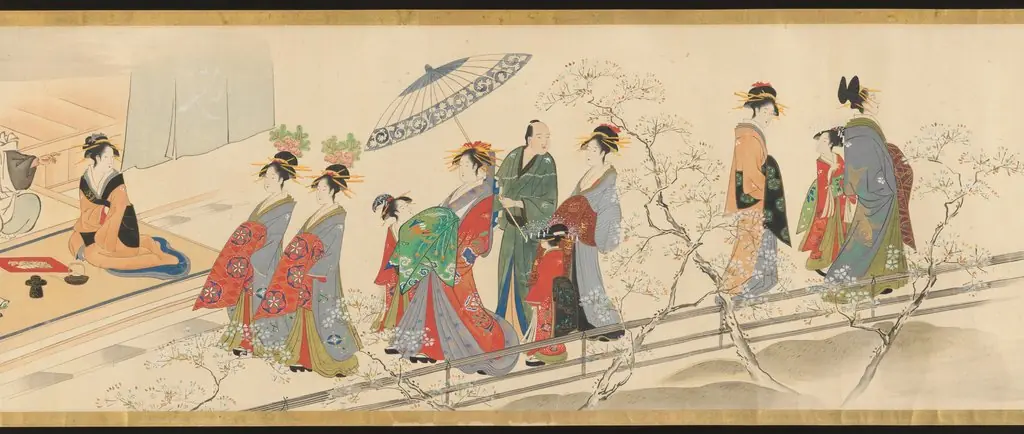 Three Gods of Good Fortune Visit the Yoshiwara; or “Scenes of Pleasure at the Height of Spring”
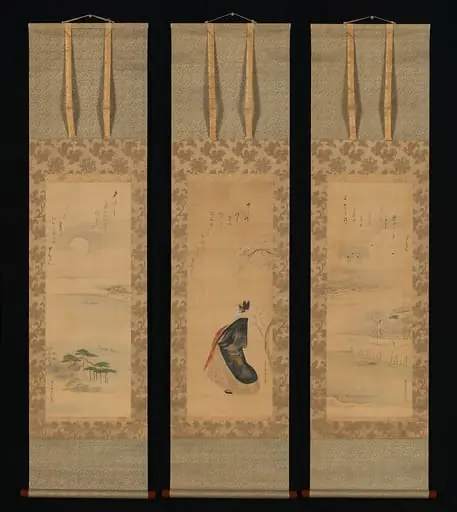 蜀山人(大田 南畝)賛 雪・月・花図 |Snow, Moon, and Cherry Blossoms (Yoshiwara in Three Seasons)
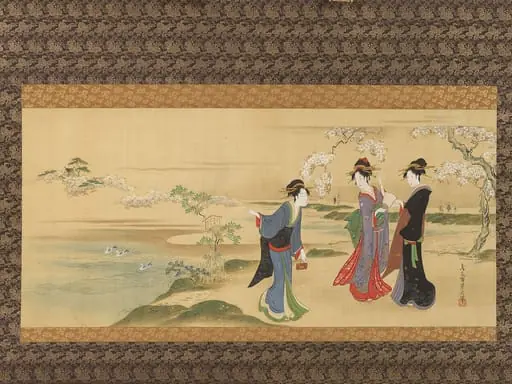 Untitled
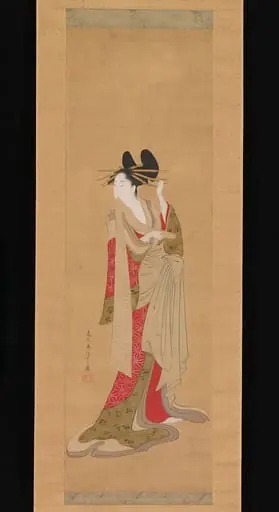 Untitled
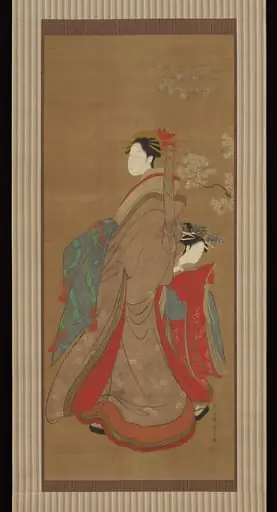 Untitled
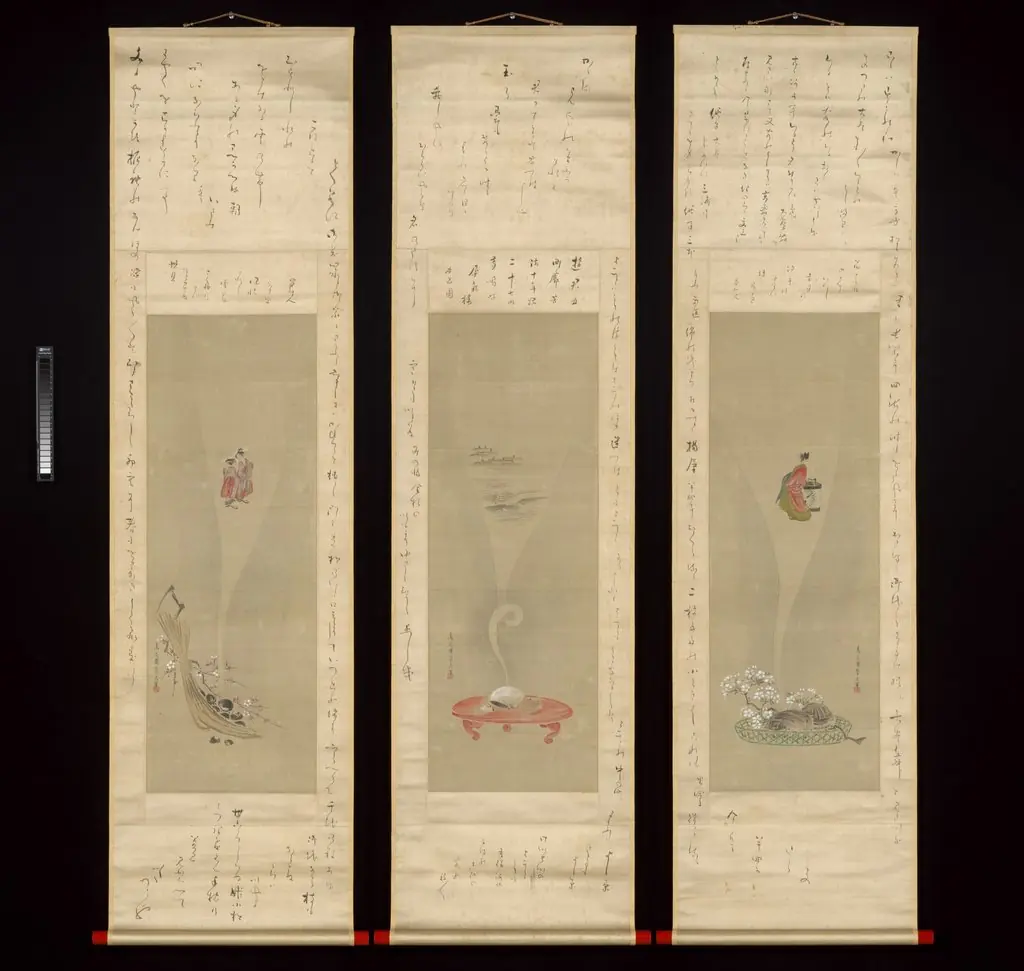 Shellfish and Apparitions of the Yoshiwara Pleasure Quarter
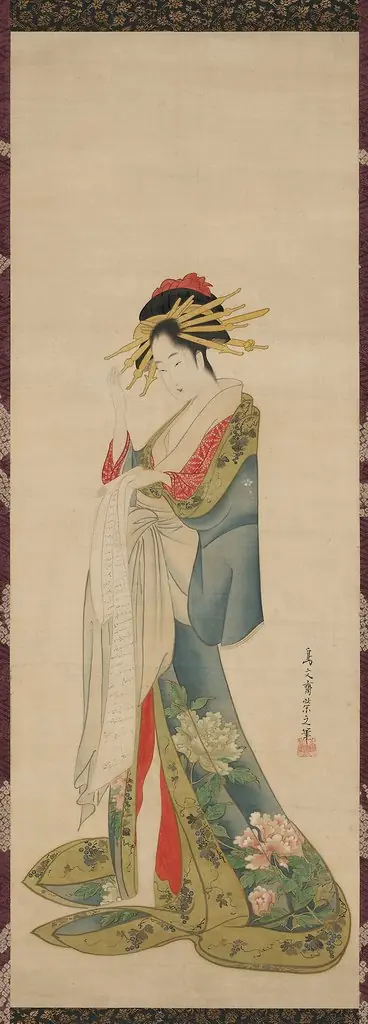 A Courtesan Reading a Letter
 Beauty Replacing Her Hairpin
 The Courtesan Takihime and Attendants (from the series New Patterns of Young Greens)
 Untitled
 Oshichi and Kichisaburo (from the series Music on the Theme of Constancy in Love)
 Untitled
 Women of the Tatsumi District (from the series Eastern Customs of the Present Day)
 Two Women by a Bamboo Blind
 青楼歌舞妓やつし画尽 十番続|The Oiran Yoyogiku of Matsubaya Standing under a Cherry Tree
 The Courtesan Kichijuro of Kage Manjiya with Two Kamuro (from the series Models for Fashions: New Designs as Fresh as Young Leaves)
 Chushingura: Act VI of The Storehouse of Loyalty
 The Hour of the Snake (from the series A Clock for Young Women)