Artwork
青楼歌舞妓やつし画尽 十番続|The Oiran Yoyogiku of Matsubaya Standing under a Cherry Tree
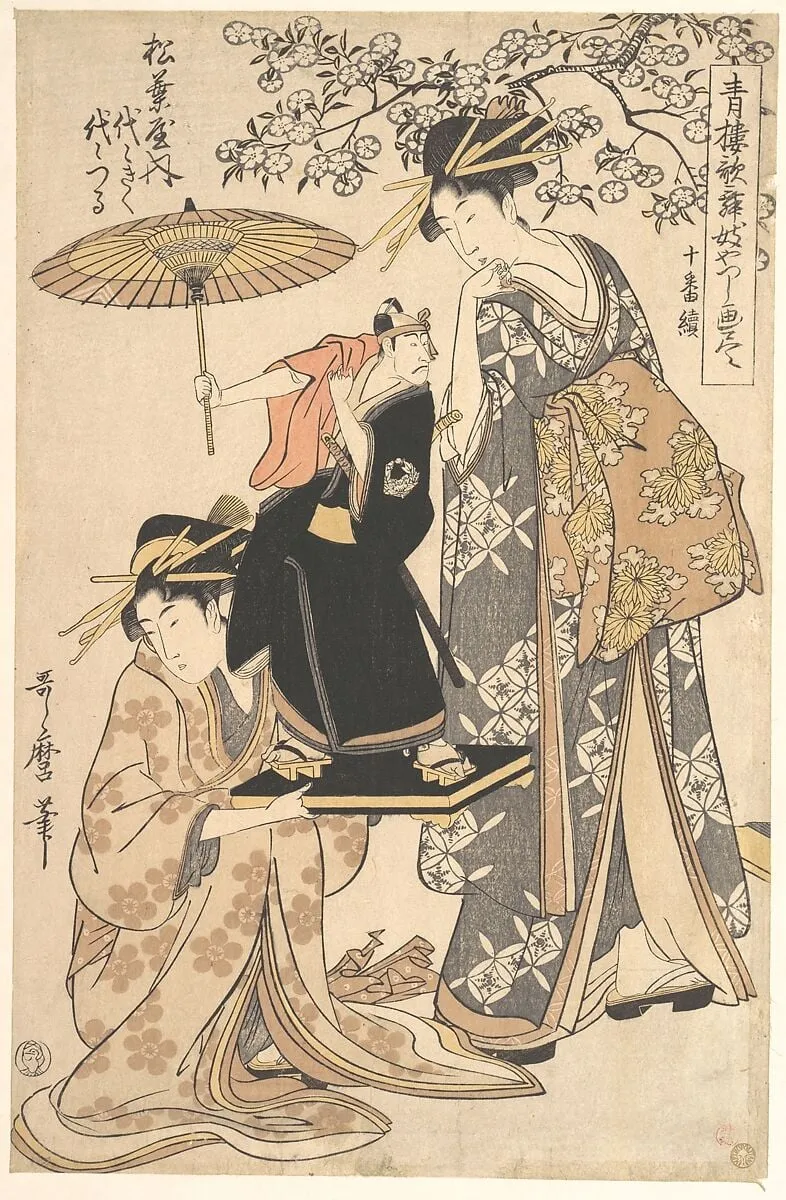
青楼歌舞妓やつし画尽 十番続|The Oiran Yoyogiku of Matsubaya Standing under a Cherry Tree is an ink print by the Romanticist artist Kitagawa Utamaro. It dates from 1780 and is held in the collection of the Metropolitan Museum of Art.
About this work
Overview
The work is part of the Metropolitan Museum of Art’s collection and measures within the typical dimensions of ukiyo‑e portrait sheets.
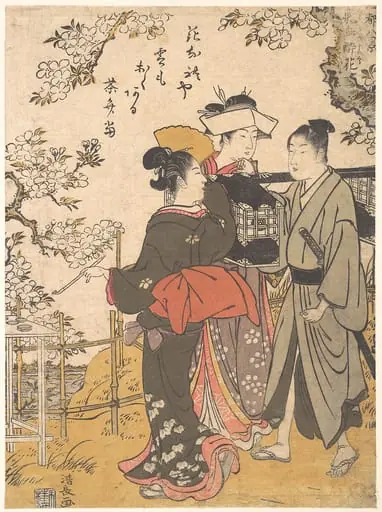
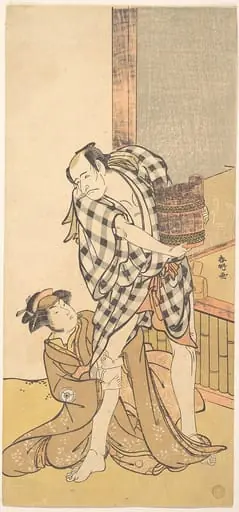
Created in 1780 by the Edo‑period artist Kitagawa Utamaro, this multicolour woodblock print depicts a scene of refined leisure. The work is part of the Metropolitan Museum of Art’s collection and measures within the typical dimensions of ukiyo‑e portrait sheets. Its composition centres on a woman in a patterned kimono standing beneath a blossoming cherry tree, accompanied by a kneeling attendant and a male figure with an umbrella.
Subject & Meaning
The central figure is an oiran, a high‑ranking courtesan, presented in a moment of quiet contemplation as she lowers her gaze, her hand lightly touching her cheek. The attendant, positioned at her side, holds a serving tray, while the man in a dark robe, likely a patron or protector, stands behind them. The setting under the cherry blossoms evokes transience and the seasonal elegance associated with the pleasure quarters.
Technique & Style
Executed with the traditional ukiyo‑e woodblock process, the image combines line engraving with hand‑applied inks in muted browns, greys and soft pinks. The kimono’s floral pattern is rendered through fine carving, while the delicate blossoms are achieved by layered colour blocks. Utamro’s characteristic attention to facial expression and subtle gesture is evident in the serene countenance of the oiran.
History & Provenance
The print forms part of a series titled "The Oiran Yoyogiku of Matsubaya," illustrating various scenes of the courtesan’s life. It entered the Metropolitan Museum of Art’s collection through a 20th‑century acquisition, reflecting the museum’s broader effort to represent Edo‑period printmaking. Its preservation in paper format offers insight into the commercial publishing practices of late‑18th‑century Japan.
Artist & collection


 Untitled
 Untitled
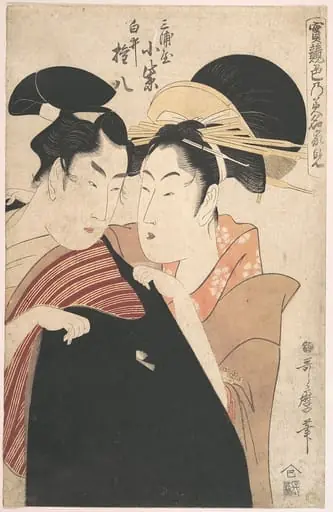 実競色乃美名家見 三浦屋小紫 白井権八|The Lovers Miura-ya Komurasaki and Shirai Gonpachi.
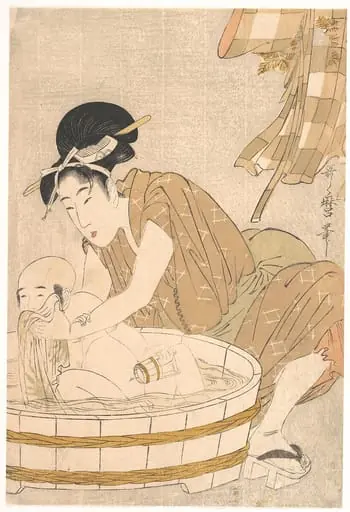 行水|Bathtime (Gyōzui)
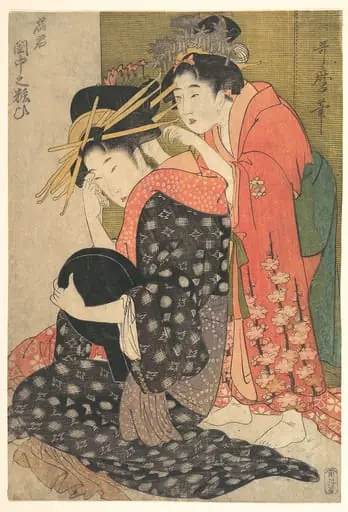 名君 閨中の粧ひ|The Oiran Yoso-oi Seated at Her Toilet
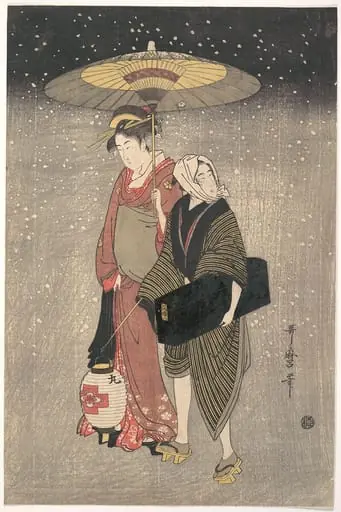 Untitled
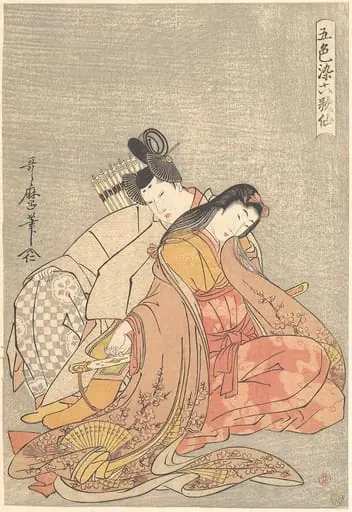 『五色染六歌仙』 在原業平と小野小町|“The Poet Ariwara no Narihira (825–880) and Ono no Komachi,” from the series Five Colors of Love for the Six Poetic Immortals (Goshiki-zome rokkasen)
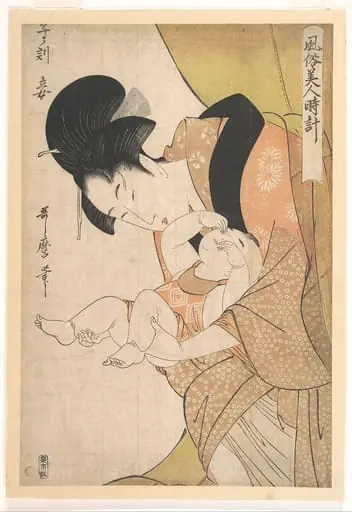 風俗美人時計 子ノ刻 妾|Midnight: Mother and Sleepy Child
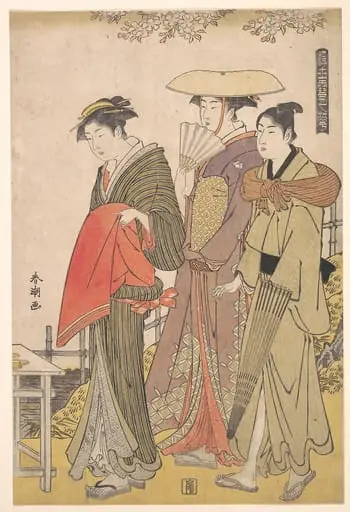 Ukiyoe Ga|The Beauty of the Floating World
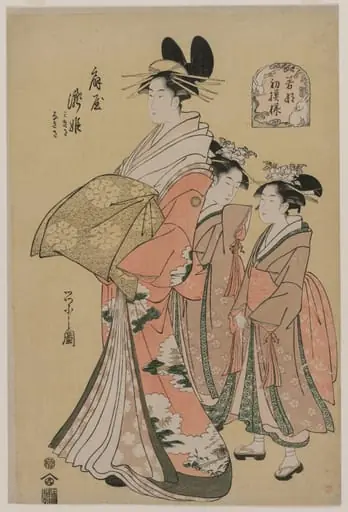 The Courtesan Takihime and Attendants (from the series New Patterns of Young Greens)
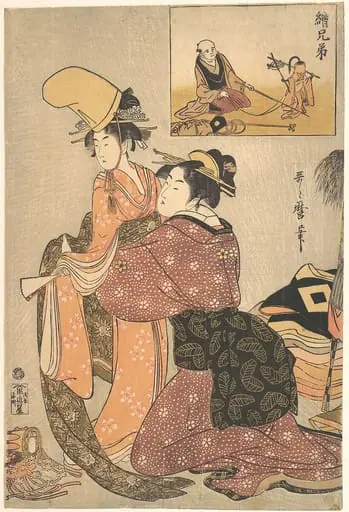 喜多川歌麿画 絵兄弟娘道成寺 見立猿廻し 「絵兄弟」|A Woman Dressing a Girl for a the Kabuki Dance “Musume Dojōji,” with “Brother Picture” (E-kyōdai) of a Monkey Trainer
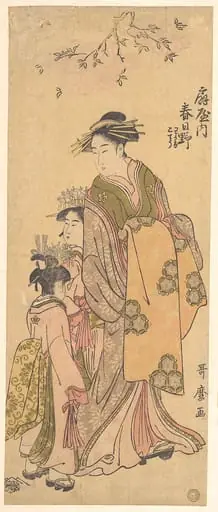 扇屋内春日野わかな こてう|The Oiran Kasugano of Ōgiya on Parade
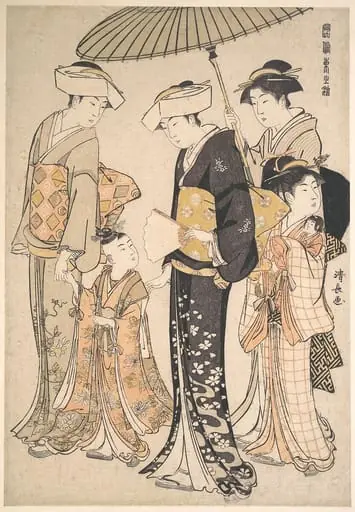 「風俗東之錦」 姫君と侍女四人|High-Ranking Samurai Girl with Four Attendants, from the series A Brocade of Eastern Manners (Fūzoku Azuma no nishiki)
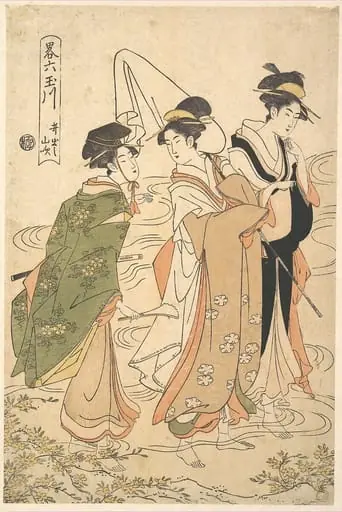 礫川亭永理 (鳥橋斎栄里)画 「畧六玉川 井出の山吹」|Mountain Roses of Ide (Ide no Yamabuki), from the series A Parodic Six Jewel Rivers (Yatsushi Mu-Tamagawa)
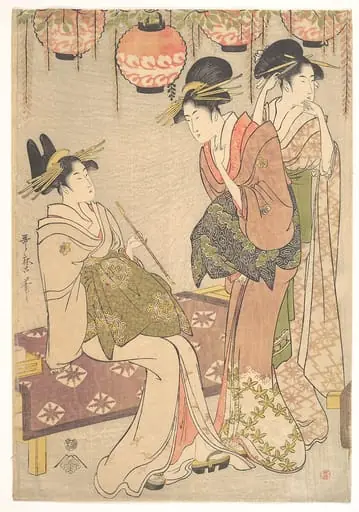 Untitled
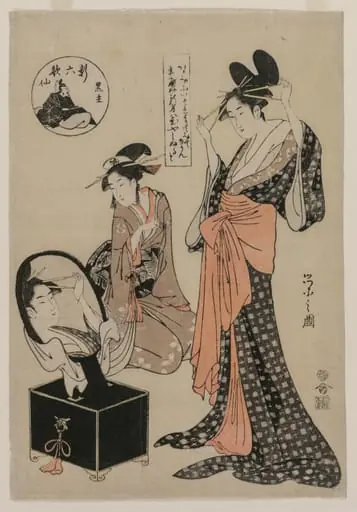 Kuronushi from the series The New Six Immortal Poets
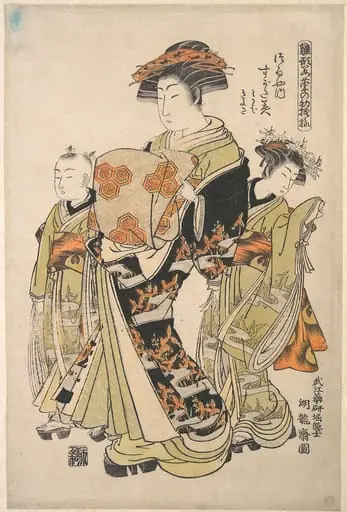 『雛形若菜の初模様 つるや内 すがたみ』|The Courtesan Sugatami of the Tsuruya Brothel, from the series “A Pat-tern Book of the Year’s First Designs, Fresh as Spring Herbs” (“Hinagata wakana no hatsu moyō”)
 Untitled
 Untitled
 五代目市川団十郎|Scene from the Play Yoshitsune and the Thousand Cherry Trees (Yoshitsune senbon zakura)