Artwork
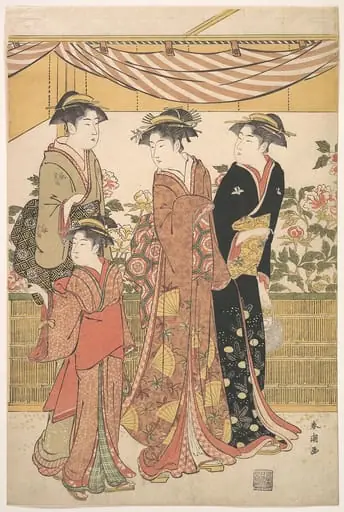
Women of the Tatsumi District (from the series Eastern Customs of the Present Day)
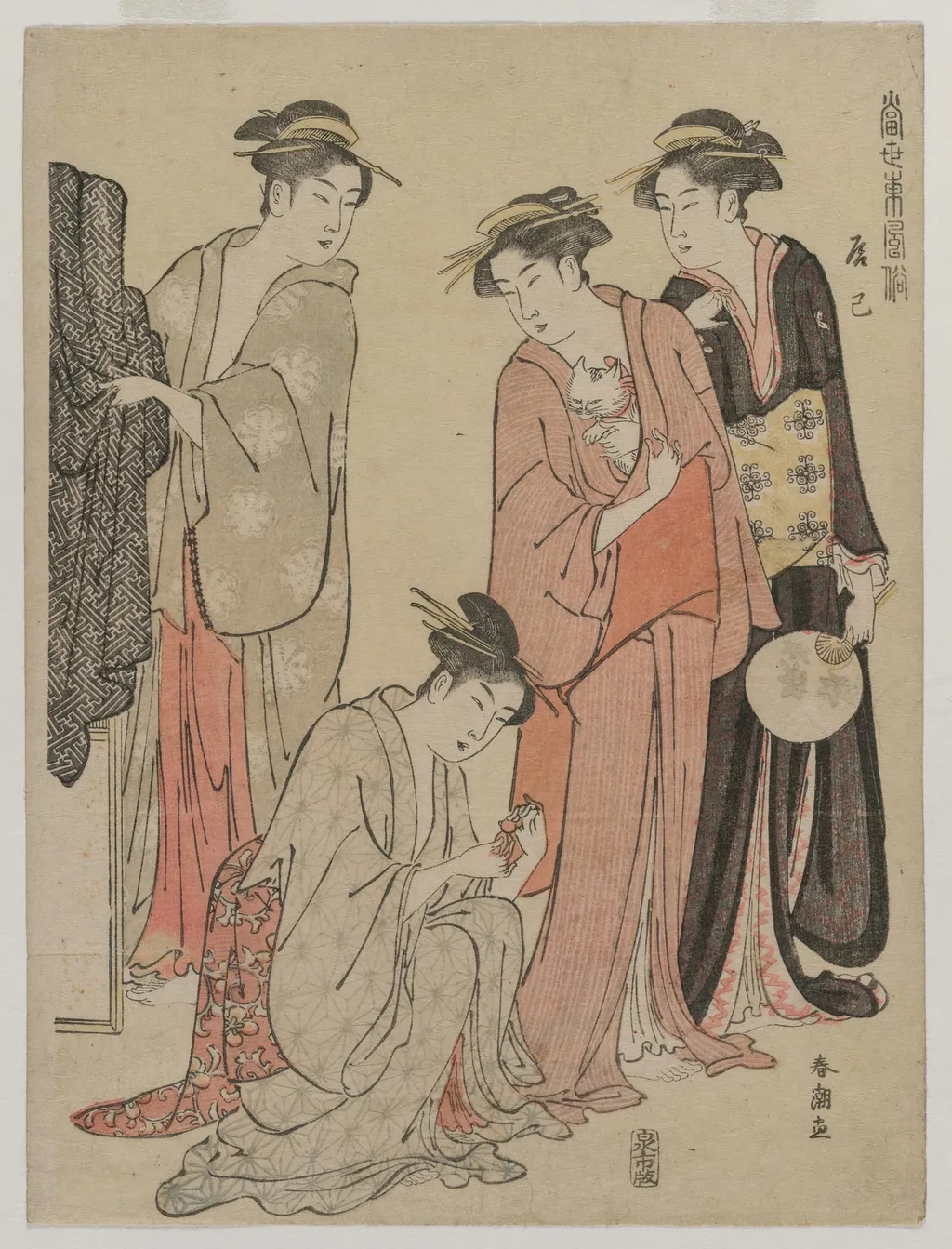
Women of the Tatsumi District (from the series Eastern Customs of the Present Day) is a print by the Romanticist artist Katsukawa Shunchō. It dates from 1784 and is held in the collection of the Cleveland Museum of Art.
About this work
Overview
Women of the Tatsumi District is a late 18th-century print by Katsukawa Shunchō, part of the series Eastern Customs of the Present Day, housed at The Cleveland Museum of Art.
Subject & Meaning
The print depicts a serene domestic scene with four figures engaged in quiet activities, conveying a sense of everyday life in the Tatsumi District. The composition focuses on the mundane, eschewing grandeur for intimate, ordinary moments.
Technique & Style
Characterized by soft colors (pinks, grays, earthy tones) and delicate brushstrokes, the print showcases subtle textile patterns, such as the kneeling woman’s floral outfit and the swirling designs on the standing woman’s robe.
History & Provenance
Created circa 1784, the work is now part of The Cleveland Museum of Art’s collection. Its creation reflects Shunchō’s contribution to capturing daily Japanese life in art during this period.
Context
As part of Eastern Customs of the Present Day, this print belongs to a series highlighting contemporary (to the artist) customs and lifestyles in Edo (Tokyo), specifically focusing on the lesser-depicted Tatsumi District.
Legacy
Through works like Women of the Tatsumi District, Katsukawa Shunchō influenced the documentation of everyday Japanese life in ukiyo-e prints, contributing to a broader appreciation of mundane themes in Japanese art history.
Artist & collection
Artist
Katsukawa Shunchō lived in Edo (now Tokyo) during the late 1700s, a time when floating-world prints—colorful scenes of theater, courtesans, and everyday life—were all the rage.

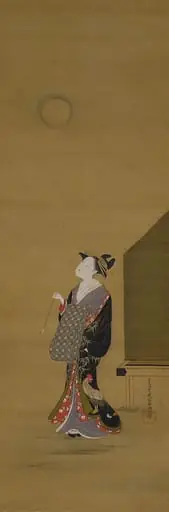
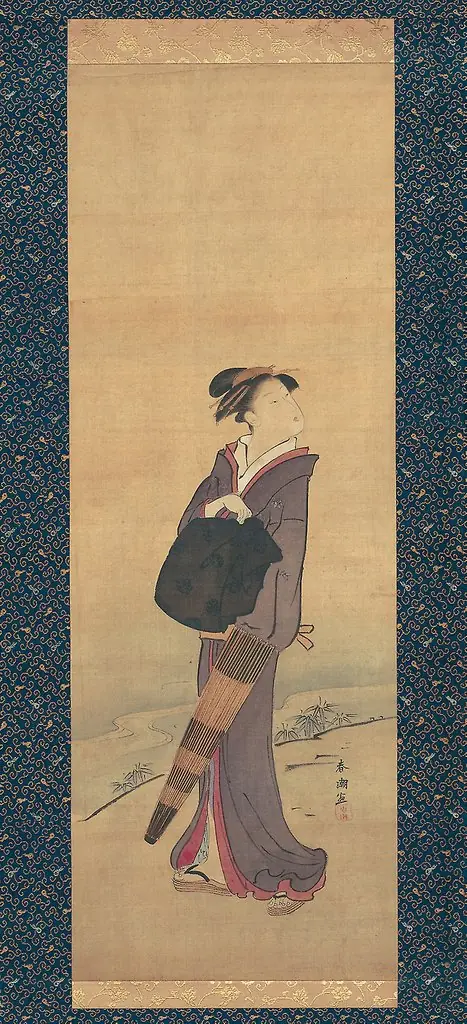
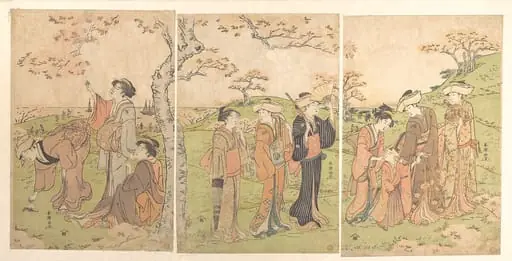
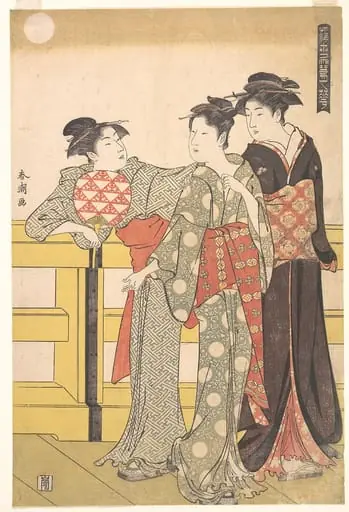
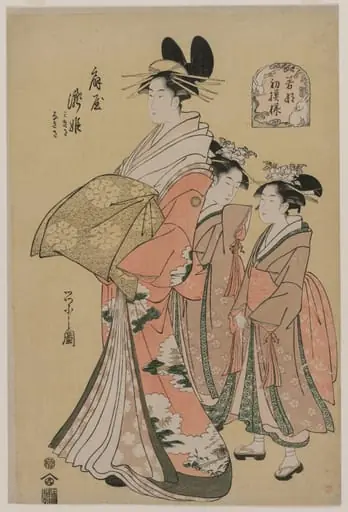 The Courtesan Takihime and Attendants (from the series New Patterns of Young Greens)
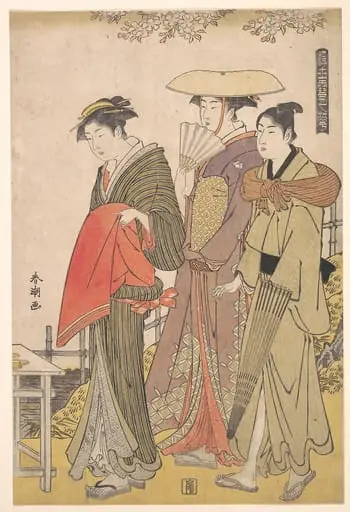
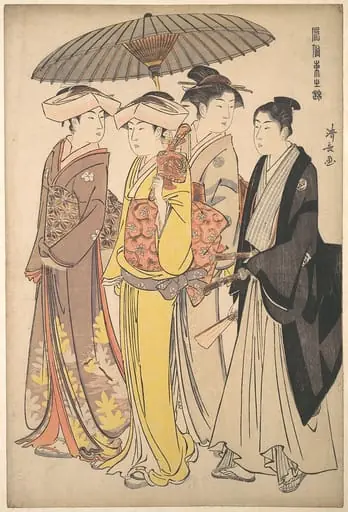 「風俗東之錦」 武家の息女と侍女と若党 |A Lady from a Samurai Household with Three Attendants, from the series A Brocade of Eastern Manners (Fūzoku Azuma no nishiki)
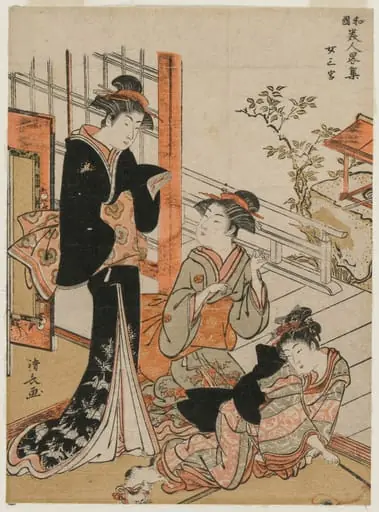 Three Women (from the series A Brief Collection of Japanese Beauties)
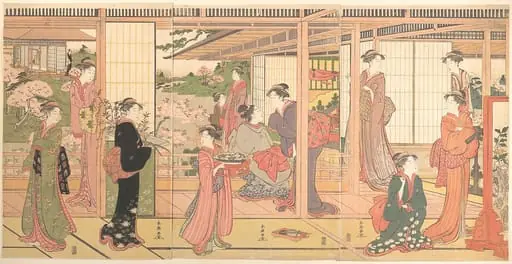
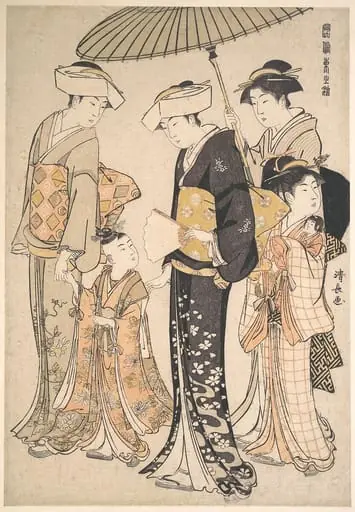 「風俗東之錦」 姫君と侍女四人|High-Ranking Samurai Girl with Four Attendants, from the series A Brocade of Eastern Manners (Fūzoku Azuma no nishiki)
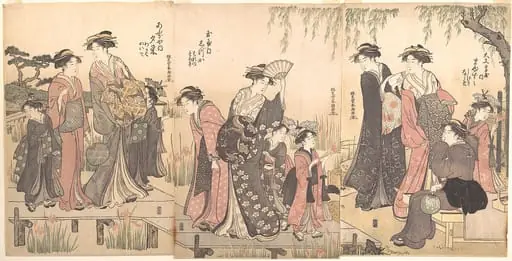
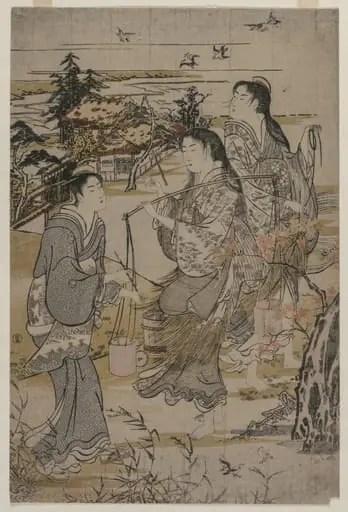 Women with Salt Pails; The Noda Tama River in Mutsu Province, from an untitled series of the Six Tama Rivers
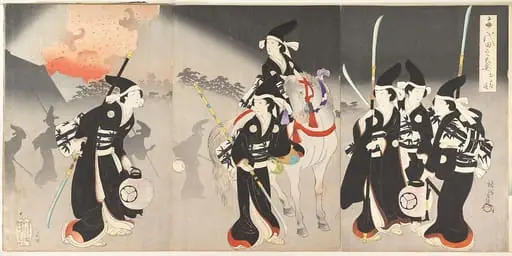 楊洲周延画 「千代田之大奥 おたち退」|“Evacuation of the Ladies,” from the series The Inner Precincts of Chiyoda Castle (Chiyoda no Ōoku, Otachinoki)