Artwork
The Hour of the Snake (from the series A Clock for Young Women)
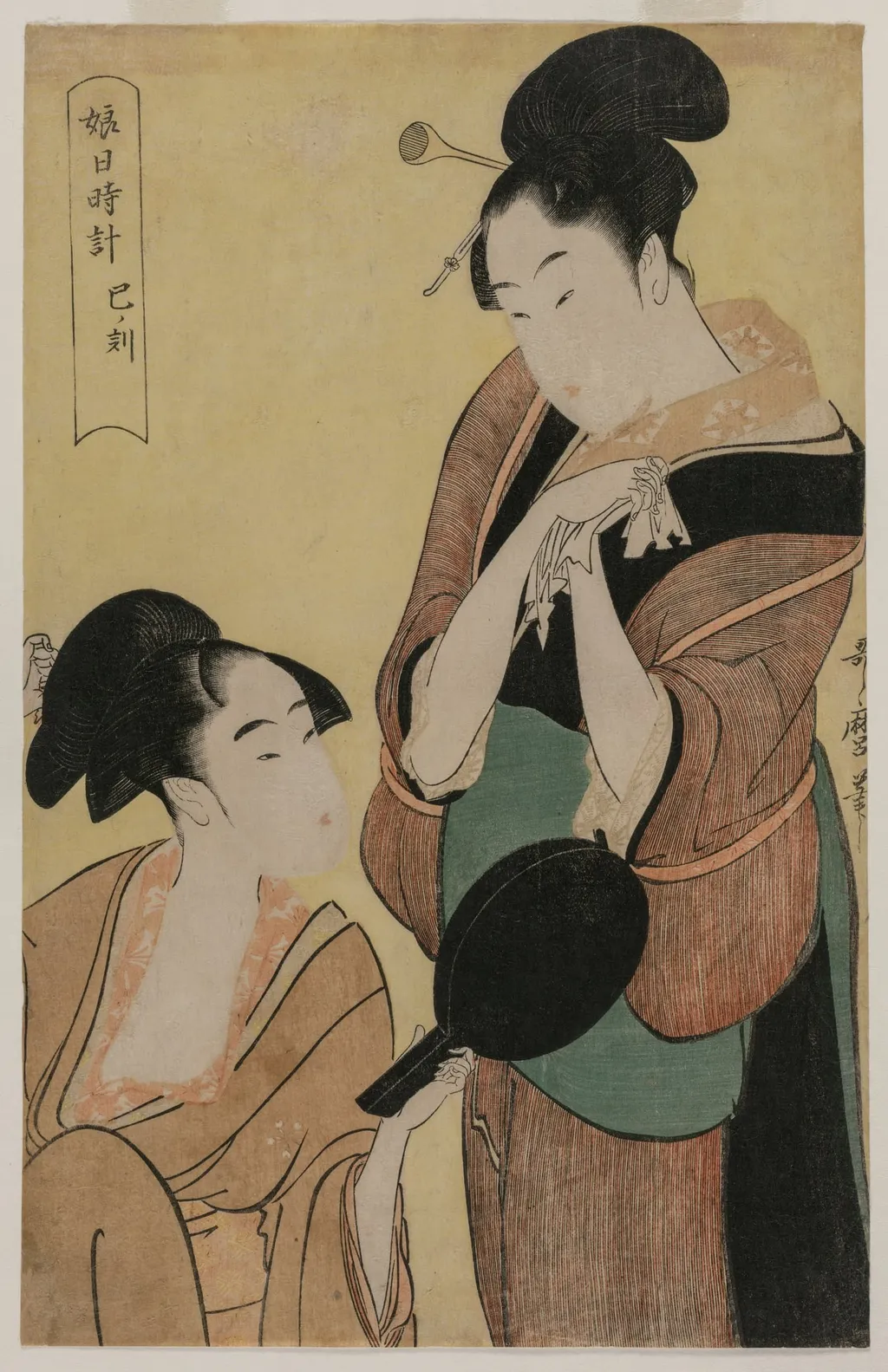
The Hour of the Snake (from the series A Clock for Young Women) is a print by the Romanticist artist Kitagawa Utamaro. It dates from 1796 and is held in the collection of the Cleveland Museum of Art.
About this work
Overview
It captures a quiet, intimate moment between two figures, reflecting the series’ focus on daily rhythms and feminine experience in late Edo-period Japan.
Created around 1796, The Hour of the Snake is one of twelve prints in Kitagawa Utamaro’s series A Clock for Young Women, each representing a time of day through the lives of women. This woodblock print is part of the ukiyo-e tradition and is currently held by The Cleveland Museum of Art. It captures a quiet, intimate moment between two figures, reflecting the series’ focus on daily rhythms and feminine experience in late Edo-period Japan.
Subject & Meaning
The print depicts two women in a private setting, their interaction suggesting a moment of quiet exchange. The standing figure holds a fan, a symbol of grace and social nuance, while the seated woman looks upward, implying attentiveness or deference. The title, referencing the snake hour (1–3 a.m.), evokes a liminal time associated with stillness and introspection, aligning the figures’ demeanor with the quietude of the night.
Technique & Style
Utamaro employed fine linework and subtle gradations of color typical of high-quality ukiyo-e prints. The kimonos feature delicate patterns rendered in layered pigments, contrasting with the pale, unadorned background that draws focus to the figures. The composition emphasizes verticality and restrained movement, with attention to textile texture and posture to convey dignity and emotional nuance without overt narrative.
History & Provenance
The print was produced during Utamaro’s mature period, when he was renowned for his bijin-ga, or portraits of beautiful women. It entered The Cleveland Museum of Art’s collection through established channels of early 20th-century Japanese art acquisition in the West. Its preservation reflects growing Western interest in Edo-period prints, though its specific provenance prior to museum acquisition remains undocumented in public records.
Context
The series A Clock for Young Women reflects the Edo period’s fascination with time as a structure of daily life, particularly among urban women. Each print corresponds to a traditional Japanese time division, linking personal moments to cosmic cycles. Utamaro’s focus on interiority and subtle gesture diverged from theatrical kabuki scenes, offering instead a contemplative view of women’s private worlds.
Legacy
Utamaro’s series influenced later artists in both Japan and the West, contributing to the global appreciation of ukiyo-e’s emotional depth. The Hour of the Snake exemplifies how everyday scenes, rendered with precision and restraint, could carry symbolic weight. While not widely exhibited, it remains a key example of late 18th-century Japanese printmaking’s capacity for quiet narrative and psychological suggestion.
Own this work as a print
Artist & collection


 Untitled
 Untitled
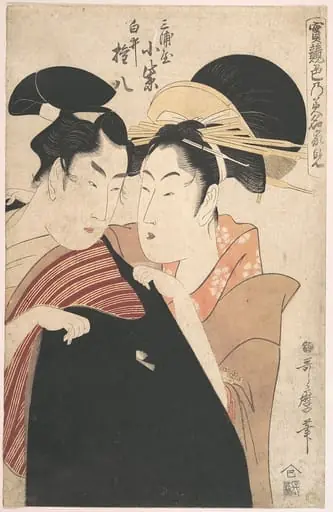 実競色乃美名家見 三浦屋小紫 白井権八|The Lovers Miura-ya Komurasaki and Shirai Gonpachi.
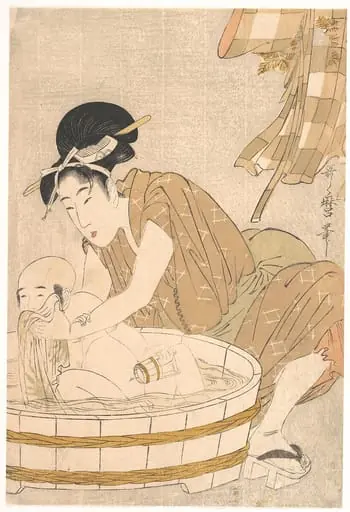 行水|Bathtime (Gyōzui)
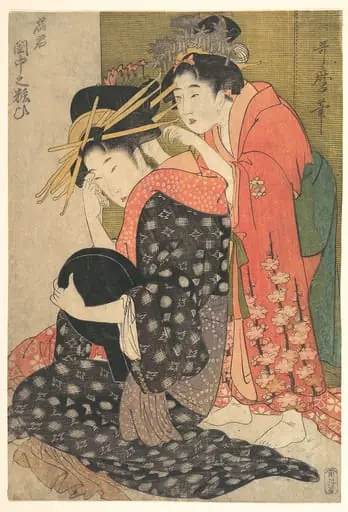 名君 閨中の粧ひ|The Oiran Yoso-oi Seated at Her Toilet
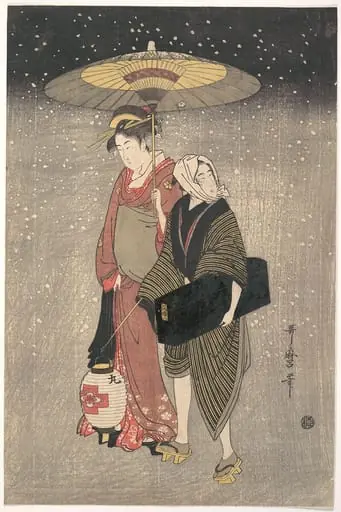 Untitled
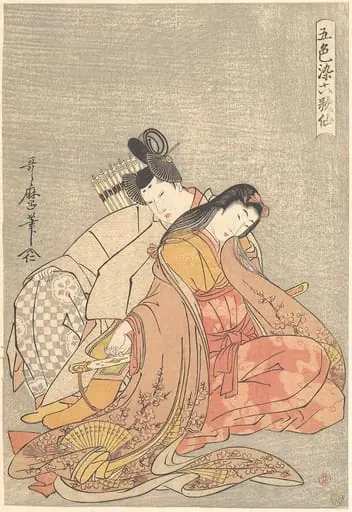 『五色染六歌仙』 在原業平と小野小町|“The Poet Ariwara no Narihira (825–880) and Ono no Komachi,” from the series Five Colors of Love for the Six Poetic Immortals (Goshiki-zome rokkasen)
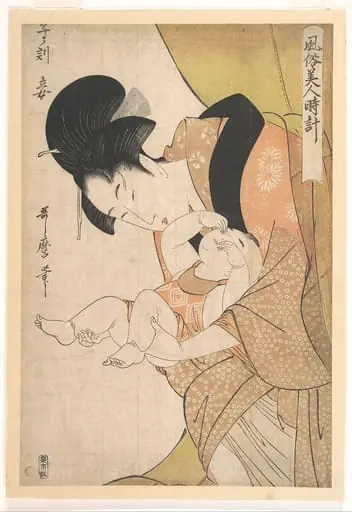 風俗美人時計 子ノ刻 妾|Midnight: Mother and Sleepy Child
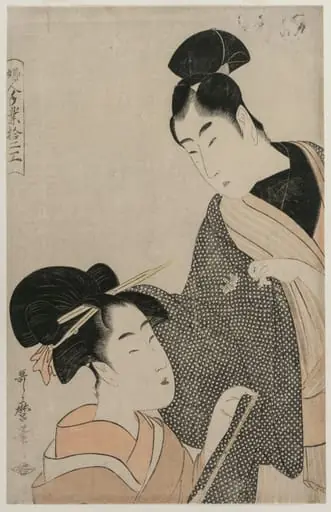 Woman Measuring a Man's Gown (from the series Twelve Occupations of Women)
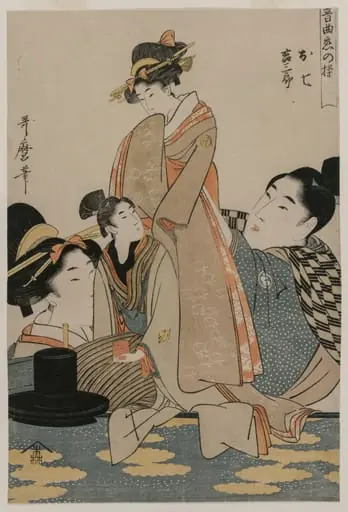 Oshichi and Kichisaburo (from the series Music on the Theme of Constancy in Love)
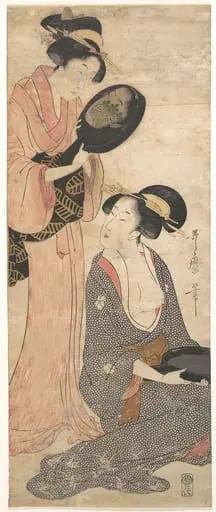 Untitled
 Untitled
 The Lovers Okiku and Kozuke (from the series An Elegant Comparison of Charming Features)
 Going to the Kabuki Theater in the Hour of the Hare (From the Series The Twelve Hours with Daily Events)
 Untitled
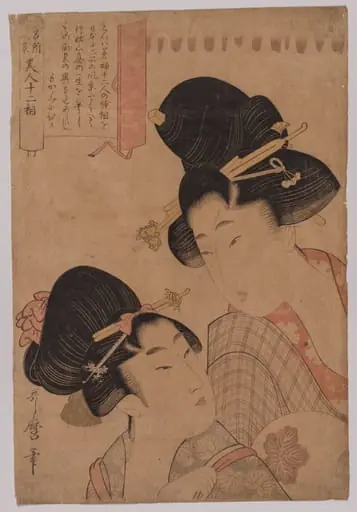 Two Courtesans
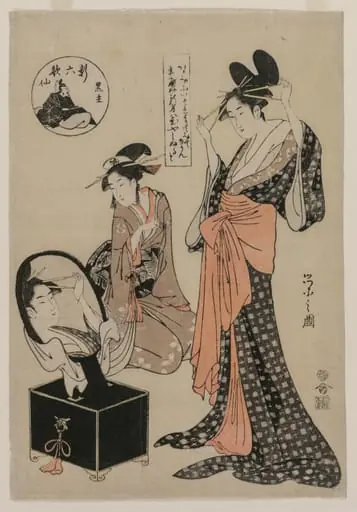 Kuronushi from the series The New Six Immortal Poets
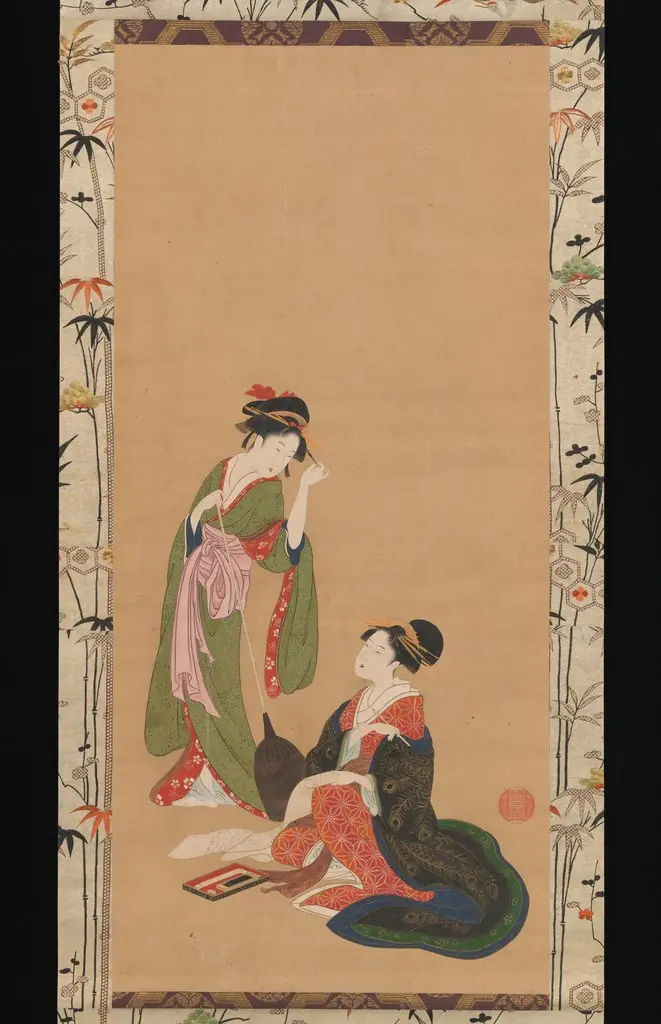 Courtesans Parodying Kanzan and Jittoku
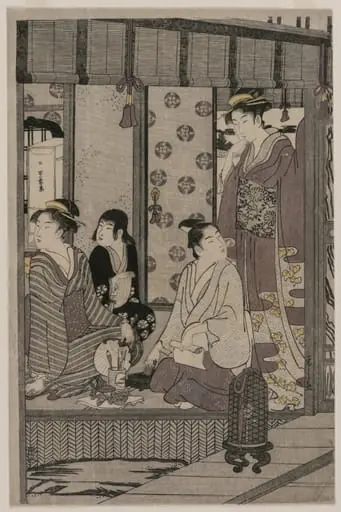 Morning Glory (from the series The Tale of Genji in Elegant Modern Dress)