Artwork
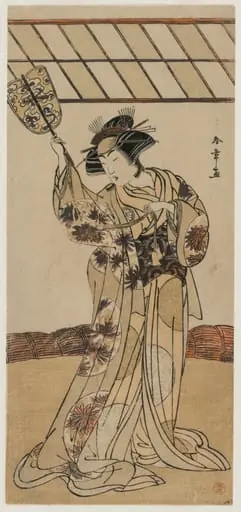
Woman Holding a Wooden Cup Stand Decorated with Chrysanthemums (from the series Elegant Pictures of the Five Seasonal Festivals)
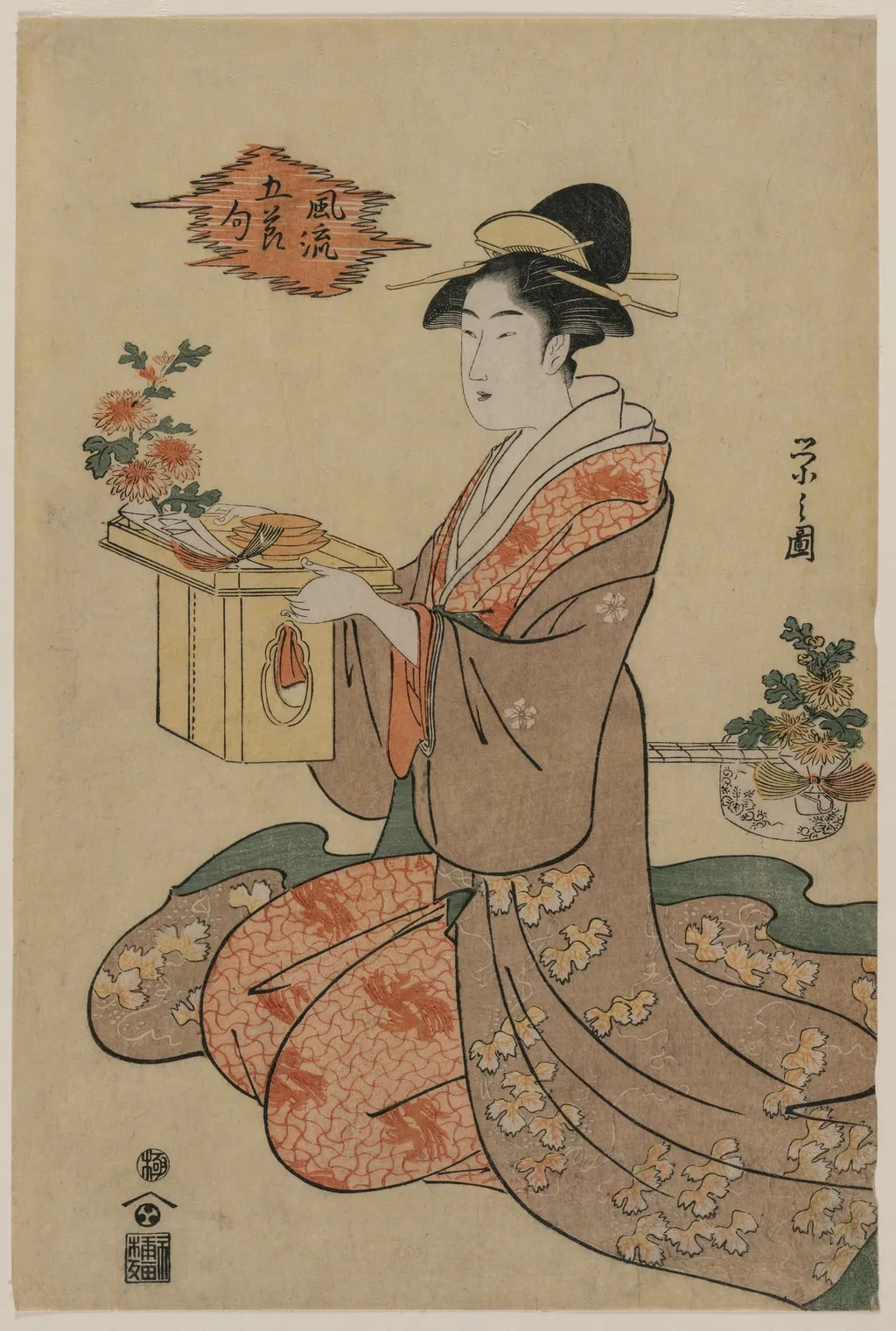
Woman Holding a Wooden Cup Stand Decorated with Chrysanthemums (from the series Elegant Pictures of the Five Seasonal Festivals) is a print by the Romanticist artist Chôbunsai Eishi. It dates from 1794 and is held in the collection of the Cleveland Museum of Art. This woodblock print, created around 1794 by Chōbunsai Eishi, belongs to a series depicting Japan’s five seasonal festivals.
About this work
Overview
This woodblock print, created around 1794 by Chōbunsai Eishi, belongs to a series depicting Japan’s five seasonal festivals. It portrays a woman in traditional attire holding a wooden cup stand adorned with chrysanthemums, a flower associated with autumn. The work exemplifies the ukiyo-e tradition, blending refined composition with subtle seasonal symbolism.
Subject & Meaning
The figure holds a cup stand decorated with chrysanthemums, referencing the Festival of Chrysanthemums, one of the five seasonal observances in Edo-period Japan. The flower symbolizes longevity and quiet resilience, aligning with autumn’s reflective character. The woman’s poised demeanor and modest attire suggest quiet participation in ritual, emphasizing dignity over spectacle.
Technique & Style
Eishi employed fine line work and restrained color palettes typical of late 18th-century bijin-ga. The print’s soft gradients and delicate contours convey texture without overt detail, focusing on form and atmosphere. The background remains unadorned, directing attention to the figure and the symbolic object she holds, reflecting the aesthetic of understated elegance.
History & Provenance
The print was produced during Eishi’s shift from painting to printmaking, following his departure from the imperial court. It entered The Cleveland Museum of Art’s collection in the 20th century, part of a broader acquisition of Edo-period prints. Its preservation reflects early Western interest in Japanese print culture and its documentation within institutional collections.
Context
Created during the Kansei era, the print emerged amid growing urban appreciation for seasonal rituals among the merchant class. While courtly traditions influenced its imagery, the series catered to a broader audience seeking cultural refinement. Chrysanthemum festivals, once reserved for elites, became accessible themes in popular art, bridging social strata through shared symbolism.
Legacy
Eishi’s series contributed to the evolution of bijin-ga by emphasizing psychological nuance over overt glamour. Though less widely known than contemporaries like Utamaro, his restrained approach influenced later printmakers who valued subtlety. The work remains a reference point for studies of seasonal aesthetics and the quiet domestication of ritual in Edo-period visual culture.
Artist & collection

Artist
Chōbunsai Eishi (鳥文斎 栄之; 1756–1829) was a Japanese ukiyo-e artist. His last name was Hosoda (細田). His first name was Tokitomi (時富). His common name was Taminosuke (民之丞) and later Yasaburo (弥三郎). Pupil of Kano Eisen'in…

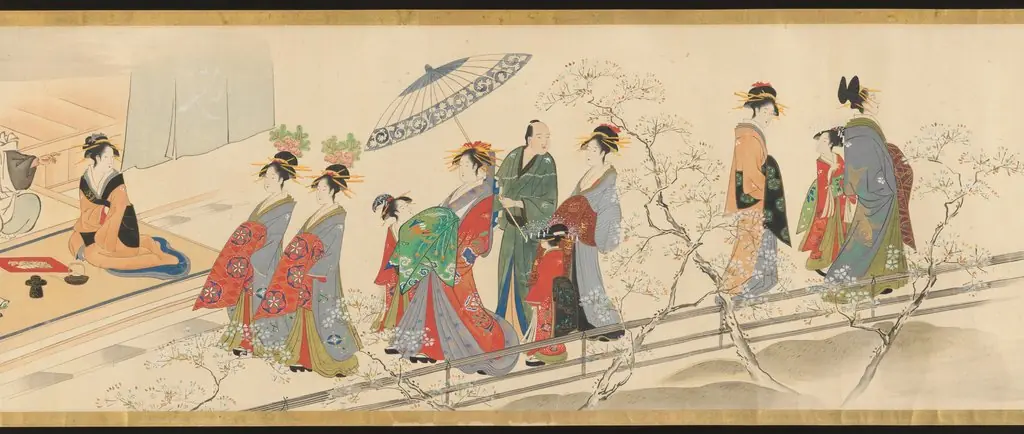 Three Gods of Good Fortune Visit the Yoshiwara; or “Scenes of Pleasure at the Height of Spring”
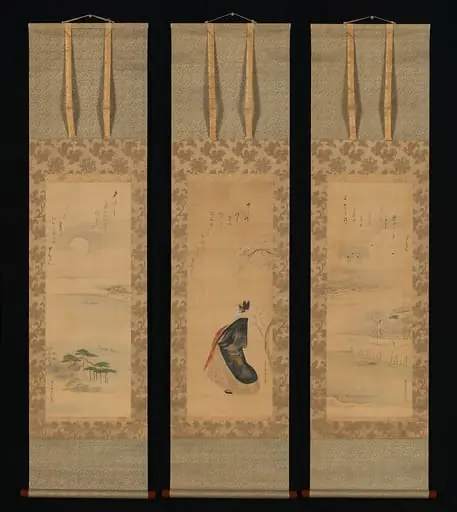 蜀山人(大田 南畝)賛 雪・月・花図 |Snow, Moon, and Cherry Blossoms (Yoshiwara in Three Seasons)
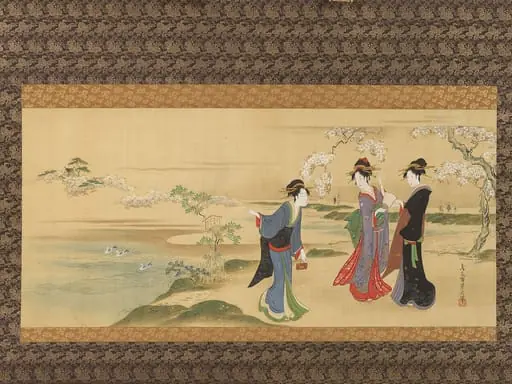 Untitled
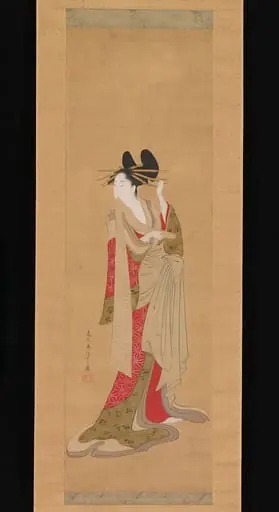 Untitled
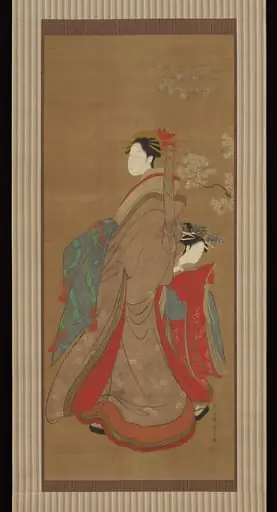 Untitled
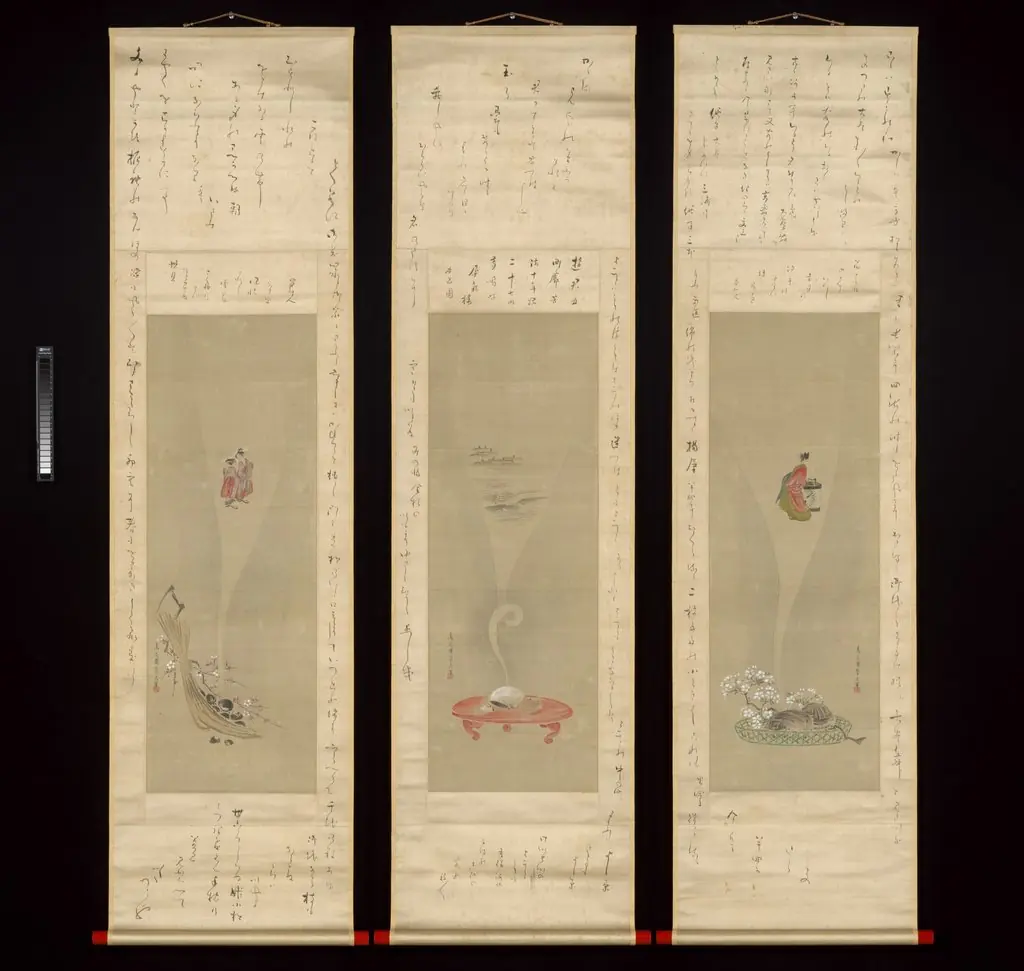 Shellfish and Apparitions of the Yoshiwara Pleasure Quarter
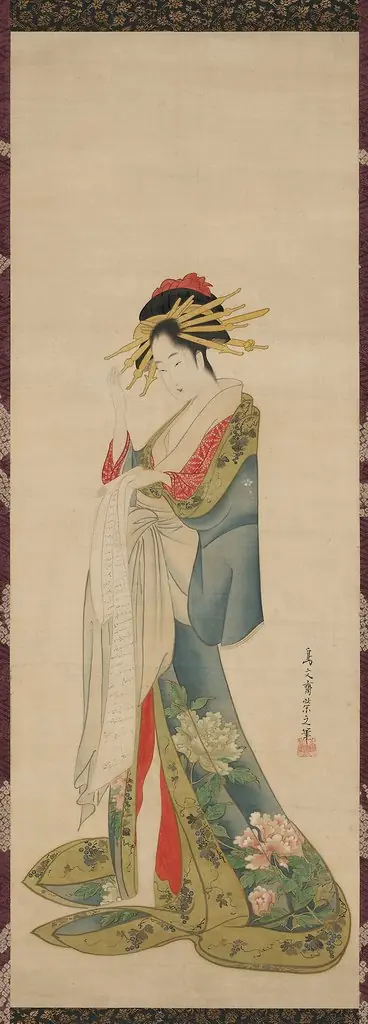 A Courtesan Reading a Letter
 Beauty Replacing Her Hairpin
 Woman Holding a Fan (from the series Ten Aspects of the Physiognomy of Women)
 The Courtesan Takihime and Attendants (from the series New Patterns of Young Greens)
 An Attractive Woman Who Looks Like the Actor Iwai Hanshiro V
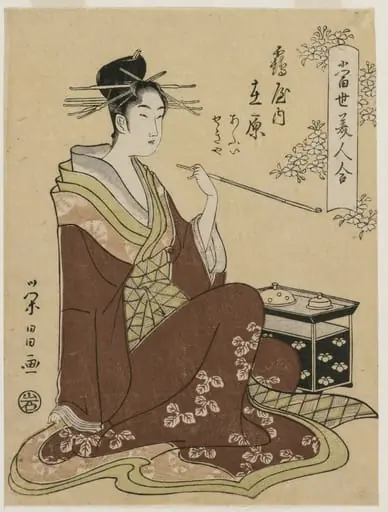 The Courtesan Ariwara of the Tsuruya Seated by a Smoking Chest (From the series A Collection of Modern Beauties)
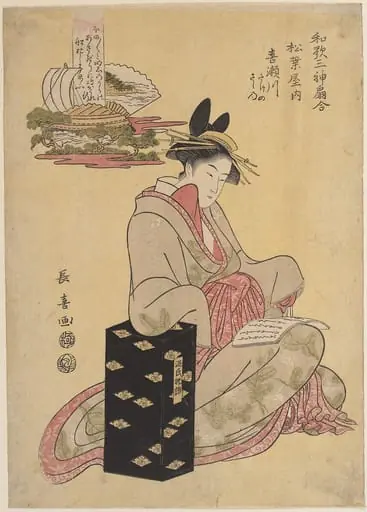 Untitled
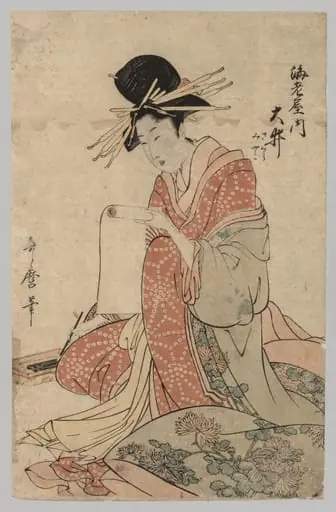 Woman of the Yoshiwara Reading Scroll
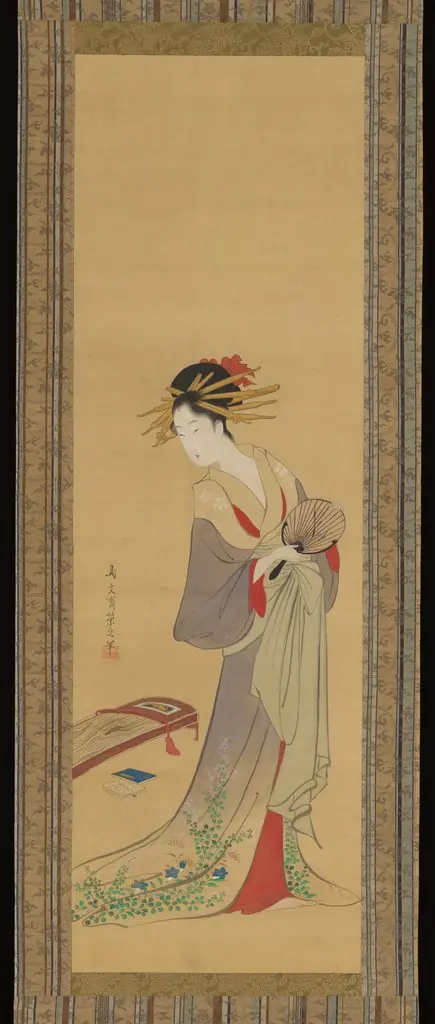 Courtesan with Fan and Koto
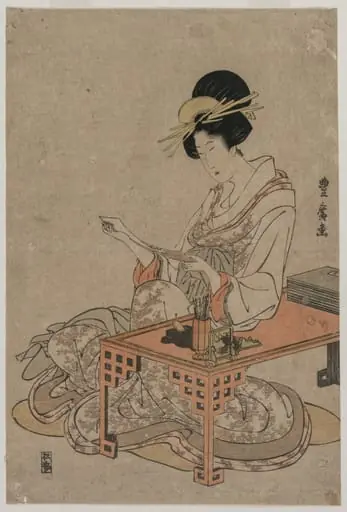 Courtesan Seated at a Writing Table
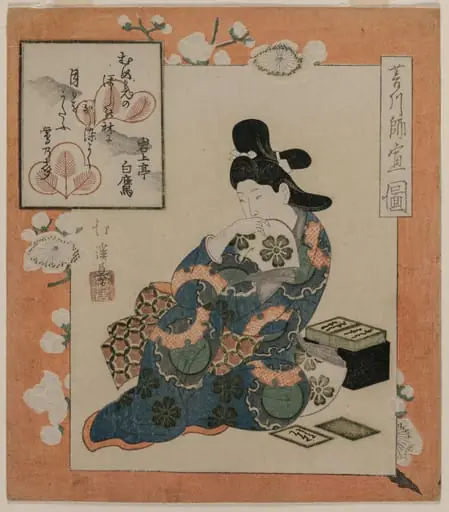 A Picture by Hishikawa Moronobu: Woman with a Set of Poem Cards
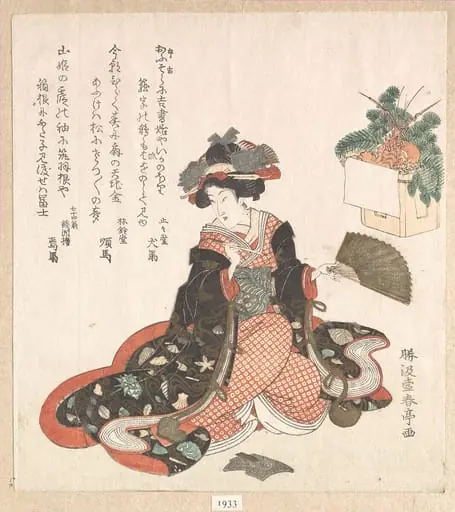 Untitled
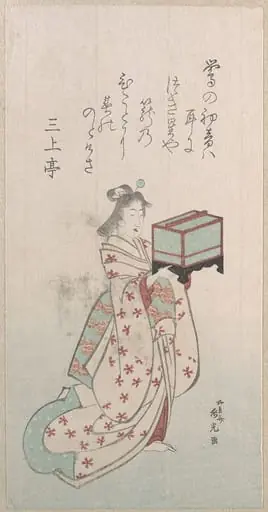 『春雨集』 摺物帖柳月斎辰光 少女に鳥かご|Spring Rain Collection (Harusame shū), vol. 2: Young Woman with a Birdcage
 Segawa Kikunojō III as Teruha