Artwork
Courtesan with Fan and Koto
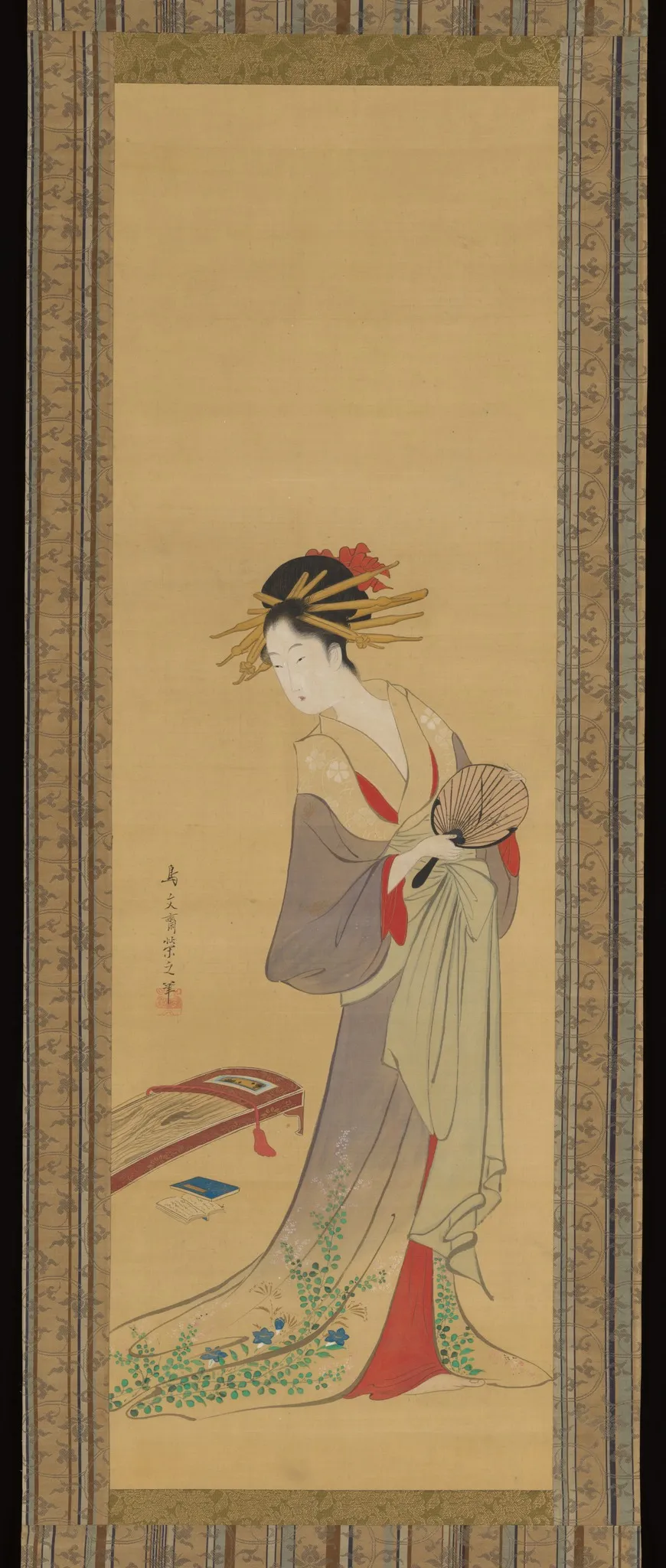
Courtesan with Fan and Koto is an unspecified painting by the Ukiyo-e artist Chôbunsai Eishi. It dates from 1792 and is held in the collection of the Metropolitan Museum of Art.
About this work
Overview
Created in 1792 by the ukiyo‑e artist Chōbunsai Eishi, this work portrays a refined woman poised beside a low table that supports a koto, a traditional Japanese stringed instrument. The composition is set against a uniform background, directing the viewer’s attention to the figure’s elegant kimono, fan, and the subtle gestures that convey poise.
Subject & Meaning
The central figure is a courtesan, identifiable by her elaborate hairstyle, adorned with decorative sticks and a red blossom, and her richly patterned kimono featuring floral and foliage motifs. Holding a fan in her right hand, she gazes slightly leftward with downcast eyes, suggesting modesty and the cultivated demeanor expected of women in Edo‑period pleasure districts.
Technique & Style
Eishi’s print exemplifies the bijin‑ga genre, emphasizing slender, elongated forms that became his hallmark. The artist employs delicate line work to delineate the kimono’s intricate patterns, while the flat, monochrome backdrop eliminates spatial depth, a common ukiyo‑e strategy to highlight the subject’s attire and accessories.
History & Provenance
Born into a samurai family and formerly a vassal of the shōgun, Eishi abandoned his stipend of 500 koku to pursue a career in art, studying briefly under Kano Eisen’in Michinobu before focusing on woodblock printing. The piece entered the collection of The Metropolitan Museum of Art, where it remains part of the museum’s Japanese prints holdings.
Context
The painting emerges from the late‑eighteenth‑century Edo period, a time when ukiyo‑e flourished as popular visual culture depicting urban life, entertainment, and fashion. Courtesans were frequent subjects, embodying both aesthetic ideals and the social dynamics of the pleasure quarters that catered to the city’s merchant class.
Legacy
Eishi’s portrayal of graceful, elongated beauties contributed to the evolution of bijin‑ga, influencing later artists such as Utamaro. His works continue to be studied for their stylistic refinement and as visual documents of Edo‑period aesthetics, reinforcing his reputation as a pivotal figure in Japanese printmaking.
Artist & collection

Artist
Chōbunsai Eishi (鳥文斎 栄之; 1756–1829) was a Japanese ukiyo-e artist. His last name was Hosoda (細田). His first name was Tokitomi (時富). His common name was Taminosuke (民之丞) and later Yasaburo (弥三郎). Pupil of Kano Eisen'in…

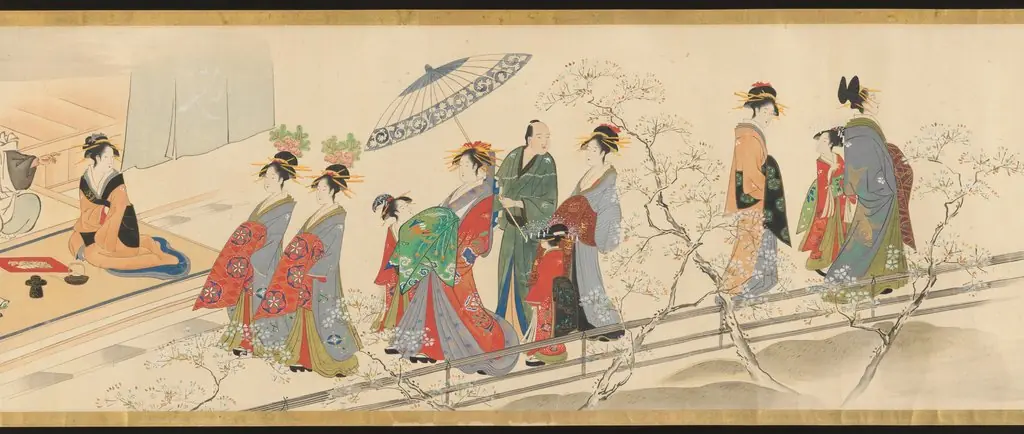 Three Gods of Good Fortune Visit the Yoshiwara; or “Scenes of Pleasure at the Height of Spring”
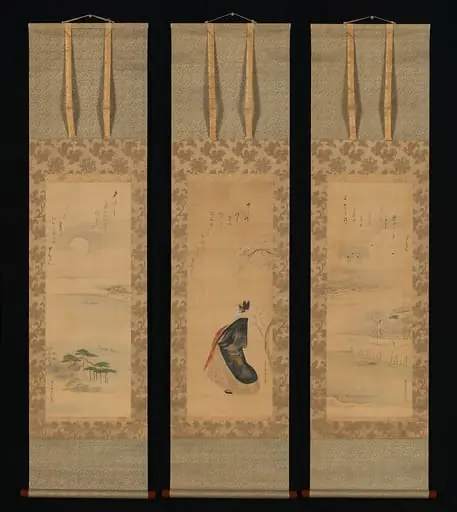 蜀山人(大田 南畝)賛 雪・月・花図 |Snow, Moon, and Cherry Blossoms (Yoshiwara in Three Seasons)
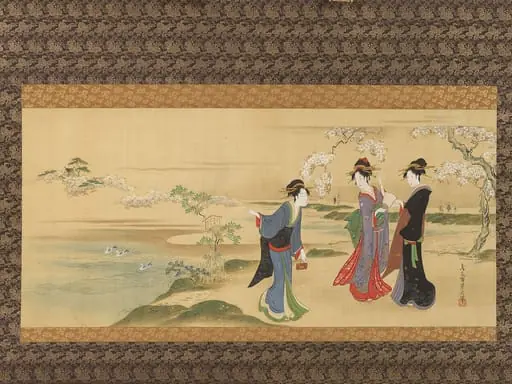 Untitled
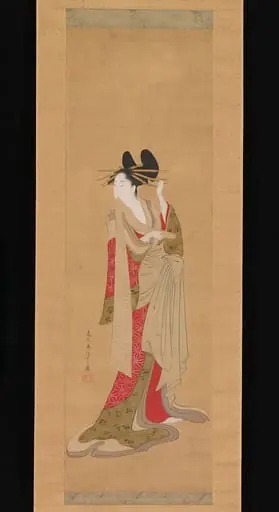 Untitled
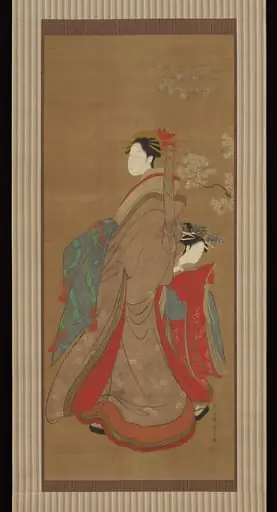 Untitled
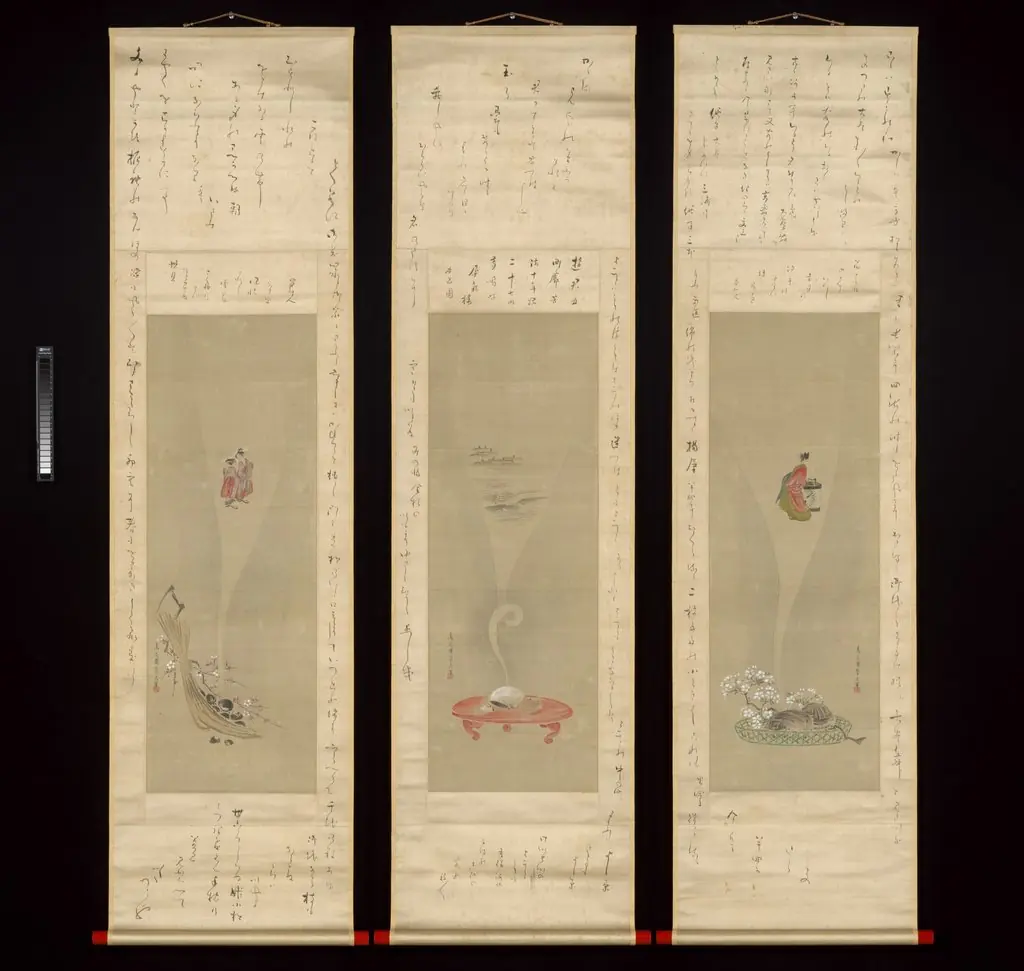 Shellfish and Apparitions of the Yoshiwara Pleasure Quarter
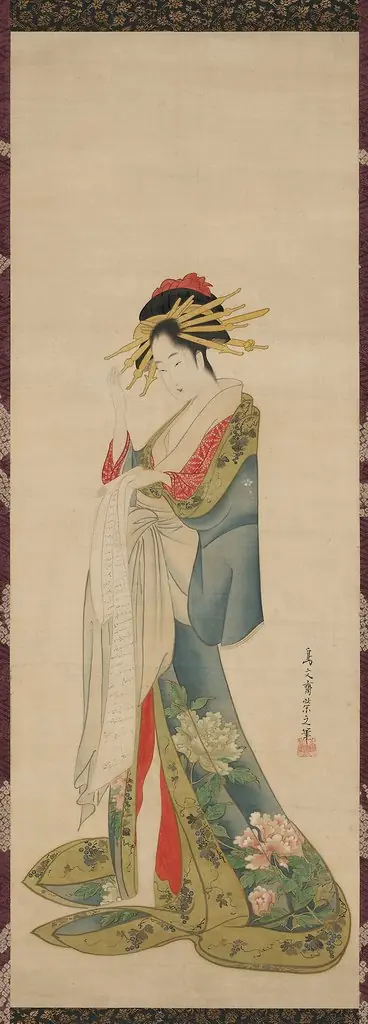 A Courtesan Reading a Letter
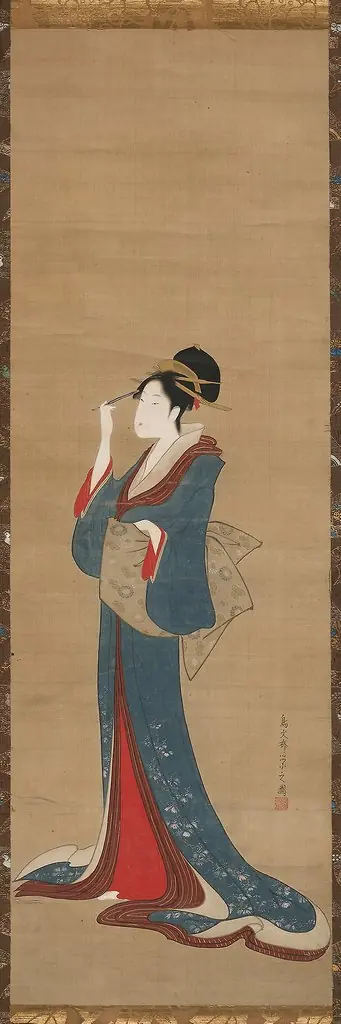 Beauty Replacing Her Hairpin
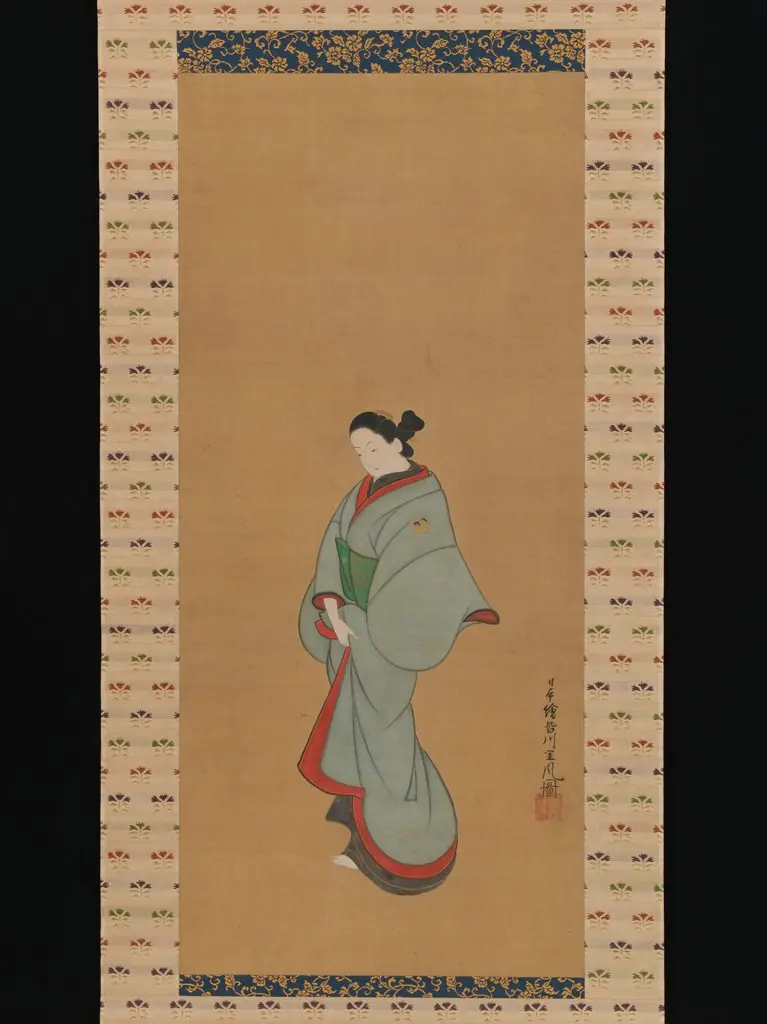 Standing Woman
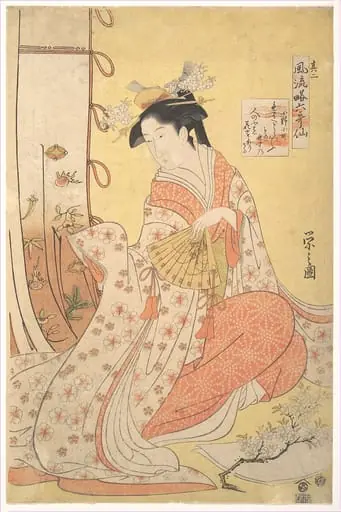 鳥文斎栄之画 「風流略六哥仙 其の二」小野小町|Ono no Komachi: Number Two (Sono ni), from the series Stylish Parodies of the Six Poetic Immortals (Fūryū yatsushi rokkasen)
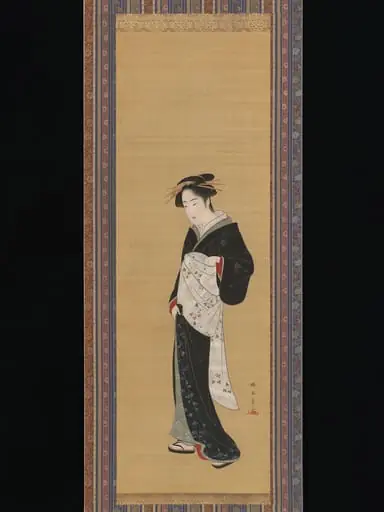 勝川春章筆 立姿美人図|Woman in a Black Kimono
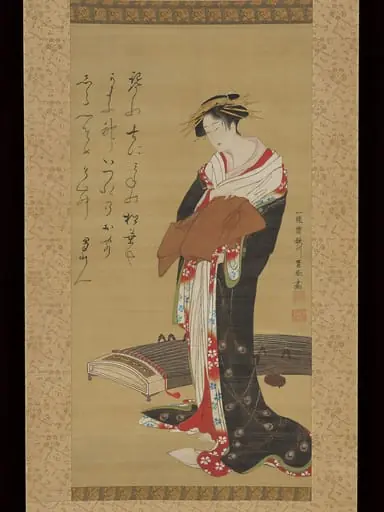 歌川豊春筆 蜀山人(大田 南畝)賛 琴に立美人図|Female Entertainer with a Koto
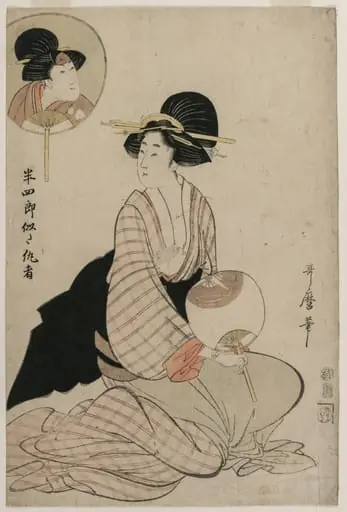 An Attractive Woman Who Looks Like the Actor Iwai Hanshiro V
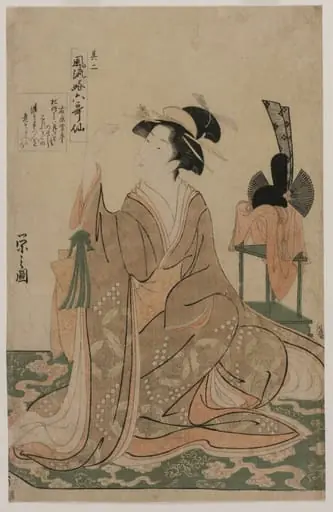 Young Woman Kneeling by a Stand with a Ceremonial Cap (from the series The Six Immortal Poets in Elegant Modern Dress)