Artwork
Segawa Kikunojō III as Teruha
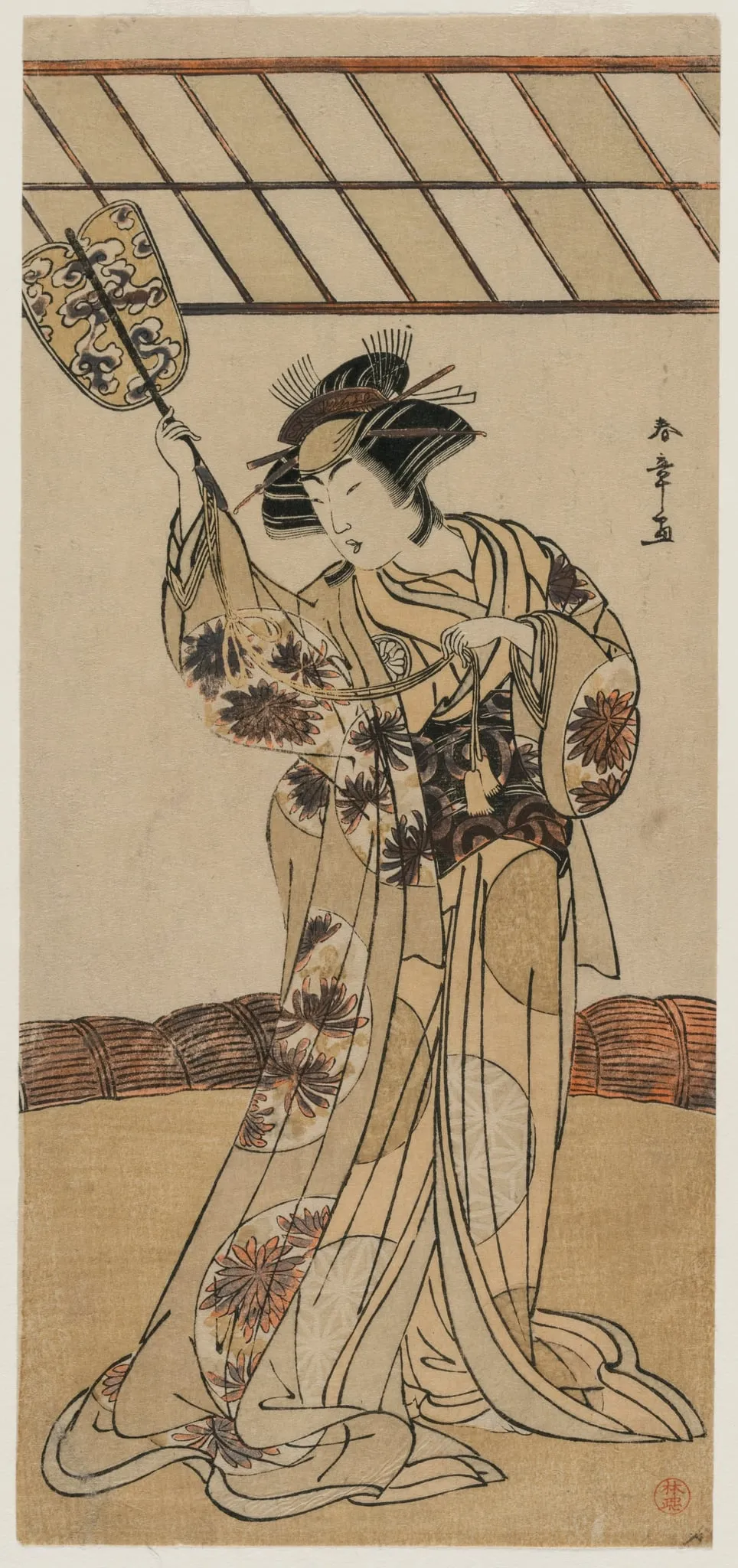
Segawa Kikunojō III as Teruha is a print by the Romanticist artist Katsukawa Shunshō. It dates from 1778 and is held in the collection of the Cleveland Museum of Art.
About this work
This print shows a man in a red and white robe holding a rooster. His face is calm but serious. The background is plain, just a dark wash.
He’s an onnagata—a man playing a woman’s role in Kabuki theater. In 1778, this actor, Segawa Kikunojō III, was famous for roles like this one.
Look up Katsukawa Shunshō (Japanese, 1726–1792) to see more prints like this.
Overview
The figure is dressed in a striking red‑and‑white robe, holding a rooster, against a plain dark background that emphasizes his composed expression.
This woodblock print portrays the celebrated Kabuki performer Segawa Kikunojō III in the role of Teruha, a female character who presides over a wrestling contest that includes red and white roosters. The image was originally the central panel of a three‑part composition, now displayed as a single sheet. The figure is dressed in a striking red‑and‑white robe, holding a rooster, against a plain dark background that emphasizes his composed expression.
Subject & Meaning
The scene captures an onnagata—a male actor specialized in female roles—fulfilling the ceremonial duties of a match official. By presenting Teruha with a rooster, the print alludes to the ritualized nature of the contest and the symbolic contrast of red and white, a common motif denoting rivalry and balance in Japanese performance culture.
Technique & Style
Executed in the ukiyo‑e tradition, the work employs bold line work and a limited color palette to delineate the figure’s costume and the rooster. The dark wash background creates a flat, stage‑like space, focusing attention on the actor’s serene yet authoritative demeanor, a hallmark of Katsukawa Shunshō’s approach to portraiture.
History & Provenance
Created in 1778, the print reflects the peak of Segawa Kikunojō III’s fame as an onnagata. It was originally part of a triptych that illustrated a popular Kabuki episode, later separated and collected as an individual piece. The sheet has passed through several Japanese and Western collections, documented in catalogues of Edo‑period prints.
Context
During the Edo period, Kabuki theater was an all‑male art form, with onnagata actors like Segawa achieving celebrity status. Prints such as this served both as promotional material for performances and as souvenirs for audiences, disseminating the visual language of theatrical roles across urban Japan.
Artist & collection
Artist
Katsukawa Shunshō spent his life in Edo (now Tokyo), where the city’s teahouses and theaters buzzed with energy.

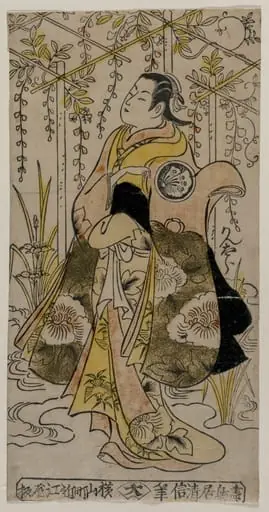 Sanjo Kantaro as a Young Woman Standing in a Wisteria Arbor
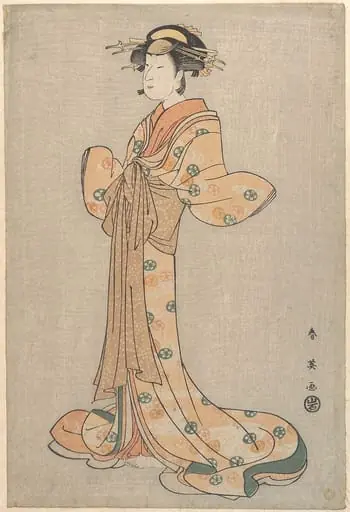 二代目中村二代目中村野塩のお軽|The Actor Nakamura Noshio II as the Courtesan Okaru
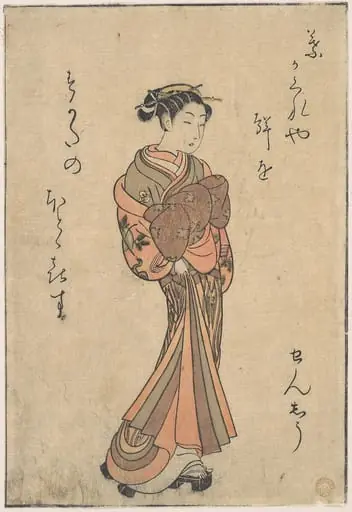 青楼美人合|The Courtesans, from the Series, "Seiro Bijin Awase Carver End Shigoro" (sic.)
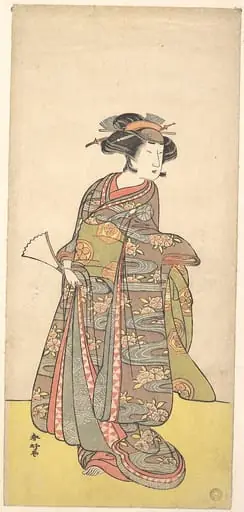 Untitled
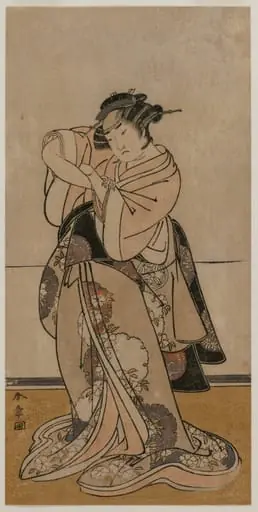 Actor Yamashita Yaozo
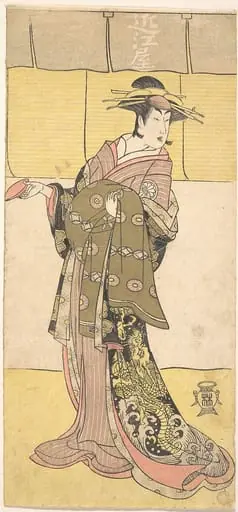 三代目瀬川菊之丞の近江屋の遊女|The Actor Segawa Kikunojō as a Courtesan of the Ōmiya Brothel
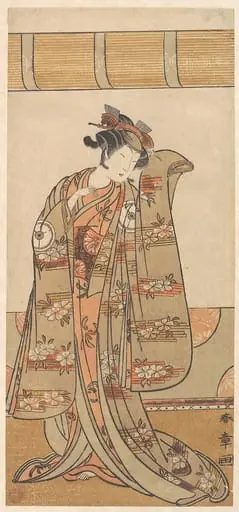 Untitled
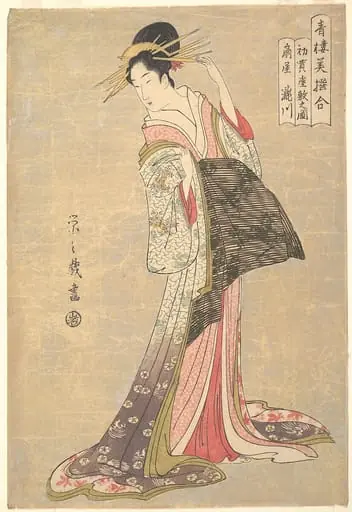 鳥文斎栄之画 「青楼美撰合 初売座敷之図 扇屋滝川」|Takigawa of the Ōgiya Brothel: The First Reception Room Appointment of the New Year (Hatsu-uri zashiki no zu: Ōgiya Takigawa), from the series A Comparison of Selected Beauties of the Pleasure Quarters (Seirō bisen awase)
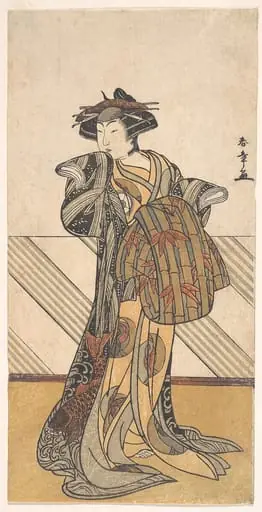 四代目岩井半四郎|Kabuki Actor Iwai Hanshirō IV
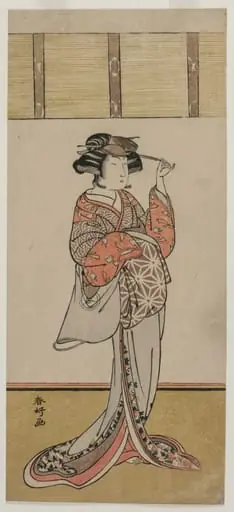 Iwai Hanshiro IV as Oiso no Tora