Artwork
Untitled
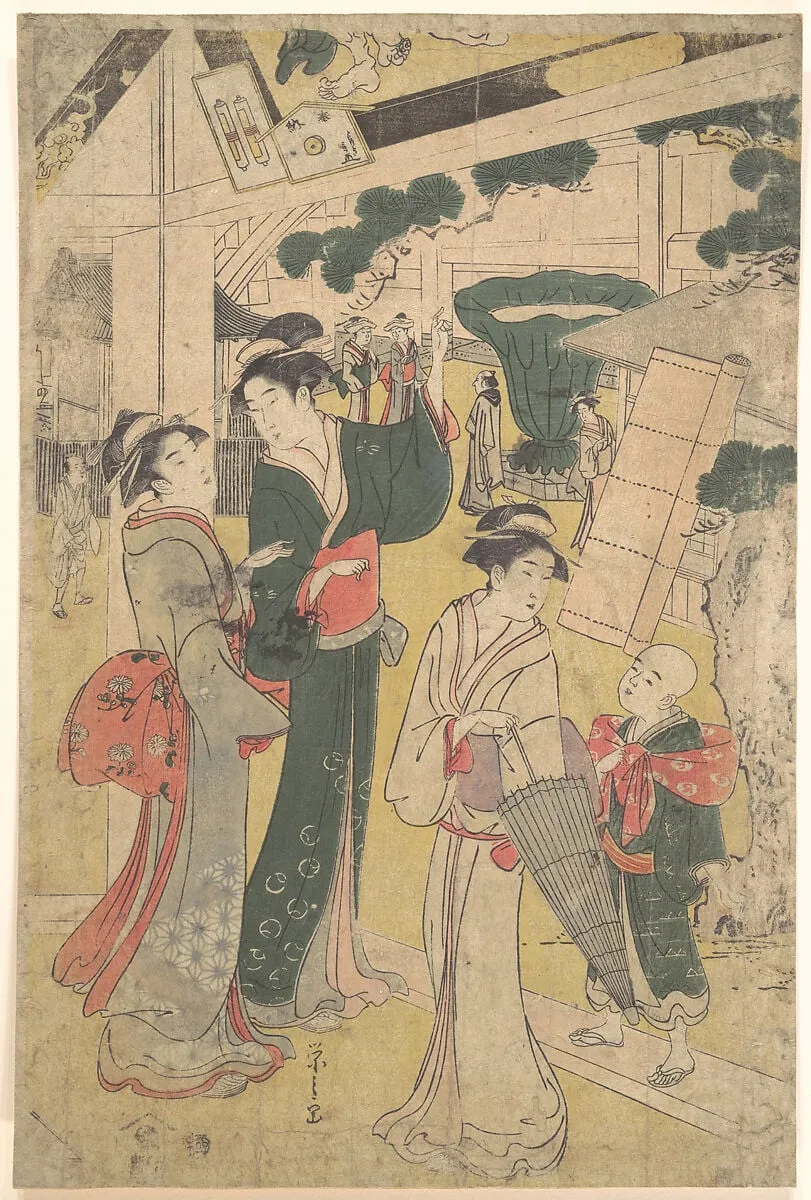
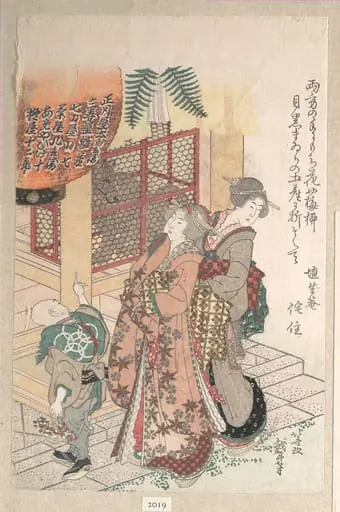
Untitled is an ink print by the Romanticist artist Chôbunsai Eishi. It dates from 1792 and is held in the collection of the Metropolitan Museum of Art. This woodblock print, created in 1792 by Chōbunsai Eishi, is an early example of his transition from samurai service to artistic practice.
About this work
Overview
The work is part of The Metropolitan Museum of Art’s print collection and reflects Eishi’s distinctive approach to depicting elegance within bustling scenes.
This woodblock print, created in 1792 by Chōbunsai Eishi, is an early example of his transition from samurai service to artistic practice. Executed in ink and color on paper, it belongs to a series of bijin-ga portraits that capture urban women in daily life. The work is part of The Metropolitan Museum of Art’s print collection and reflects Eishi’s distinctive approach to depicting elegance within bustling scenes.
Subject & Meaning
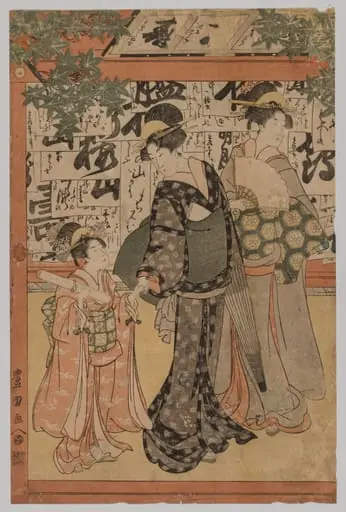
The scene portrays four women in vivid kimonos moving through a city street, accompanied by a child with a toy and another carrying a basket. Their poised postures and refined attire suggest urban refinement, while the background hints at a lively commercial environment. The inclusion of everyday objects and distant figures grounds the image in ordinary life, subtly elevating the quiet dignity of its subjects.
Technique & Style
Eishi employed bold, clean outlines to define forms and flat areas of color to enhance visual rhythm. Clothing patterns and accessories are rendered with precise detail, emphasizing texture without illusionistic depth. The composition balances individual figures within a crowded space, using scale and placement to suggest movement and spatial depth without perspective conventions.
History & Provenance
Eishi, originally a samurai retainer with a 500-koku stipend, abandoned his official role around 1790 to dedicate himself to art. This print dates from the early phase of his career, shortly after his shift. It entered The Metropolitan Museum of Art’s collection through documented acquisitions of Edo-period prints, preserving its provenance within institutional records.
Context
Produced during the late Edo period, the print reflects the growing popularity of bijin-ga among urban audiences. Eishi’s work diverged from earlier ukiyo-e styles by emphasizing elongated figures and restrained elegance, aligning with aesthetic shifts in Tokyo’s cultural circles. His background as a former courtier lent his depictions of women a sense of refined detachment from common genre scenes.
Legacy
Eishi’s early prints, including this one, influenced later ukiyo-e artists by introducing a more subdued, aristocratic sensibility to bijin-ga. His focus on posture, fabric, and quiet movement set a precedent for refined portraiture within popular print culture. Though less widely known than contemporaries like Utamaro, his work remains a significant thread in the evolution of Edo-period visual culture.
Artist & collection

Artist
Chōbunsai Eishi (鳥文斎 栄之; 1756–1829) was a Japanese ukiyo-e artist. His last name was Hosoda (細田). His first name was Tokitomi (時富). His common name was Taminosuke (民之丞) and later Yasaburo (弥三郎). Pupil of Kano Eisen'in…

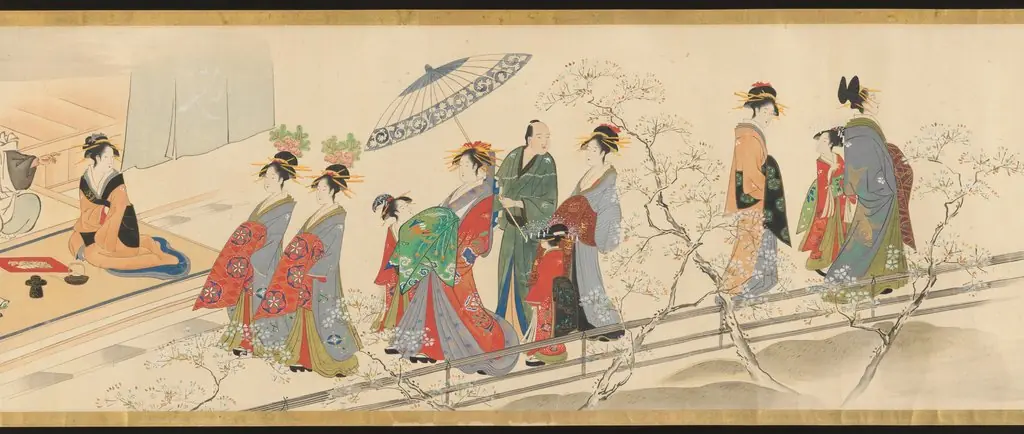 Three Gods of Good Fortune Visit the Yoshiwara; or “Scenes of Pleasure at the Height of Spring”
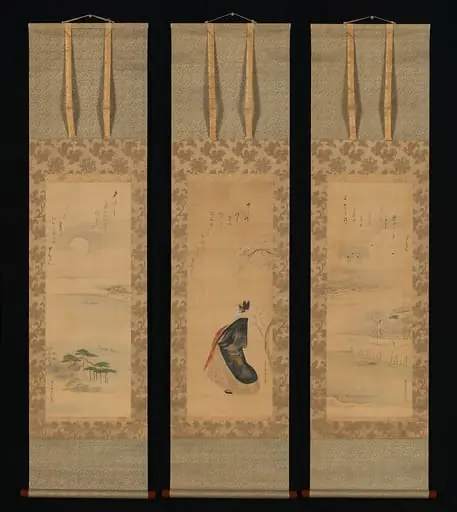 蜀山人(大田 南畝)賛 雪・月・花図 |Snow, Moon, and Cherry Blossoms (Yoshiwara in Three Seasons)
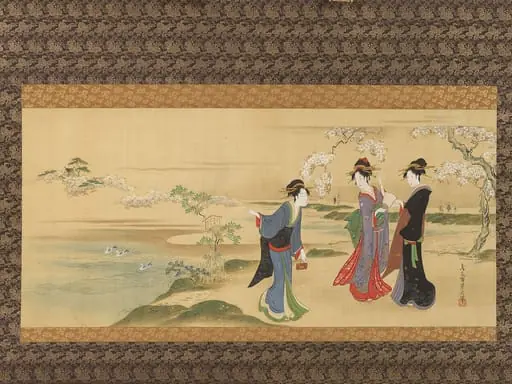 Untitled
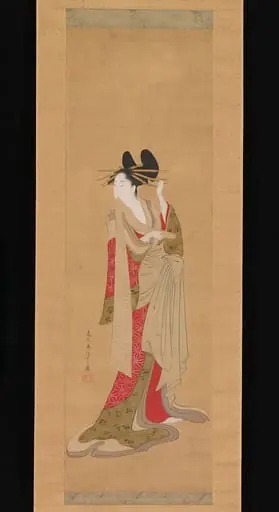 Untitled
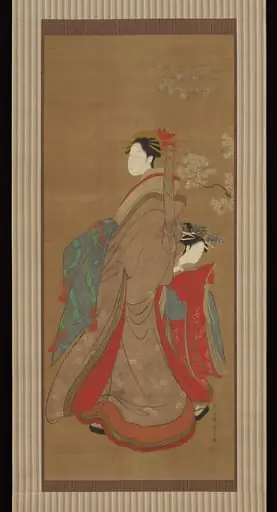 Untitled
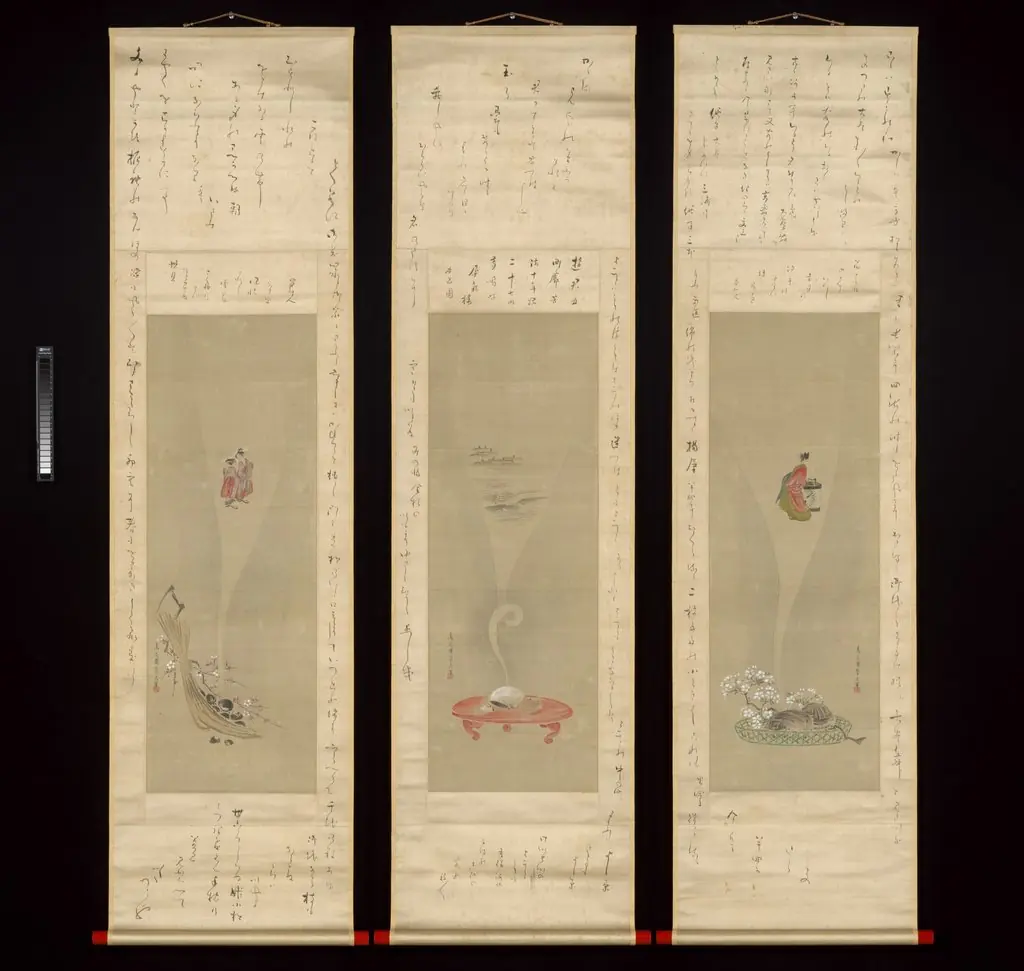 Shellfish and Apparitions of the Yoshiwara Pleasure Quarter
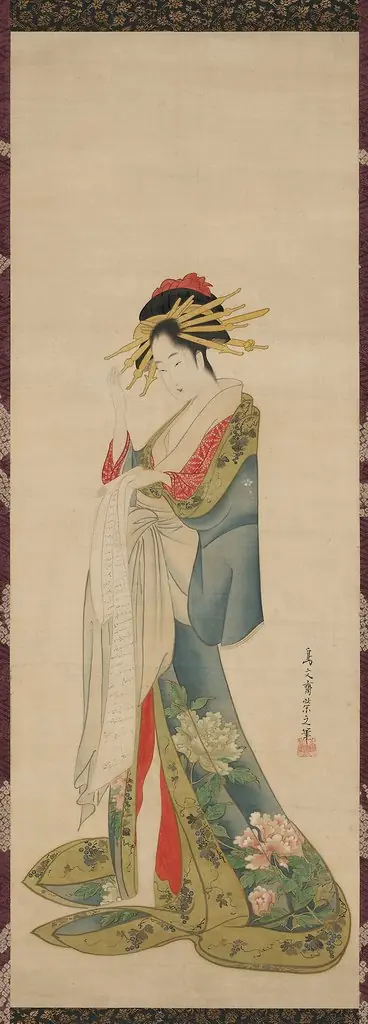 A Courtesan Reading a Letter
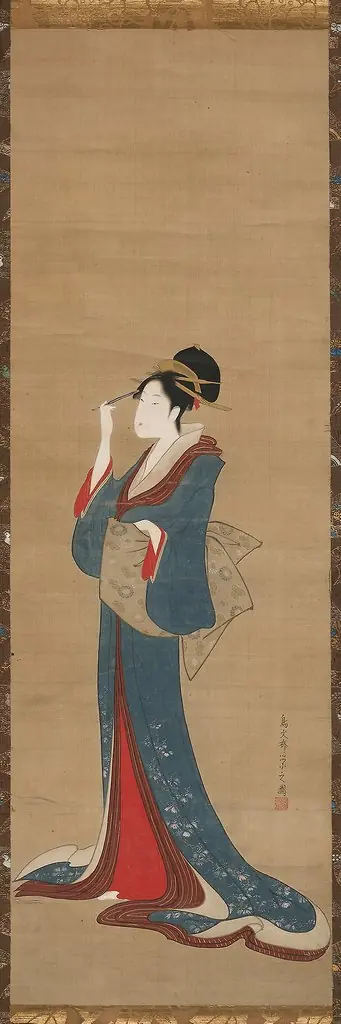 Beauty Replacing Her Hairpin
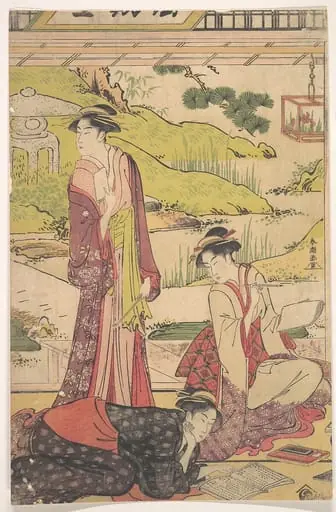 あやめ燈籠図|Three Women Enjoying Literary Pursuits
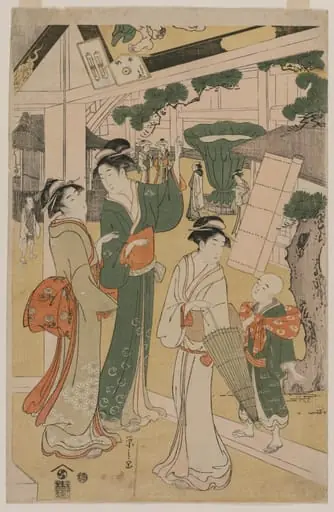 Print from Women Resting in the Votive Picture Hall at Asakusa
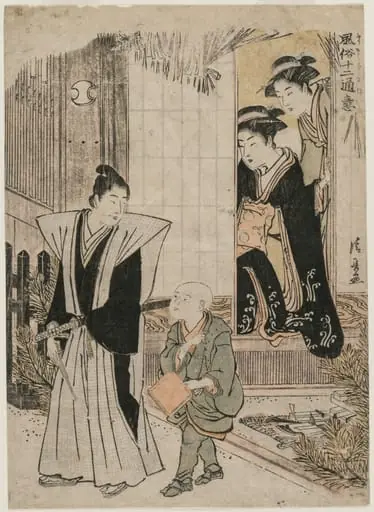 The First Month (from the series Popular Presentations)
 Examination for Writing
 Untitled
 Courtesan Standing on a Veranda
 Aki|風俗四季歌仙 立秋|First Day of Autumn (Risshu)
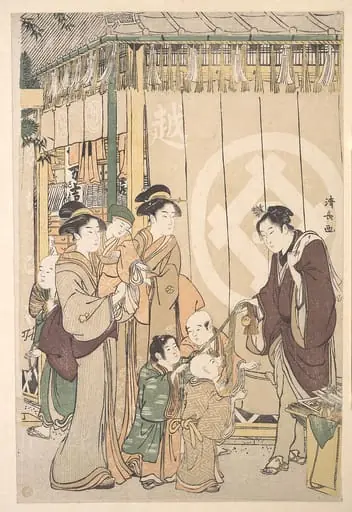 鳥居清長画 初春の越後屋|Group before the Echigo-ya Dry-goods Shop on New Year's Day
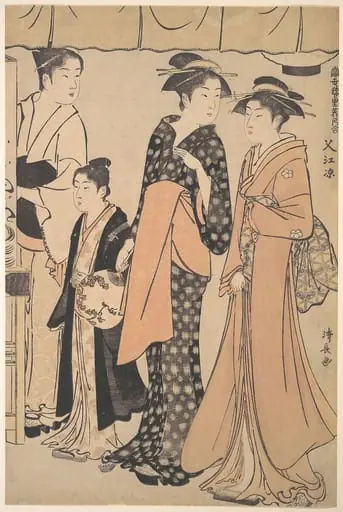 Sako no Suzumi|Cooling Off at Nakazu
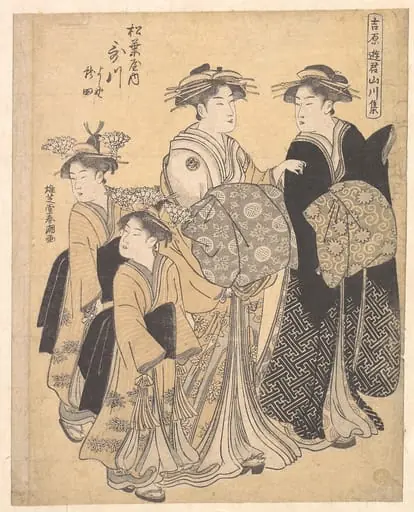 Untitled
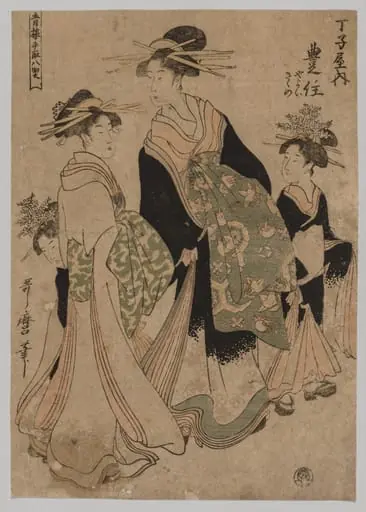 Courtesans and Attendants
 初詣|Young Women Visiting a Shinto Shrine