Artwork
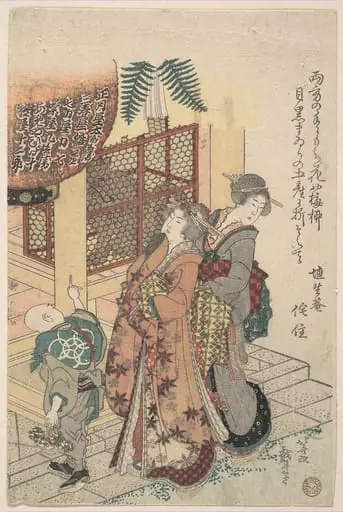
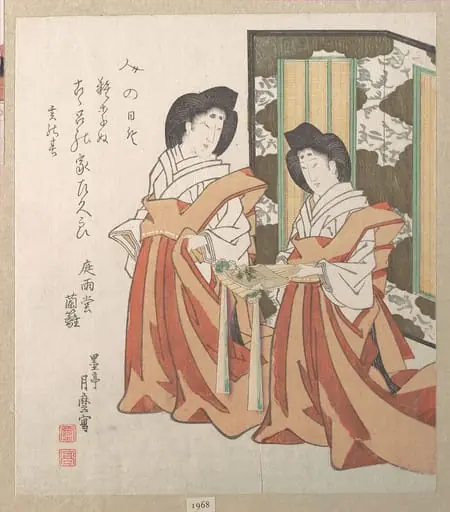
初詣|Young Women Visiting a Shinto Shrine
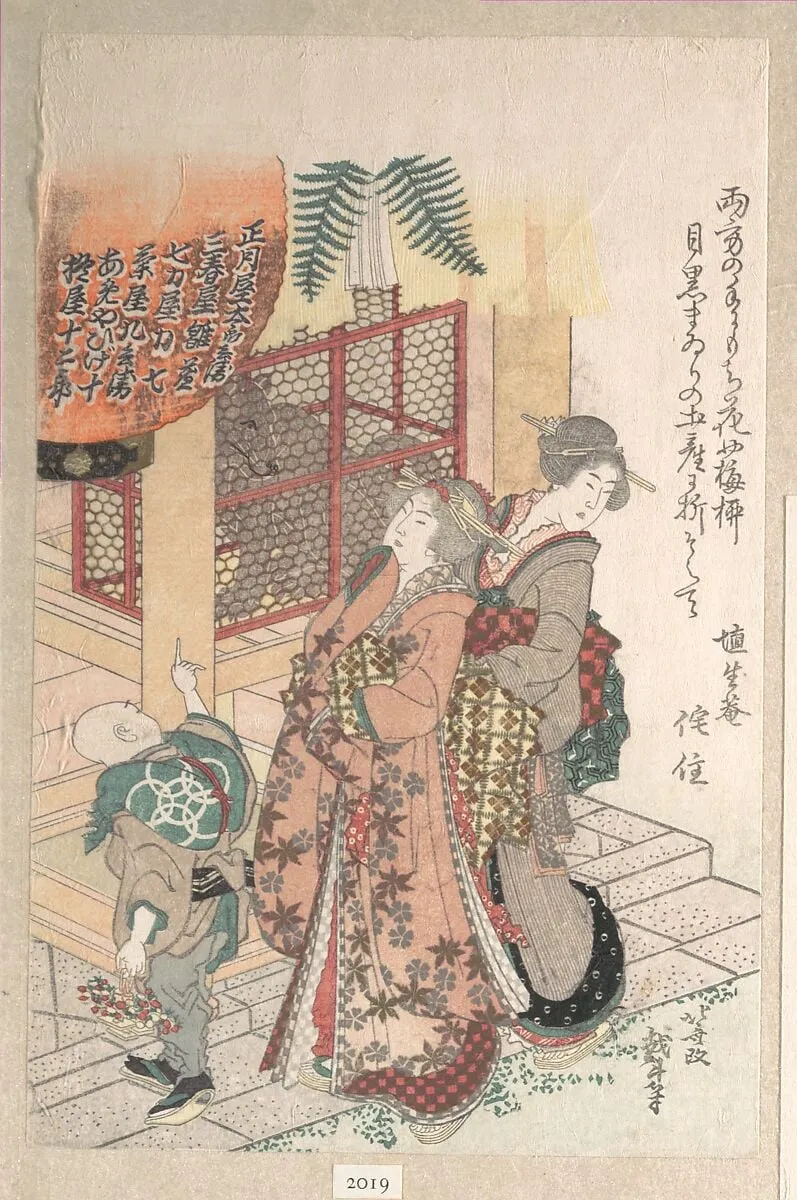
初詣|Young Women Visiting a Shinto Shrine is an ink print by the Japonisme artist Katsushika Hokusai. It dates from 1814 and is held in the collection of the Metropolitan Museum of Art.
About this work
Overview
Katsushika Hokusai’s woodblock print, titled *Young Women Visiting a Shinto Shrine*, was produced in 1814. Executed as a surimono—an ink-and-colour print on paper intended for private distribution—the work measures roughly a hand‑sized sheet and is now part of the collection of the Metropolitan Museum of Art.
Subject & Meaning
The scene depicts two women in flowing kimono ascending a stone stairway toward a vermilion torii gate, a customary entrance to a Shinto shrine. One carries a wrapped parcel, the other a folding fan, while a boy below offers a basket of blossoms. The composition captures the ritual of *hatsumōde*, the first shrine visit of the new year, emphasizing communal devotion and seasonal renewal.
Technique & Style
Hokusai employs the surimono format’s fine line work and vivid pigments to render intricate textile patterns and the hexagonal lattice of the gate.
Hokusai employs the surimono format’s fine line work and vivid pigments to render intricate textile patterns and the hexagonal lattice of the gate. Cross‑hatching in the shadows creates a sense of depth, while the limited background allows the figures’ bright colours to dominate. The print’s delicate brush‑like strokes and careful registration exemplify the high‑quality craftsmanship typical of early‑19th‑century Edo woodblock production.
History & Provenance
Created during the late Edo period, the print was likely commissioned for a poetry society or a private patron, as was common for surimono. It entered the Metropolitan Museum of Art’s collection in the early 20th century through a donation from a collector of Japanese prints, where it has been displayed as part of the museum’s Asian art holdings.
Context
In 1814, Hokusai was already an established artist, known for both landscape and genre subjects. This work reflects the popularity of everyday life scenes that appealed to urban audiences, offering a glimpse into seasonal customs. The depiction of shrine visitation aligns with contemporary interest in documenting religious practices within the bustling life of Edo’s middle class.
Artist & collection

Artist
Katsushika Hokusai spent his life in Edo, now Tokyo, where he drew and carved prints for a living.

 Untitled
 Untitled
 Untitled
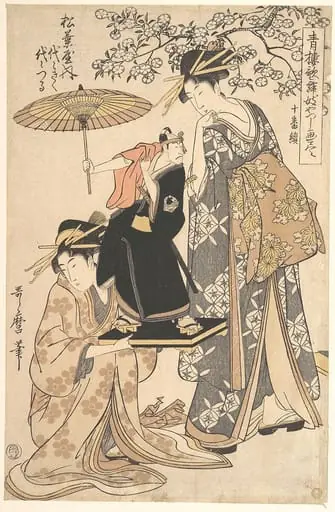 青楼歌舞妓やつし画尽 十番続|The Oiran Yoyogiku of Matsubaya Standing under a Cherry Tree
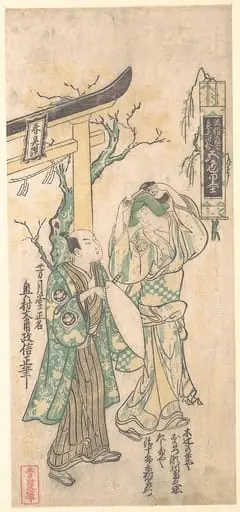 Untitled
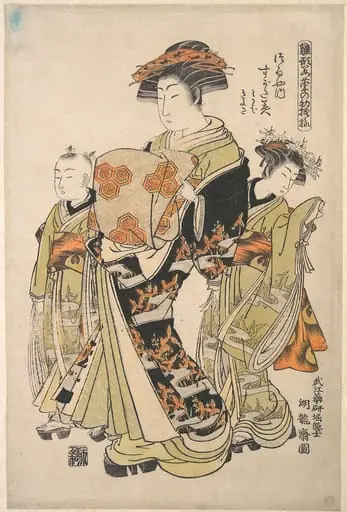 『雛形若菜の初模様 つるや内 すがたみ』|The Courtesan Sugatami of the Tsuruya Brothel, from the series “A Pat-tern Book of the Year’s First Designs, Fresh as Spring Herbs” (“Hinagata wakana no hatsu moyō”)
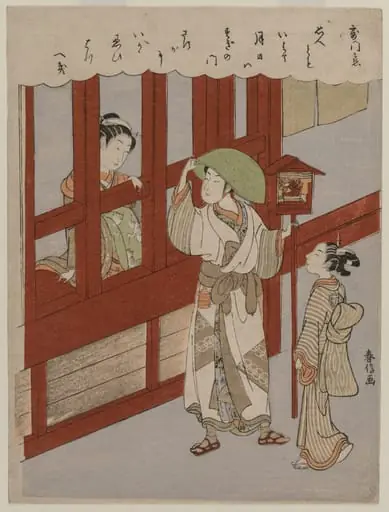 Love at the Brothel Gate
 Untitled
 Untitled
 Untitled
 Untitled
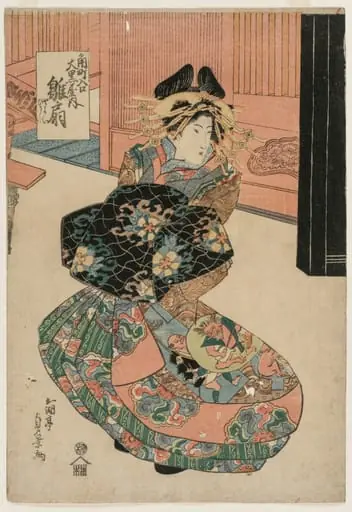 The Courtesan Hinaogi of the Daikokuya at the Entrance of Kadomachi