Artwork
Examination for Writing
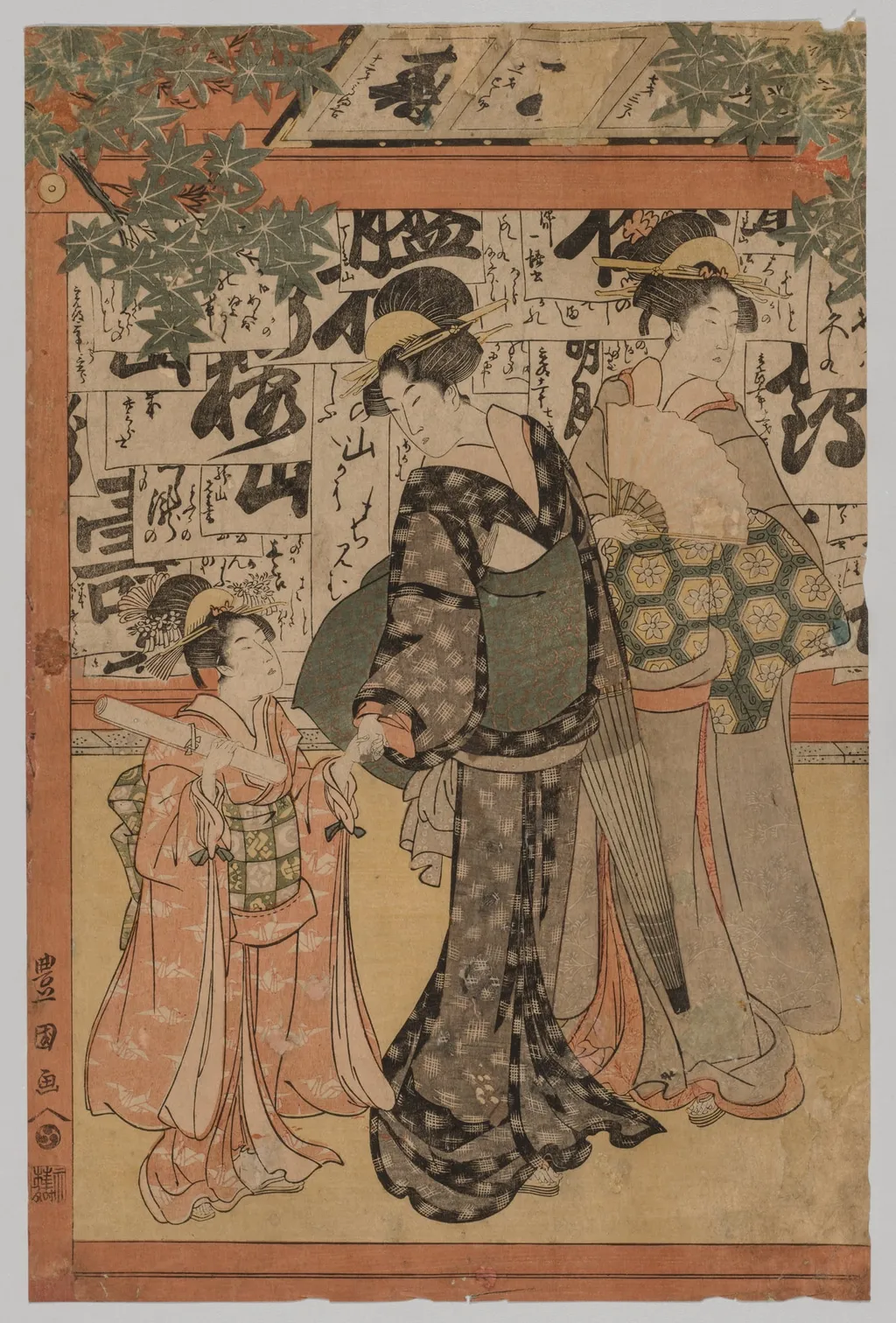
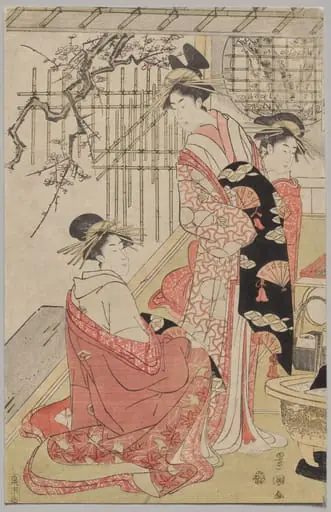
Examination for Writing is a print by the Romanticist artist Utagawa Toyokuni I. It dates from 1797 and is held in the collection of the Cleveland Museum of Art. Created in 1797 by Utagawa Toyokuni, this woodblock print captures a quiet moment among four female figures in traditional Japanese dress.
About this work
Overview
Created in 1797 by Utagawa Toyokuni, this woodblock print captures a quiet moment among four female figures in traditional Japanese dress.
Created in 1797 by Utagawa Toyokuni, this woodblock print captures a quiet moment among four female figures in traditional Japanese dress. Though often described as a painting, it is a printed work from the ukiyo-e tradition, produced for mass circulation. The Cleveland Museum of Art holds one of its surviving impressions, preserving its vivid colors and crisp linework characteristic of late 18th-century Edo-period printmaking.
Subject & Meaning
The scene portrays three adult women and a young girl, likely engaged in a preparatory moment before an academic or literary examination. Their formal attire and composed posture suggest a ritual of scholarly readiness, common among women of the merchant or artisan classes. The inclusion of the child implies generational continuity in education, reflecting broader societal values around literacy and cultural refinement during the Edo period.
Technique & Style
Toyokuni employed bold, clean outlines and flat areas of color typical of ukiyo-e woodblock printing. The kimonos display intricate patterns—plaid, floral—rendered with precision, while the background features stylized calligraphic elements and foliage, adding depth without perspective. The figures face directly outward, creating a sense of dignified stillness, a convention in portrait prints of the time that emphasized presence over narrative motion.
History & Provenance
Produced during Toyokuni’s peak years as a leading printmaker in Edo, the work was likely part of a series on female education or daily rituals. It entered the Cleveland Museum of Art’s collection in the 20th century, among a broader acquisition of Japanese prints. Its survival in good condition reflects careful preservation and the print’s popularity in its era, though few original impressions remain.
Context
In late 18th-century Japan, literacy among women of the urban middle class was increasingly valued, particularly in domains like poetry, calligraphy, and etiquette. Prints like this one visualized ideals of feminine refinement, often commissioned by publishers to appeal to a growing consumer base. The inclusion of written characters in the background nods to the cultural weight placed on literacy, even as the figures themselves remain silent, their inner thoughts unspoken.
Legacy
Toyokuni’s print exemplifies how ukiyo-e artists translated social norms into accessible imagery. While not widely known outside specialist circles today, it contributes to understanding the role of women in Edo-period education and the visual language used to represent it. The work remains a quiet testament to the quiet dignity assigned to learning in a society where such pursuits were often unseen in official records.
Artist & collection

Artist
Toyokuni was a born showman who made sure the energy of Edo’s kabuki stage never faded on paper.

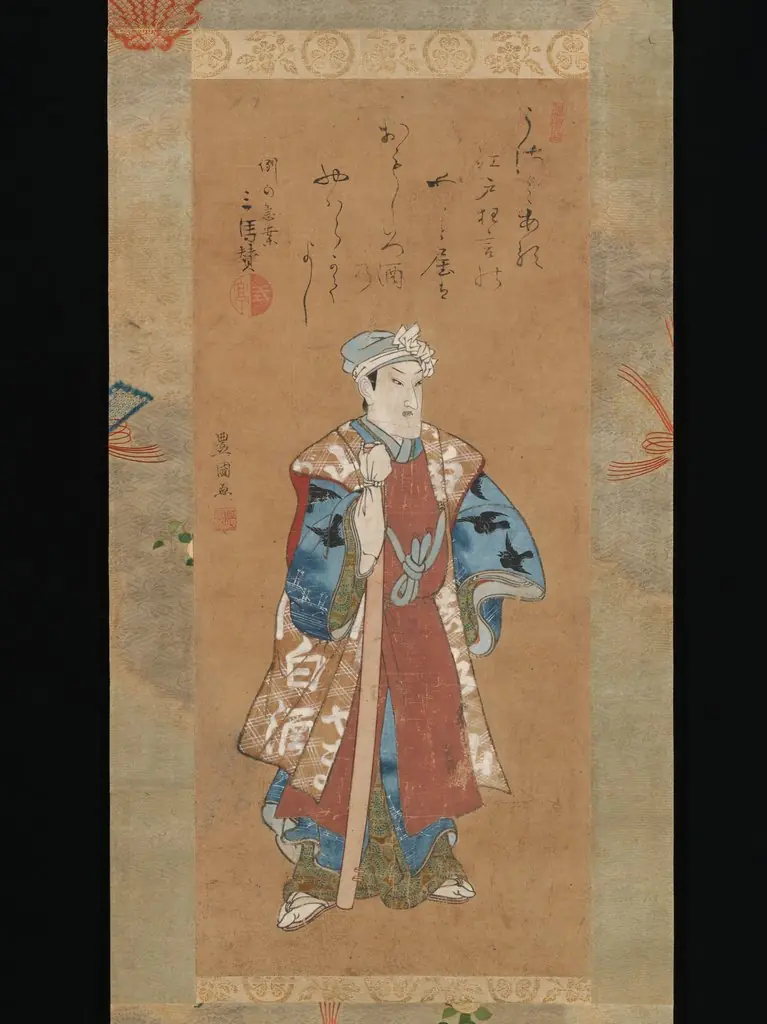 Bandō Mitsugorō II as Shinbei in the Kabuki Play "Sukeroku"
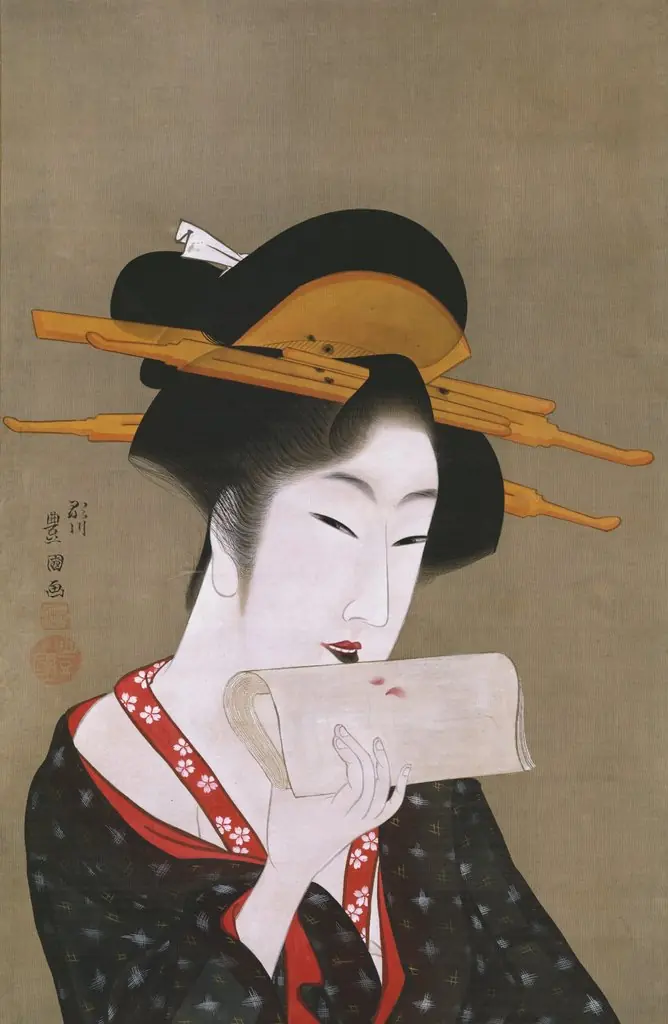 Beauty Blotting Her Lip Rouge
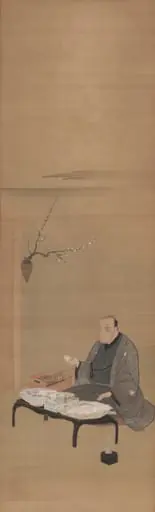 Portrait of Kinokuniya Bunzaemon
 Untitled
 Tokaido Yotsuya Kaidan|Onoe Matsusuke as the Ghost of the Murdered Wife Oiwa, in "A Tale of Horror from the Yotsuya Station on the Tokaido Road"
 Untitled
 Untitled
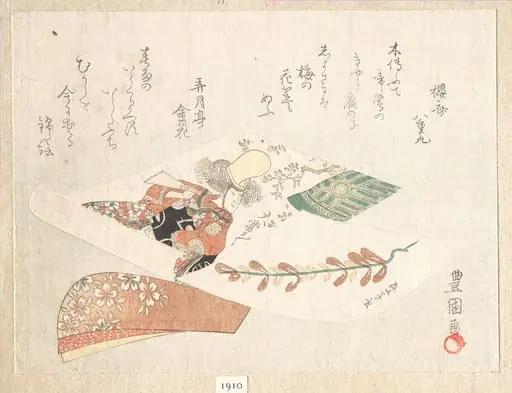 娘道成寺図の錦絵|Print of a Kabuki Dancer from the Maiden of the Dōjōji Temple (Musume Dōjōji)
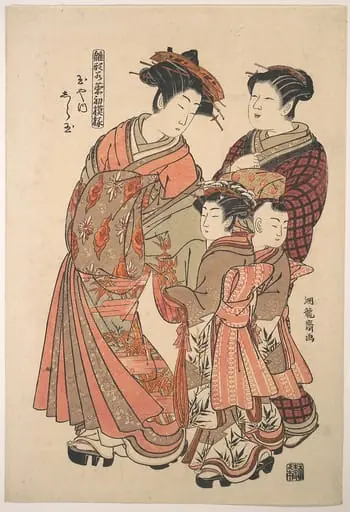 『雛形若菜初模様 玉や内 しら玉』|The Courtesan Shiratama of the Tamaya Brothel, from the series “A Pat-tern Book of the Year’s First Designs, Fresh as Spring Herbs” (“Hinagata wakana hatsu moyō”)
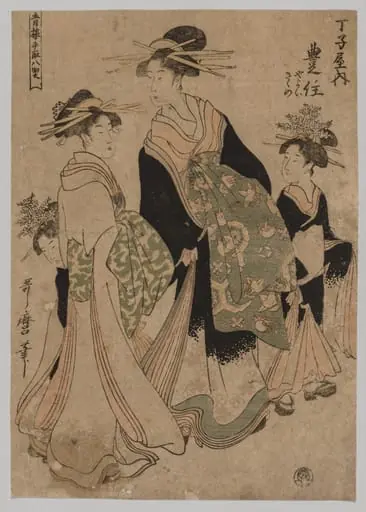 Courtesans and Attendants
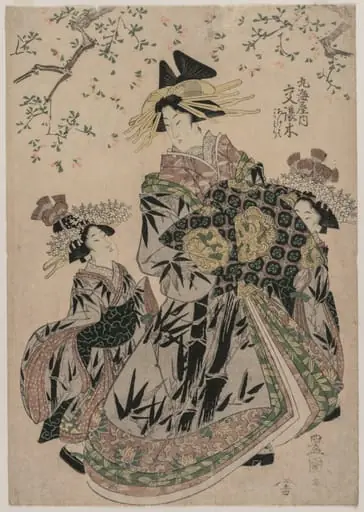 The Courtesan Katakoshigi (?) of Maruebiya with her Kamuro Ageha and Midori
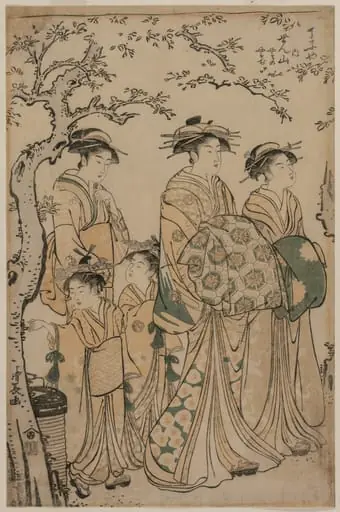 The Courtesan Senzan of Chojiya Strolling with her Kamuro Yasono and Yasoji and Two Shinzo
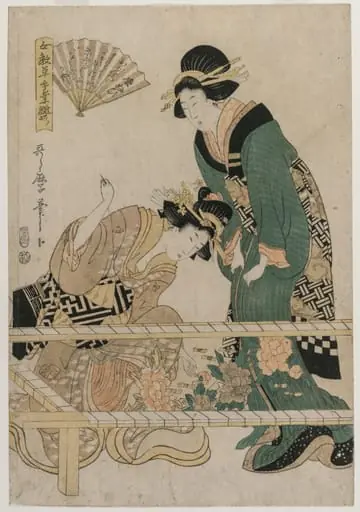 Chinese Embroidery (from the series Instructive Patterns for Women's Handicraft)
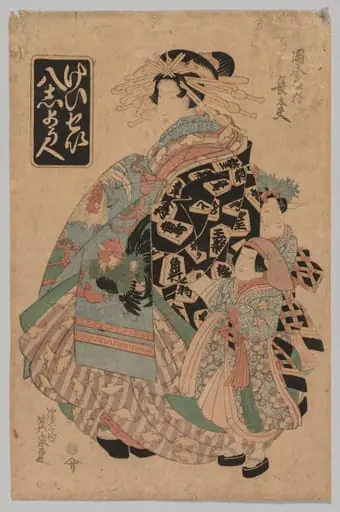 Chōdayu of the Okamotoya from the series ?
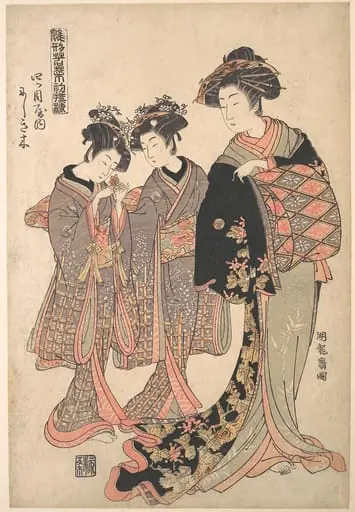 『雛形若菜初模様 四ツ目屋内 にしき木』|The Courtesan Nishikigi of the Yotsumeya Brothel, from the series “A Pattern Book of the Year’s First Designs, Fresh as Spring Herbs” (“Hinagata wakana hatsu moyō”)
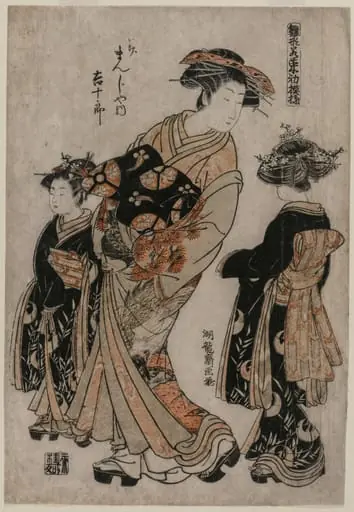 The Courtesan Kichijuro of Kage Manjiya with Two Kamuro (from the series Models for Fashions: New Designs as Fresh as Young Leaves)
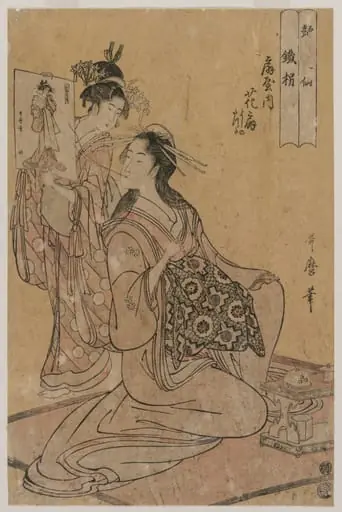 The Courtesan Hana-ogi of Ogiya as the Sennin Tekkai (from the series Eight Immortals of Sensuality)
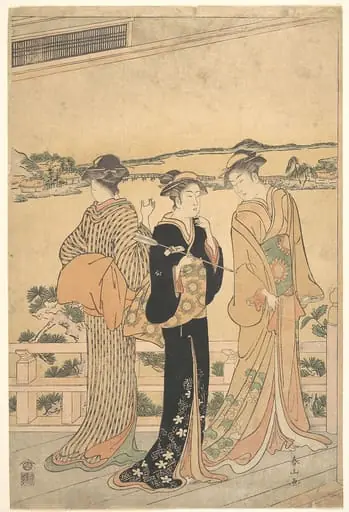 Untitled
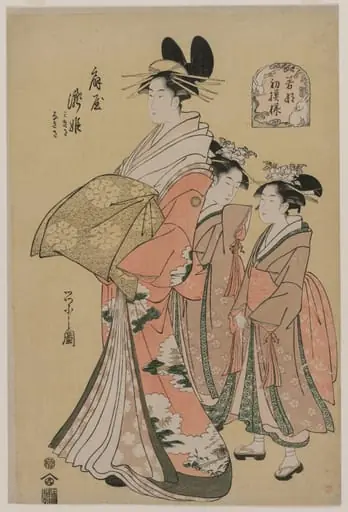 The Courtesan Takihime and Attendants (from the series New Patterns of Young Greens)
 Courtesans of the Ōgiya on a Spring Outing