Artwork
Dames en Manteaux
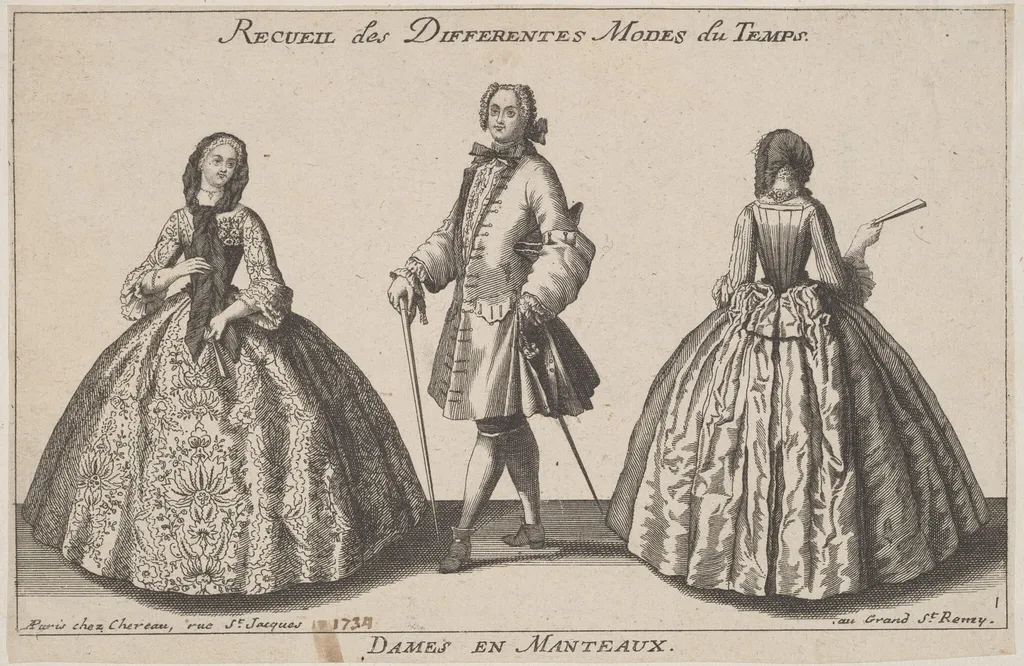
Dames en Manteaux is an ink print by the Baroque artist Jacques Chéreau. It dates from 1724 and is held in the collection of the National Gallery of Art.
About this work
Overview
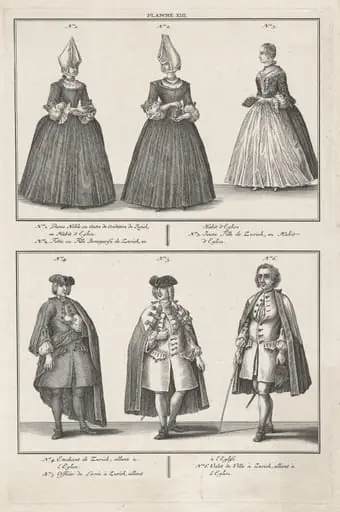
Jacques Chéreau’s print, dated around 1724, is an engraving combined with etching on laid paper. The work presents a small group of three figures dressed in contemporary aristocratic attire, rendered with fine linear detail that highlights the textures and patterns of their garments. The title, rendered in French, translates to “Ladies in Cloaks,” indicating a focus on current fashion.
Subject & Meaning
The composition features two women and a man, each holding accessories such as fans and a walking stick, which serve as markers of genteel leisure. Their clothing—voluminous skirts, elaborate sleeves, and a long coat—reflects the prevailing styles of early eighteenth‑century France, offering a visual catalogue of the period’s sartorial trends.
Technique & Style
Chéreau employed a dual process: a traditional engraving to define the overall design, complemented by etching for the intricate decorative motifs on the skirts. The use of laid paper provides a subtle texture that enhances the contrast between the crisp engraved lines and the softer etched shading, typical of French printmaking of the era.
History & Provenance
Created circa 1724, the print belongs to a series of fashion plates that circulated among the European elite. While specific ownership records are scarce, such works were often distributed as hand‑to‑hand specimens of current dress, serving both as decorative objects and as references for tailors and dressmakers.
Context
In the early eighteenth century, prints documenting contemporary clothing were a popular means of disseminating style across courts and cities. Chéreau’s work aligns with this tradition, providing a snapshot of the transition from the elaborate Baroque silhouettes to the lighter, more natural forms that would dominate the later Rococo period.
Artist & collection


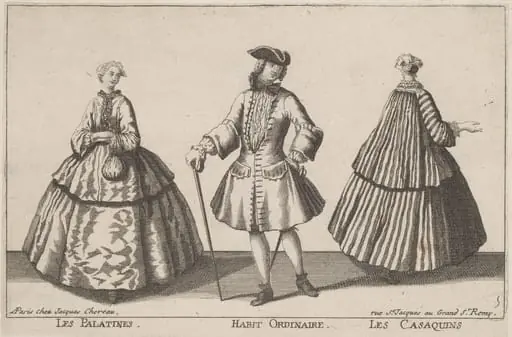 Les Palatines/Habit Ordinaire/Les Casaquins
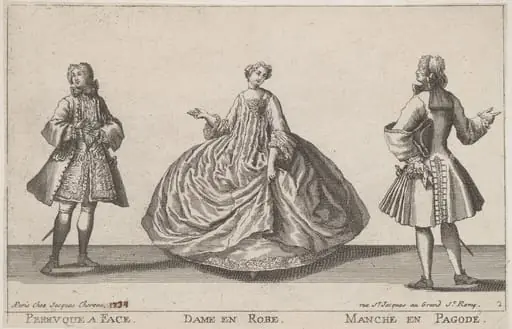 Perruque à Face/Dame en Robe/Manche en Pagode
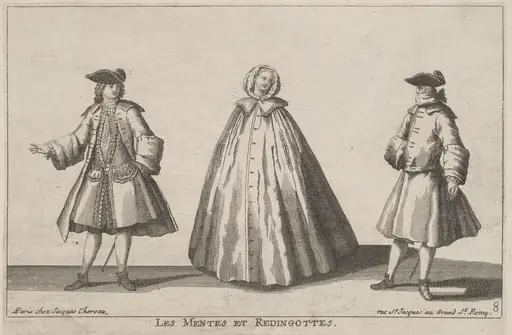 Les Mentes et Redingottes
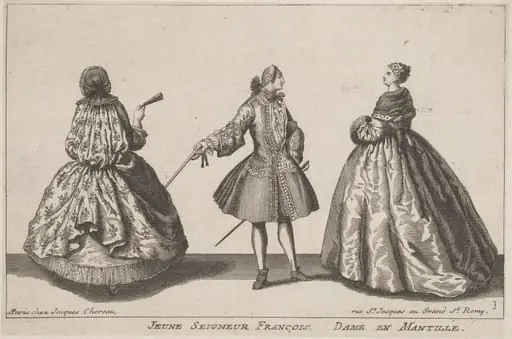 Jeune Seigneur François/Dame en Mantille
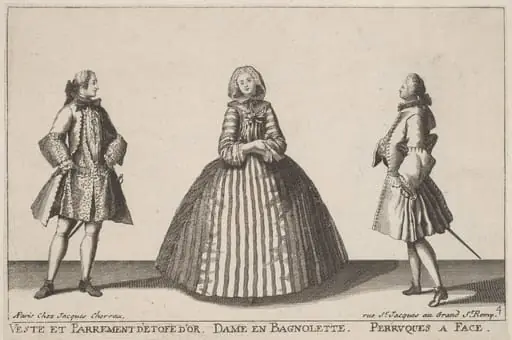 Veste et Parrement d'Etofe d'Or/Dame en Bagnolette/Perruques à Face
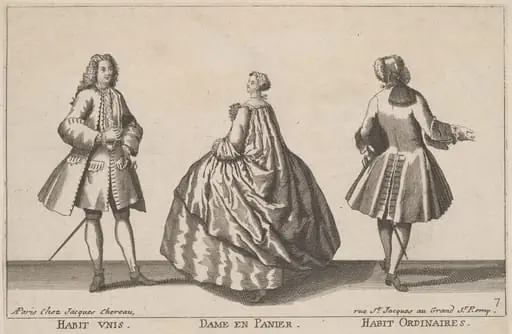 Habit Unis/Dame en Panier/Habit Ordinaires
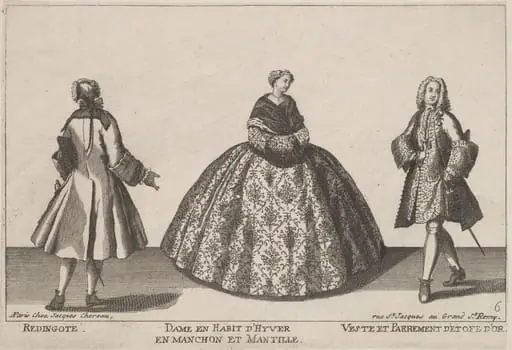 Redingote/Dame en Habit d'Hyver en Manchon/Veste et Parrement d'Etofe d'Or