Artwork
Redingote/Dame en Habit d'Hyver en Manchon/Veste et Parrement d'Etofe d'Or
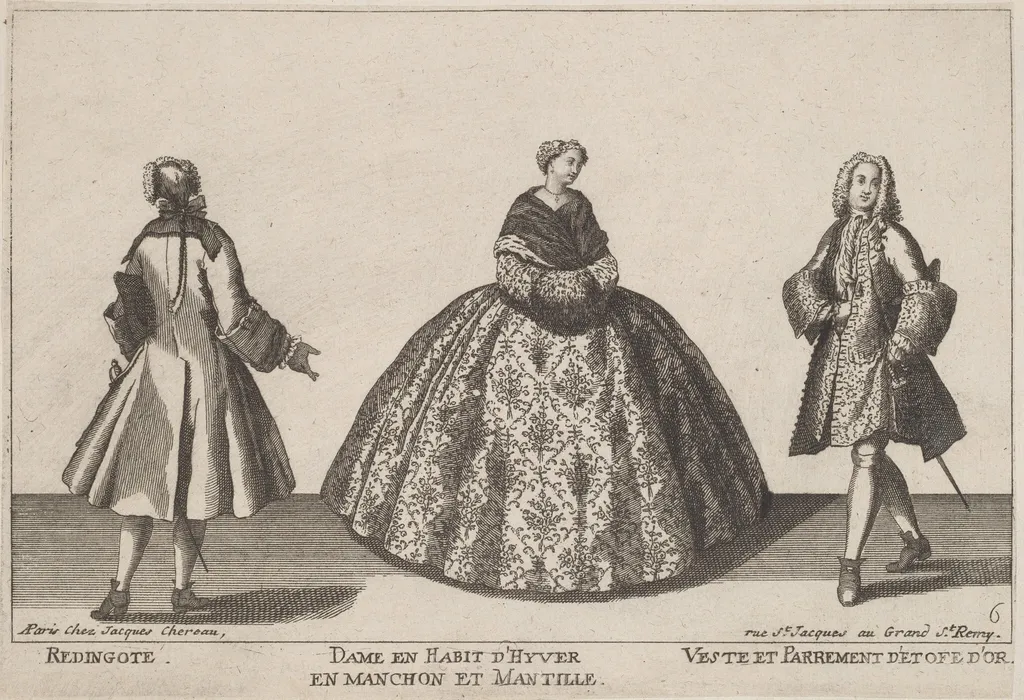
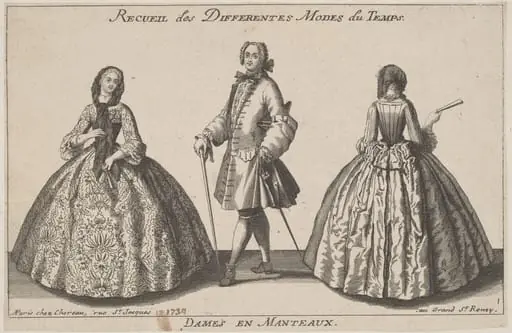
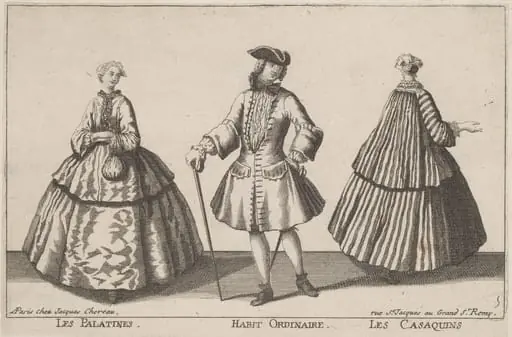
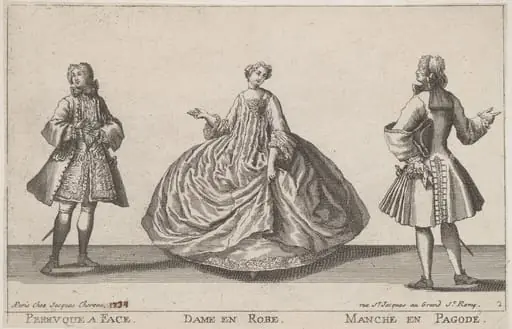
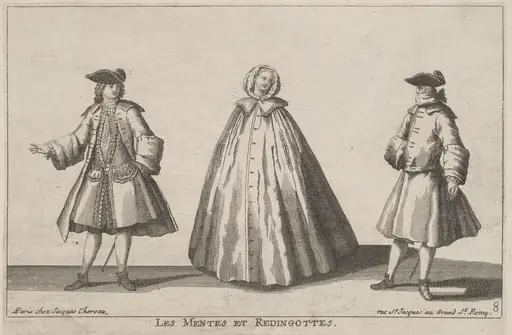
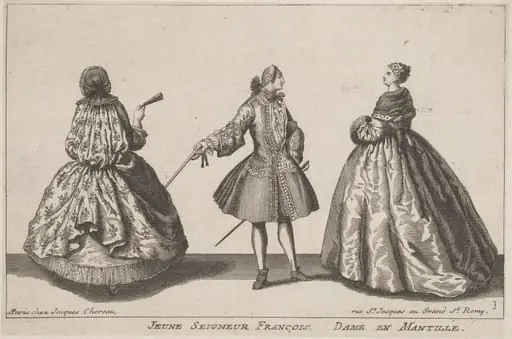
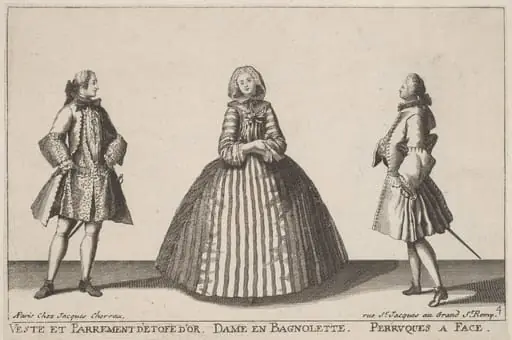
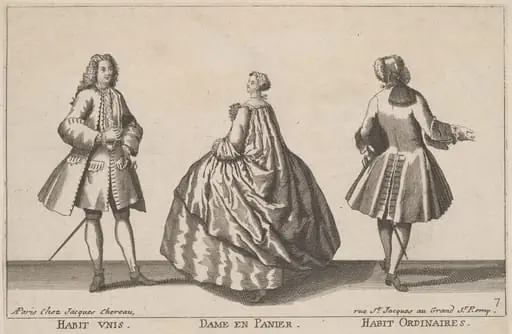
Redingote/Dame en Habit d'Hyver en Manchon/Veste et Parrement d'Etofe d'Or is an ink print by the Baroque artist Jacques Chéreau. It dates from 1724 and is held in the collection of the National Gallery of Art.
About this work
Overview
Created around 1724 by Jacques Chéreau, this print combines engraving and etching on laid paper to depict three figures in formal 18th-century attire.
Created around 1724 by Jacques Chéreau, this print combines engraving and etching on laid paper to depict three figures in formal 18th-century attire. The composition presents a trio dressed for winter occasions, each labeled with specific garment terminology. The work functions as a visual catalog of contemporary fashion, emphasizing texture, layering, and the social significance of dress rather than narrative or emotion.
Subject & Meaning
The central figure is a woman in a voluminous, patterned winter ensemble labeled 'Dame en Habit d’Hyver,' indicating formal cold-weather attire. To her left, a man wears a 'Redingote,' a long outer coat with a cape, and to her right, another man displays a gold-embellished vest. The labels suggest the print served as a reference for elite fashion, documenting how clothing signaled status, season, and propriety in early 18th-century French society.
Technique & Style
Chéreau employed fine engraving lines and subtle etching to render the intricate textures of brocade, fur, and wool. The figures are rendered with crisp outlines and minimal shading, prioritizing clarity of garment structure over naturalism. The background is left blank, focusing attention entirely on the costumes. The precision of the lines reflects the print’s function as a fashion document rather than a portrait.
History & Provenance
The print was produced in Paris during a period when illustrated fashion plates were gaining popularity among the aristocracy and emerging middle class. Though no early ownership records are widely documented, its survival in institutional collections suggests it was circulated as a reference for tailors, designers, or fashion-conscious patrons. Its survival reflects the growing commercial interest in visual records of dress.
Context
In the early 1720s, Paris was the epicenter of European fashion, with elaborate court dress codifying social hierarchy. This print aligns with a broader trend of publishing illustrated guides to clothing, often distributed in fashion journals or as standalone sheets. The use of French terminology indicates its intended audience was literate, affluent, and familiar with the nuances of haute couture.
Legacy
Chéreau’s print contributes to a historical archive of pre-Revolutionary French dress, offering insight into how clothing was categorized and visualized before the rise of mass media. While not widely known today, it remains a valuable artifact for costume historians, illustrating the intersection of print culture, social ritual, and the material culture of the ancien régime.
Artist & collection