Artwork
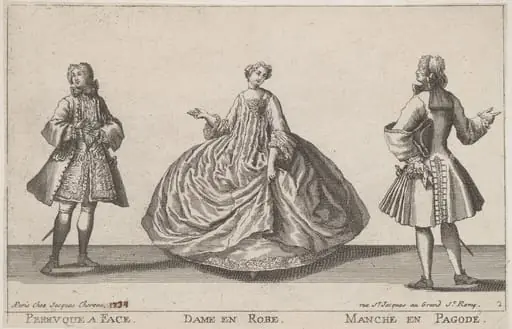
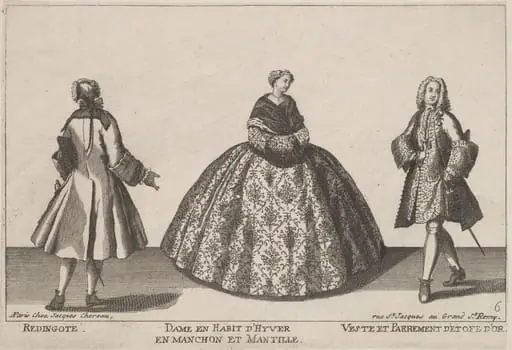
Veste et Parrement d'Etofe d'Or/Dame en Bagnolette/Perruques à Face
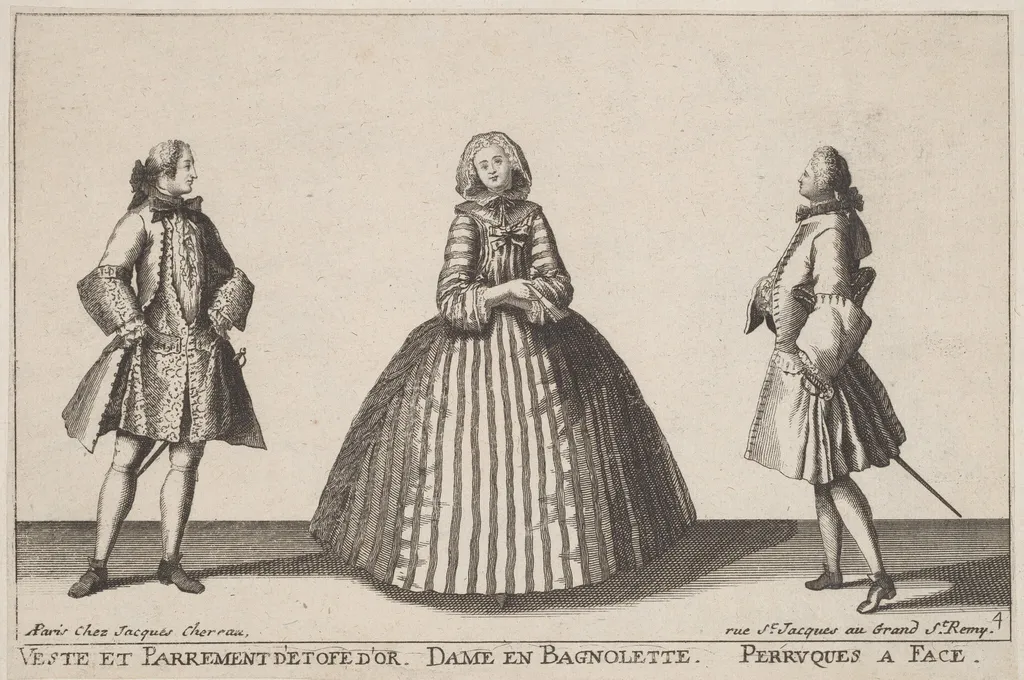
Veste et Parrement d'Etofe d'Or/Dame en Bagnolette/Perruques à Face is an ink print by the Baroque artist Jacques Chéreau. It dates from 1724 and is held in the collection of the National Gallery of Art.
About this work
Overview
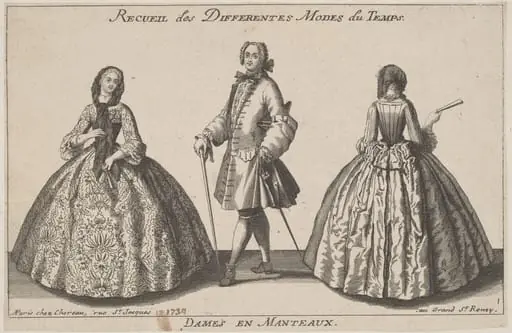
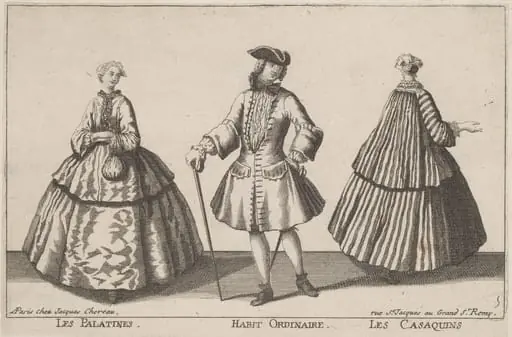
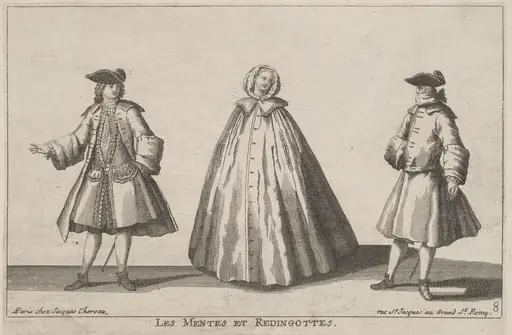
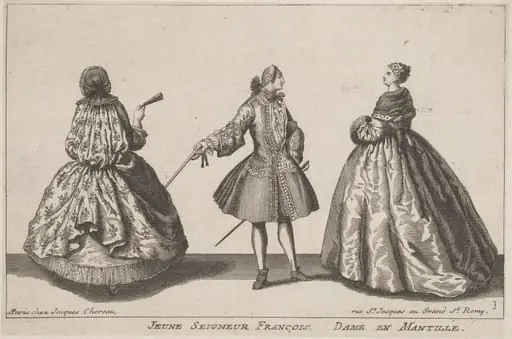
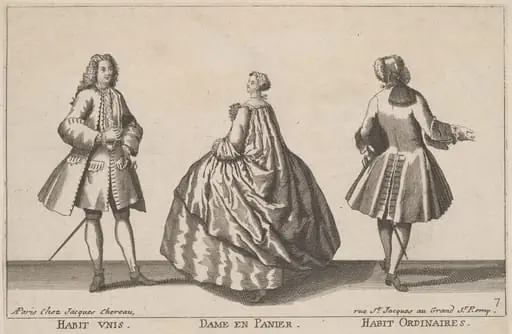
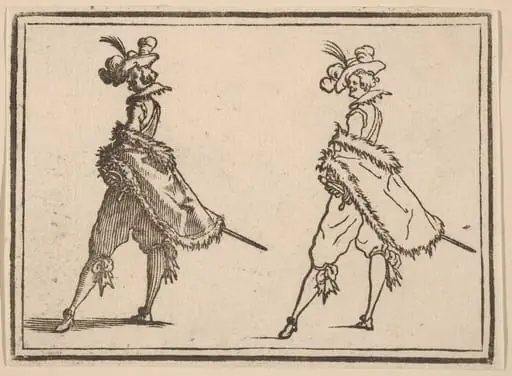
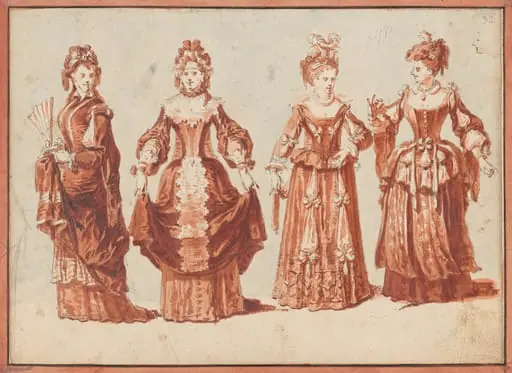
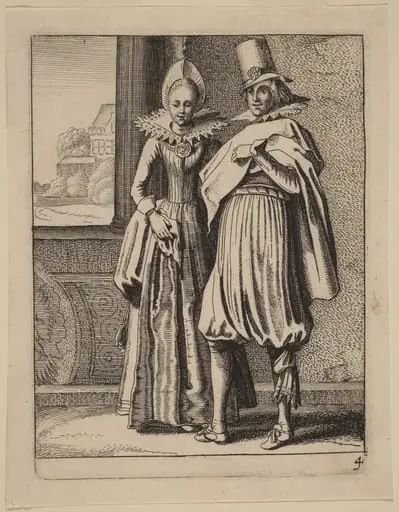
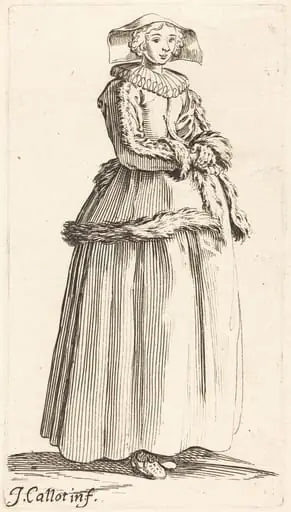
Jacques Chéreau’s print, titled Veste et Parrement d’Etofe d’Or/Dame en Bagnolette/Perruques à Face, dates from around 1724. Executed on laid paper, the work combines engraving and etching to depict three figures in contemporary dress. The composition is set against a plain backdrop with a simple floor line, emphasizing the clothing and accessories of the subjects.
Subject & Meaning
The central figure is a woman wearing a long striped gown, a bow at the neckline, and a modest head covering, her skirt voluminous and elaborate. Flanking her are two men in richly ornamented attire, complete with lace trim, ruffles, high‑heeled shoes, powdered wigs, and swords, illustrating the fashion and social roles of early‑18th‑century aristocracy.
Technique & Style
Chéreau employed a hybrid process, using fine engraving lines for precise detail alongside broader etching strokes for tonal variation. The laid‑paper support provides a textured surface that enhances the contrast between the crisp outlines of the figures and the subdued background, reflecting the Baroque interest in surface richness and decorative complexity.
History & Provenance
Created circa 1724, the print belongs to Chéreau’s early output, a period when French printmakers were documenting contemporary costume. While specific ownership records are scarce, the work has circulated among collections of 18th‑century prints and appears in catalogues of French engraving, underscoring its role as a visual record of period dress.
Artist & collection