Artwork
Perruque à Face/Dame en Robe/Manche en Pagode
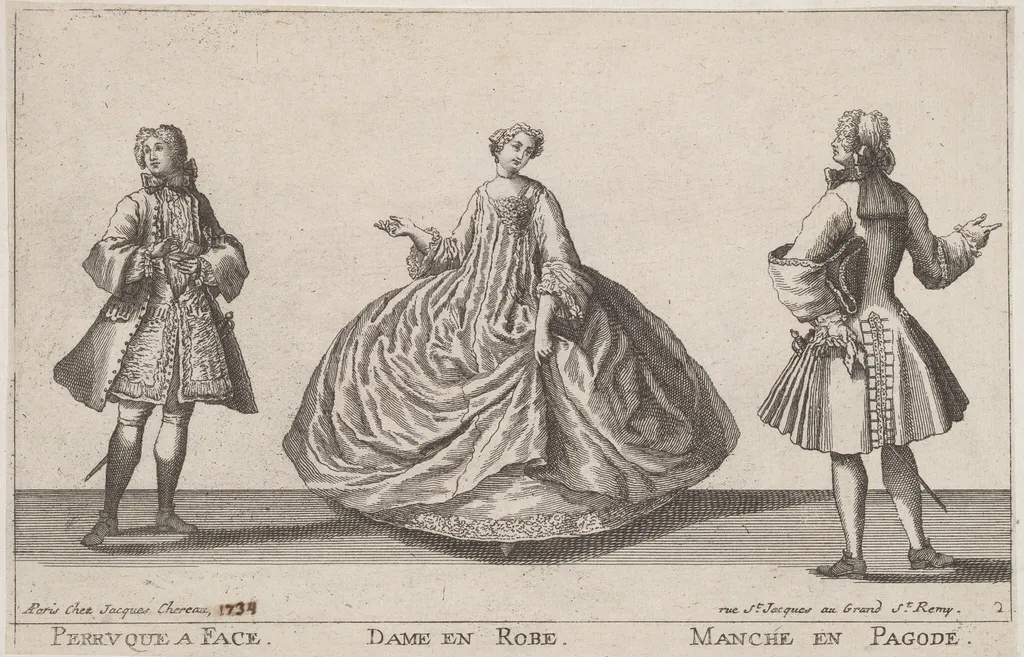
Perruque à Face/Dame en Robe/Manche en Pagode is an ink print by the Baroque artist Jacques Chéreau. It dates from 1724 and is held in the collection of the National Gallery of Art.
About this work
Overview
The composition functions as a visual catalogue of contemporary costume, rendered with the precision characteristic of early modern print workshops.
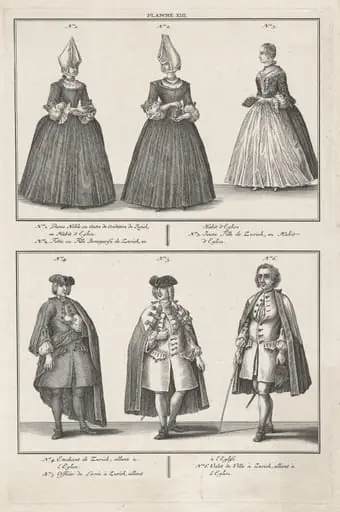
Created around 1724, this print is an engraving with etching on laid paper by French printmaker Jacques Chéreau. It presents a staged grouping of three figures dressed in elaborate eighteenth‑century attire, each accompanied by a descriptive label that identifies a particular fashion element. The composition functions as a visual catalogue of contemporary costume, rendered with the precision characteristic of early modern print workshops.
Subject & Meaning
The central female figure wears a low‑cut gown and an expansive skirt, holding a fan, while the two male companions display towering wigs, ornate coats, and accessories such as a hat and a gesturing hand. The accompanying captions—"Perruque à Face," "Dame en Robe," and "Manche en Pagode"—highlight a wig‑styled face, a lady’s dress, and a sleeve fashioned after a pagoda, respectively, indicating an interest in documenting and perhaps satirising fashionable extremes of the period.
Technique & Style
Chéreur combined traditional engraving with etching, allowing both crisp line work and softer tonal areas. The laid paper surface contributes a subtle texture that enhances the depth of the figures’ clothing details. The print’s clear delineation of fabrics, accessories, and the theatrical pose reflects the period’s penchant for precise, instructional illustration of dress, while the etching washes suggest atmospheric shading.
History & Provenance
The work originates from Chéreau’s early career in Paris, a time when the workshop produced a series of fashion prints for an emerging market of consumers interested in the latest court styles. Though specific ownership records are scarce, the print has appeared in several catalogues of eighteenth‑century French prints and is now held in public collections that focus on graphic arts and costume history.
Artist & collection


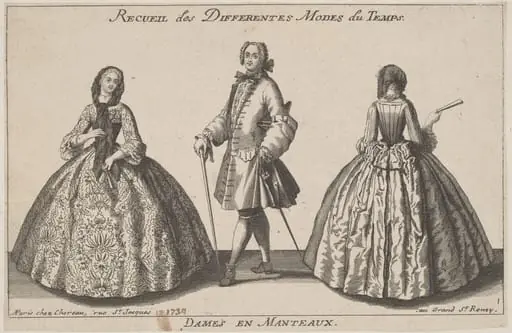 Dames en Manteaux
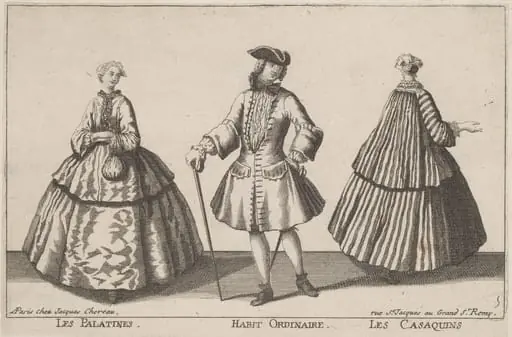 Les Palatines/Habit Ordinaire/Les Casaquins
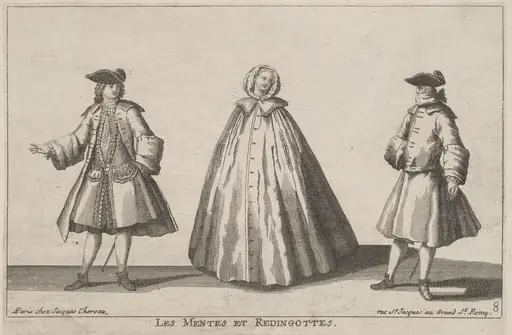 Les Mentes et Redingottes
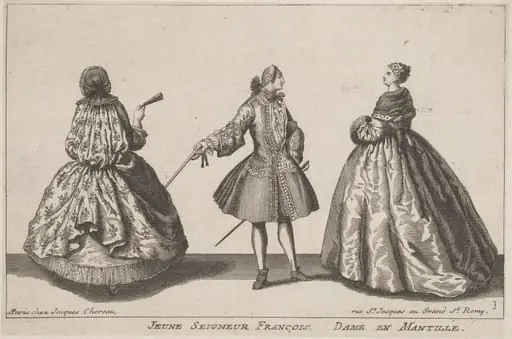 Jeune Seigneur François/Dame en Mantille
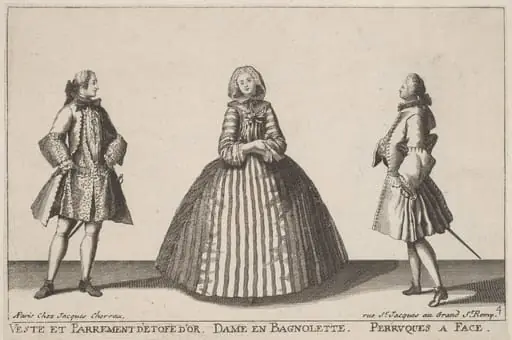 Veste et Parrement d'Etofe d'Or/Dame en Bagnolette/Perruques à Face
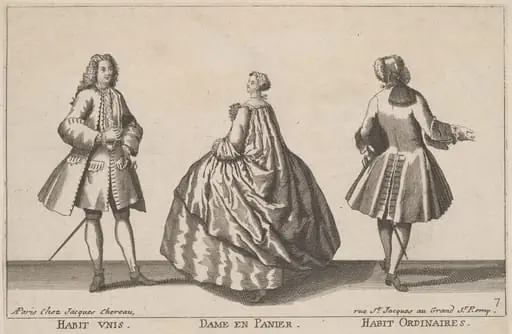 Habit Unis/Dame en Panier/Habit Ordinaires
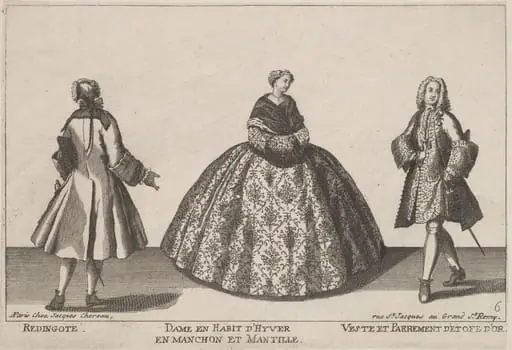 Redingote/Dame en Habit d'Hyver en Manchon/Veste et Parrement d'Etofe d'Or