Artwork
H Beard Print Collection
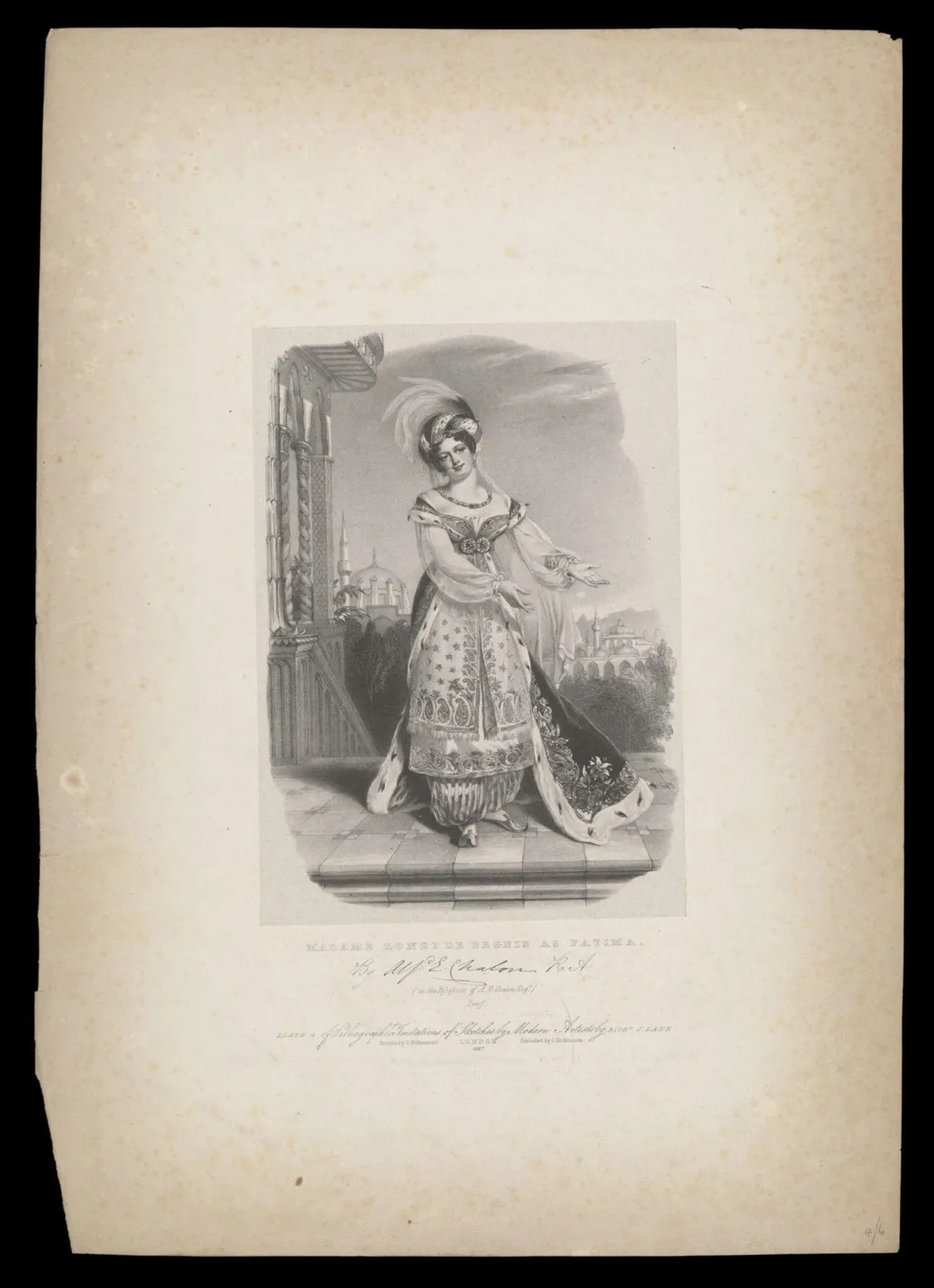
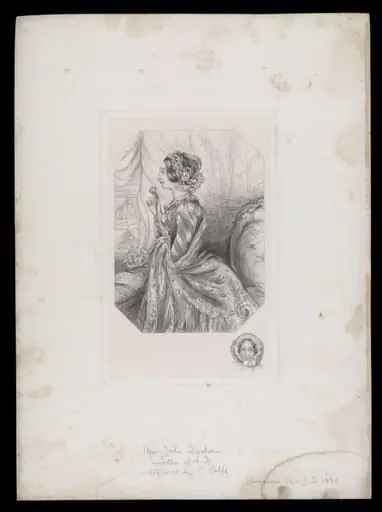
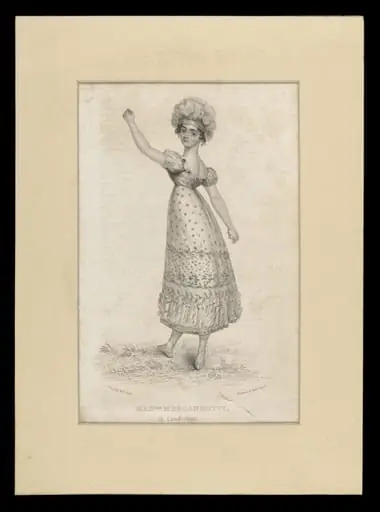
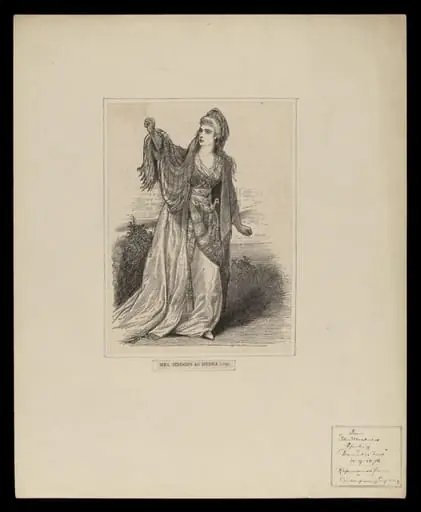
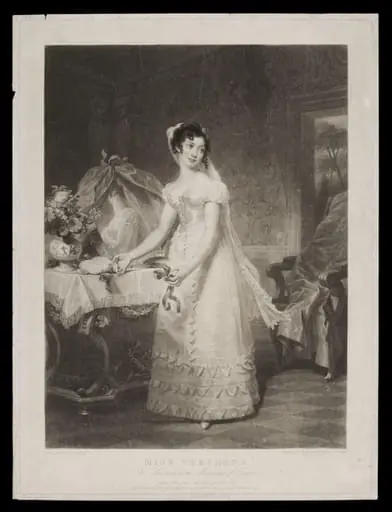
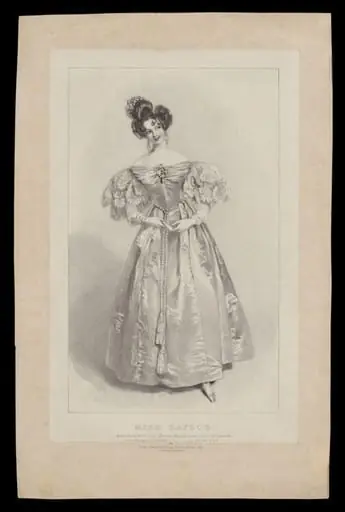
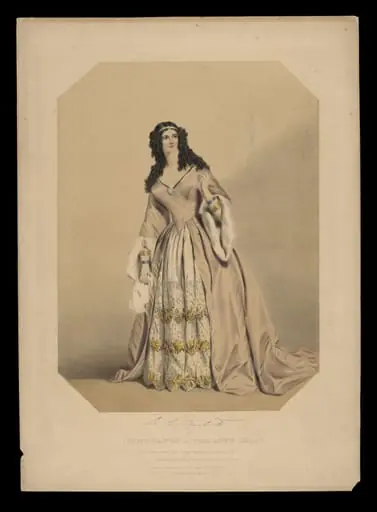
H Beard Print Collection is a print by the Romanticist artist Alfred Edward Chalon. It dates from 1827 and is held in the collection of the Victoria and Albert Museum.
About this work
The H Beard Print Collection is a print made by Alfred Edward Chalon in 1827.
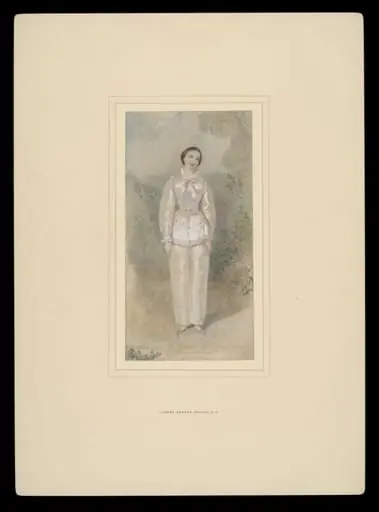
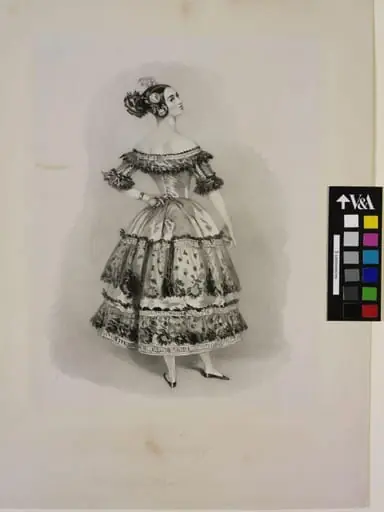
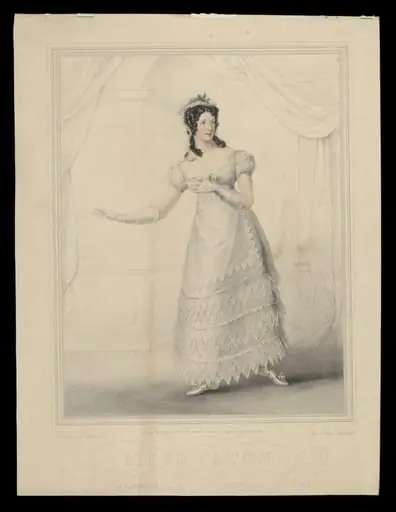
It's a portrait of Madame Ronzi de Begnis as Fatima, which suggests a connection to theater or performance.
The artist was part of the Romanticism movement, which might have influenced the style of the print.
You can learn more about this style by looking into Romanticism.
Overview
This 1827 print by Alfred Edward Chalon is part of the H Beard Print Collection and depicts Madame Ronzi de Begnis in character as Fatima. Created as a theatrical portrait, it captures a moment from her stage performance rather than a private likeness. The work reflects the 19th-century practice of documenting prominent performers in their most memorable roles, blending art and entertainment.
Subject & Meaning
Madame Ronzi de Begnis, a celebrated opera singer, portrayed Fatima, a character from the opera 'La Muette de Portici' by Daniel Auber. The role required dramatic expression and physical presence, qualities Chalon emphasized in the full-length composition. The image functions as both a record of her performance and a tribute to her status as a leading figure in European opera at the time.
Technique & Style
Chalon employed fine-line engraving and delicate tonal shading to render the figure with clarity and grace. His approach aligns with Romantic-era portraiture, favoring emotional resonance over rigid formality. The flowing lines of the costume and the poised stance suggest movement, reinforcing the theatrical context while maintaining the precision expected in printed portraiture of the period.
History & Provenance
The print was produced shortly after Ronzi de Begnis’s acclaimed performance in London, likely to meet public demand for images of popular performers.
The print was produced shortly after Ronzi de Begnis’s acclaimed performance in London, likely to meet public demand for images of popular performers. It entered the H Beard Print Collection, a 19th-century archive of theatrical imagery, which preserved such works as cultural artifacts. Its survival offers insight into how stage personalities were memorialized before photography became widespread.
Context
In the 1820s, opera houses in London and Paris were centers of social and artistic life. Performers like Ronzi de Begnis achieved celebrity status, and prints of them in character were widely circulated. Chalon, known for his portraits of royalty and artists, extended his practice to the stage, reflecting the blurring boundaries between high art and popular culture in the Romantic era.
Legacy
This print remains a valuable document of early 19th-century performance culture. It illustrates how visual art served to immortalize transient theatrical moments, preserving the physicality and presence of performers for audiences who never saw them live. As part of the H Beard Collection, it contributes to the historical record of opera and print media in the pre-photographic age.
Artist & collection

Artist
Alfred Edward Chalon was a Swiss-born British portraitist. He lived in London where he was noticed by Queen Victoria.