Artwork
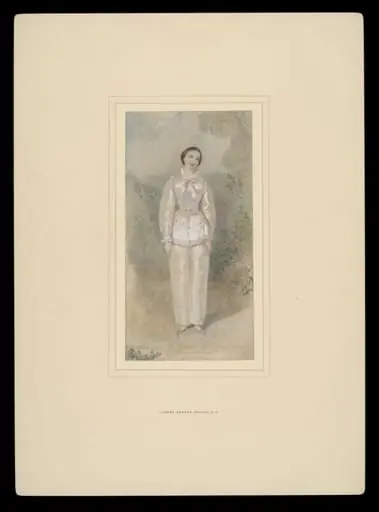
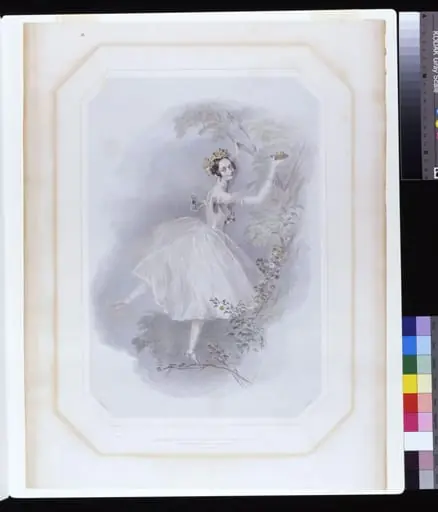
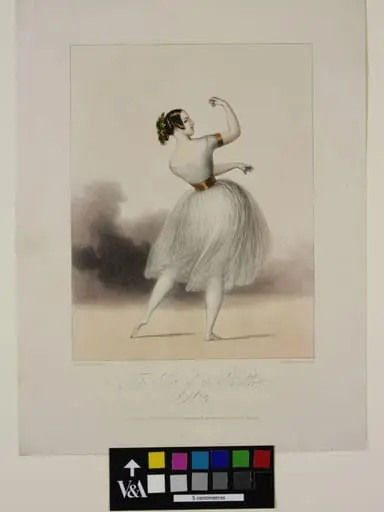
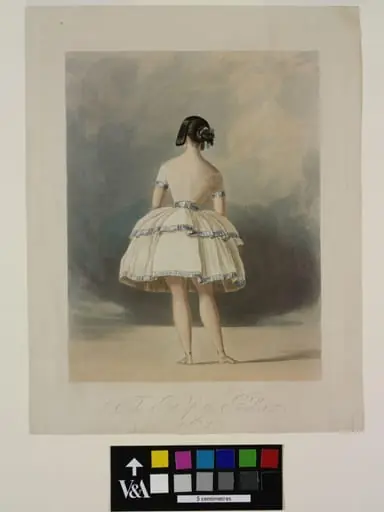
Marie Taglioni in La Sylphide (Souvenir d'adieu, No. 1)
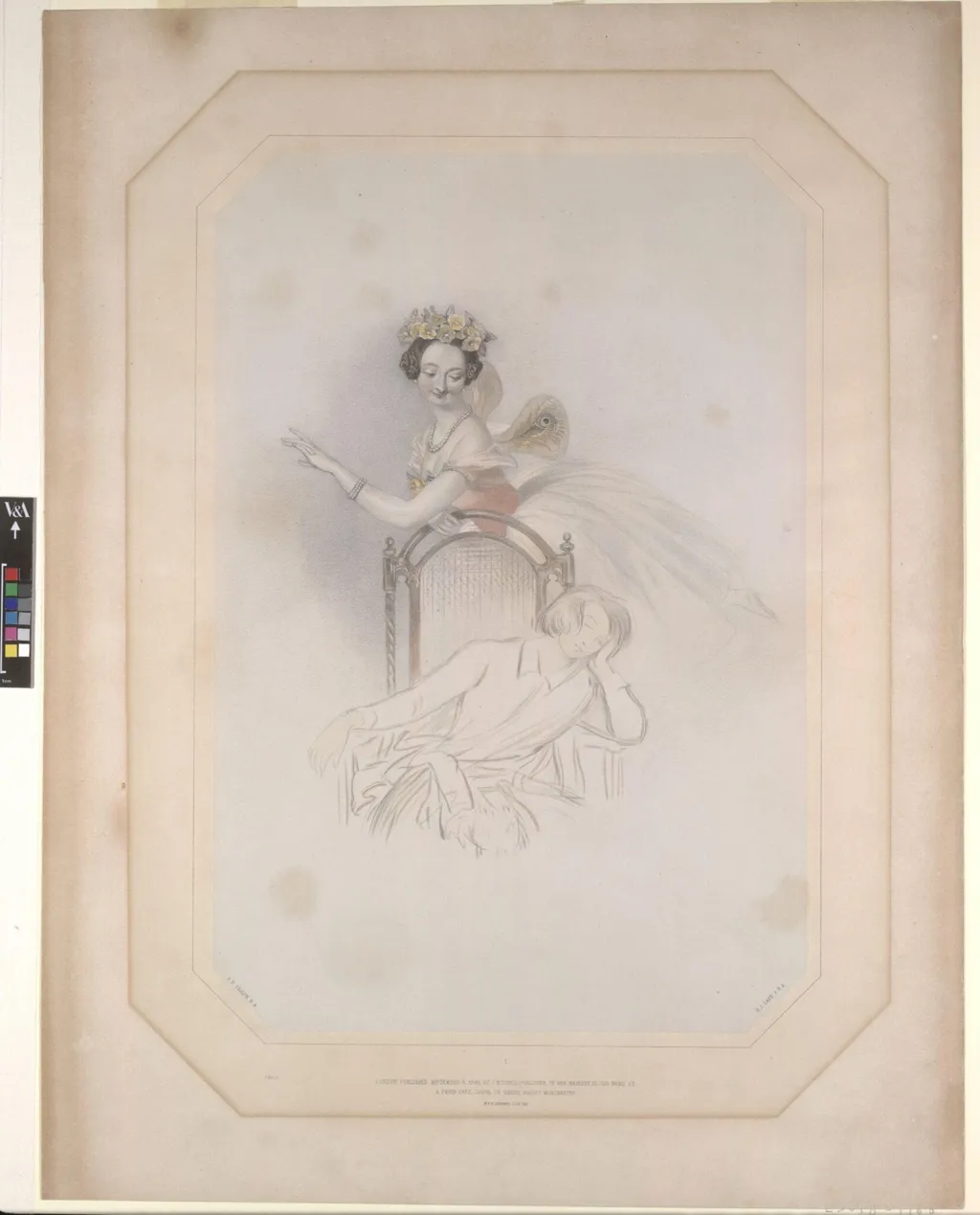
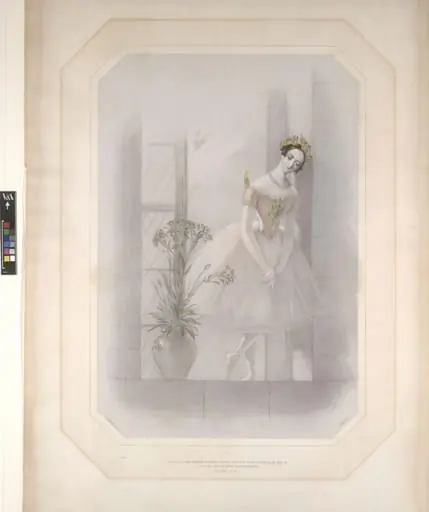
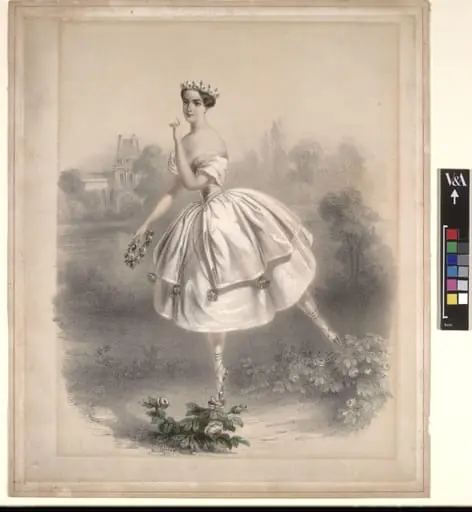
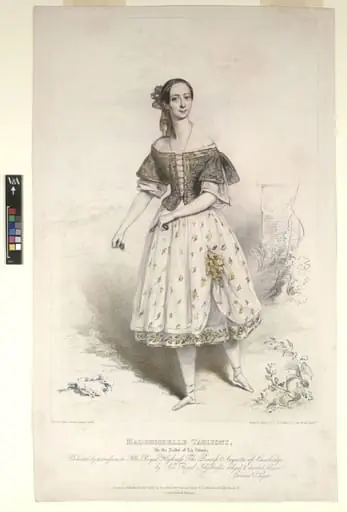
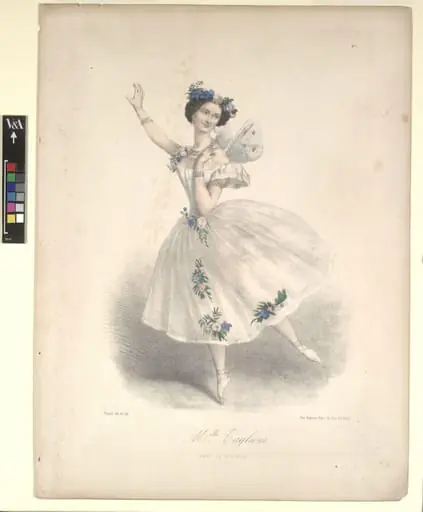
Marie Taglioni in La Sylphide (Souvenir d'adieu, No. 1) is a print by the Romanticist artist Alfred Edward Chalon. It dates from 8 and is held in the collection of the Victoria and Albert Museum. This print depicts Marie Taglioni in the title role of La Sylphide, a ballet premiered in 1832.
About this work
This print captures Marie Taglioni as the Sylph in a famous ballet from 1832.
This print captures Marie Taglioni as the Sylph in a famous ballet from 1832. It shows the moment she appears to a sleeping Scotsman named James.
Marie’s father made the ballet just to show off her skill. He used the new pointe technique, where dancers balance on their toes. Before this, pointe work was just a trick. Her performance turned it into something graceful and dreamlike.
Check out the Victoria and Albert Museum to see this print.
Overview
This print depicts Marie Taglioni in the title role of La Sylphide, a ballet premiered in 1832. Created as a keepsake of her performance, it captures a defining moment in 19th-century dance. The image commemorates her portrayal of a supernatural forest spirit, a character designed to showcase her unique physicality and artistry. The work is part of a series of souvenirs produced to honor her influence on ballet.
Subject & Meaning
The scene illustrates the Sylph’s first appearance to James, a young Scotsman entranced by her otherworldly presence. Her delicate form, hovering above the sleeping figure, conveys mystery and detachment. The character embodies an idealized femininity—ethereal, untouchable, and spiritually elevated—reflecting Romantic-era notions of womanhood as pure and transcendent, far removed from earthly concerns.
Technique & Style
Taglioni’s performance introduced pointe work as a means of artistic expression rather than mere spectacle. The print suggests her lightness through elongated lines and floating posture, emphasizing the illusion of weightlessness. Her movements, choreographed by her father, were rendered with subtle grace, transforming toe dancing into a language of emotion and fantasy, setting a new standard for ballet aesthetics.
History & Provenance
The print was produced shortly after the ballet’s 1832 premiere at the Paris Opéra, where Taglioni’s performance caused a sensation. As a souvenir, it circulated among admirers and collectors, reinforcing her fame beyond the stage. The Victoria and Albert Museum holds this impression, one of several surviving prints documenting the cultural impact of her role and the early commercialization of dance imagery.
Context
La Sylphide emerged during the Romantic period, when art and theater idealized the supernatural and the emotional. Ballet shifted from courtly entertainment to narrative-driven performance, with dancers becoming symbols of inner states. Taglioni’s portrayal aligned with broader cultural fascinations with spirits, nature, and the feminine sublime, making her an emblem of the era’s artistic sensibilities.
Legacy
Taglioni’s interpretation of the Sylph established pointe work as central to classical ballet, influencing generations of dancers. The role became a benchmark for ethereal femininity in dance, shaping choreographic and costuming traditions. Her performance also marked the beginning of the ballerina as a cultural icon, with prints like this one helping to cement her image in the public imagination.
Artist & collection

Artist
Alfred Edward Chalon was a Swiss-born British portraitist. He lived in London where he was noticed by Queen Victoria.