Artwork
Flora and Zephyr
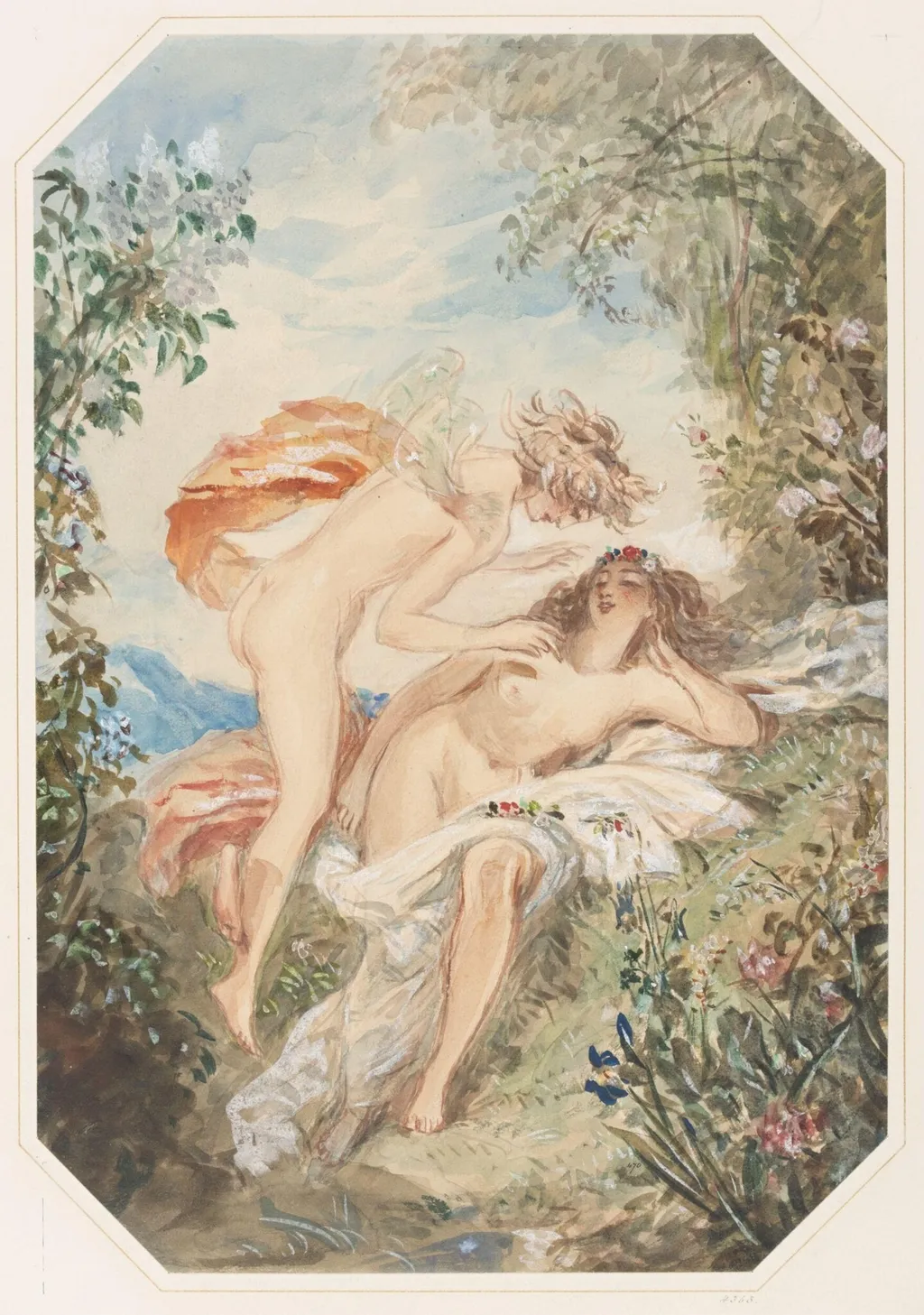
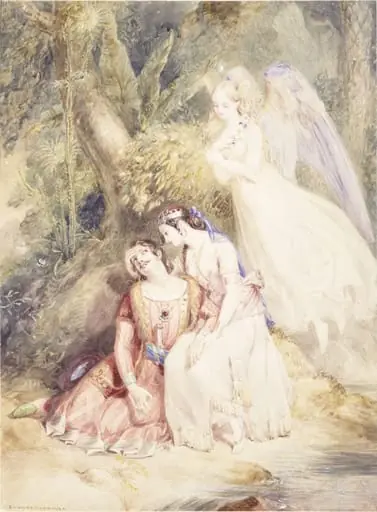
Flora and Zephyr is a watercolor work on paper by Chalon. It dates from 1850 and is held in the collection of the Victoria and Albert Museum.
About this work
Overview
Flora and Zephyr is a watercolour painting created by Chalon in 1850, featuring two figures in a serene outdoor setting characterized by dreamy, airy qualities.
Subject & Meaning
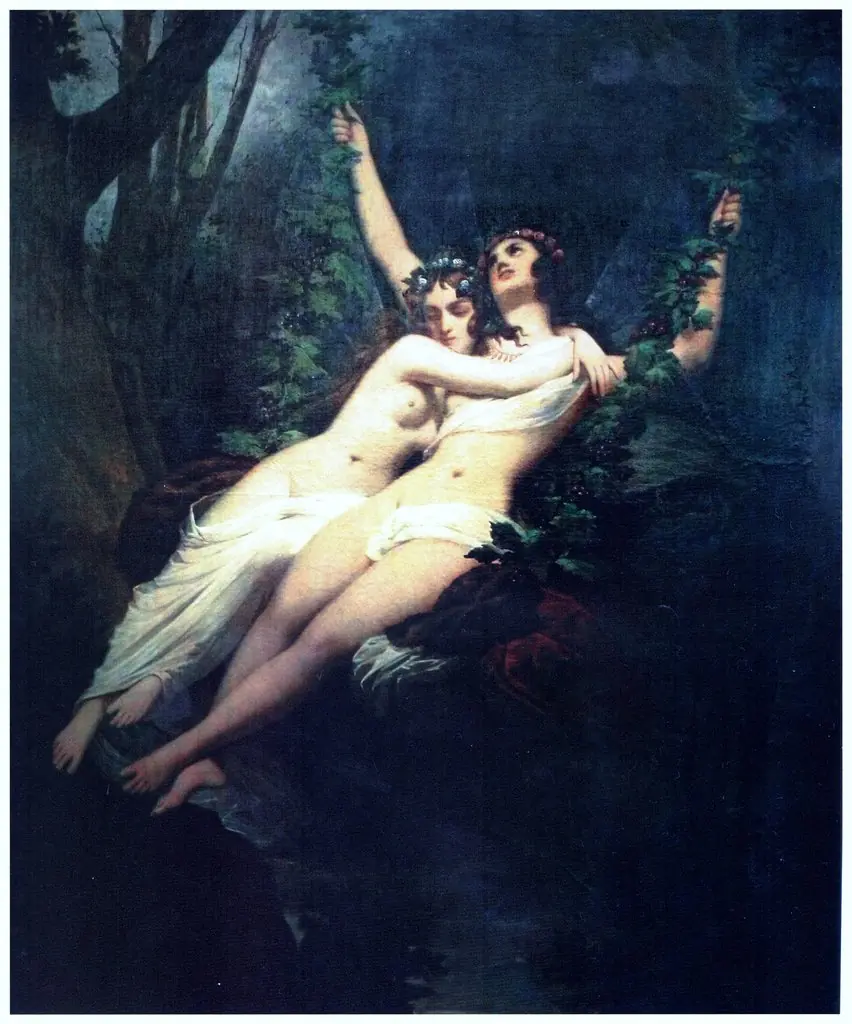
The painting depicts a classical scene with two central figures: one reclining, adorned with floral and leafy headpieces, and the other floating above, holding a billowing red-orange cloth. The composition suggests a mythological or allegorical narrative, potentially referencing the Roman goddess of flowers (Flora) and the west wind (Zephyr).
Technique & Style
Chalon utilized water-based pigments on paper, emphasizing light, gentle brushstrokes to achieve a soft, blurry background with indistinct trees and a pale sky. The figures are rendered weightless, with minimal grounding, enhancing the overall ethereal ambiance.
History & Provenance
Created in 1850 as an exercise proposed by the Sketching Society, the painting's subsequent ownership history is not detailed here.
Context
The work aligns with mid-19th-century artistic interests in classical themes and the development of watercolour techniques, popular among British artists of the time.
Legacy
While not individually renowned, *Flora and Zephyr* contributes to the broader understanding of Chalon's oeuvre and the artistic practices of its era, with similar works found in collections like the Victoria and Albert Museum.
Artist & collection
Artist
John Chalon painted small, detailed watercolours of British landscapes and everyday scenes in the early 1800s.