Artwork
Cimon and Iphigenia
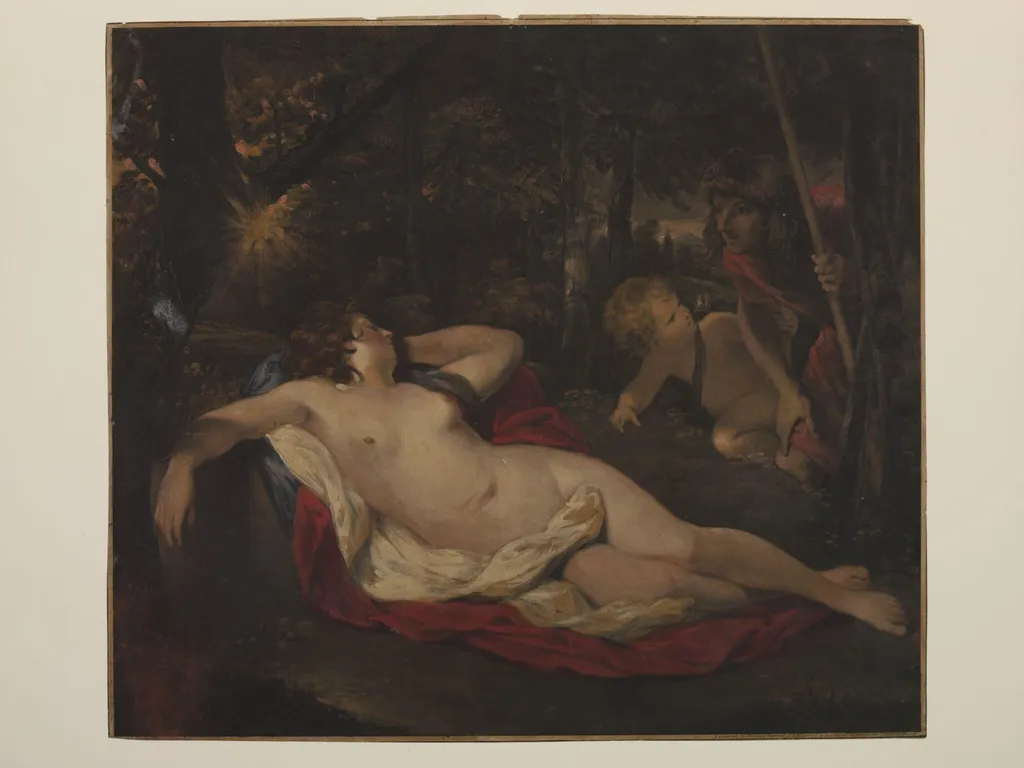
Cimon and Iphigenia is a print by Francis Haward. It dates from 1750 and is held in the collection of the Victoria and Albert Museum. A colored print portrays a quiet moment from classical myth, showing Iphigenia in repose beneath draped textiles, observed by Cimon.
About this work
Overview
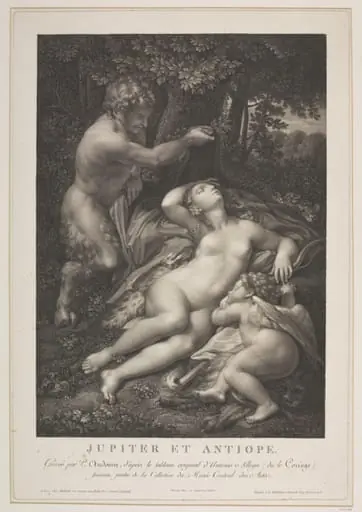
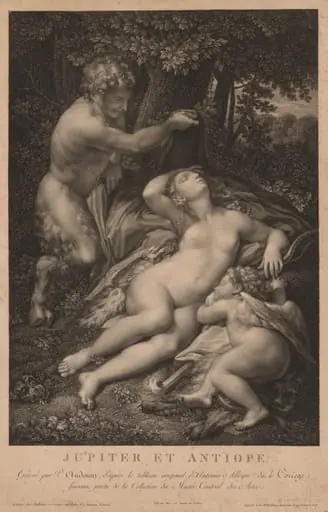
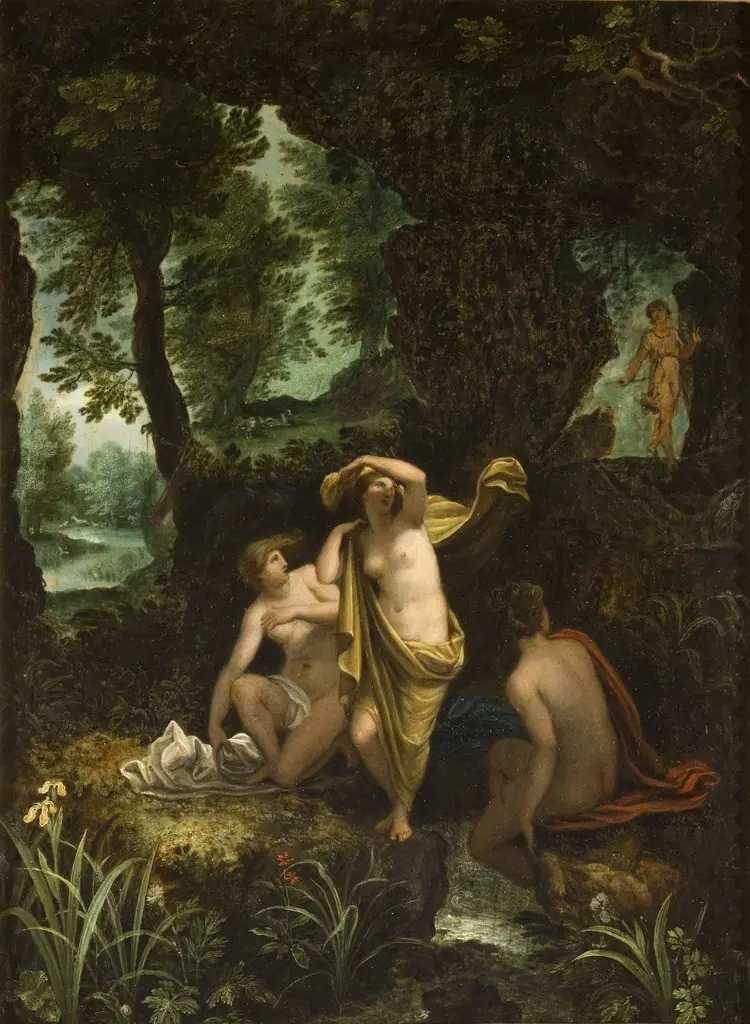
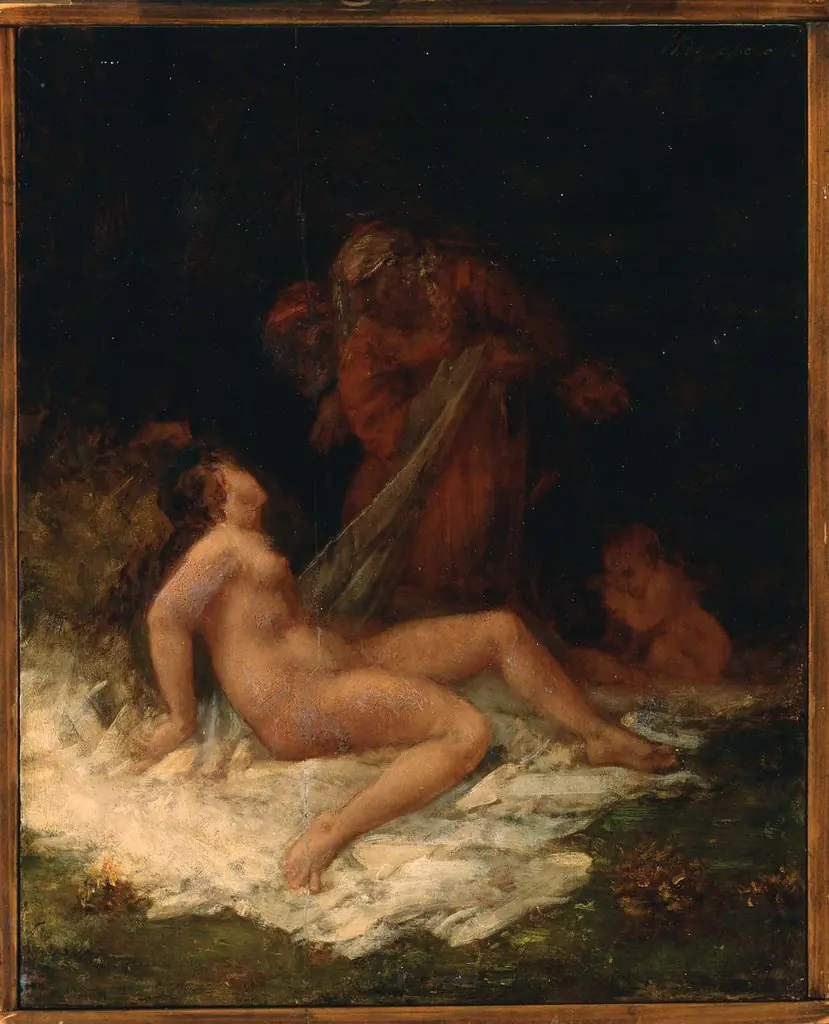
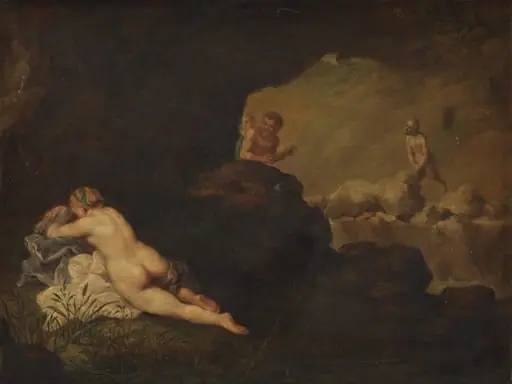
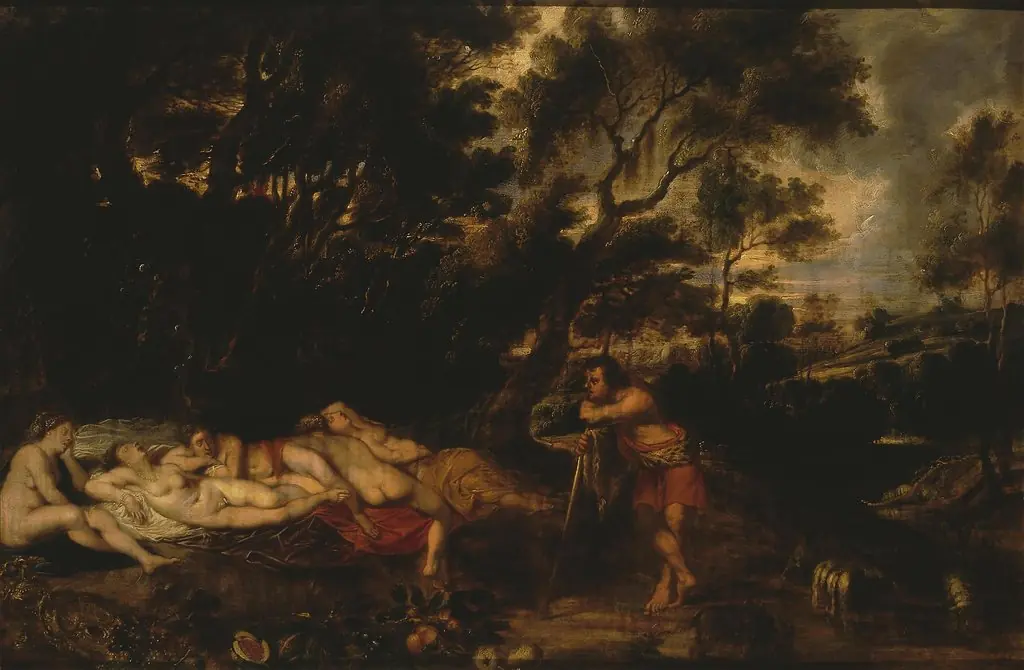
A colored print portrays a quiet moment from classical myth, showing Iphigenia in repose beneath draped textiles, observed by Cimon. The scene unfolds in a wooded setting, with two secondary figures in the distance—a boy with a staff and a woman with flowing hair—adding narrative depth. Soft lighting and warm tones evoke stillness, emphasizing the intimacy of the moment without overt drama.
Subject & Meaning
The sleeping figure symbolizes vulnerability and transition, while the background figures may represent attendants or symbolic guides.
The image references the myth of Iphigenia, daughter of Agamemnon, who was spared from sacrifice and transported to Tauris. Cimon, her guardian, watches over her in exile. The presence of a cupid suggests divine influence or the persistence of love amid fate’s trials. The sleeping figure symbolizes vulnerability and transition, while the background figures may represent attendants or symbolic guides.
Technique & Style
The print employs delicate color washes to model form and texture, with layered fabrics rendered in muted reds and whites against earthy greens of the landscape. Lines are subtle, avoiding sharp definition, enhancing the dreamlike quality. The composition directs attention to Iphigenia’s reclining form, while the background figures are rendered with less detail, reinforcing spatial depth and narrative focus.
History & Provenance
This print likely dates to the late 18th or early 19th century, produced during a revival of interest in classical themes among European printmakers. It may have been part of a series illustrating mythological tales for private collectors. Its survival in modest numbers suggests it was not widely distributed, possibly commissioned by a patron with literary or antiquarian interests.
Context
In the decades following the Enlightenment, mythological subjects were frequently adapted for domestic art, blending scholarly reference with emotional restraint. This print reflects a trend toward intimate, narrative-driven scenes rather than grand historical tableaux. The choice of Iphigenia’s quiet exile aligns with contemporary sensibilities favoring pathos over spectacle.
Legacy
Though not widely reproduced or studied today, the print contributes to a broader visual tradition of mythological domestication in print culture. Its quiet tone and attention to psychological nuance anticipate 19th-century Romantic treatments of classical subjects, preserving a moment of stillness amid myth’s turbulence.
Artist & collection
Artist
Francis Haward carved delicate prints in the late 1700s, often retelling classical myths in ink.