Artwork
Bhore Ghauts
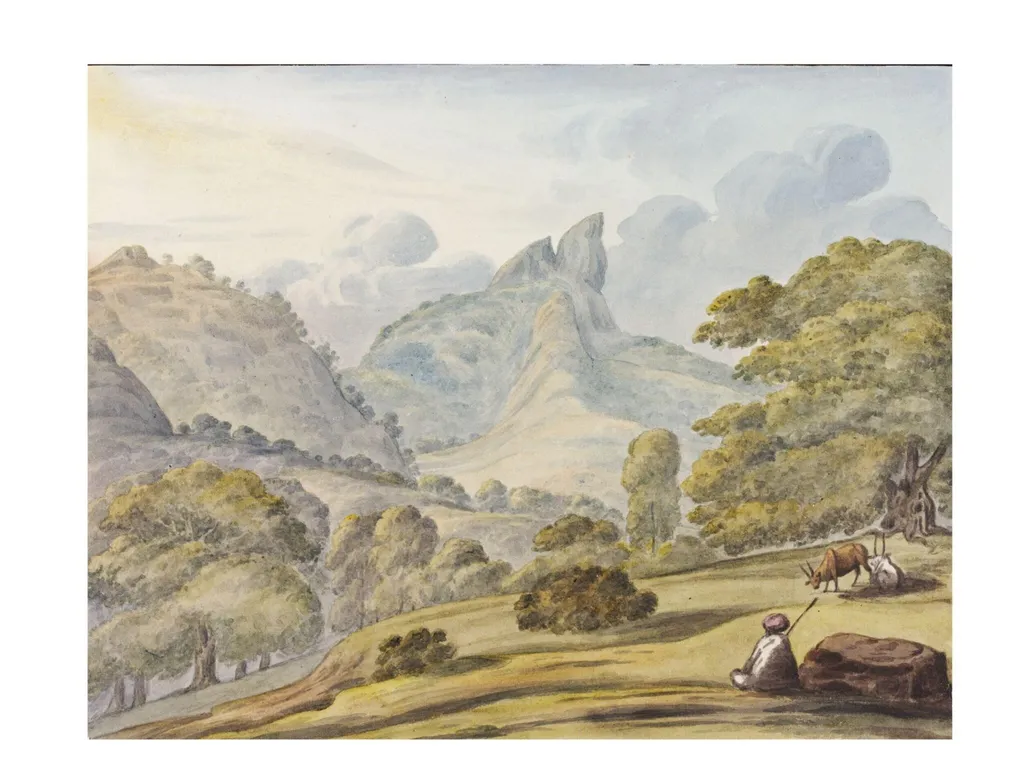
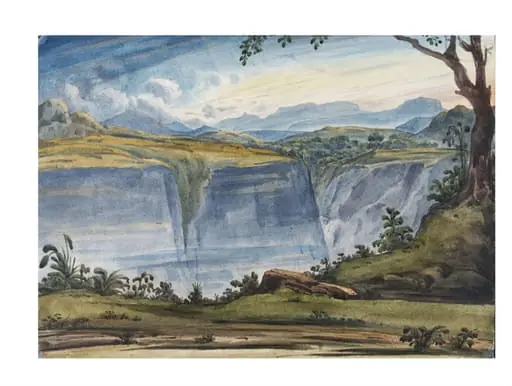
Bhore Ghauts is a paint painting by the Patna School of Painting artist Charles Harcourt Chambers. It dates from 1826 and is held in the collection of the Victoria and Albert Museum.
About this work
Overview
These works, mostly in pencil and watercolour, were later compiled into three bound albums, preserving his observations of the Konkan coast and Western Ghats.
Sir Charles Harcourt Chambers, a British judge appointed to the Supreme Court in Bombay in 1823, produced a body of watercolour sketches during his time in western India. His artistic practice emerged from personal exploration rather than professional obligation, with landscapes drawn during journeys between Bombay and the mainland. These works, mostly in pencil and watercolour, were later compiled into three bound albums, preserving his observations of the Konkan coast and Western Ghats.
Subject & Meaning
The painting depicts the Bhor Ghat, a rugged mountain pass near Khandala, featuring the distinctive rock formation known as 'The Duke’s Nose.' The scene captures a winding path ascending steep cliffs, framed by dense vegetation. Rather than idealizing the landscape, Chambers recorded its topographical character with attention to local detail, suggesting a documentary impulse tied to his daily travels and the physical realities of colonial administration in the region.
Technique & Style
Chambers worked primarily in pencil and watercolour, often completing sketches en plein air during his excursions. His technique emphasizes subtle tonal gradations and delicate washes to convey atmospheric depth and the humidity of the Ghats. Lines are precise yet unforced, with vegetation rendered in loose, observational strokes. The absence of dramatic embellishment lends his work a quiet realism, grounded in direct observation rather than romantic convention.
History & Provenance
The watercolours were assembled by Chambers himself into three albums, now held as IS.21–23-1994, with images inserted by slitting the pages to accommodate the sheets. Alongside Indian landscapes, the albums include views of England, Scotland, and Wales, reflecting his dual cultural ties. After his death in 1828, the albums remained in private hands before entering the Victoria and Albert Museum’s collection, where they serve as rare visual records of early 19th-century travel in western India.
Context
Chambers’s sketches emerged during a period of expanding British administrative presence in western India. His travels along the Bhor Ghat coincided with the construction of improved roads linking Bombay to the Deccan plateau. As a judge, his movements were tied to judicial circuits, and his art functioned as a personal record of the terrain he traversed—offering an informal counterpoint to official cartographic efforts of the era.
Legacy
Chambers’s watercolours are among the earliest known firsthand visual records of the Western Ghats by a British resident. While not widely exhibited in his lifetime, his albums provide valuable insight into the landscape as experienced by colonial officials outside formal surveying projects. Their preservation offers a quiet, unembellished window into the natural environment of early 19th-century Maharashtra, distinct from later imperial romanticism.
Artist & collection
Artist
A British painter active in the 1820s, Chambers captured the ports and passes of early colonial India.

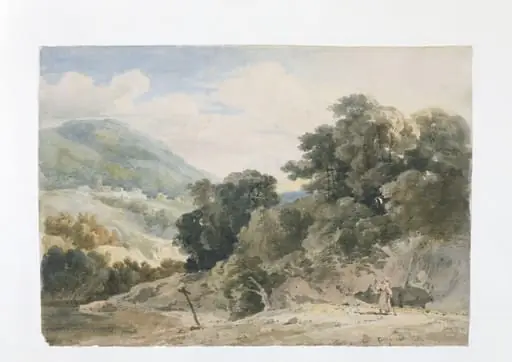 Landscape with hermit
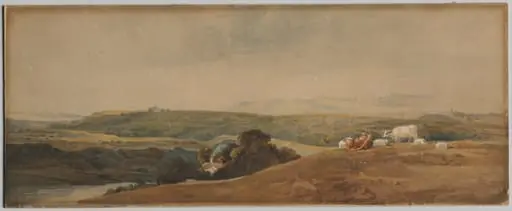 Mountains and Cattle
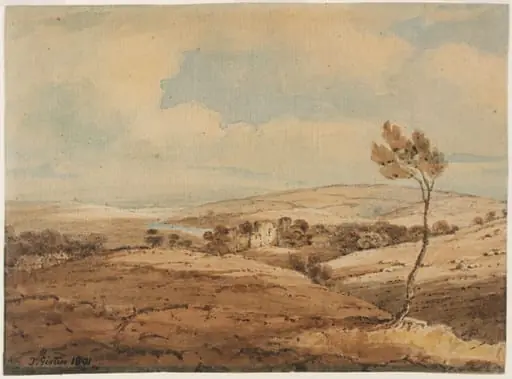 Landscape with ruined castle and river
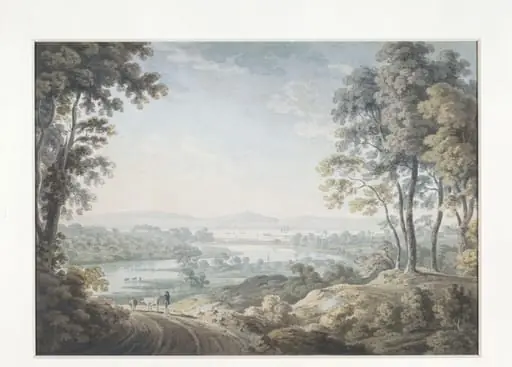 Lymington River, with the Isle of Wight in the distance
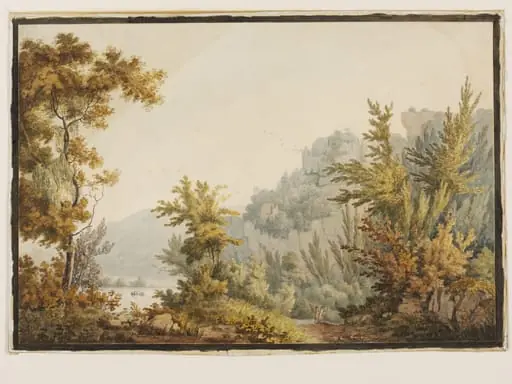 Landscape with Lake and Cliffs
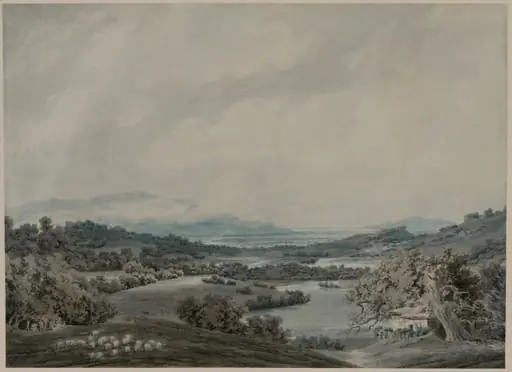 Italian Landscape
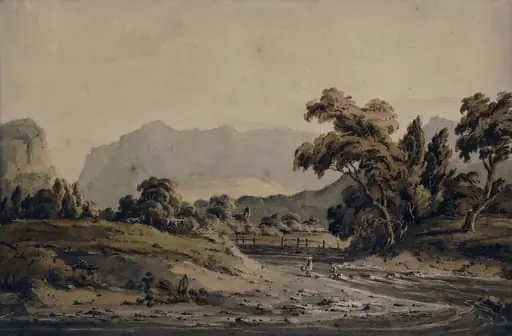 Rydal Head, Ambleside, Westmorland
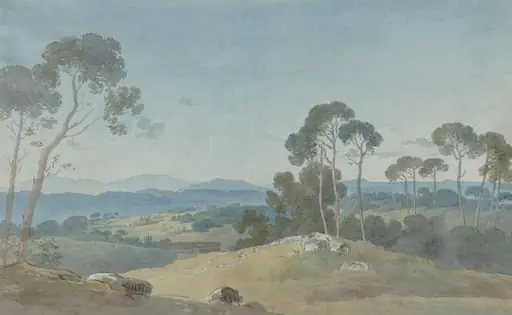 Mongouldi, Portugal
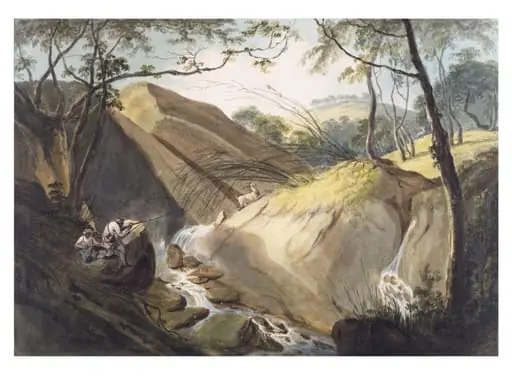 Deer shooting near Monghyr
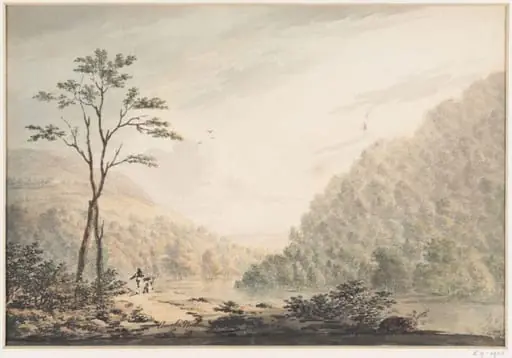 View on the Lands of the Earl of Fortescue, Castle Hill, Devon