Artwork
Italian Landscape
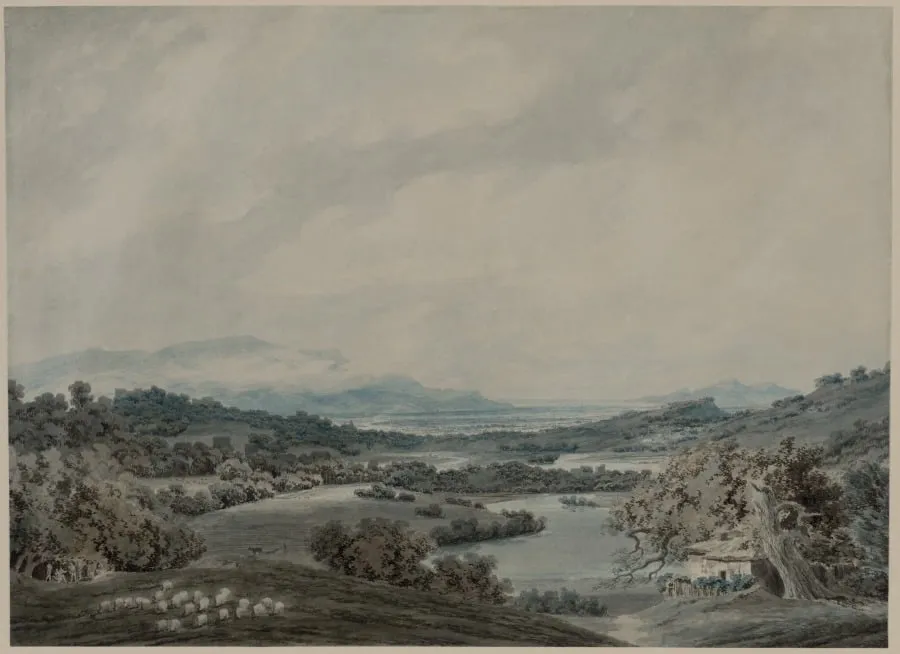
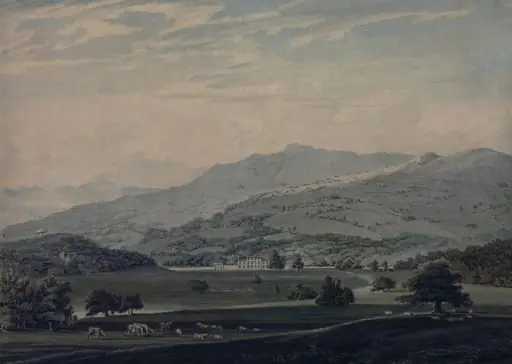
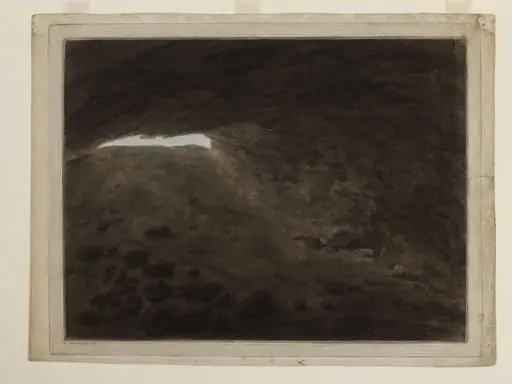
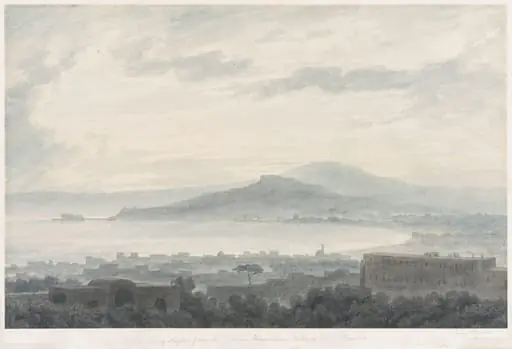
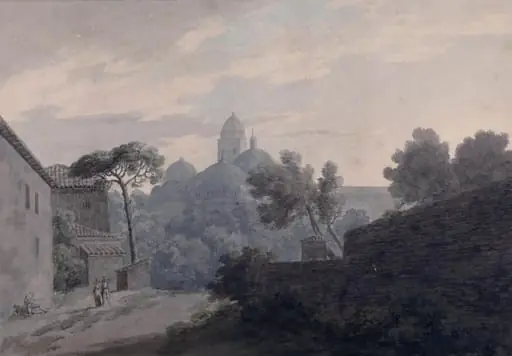
Italian Landscape is a drawing by the Romanticist artist John Robert Cozens. It dates from 1791 and is held in the collection of the Cleveland Museum of Art. This pencil and wash drawing, created in the late 18th century, reflects a British artist’s reimagined vision of the Italian countryside.
About this work
Overview
This pencil and wash drawing, created in the late 18th century, reflects a British artist’s reimagined vision of the Italian countryside.
This pencil and wash drawing, created in the late 18th century, reflects a British artist’s reimagined vision of the Italian countryside. Though grounded in earlier sketches from travels to Italy and Switzerland, the work was composed in England without direct observation. It belongs to a broader trend among British patrons who sought idealized continental landscapes, blending recollection with invention to evoke emotional resonance over topographical accuracy.
Subject & Meaning
The scene presents no identifiable location, instead weaving fragments of remembered terrain—ruined architecture, distant hills, a winding river—into a dreamlike composition. The inclusion of English-style trees beside Italianate ruins suggests a psychological fusion of place and memory. The mood is contemplative, not documentary; the landscape functions as an internal landscape, shaped by time and longing rather than topographical fidelity.
Technique & Style
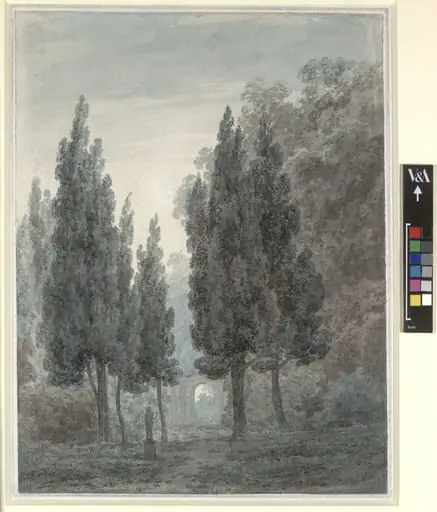
Cozens employed a restrained palette of muted grays, blues, and soft greens, applying washes with deliberate subtlety to dissolve forms into atmospheric haze. Edges blur gently, echoing the sfumato technique of Renaissance painting, where boundaries between land, sky, and shadow dissolve. Pencil lines guide the eye without asserting structure, allowing the washes to dominate and create a sense of quiet dissolution.
History & Provenance
The drawing stems from sketches made during Cozens’s two journeys to the Continent, which he later revisited in his London studio. It was likely produced for a private collector interested in the Grand Tour aesthetic, though not as a record of a specific site. Its creation reflects the practice of reworking travel notes into idealized compositions, a common method among artists catering to aristocratic tastes in post-travel Britain.
Context
In 18th-century Britain, landscapes of Italy were highly sought after as symbols of cultural refinement. Artists like Cozens responded not by replicating real views, but by constructing evocative hybrids that satisfied a longing for the sublime and the antique. This work aligns with a shift from topographical precision toward emotional atmosphere, anticipating Romanticism’s emphasis on mood over fact.
Legacy
Cozens’s approach influenced later British watercolorists who prioritized mood and memory over literal representation. His use of atmospheric washes and ambiguous settings helped redefine landscape as an introspective medium. Though his works were once seen as mere travel souvenirs, they are now recognized for their quiet innovation in translating experience into emotional terrain.
Artist & collection
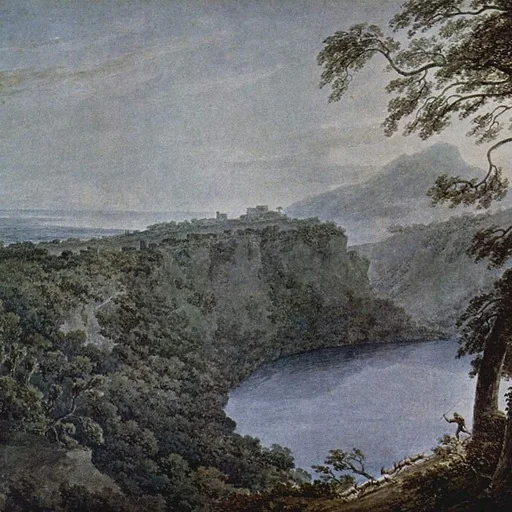
Artist
John Robert Cozens (1752 – 14 December 1797) was an English painter of romantic watercolour landscapes, nearly all of Continental scenes.

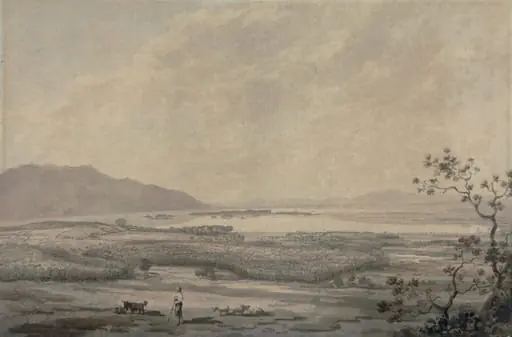 Killarney from the Hills above Muckross
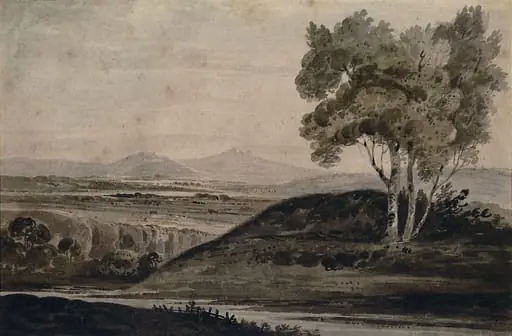 Landscape, evening effect
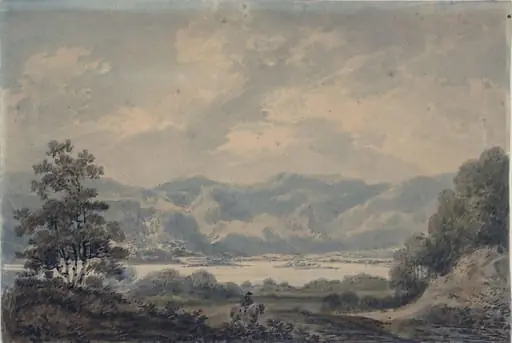 Windermere
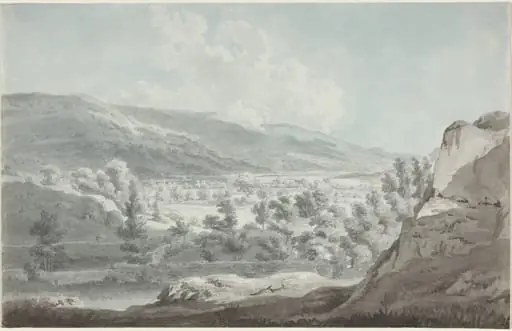 The Head of Ullswater
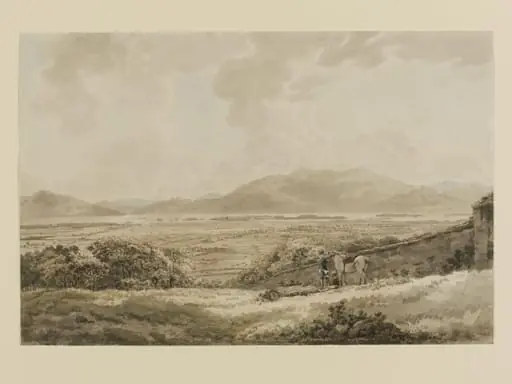 Killarney and Lake
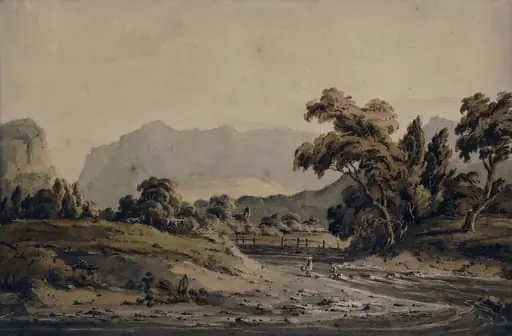 Rydal Head, Ambleside, Westmorland
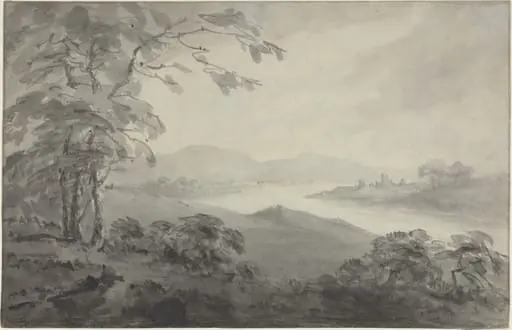 River Landscape with Ruins
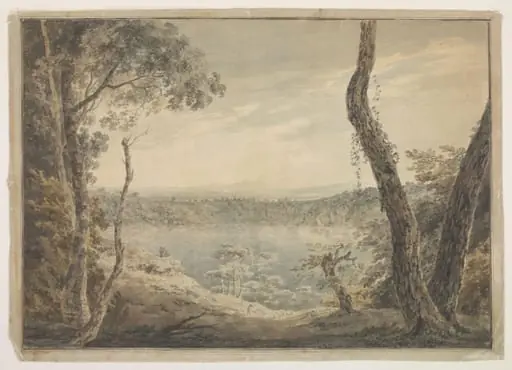
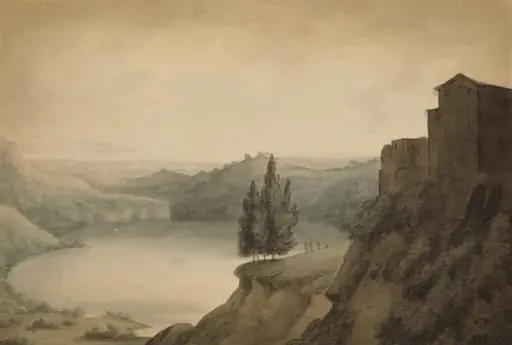 The Lake of Nemi
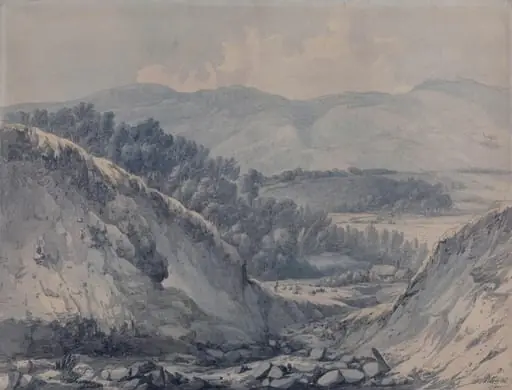 Near Dolgelly
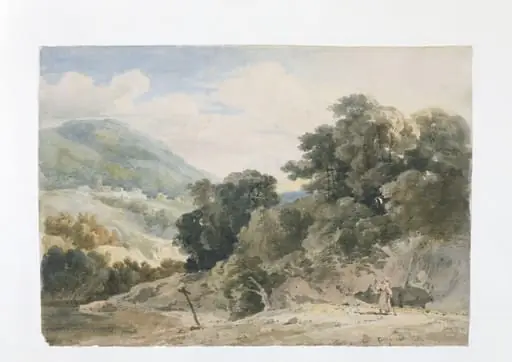 Landscape with hermit
 A View from Bald Mountain, Orange County, N.Y.
 River scene with a temple or palace in the clouds