Artwork
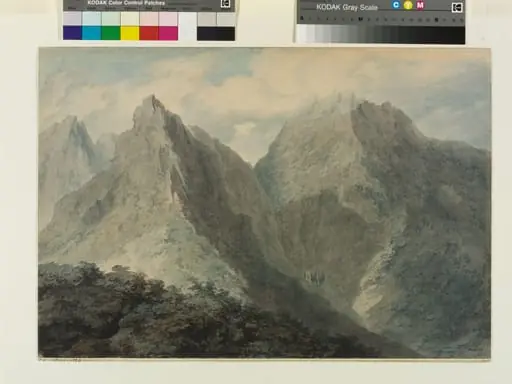
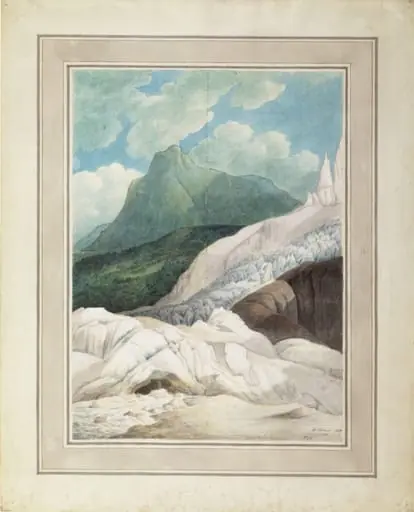
The Source of the Saraswati river in the mountains of Abu in Gujerat
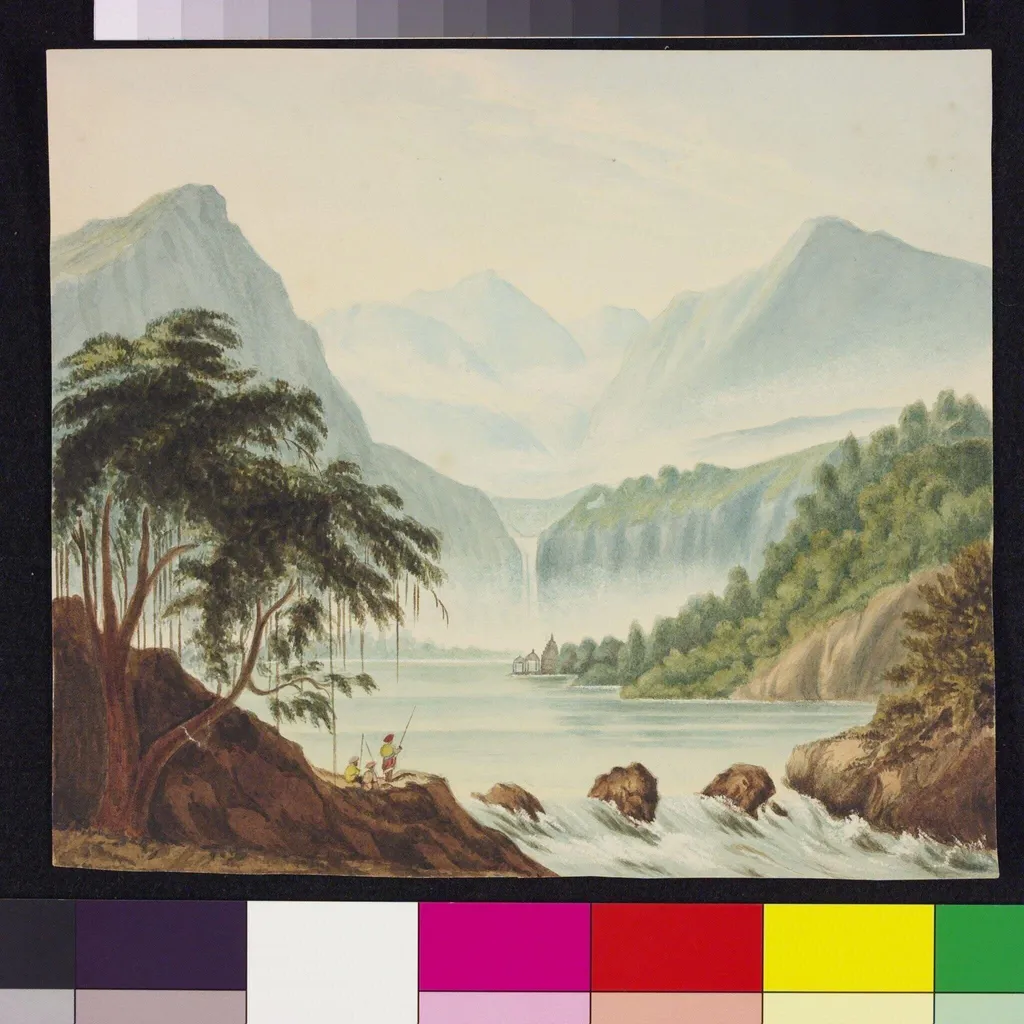
The Source of the Saraswati river in the mountains of Abu in Gujerat is a paint painting by the Romanticist artist Charles Chambers. It dates from 1823 and is held in the collection of the Victoria and Albert Museum.
About this work
Overview
The piece belongs to a three-volume album documenting Indian scenery, reflecting his personal engagement with the region’s topography beyond official duties.
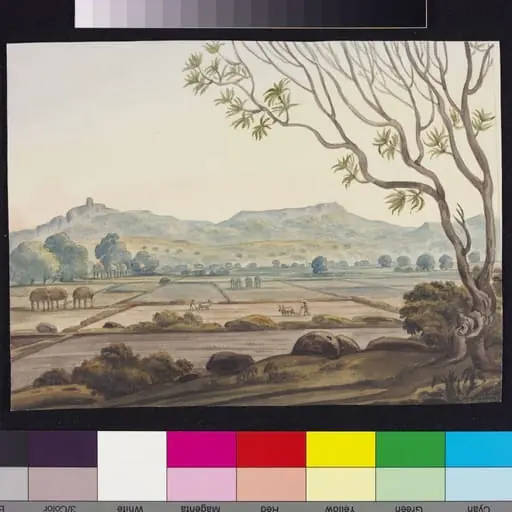
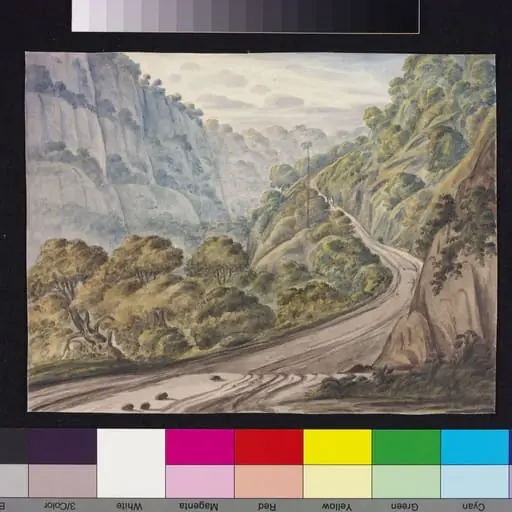
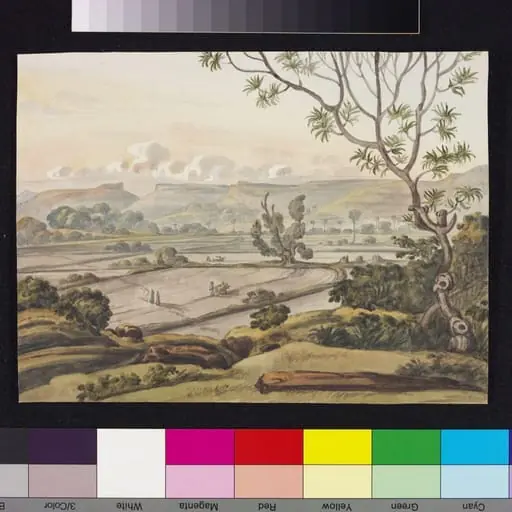
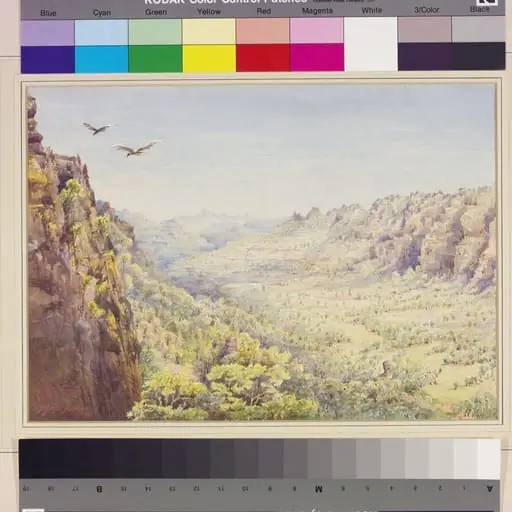
Created around 1823 by Sir Charles Harcourt Chambers, this watercolor captures the headwaters of the Saraswati River near Mount Abu in Gujarat. Executed in pencil, ink, and watercolor, it is one of many landscape studies made during Chambers’ time as Chief Justice of Bombay. The piece belongs to a three-volume album documenting Indian scenery, reflecting his personal engagement with the region’s topography beyond official duties.
Subject & Meaning
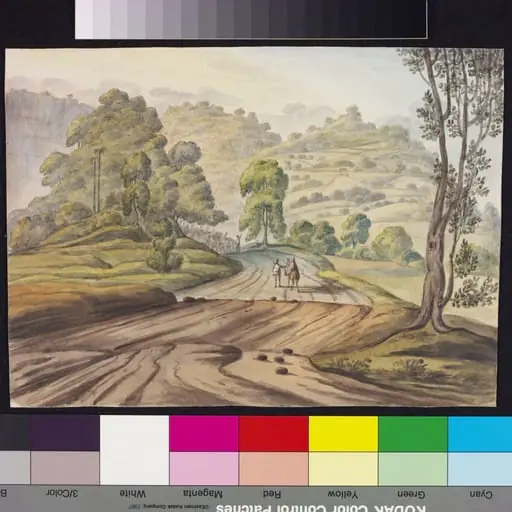
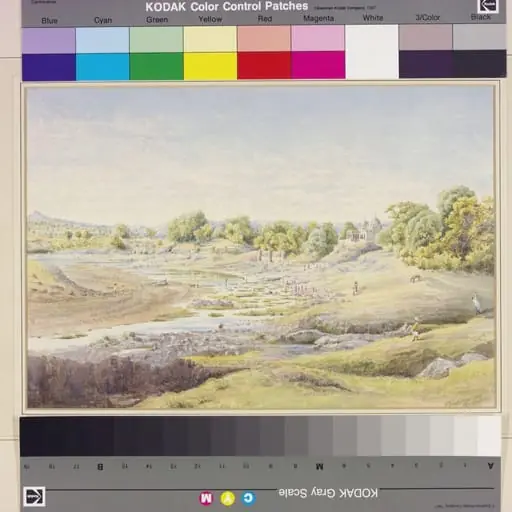
The painting portrays a tranquil mountain valley where the Saraswati River emerges from rocky terrain. Two figures stand near a moss-covered tree, while two bears wade in the shallows, suggesting quiet coexistence between humans, wildlife, and nature. The distant structure hints at human presence without disruption, reinforcing a sense of harmony. The scene evokes contemplation rather than narrative, emphasizing serenity over drama.
Technique & Style
Chambers employed soft watercolor washes, delicate ink lines, and subtle pencil underdrawing to render the mist-laden valley. Light is diffused and muted, creating a hazy atmosphere where mountains dissolve into cloud. The river’s surface is rendered with gentle ripples near rocks, contrasting with its stillness elsewhere. The palette remains restrained—cool grays, pale greens, and washed blues—enhancing the painting’s quiet, introspective tone.
History & Provenance
The work was produced during Chambers’ tenure as Chief Justice in Bombay, where he resided at Hermitage House. It formed part of a personal album of Indian landscapes, likely compiled for private reflection rather than public display. The album remained within family or colonial circles until its eventual inclusion in institutional collections, preserving its status as a documentary artifact of early 19th-century British engagement with Indian geography.
Context
Chambers’ paintings emerged during a period when British officials in India increasingly recorded local landscapes, blending topographical accuracy with aesthetic sensitivity. Unlike official surveys, his works reflect personal observation, influenced by European Romantic traditions that valued nature as a site of emotional resonance. His approach aligns with contemporaries who sought to capture India’s scenery beyond colonial utility.
Legacy
Though not widely exhibited in his lifetime, Chambers’ watercolors contribute to a broader corpus of colonial-era Indian landscapes that document regional environments with quiet precision. They offer insight into how British residents perceived and interacted with the subcontinent’s natural features. Today, these works are valued for their understated realism and their role in shaping early visual records of India’s topography.
Artist & collection
Artist
Charles Chambers painted Indian landscapes in the early 1800s, focusing on rivers, roads, and towns.