Artwork
Untitled
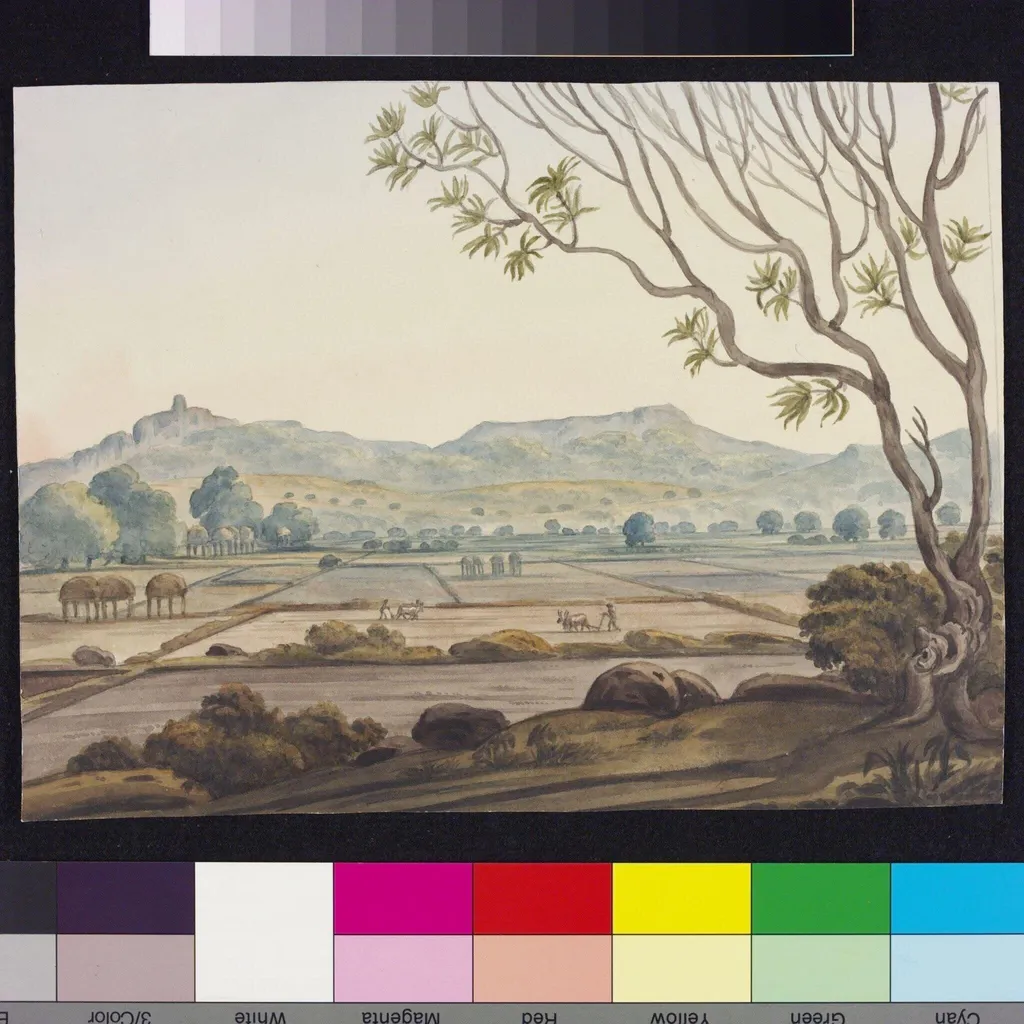
Untitled is a paint painting by the British Romanticist artist Charles Chambers. It dates from 1823 and is held in the collection of the Victoria and Albert Museum.
About this work
Overview
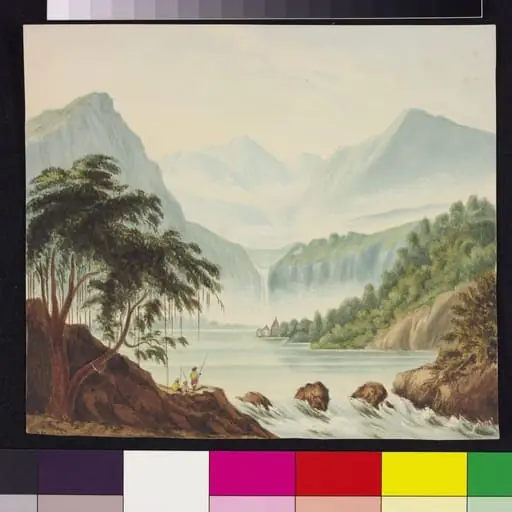
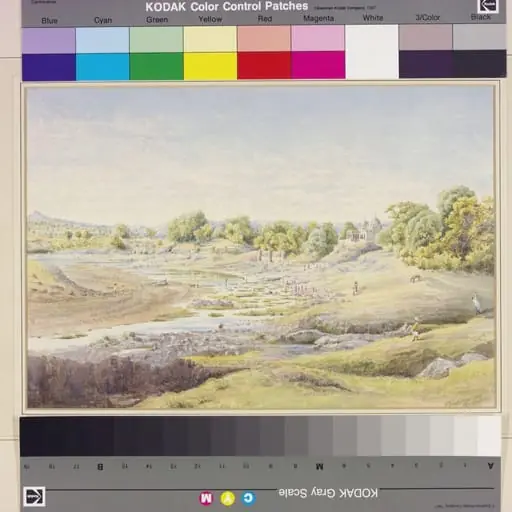
This watercolor presents a tranquil Indian landscape dominated by a Champa (Plumeria rubra) tree, its soft‑colored blossoms arranged in loose clusters.
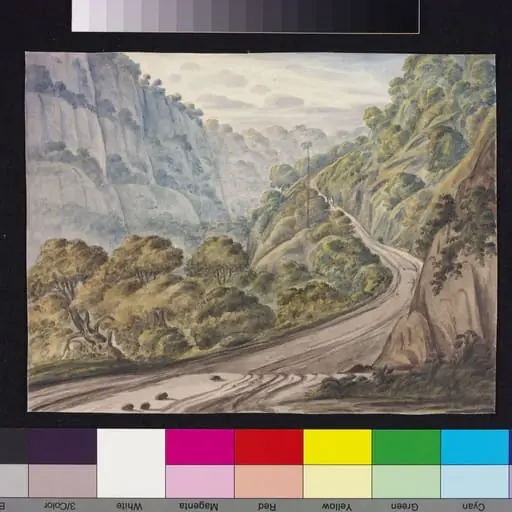
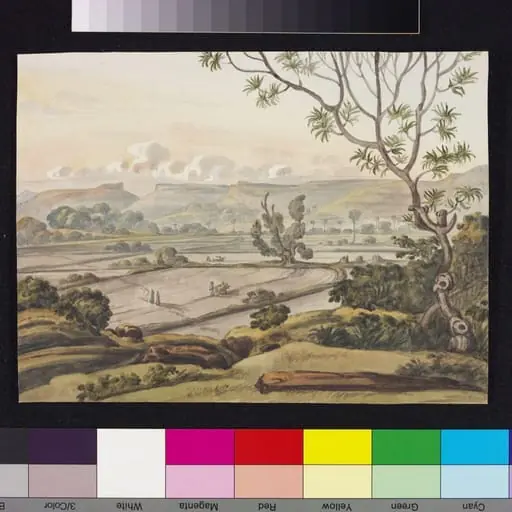
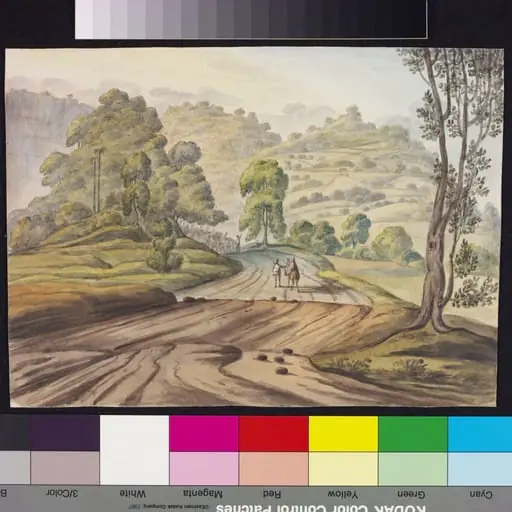
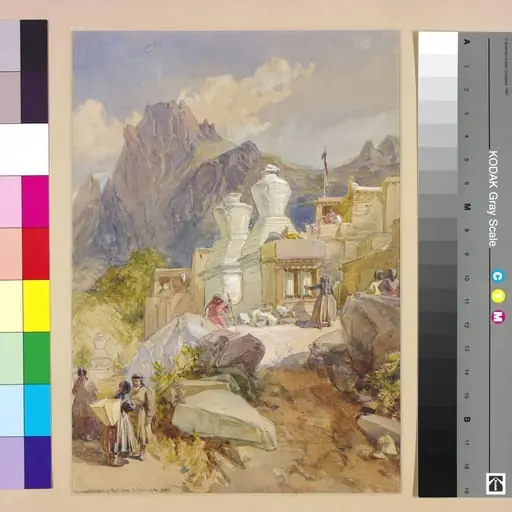
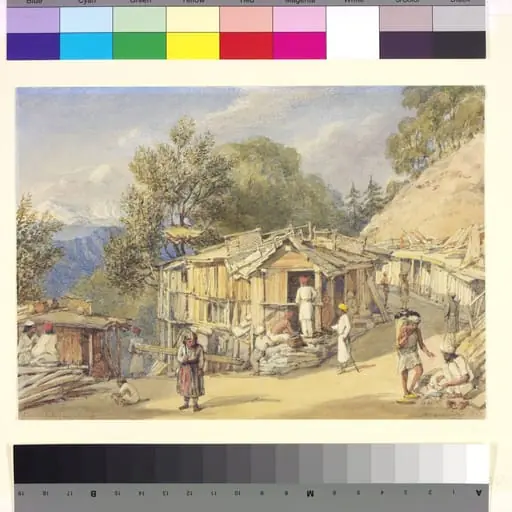
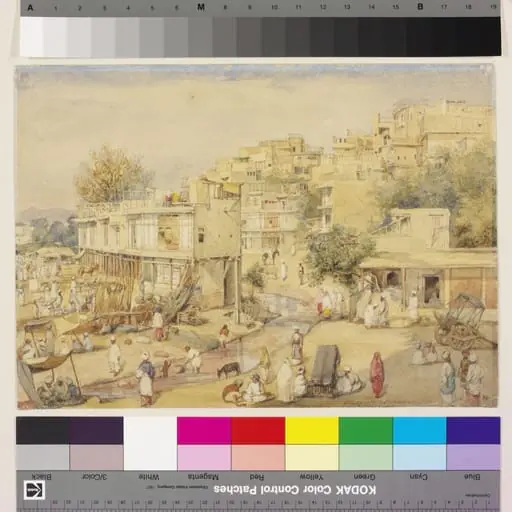
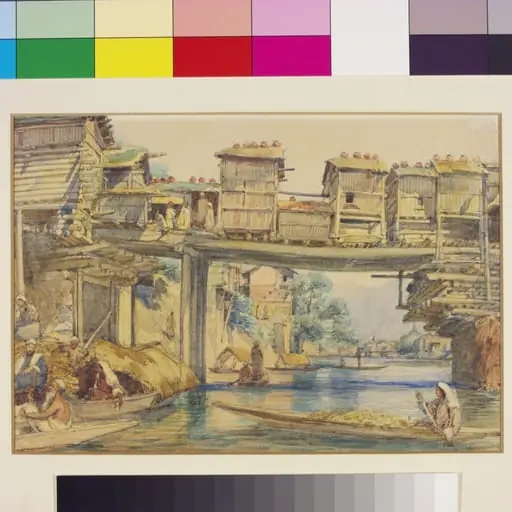
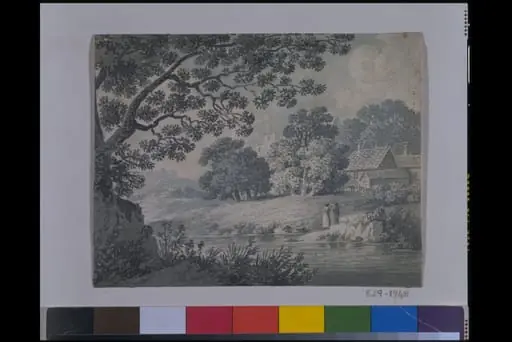
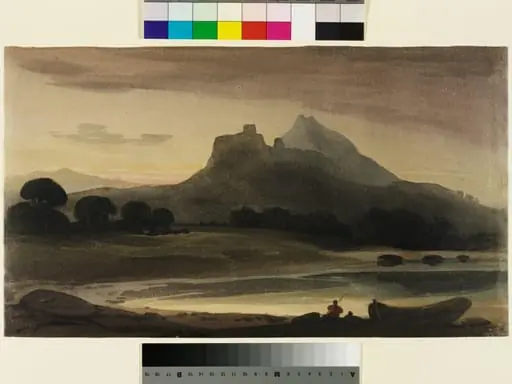
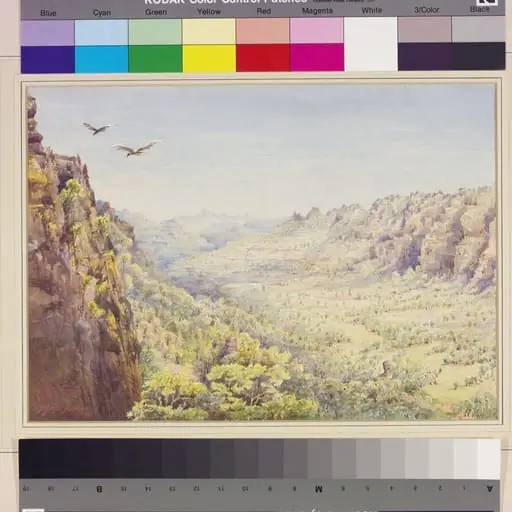
This watercolor presents a tranquil Indian landscape dominated by a Champa (Plumeria rubra) tree, its soft‑colored blossoms arranged in loose clusters. A river bisects the composition, winding through gentle hills that recede into a pale horizon. Small groups of figures and livestock populate the banks, while a herd of cows rests beneath trees on the left. The overall tone is calm, with muted blues and greens lending a serene atmosphere.
Subject & Meaning
The central motif, the Champa tree—also called the Pagoda or Temple tree—holds cultural significance in India, symbolizing purity and devotion. Its velvety flowers, rendered in varied hues, draw the eye and suggest a moment of everyday reverence within a natural setting. The inclusion of travelers and cattle underscores a harmonious coexistence between people, animals, and the environment.
Technique & Style
Executed in watercolor, the artist employs delicate washes to model sky, hills, and distant mountains, allowing colors to fade into one another. Light blues convey the atmosphere, while subdued greens define the terrain. Fine brushwork captures the texture of the Champa blossoms, and the restrained palette creates a sense of quiet contemplation characteristic of early 19th‑century landscape painting.
History & Provenance
The work belongs to an album of Indian scenes compiled around 1823 by Sir Charles Harcourt Chambers, then Chief Justice of Bombay. The album was part of the collection associated with his Bombay residence, known as the Hermitage. It remains one of three such albums linked to Chambers, documenting his visual record of the region during the early colonial period.
Context
Created during a period when European observers were cataloguing Indian flora and scenery, the painting reflects the Romantic interest in nature’s emotive power. While not overtly dramatic, its emphasis on a peaceful, idealised landscape aligns with contemporary tastes for idyllic depictions of exotic locales, offering insight into colonial-era visual culture.
Artist & collection
Artist
Charles Chambers painted Indian landscapes in the early 1800s, focusing on rivers, roads, and towns.