Artwork
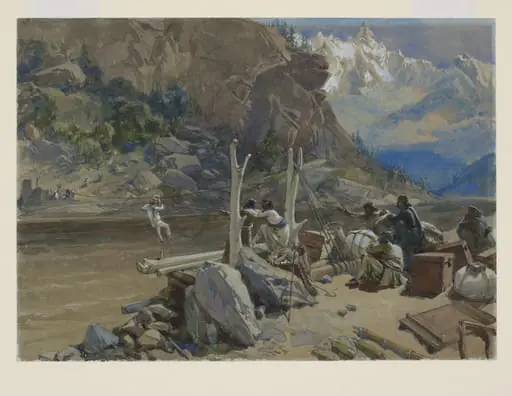
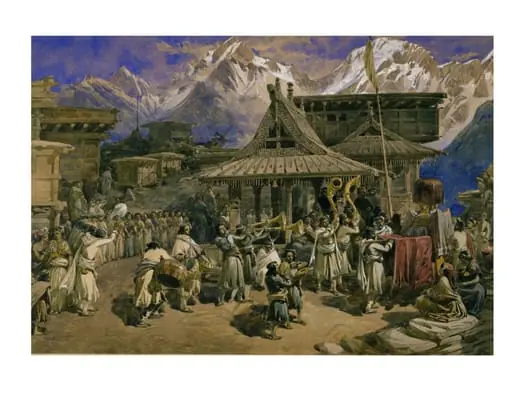
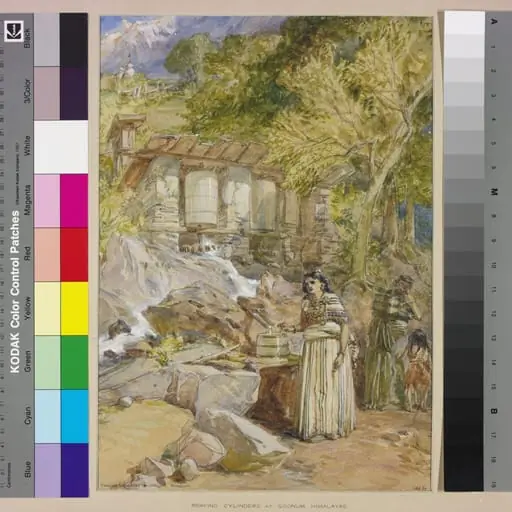
Praying cylinders in the village of Kulsi on the Indus
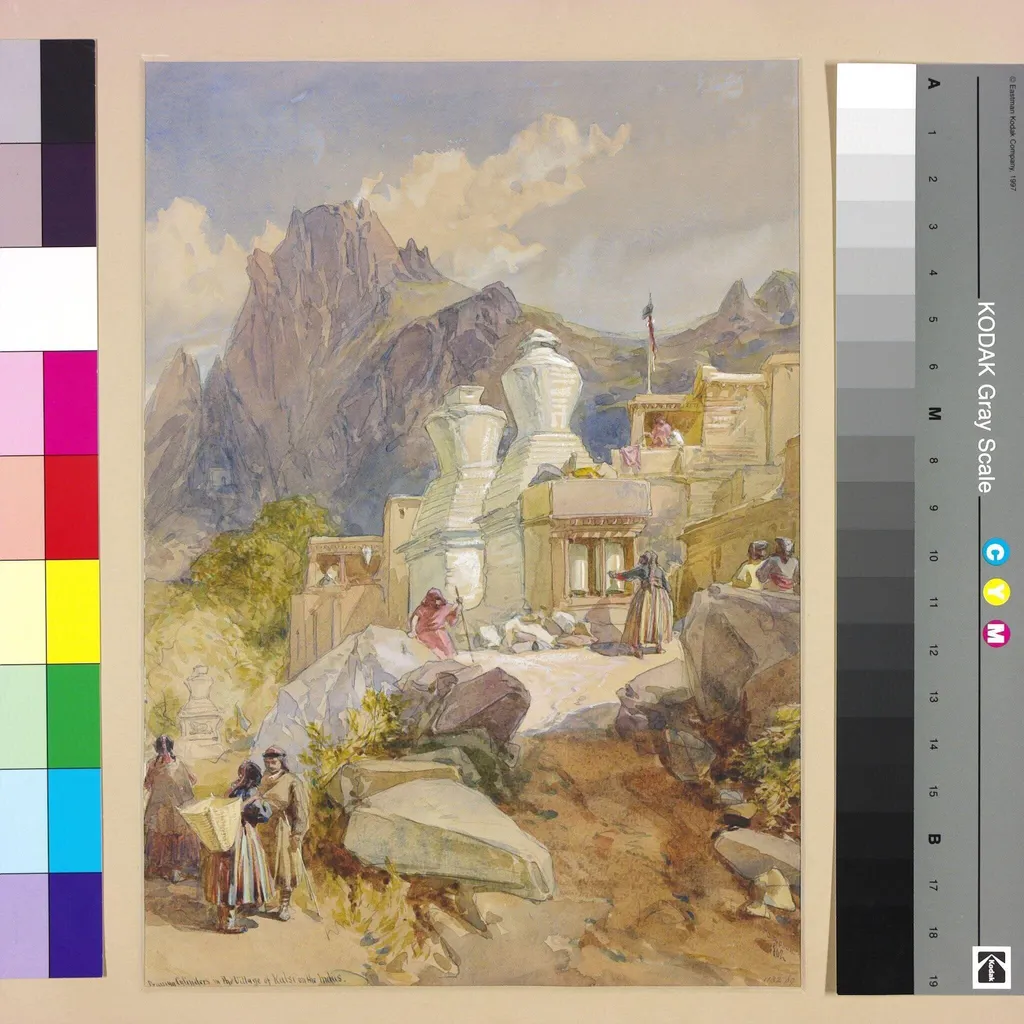
Praying cylinders in the village of Kulsi on the Indus is a paint painting by the Impressionist artist William Simpson. It dates from 1862 and is held in the collection of the Victoria and Albert Museum.
About this work
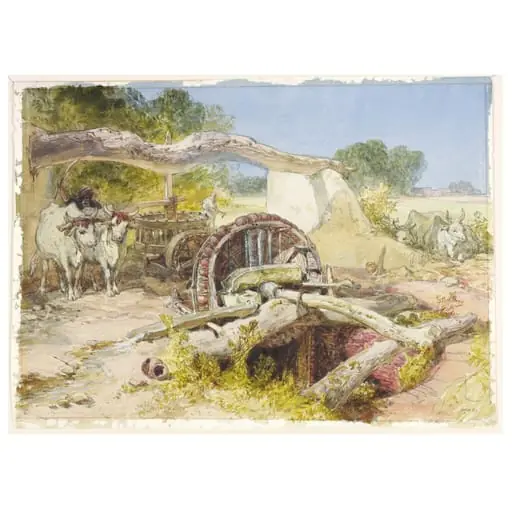
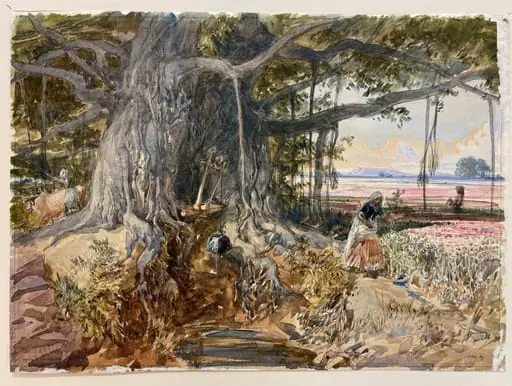
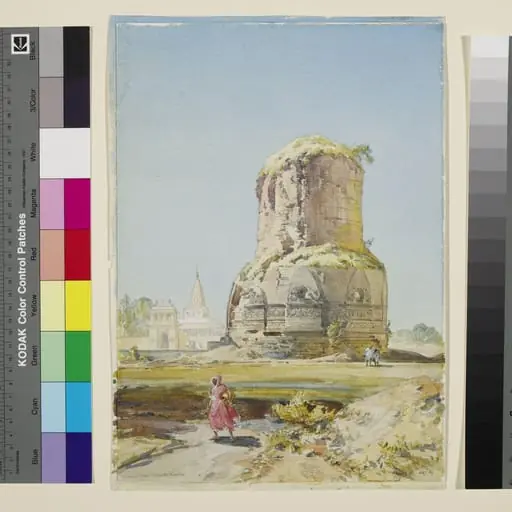
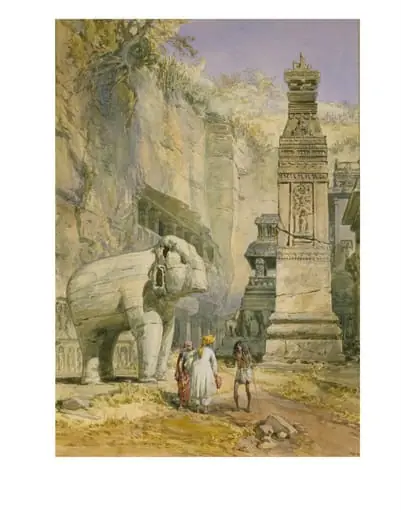
William Simpson painted scenes from his travels in India. This work shows a village called Kulsi in 1862. He used watercolor and later turned it into a finished painting.
Simpson was known for his war art and detailed sketches. He visited India in 1859 and traveled widely. His work mixes realism with impressionist touches.
Look next at the artist: Simpson, William.
Overview
Praying cylinders in the village of Kulsi on the Indus is a watercolor painting by William Simpson, created after his travels to India in the late 1850s and early 1860s.
Subject & Meaning
The painting depicts a Buddhist Chorten, or Stupa, in the village of Kulsi, adorned with praying cylinders, set within a mountainous landscape. This scene represents Simpson's first encounter with Buddhism, a subject he would later study and write about.
Technique & Style
Simpson's work is characterized by detailed sketches and a blend of realism with impressionist touches. The painting is a highly colored and evocative interpretation of the landscape and architecture.
History & Provenance
Simpson traveled to India in 1859, commissioned by Day and Sons to document sites associated with the Indian Revolt of 1857. He completed this painting after returning to London in 1862, based on sketches made during his visit to Kulsi.
Artist & collection
Artist
William Simpson drew what he saw during the Crimean War in the 1850s, including sketches of battles and camps in Crimea and Constantinople.