Artwork
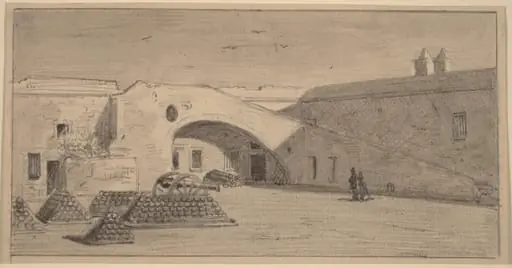
Moat at Fort Marion, Florida
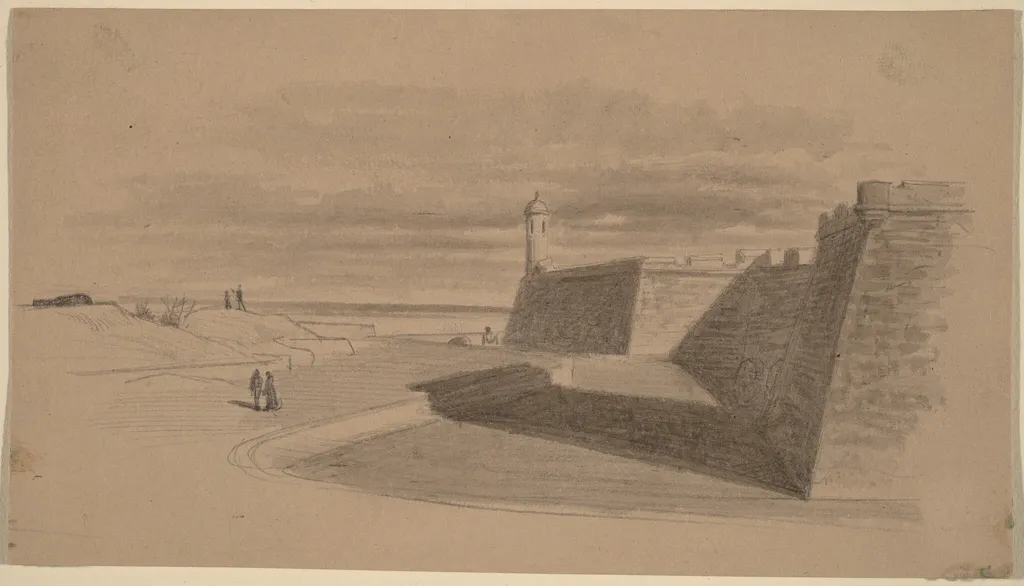
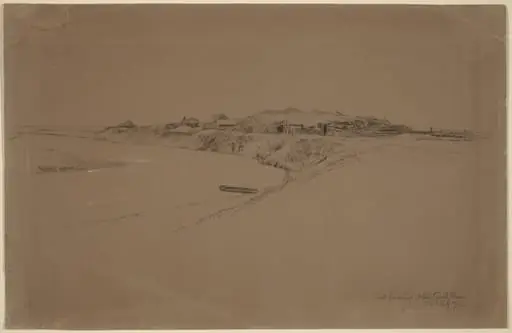
Moat at Fort Marion, Florida is a graphite drawing by the Impressionist artist James Wells Champney. It dates from 1874 and is held in the collection of the National Gallery of Art.
About this work
Overview
The work depicts the formidable stone fortifications of a coastal defense structure, its deep moat reflecting the architectural pragmatism of military design.
James Wells Champney’s *Moat at Fort Marion, Florida* is a graphite and gray wash drawing on tan wove paper, dated approximately 1874. The work depicts the formidable stone fortifications of a coastal defense structure, its deep moat reflecting the architectural pragmatism of military design. Executed with fluid, economical strokes, the composition balances architectural solidity with the immediacy of an on-site sketch.
Subject & Meaning
The drawing centers on Fort Marion—later known as Castillo de San Marcos—a Spanish colonial stronghold in St. Augustine. Champney’s focus on the moat underscores its dual role as both barrier and symbol of defense. The inclusion of figures along the path introduces a human scale, contrasting the permanence of the fort with the transient presence of its visitors or inhabitants.
Technique & Style
Champney employs a restrained yet expressive technique, combining sharp graphite lines with delicate gray washes to model form and atmosphere. The loose handling of foliage and sky suggests rapid execution, characteristic of plein-air studies. This approach aligns with late 19th-century Realist conventions, prioritizing direct observation over idealized representation.
History & Provenance
Created during the Reconstruction era, the drawing reflects a period of renewed interest in America’s colonial and military heritage. Fort Marion, originally constructed in the late 17th century, served as a Union prison during the Civil War, adding layers of historical significance to the scene. The work’s early ownership and exhibition history remain undocumented.
Context
Champney’s depiction emerges from a broader 19th-century fascination with picturesque ruins and historical sites. Artists and writers often framed such locations as emblems of endurance, resonating with contemporary debates about national identity and preservation. The fort’s survival through multiple conflicts lent it particular cultural weight during this era.
Artist & collection

Artist
James Wells Champney (July 16, 1843 – May 1, 1903) was an American genre artist and illustrator noted for his portraits, oriental scenes and American landscapes.

![Buildings along a Riverside [verso], by Hubert Robert](https://artifactworldgallery.com/img/hubert-robert--buildings-along-a-riverside-verso--2575ea57b917e17d-w320.webp)