Artwork
Fort Marion, Florida
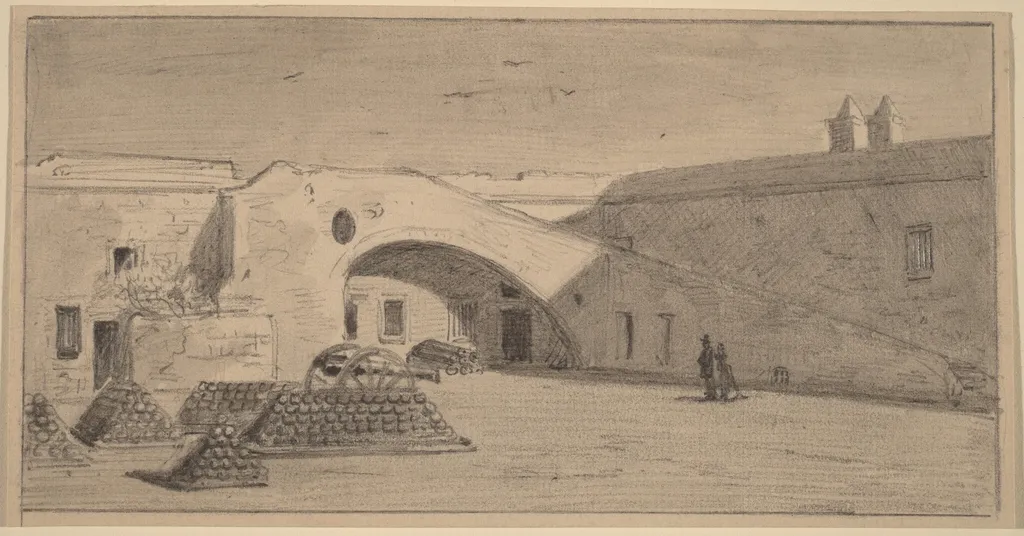
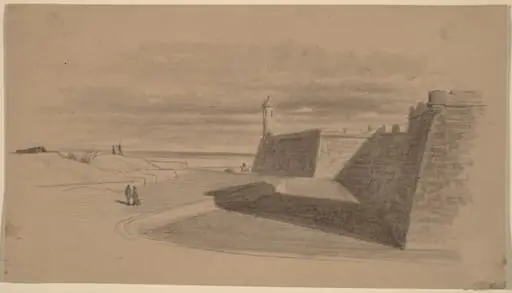
Fort Marion, Florida is a graphite drawing by the Impressionist artist James Wells Champney. It dates from 1874 and is held in the collection of the National Gallery of Art.
About this work
Overview
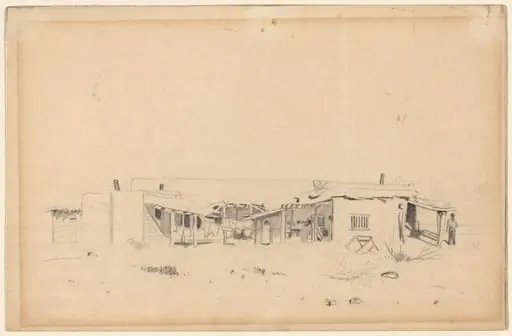
James Wells Champney’s drawing titled Fort Marion, Florida, executed around 1874, is a graphite work with a gray wash on wove paper. The piece records a tranquil street scene framed by stone structures and a high wall crowned with towers. In the lower foreground, cannonballs and barrels are stacked, while a solitary figure moves past an arched passageway.
Subject & Meaning
The composition captures a moment of everyday life within a military fort, emphasizing the juxtaposition of solid architecture and the transient presence of a lone pedestrian. The inclusion of artillery supplies hints at the fort’s defensive function, while the quiet street suggests a pause in activity, inviting viewers to consider the coexistence of war readiness and civilian routine.
Technique & Style
Champney employed simple, confident lines and a subtle gray wash to render light and shadow, creating depth without elaborate detail. The drawing’s tonal range relies on soft shading to model forms, a method typical of on‑site sketches where speed and immediacy were essential. The approach reflects the realist tendency to document observed scenes with fidelity.
Context
Created during a period when American artists were increasingly interested in depicting ordinary subjects, the work aligns with the broader Realist movement of the late nineteenth century. Champney, known for his travel sketches, often recorded architectural and landscape features during journeys, and this piece exemplifies his practice of translating field observations into finished drawings.
Artist & collection

Artist
James Wells Champney (July 16, 1843 – May 1, 1903) was an American genre artist and illustrator noted for his portraits, oriental scenes and American landscapes.


 Porte de l'Avenue Uhrich
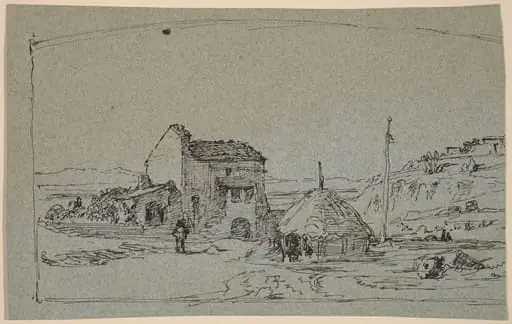 Tuscany
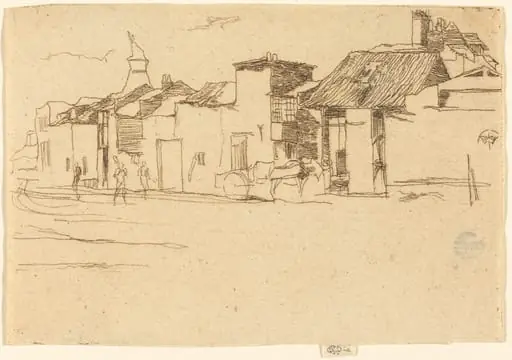 The Old Swan Brewery, Chelsea
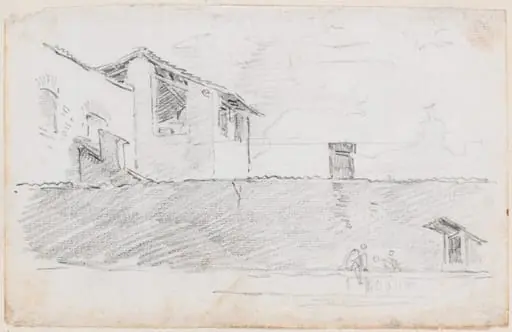 Housetops behind a Wall
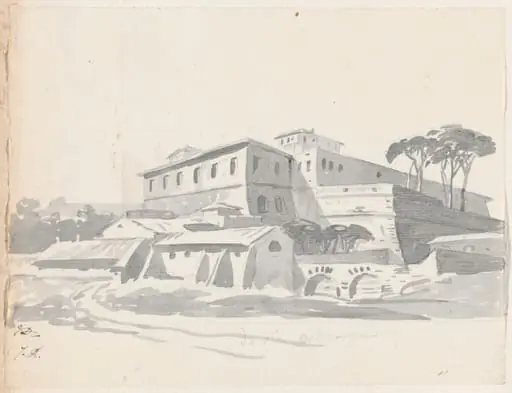 Roman View
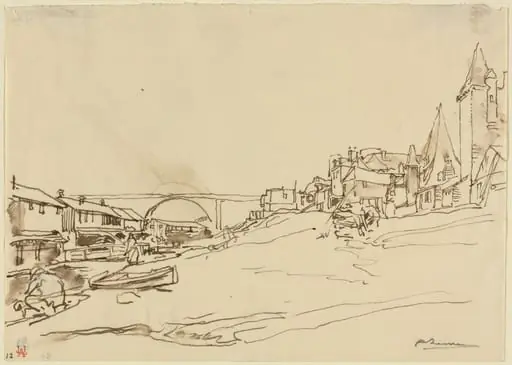 The House of the King of Poland (Angers)
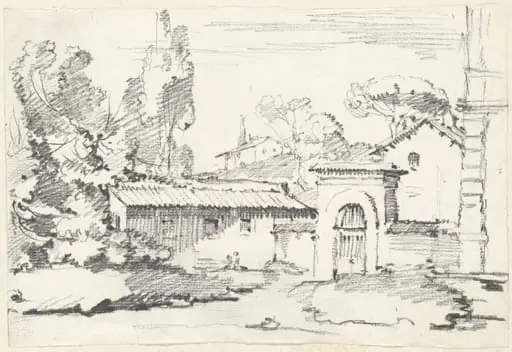 Entrance to the Gardens of the Villa Giulia
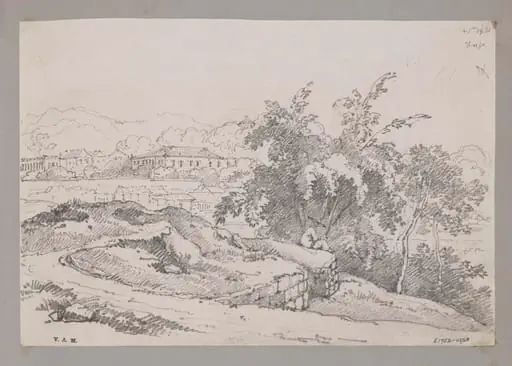 The Casa, Macao, in the gardens of which is Camoens' Cave (the residence of Lady Pereira), Macao
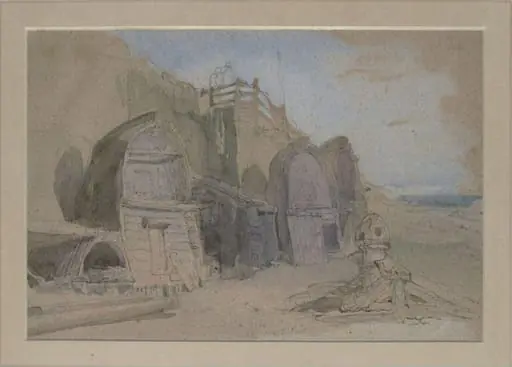 On the Beach, Brighton
 Untitled
 Provins (Seine et Marne)