Artwork
Turkish Sentinel
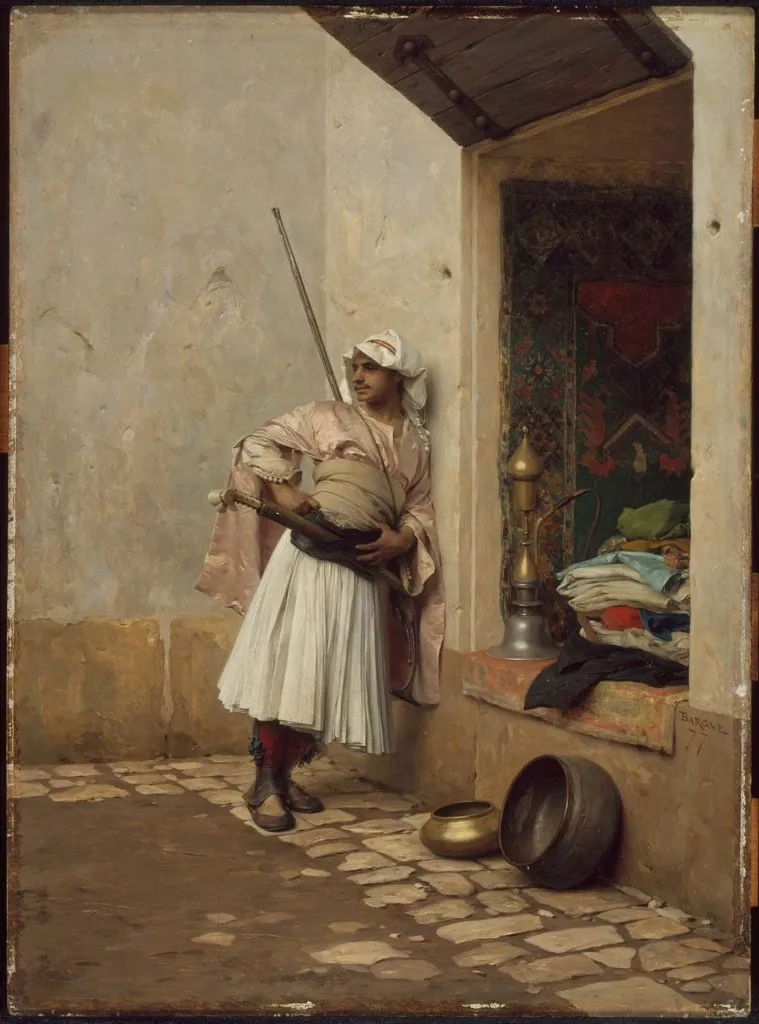
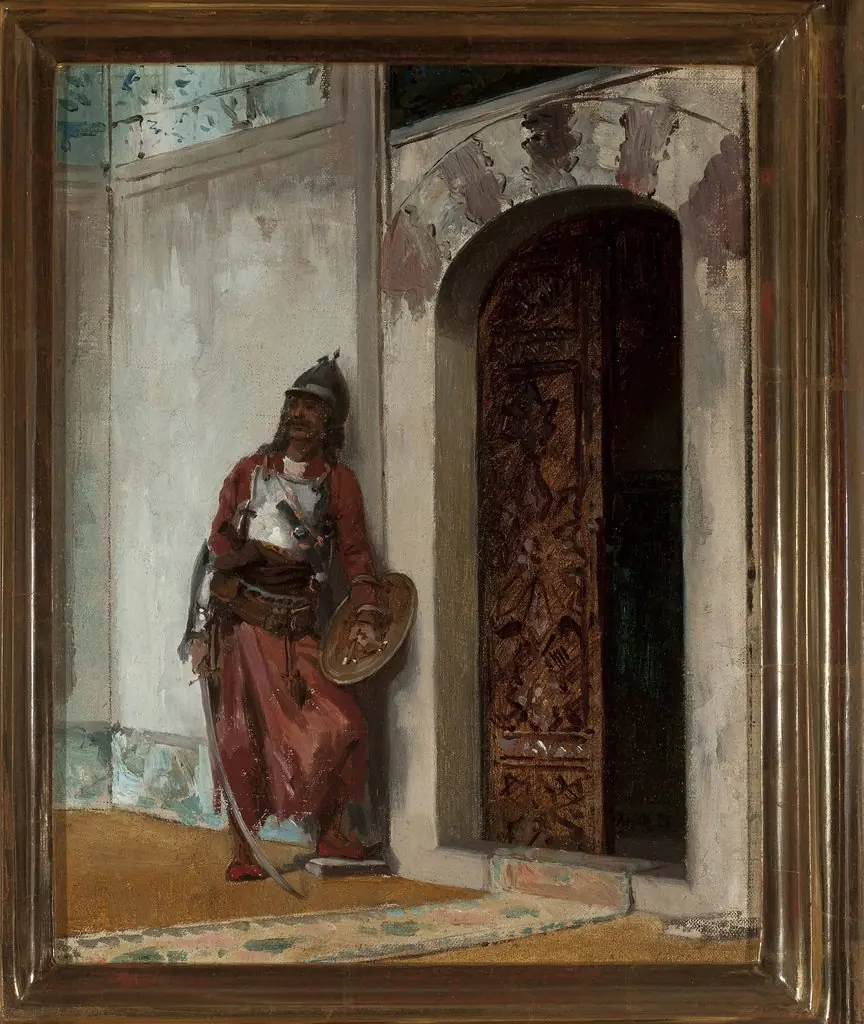
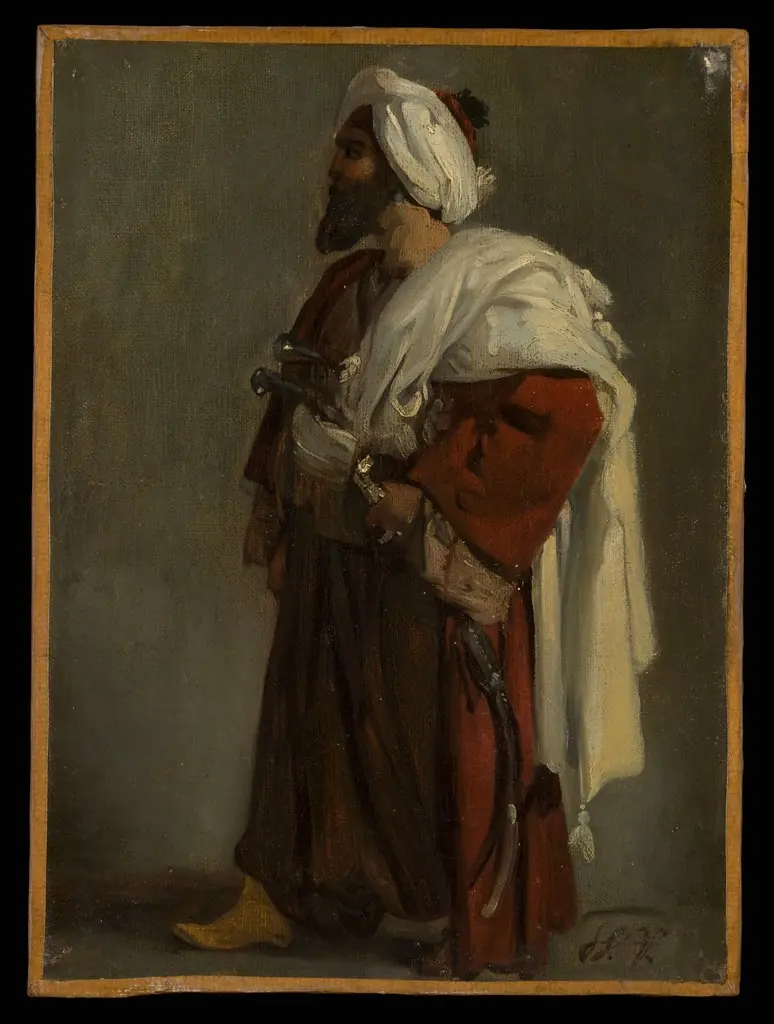
Turkish Sentinel is an unspecified painting by the Orientalist artist Charles Bargue. It is held in the collection of the Museum of Fine Arts Boston.
About this work
Overview
The painting belongs to the broader Orientalist tradition, which often depicted scenes from the Ottoman Empire and North Africa through a European lens.
Charles Bargue, a French artist known for his instructional drawing system, completed *Turkish Sentinel* in 1889. The painting belongs to the broader Orientalist tradition, which often depicted scenes from the Ottoman Empire and North Africa through a European lens. Executed with precision, the work reflects Bargue’s background in lithography and his emphasis on disciplined draftsmanship. It is now part of the Museum of Fine Arts, Boston’s permanent collection.
Subject & Meaning
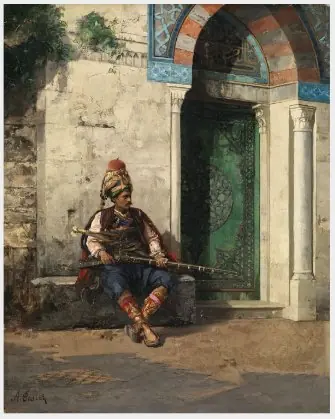
The painting portrays a solitary figure, likely a guard or sentinel, standing in a stone-walled alcove. He holds a sword and a wrapped item, suggesting duty or ceremonial role. His attire—white turban, pink robe, white skirt, and black boots—evokes regional dress from the Ottoman sphere. The stillness and isolation of the figure convey a sense of quiet vigilance, though the work does not narrate a specific event, instead offering a stylized representation of an exoticized Other.
Technique & Style
Bargue’s lithographic training is evident in the painting’s sharp contours and controlled tonal gradations. The surface is rendered with meticulous attention to texture—stone walls, fabric folds, and boot leather are carefully distinguished. Color is restrained but deliberate: the pink robe contrasts subtly against the muted stone backdrop, enhancing spatial depth. Light falls evenly, avoiding dramatic chiaroscuro, reinforcing the work’s documentary rather than theatrical intent.
History & Provenance
Created in 1889, *Turkish Sentinel* emerged during the height of European Orientalist interest in the Middle East and North Africa. Though Bargue was primarily known for his drawing manuals, this painting reflects his engagement with the genre. It entered the Museum of Fine Arts, Boston’s collection in the early 20th century, likely through acquisition or donation, and has remained in its holdings since, serving as an example of 19th-century academic Orientalism.
Context
In the late 19th century, European artists frequently depicted subjects from the Ottoman Empire and North Africa, often idealizing or exoticizing them for domestic audiences. Bargue’s work aligns with this trend, though his approach is more restrained than the flamboyant styles of contemporaries like Jean-Léon Gérôme. The painting reflects colonial-era curiosity, filtered through academic training and a focus on formal accuracy rather than narrative drama.
Legacy
While not widely exhibited outside institutional settings, *Turkish Sentinel* remains a representative example of academic Orientalist painting. It illustrates how technical precision and ethnographic detail were used to construct visual narratives of the East for Western viewers. Today, it is studied less for its subject matter than for its role in the history of art education and the evolution of cross-cultural representation in 19th-century art.
Artist & collection
Artist
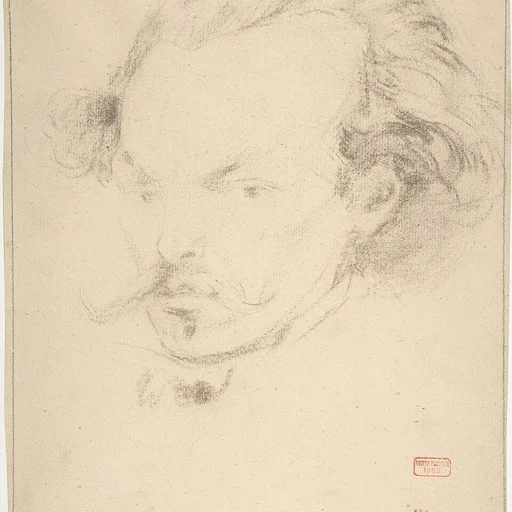
Charles Bargue (Paris, c. 1825 - Paris, 1883) was a French painter and lithographer noted for devising an influential drawing course.