Artwork
A Syrian Sheik, Egypt
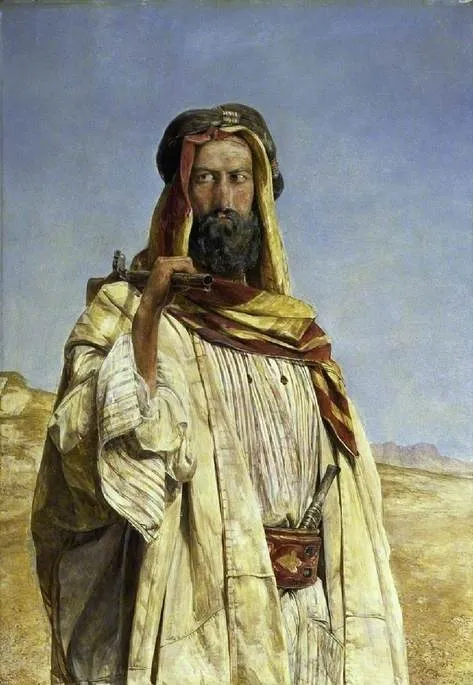
A Syrian Sheik, Egypt is an oil painting by the Orientalist artist John Frederick Lewis. It dates from 1856 and is held in the collection of the Fitzwilliam Museum.
About this work
Overview
John Frederick Lewis’s oil painting titled *A Syrian Sheik, Egypt* was completed in 1856. The work is part of the collection of the Fitzwilliam Museum in Cambridge. It portrays a solitary figure in a desert setting, rendered in the artist’s characteristic attention to light and surface.
Subject & Meaning
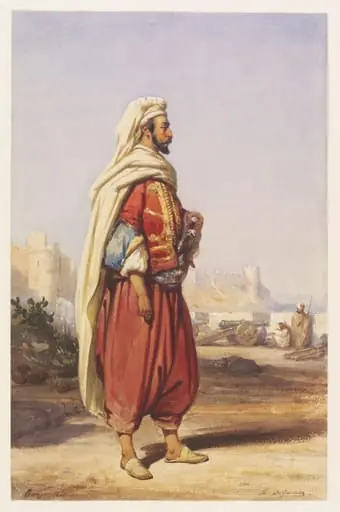
The central figure is a man dressed in traditional Middle Eastern clothing: a white robe, a red and gold headscarf, and a rifle slung across his shoulder. His expression is solemn, and his gaze extends beyond the immediate scene, suggesting contemplation or vigilance amid the expansive dunes.
Technique & Style
Lewis employs a layered glazing method, building thin translucent washes of oil to achieve depth and luminous colour. The contrast between illuminated sand and shadowed rock formations creates a three‑dimensional effect, while the fine detailing of the fabric and weapon demonstrates his meticulous draftsmanship.
History & Provenance
The painting entered the Fitzwilliam Museum’s holdings after being acquired in the late 19th century, though the exact circumstances of its purchase are not recorded in public archives. It remains one of the few works by Lewis that directly engages with North‑African subject matter, reflecting contemporary European interest in Orientalist themes.
Artist & collection
Artist
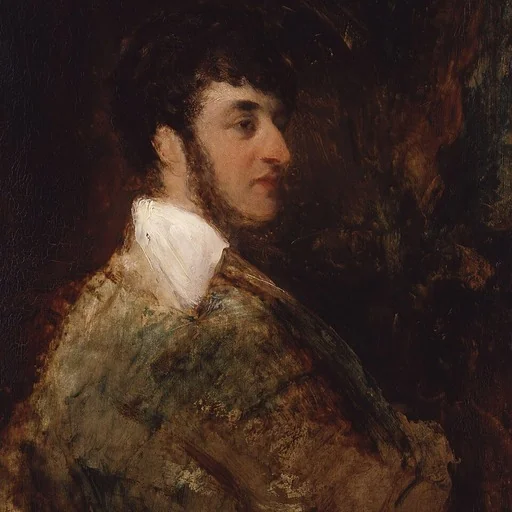
John Frederick Lewis (1804–1876) was an English Orientalist painter. He specialized in Oriental and Mediterranean scenes in detailed watercolour or oils, very often repeating the same composition in a version in each…

![Portrait of Trehem[?]Walid 'Abdullah, an Arab from Iraq, by Aloysius Rosarius Amadeus Raymondus Andreas Preziosi](https://artifactworldgallery.com/img/aloysius-rosarius-amadeus-raymondus-andreas-preziosi--portrait-of-trehem-walid-abdullah-an-arab-from-iraq--2476a3692d0929a5-w320.webp)