Artwork
The Moorish Warrior
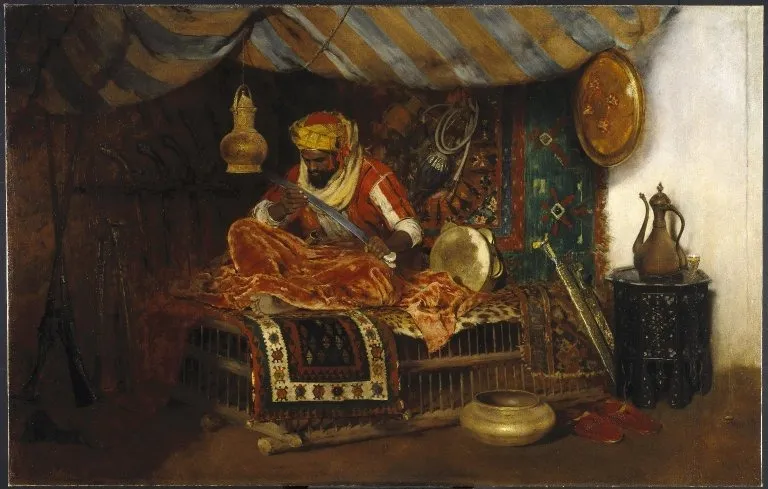
The Moorish Warrior is an oil painting by the American Impressionist artist William Merritt Chase. It dates from 1890 and is held in the collection of the Brooklyn Museum.
About this work
Overview
Though rooted in the stylistic freedom of his time, the painting diverges from typical Impressionist landscapes to focus on a solitary, costumed figure.
Painted in 1890 by American artist William Merritt Chase, *The Moorish Warrior* is an oil-on-canvas work that reflects his interest in exotic subjects during the height of American Impressionism. Though rooted in the stylistic freedom of his time, the painting diverges from typical Impressionist landscapes to focus on a solitary, costumed figure. Chase’s engagement with non-Western imagery aligns with broader 19th-century artistic trends that sought inspiration beyond European traditions.
Subject & Meaning
The figure is portrayed in elaborate attire—red and white robes, a yellow headscarf, and a sword—suggesting a stylized representation of a Moorish warrior. The setting, with scattered objects like a pitcher and bowl, evokes an imagined Eastern interior rather than a specific cultural context. The pose and accoutrements convey dignity and mystery, but the depiction is filtered through a Western lens, prioritizing aesthetic appeal over ethnographic accuracy.
Technique & Style
Chase employed bold brushwork and a strong chiaroscuro effect to define the figure against a dark, undefined background. The vivid hues of the clothing stand in sharp contrast to the muted surroundings, drawing attention to the subject’s form and garments. His handling of light and texture reveals his training in European academic traditions, even as his loose brushstrokes hint at Impressionist influence, blending precision with atmospheric immediacy.
History & Provenance
Created during Chase’s most active period as both artist and educator, the painting emerged from his studio in New York, where he frequently staged theatrical scenes with props and costumes. It was likely painted for exhibition rather than commission, reflecting his personal fascination with orientalist themes. The work remained in private collections for decades before entering a public institution, where it continues to be studied for its cultural and artistic implications.
Context
In late 19th-century America, depictions of 'the Orient' were popular in art and theater, often blending fact with fantasy. Chase’s painting fits within this trend, influenced by European Orientalism and the growing availability of imported textiles and artifacts. While his technique was modern, his subject matter adhered to longstanding conventions that exoticized non-European cultures, a practice increasingly questioned in later scholarship.
Legacy
Though not among Chase’s most celebrated works, *The Moorish Warrior* remains a significant example of how American artists engaged with global imagery during a period of expanding cultural exchange. It illustrates the tension between artistic experimentation and cultural stereotyping, offering insight into the complexities of representation in art that continue to inform contemporary discourse on identity and appropriation.
Artist & collection
Artist
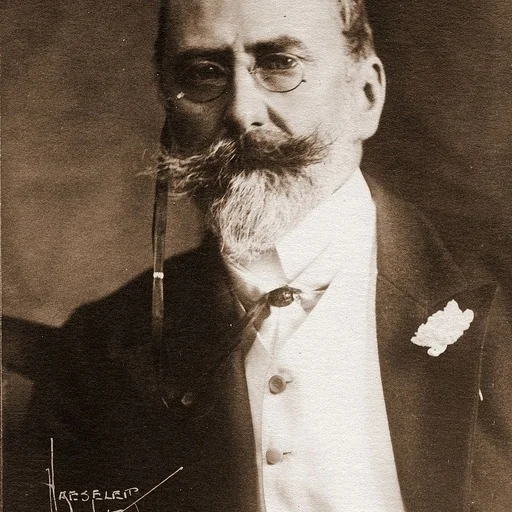
William Merritt Chase (November 1, 1849 – October 25, 1916) was an American painter, known as an exponent of Impressionism and as a teacher.

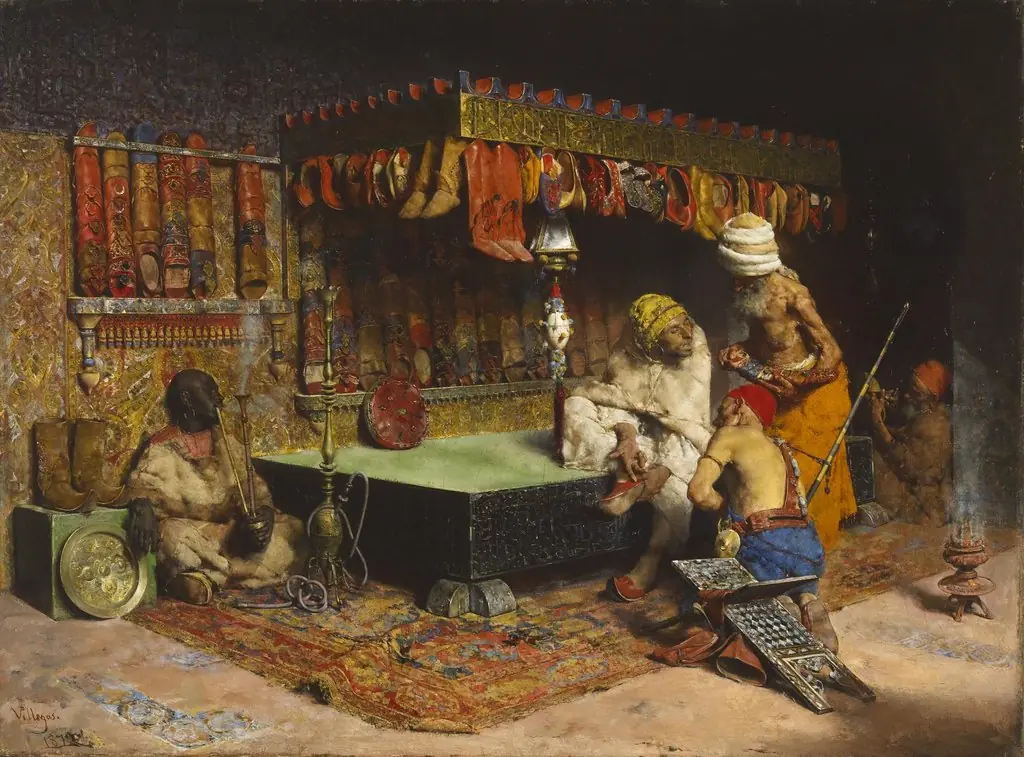 The Slipper Merchant in Morocco
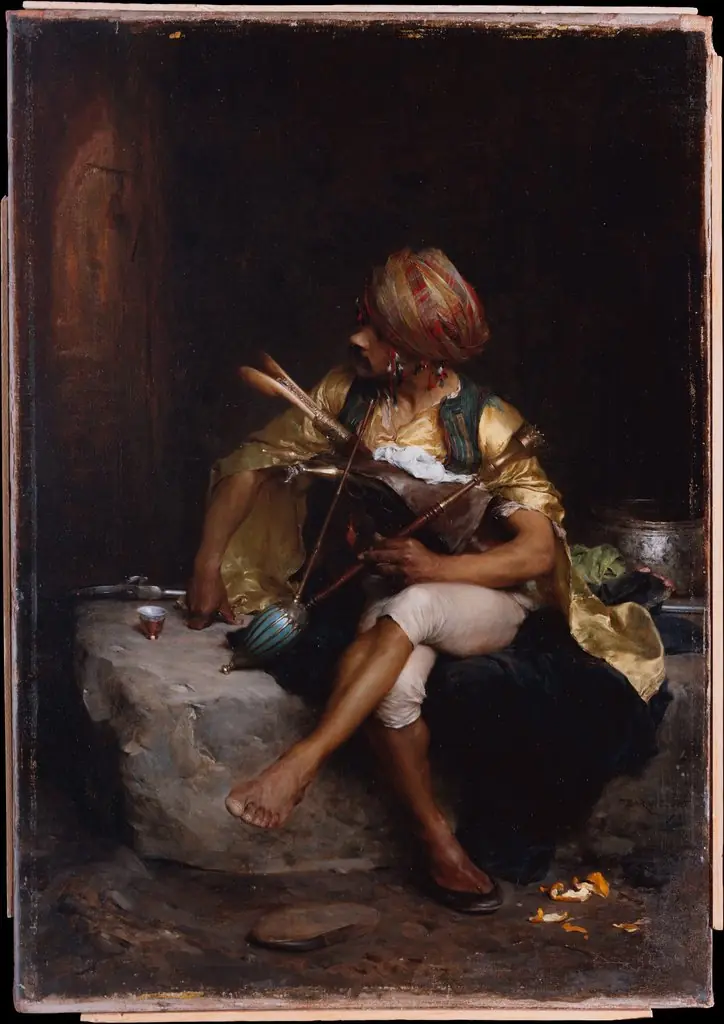 A Bashi-Bazouk
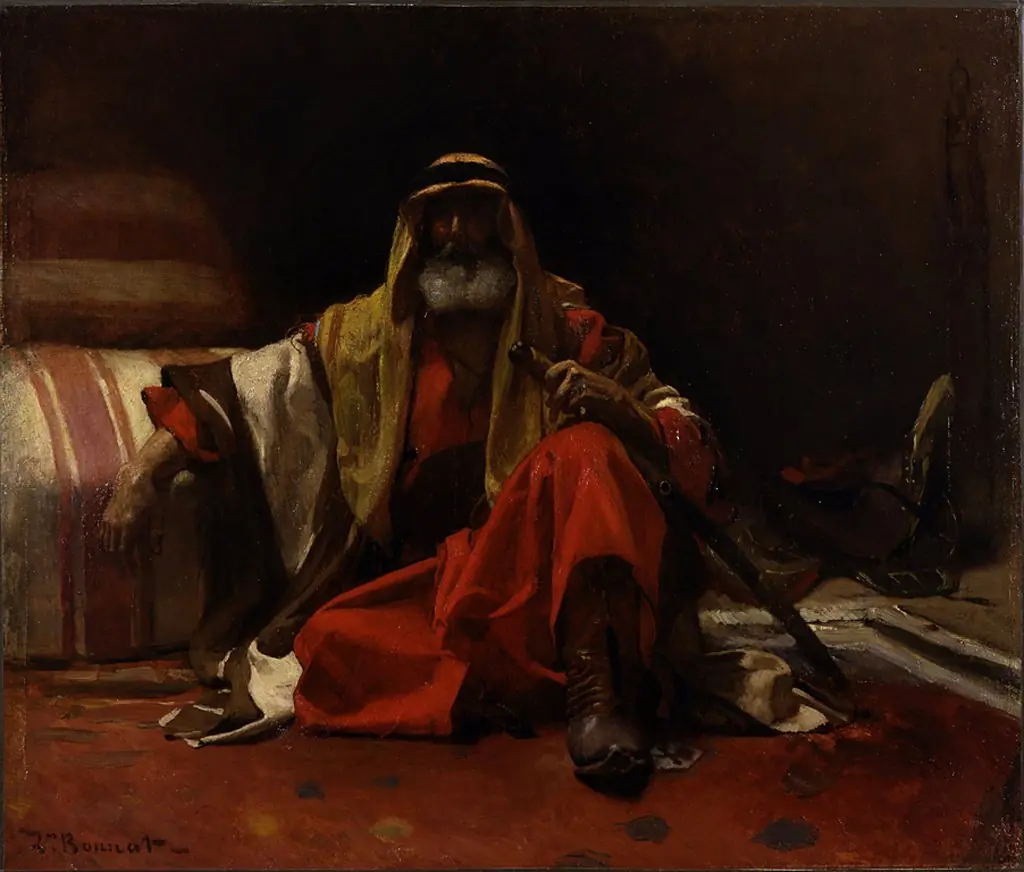 An Arab Sheik
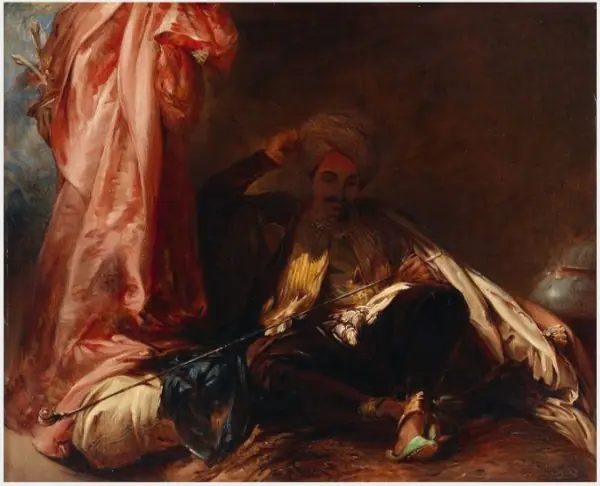 The Chibouk
![Blind Egyptian with a Madrab [Teasel], by Egron Sillif Lundgren](https://artifactworldgallery.com/img/egron-sillif-lundgren--blind-egyptian-with-a-madrab-teasel--05374d5103b0d694-w320.webp) Blind Egyptian with a Madrab [Teasel]
Blind Egyptian with a Madrab [Teasel]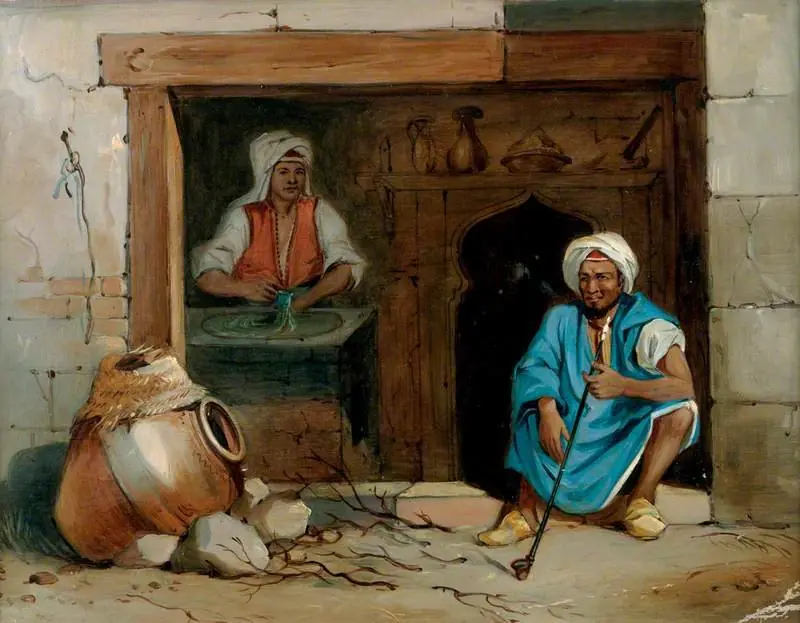 An Egyptian Baker and His Assistant at the Door of a Cake-Shop
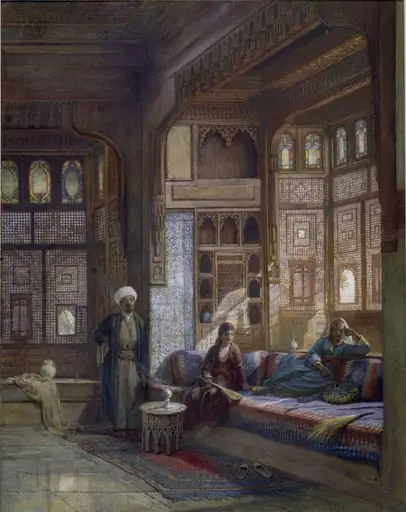 A room in the house of Shayk Sadat, Cairo
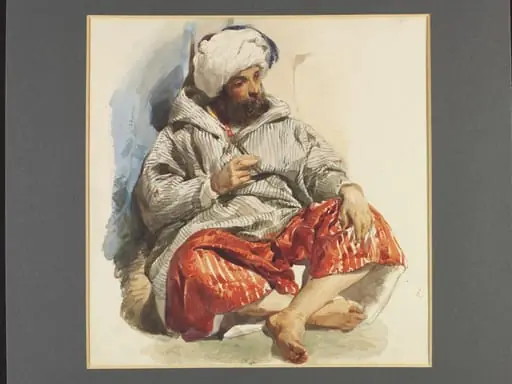 A European in Oriental dress, seated cross legged
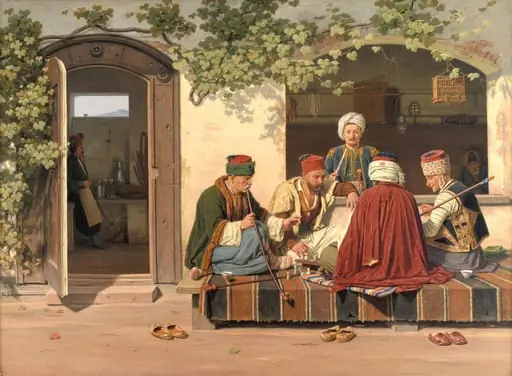 A party of chess players outside a Turkish coffeehouse and barbershop
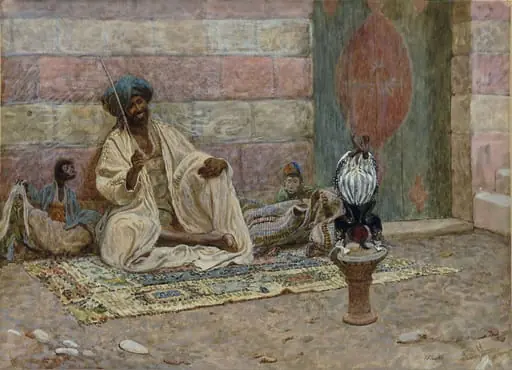 An Oriental, with performing monkeys