Artwork
A Moroccan Amir
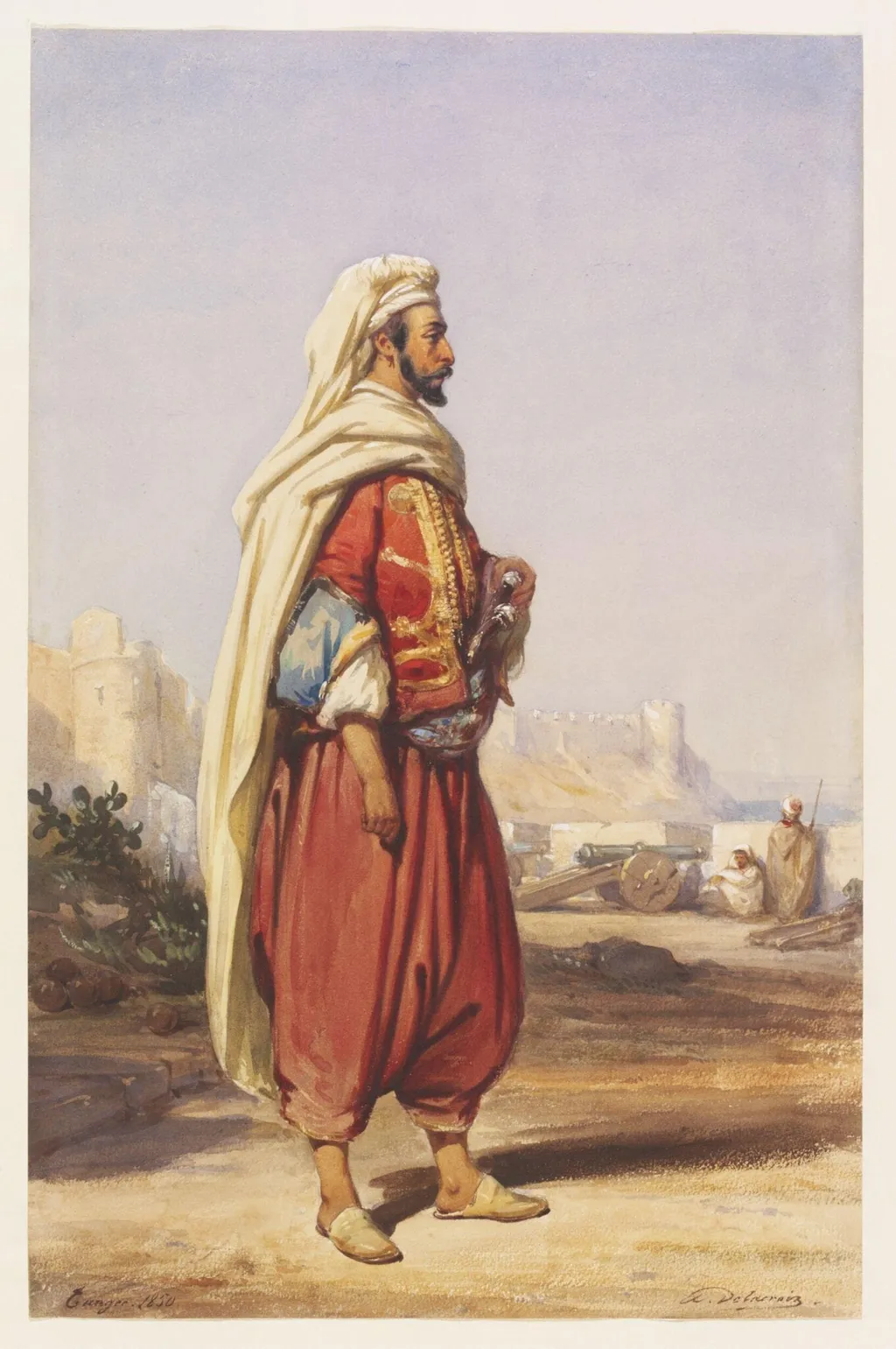
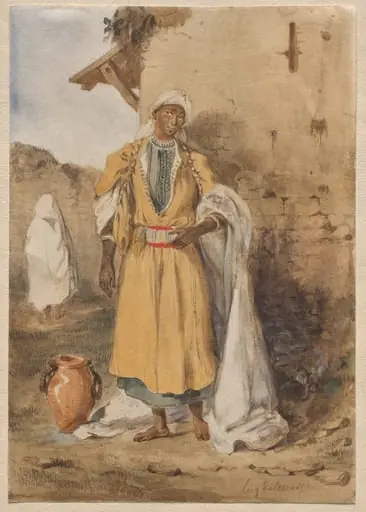
A Moroccan Amir is a watercolor work on paper by the Impressionist artist Auguste Delacroix. It dates from 1850 and is held in the collection of the Victoria and Albert Museum. This watercolour, painted in 1850, depicts a Moroccan military leader within the Citadel of Tangier.
About this work
This watercolor shows a Moroccan military leader in Tangier’s Citadel.
This watercolor shows a Moroccan military leader in Tangier’s Citadel. Delacroix painted it in 1850 during his trip to Morocco. The man stands in bright light with a cannon behind him.
Delacroix rarely left his hometown before 1849. His visit to Tangier shifted his work toward North African scenes. This piece reflects his quick, direct style in watercolor.
Look up the Victoria and Albert Museum next.
Overview
This watercolour, painted in 1850, depicts a Moroccan military leader within the Citadel of Tangier. Created during Auguste Delacroix’s first and only journey to North Africa, it reflects a decisive shift in his artistic focus. Prior to 1849, his work centered on coastal life near Boulogne; after his trip, oriental subjects became central to his exhibitions at the Salon.
Subject & Meaning
The figure is portrayed in profile, standing with quiet authority under strong sunlight. His alert posture and sharp facial features suggest vigilance and command. The cannon behind him anchors the scene in a military context, not as a weapon in use, but as a symbol of presence and authority. The subject is not idealized; his dignity emerges from observation rather than romanticism.
Technique & Style
Delacroix employed watercolour with swift, direct brushwork, capturing light and form with immediacy. The bright sunlight is rendered through washes of pale yellow and white, while the stone walls and shadowed areas are built with muted tones. The technique reflects a spontaneous, on-site approach, typical of travel sketches, yet executed with precision and compositional clarity.
History & Provenance
Painted during or shortly after Delacroix’s 1849–50 journey to Morocco, the work is among the earliest of his North African studies. It entered the Victoria and Albert Museum’s collection as part of a broader acquisition of 19th-century British and European watercolours, where it remains a key example of European artists engaging with North African subjects during the mid-century.
Context
Delacroix’s visit to Tangier coincided with a growing European fascination with North Africa, fueled by colonial expansion and travel literature. Unlike many contemporaries who exoticized their subjects, he focused on quiet, unadorned moments of daily military life. His work stands apart from the theatrical orientalism of his more famous namesake, Eugène Delacroix.
Legacy
This watercolour marks a turning point in Auguste Delacroix’s career, establishing his reputation for authentic, observational depictions of North African life. Though less known than his Romantic peers, his post-Morocco works contributed to a more grounded European visual record of the region, influencing later artists seeking realism over spectacle in Orientalist themes.
Artist & collection
Artist
Auguste Delacroix wasn’t some starving artist—he was a working draftsman who got paid to sketch exotic scenes for rich travelers.

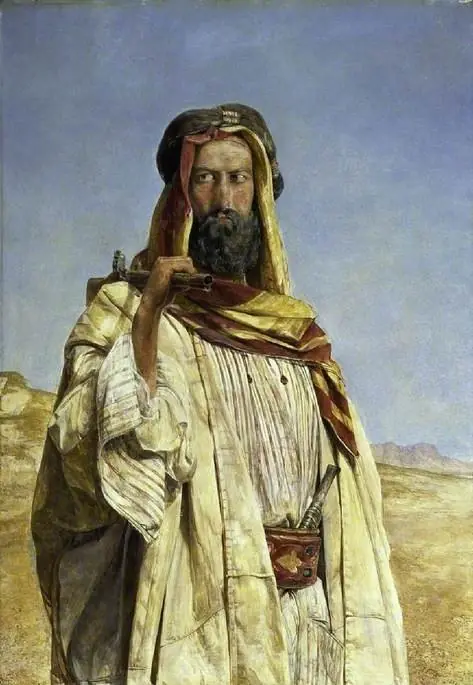 A Syrian Sheik, Egypt
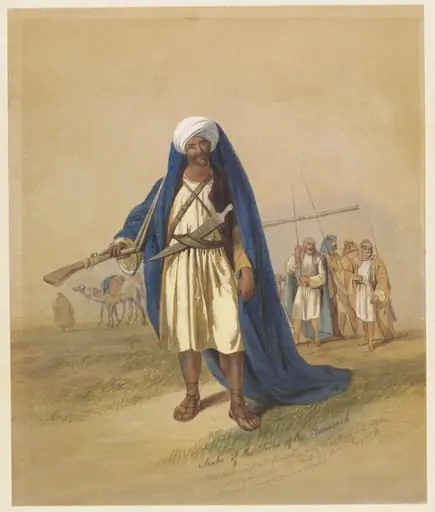 Arabs of the Tribe of the Benisaid
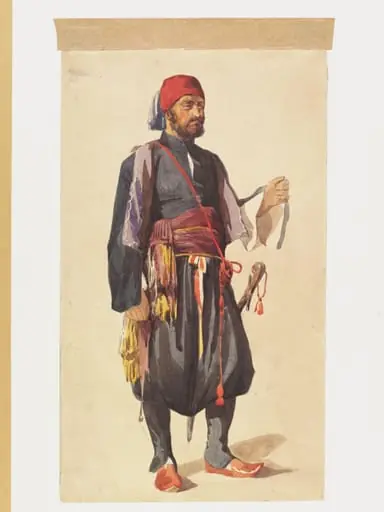 Officer, possibly a Spahi
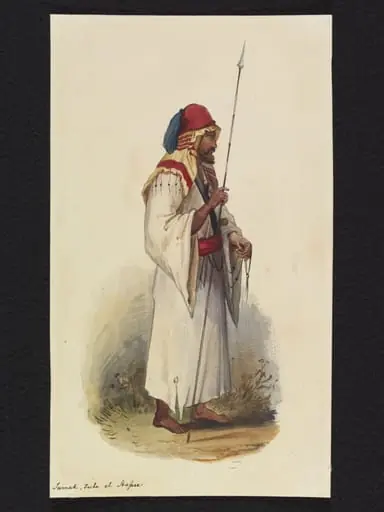 Jumah, Tribe el Hassee
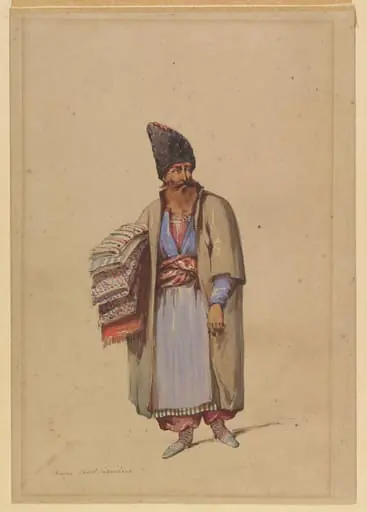 Persian Shawl-Merchant
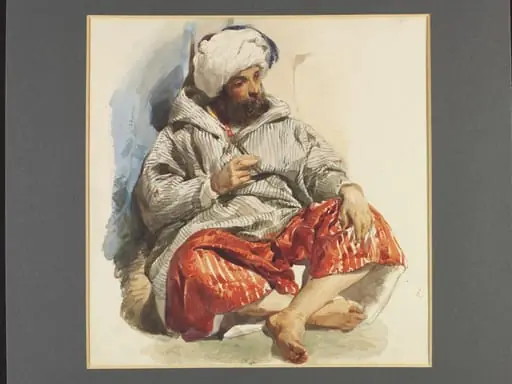 A European in Oriental dress, seated cross legged
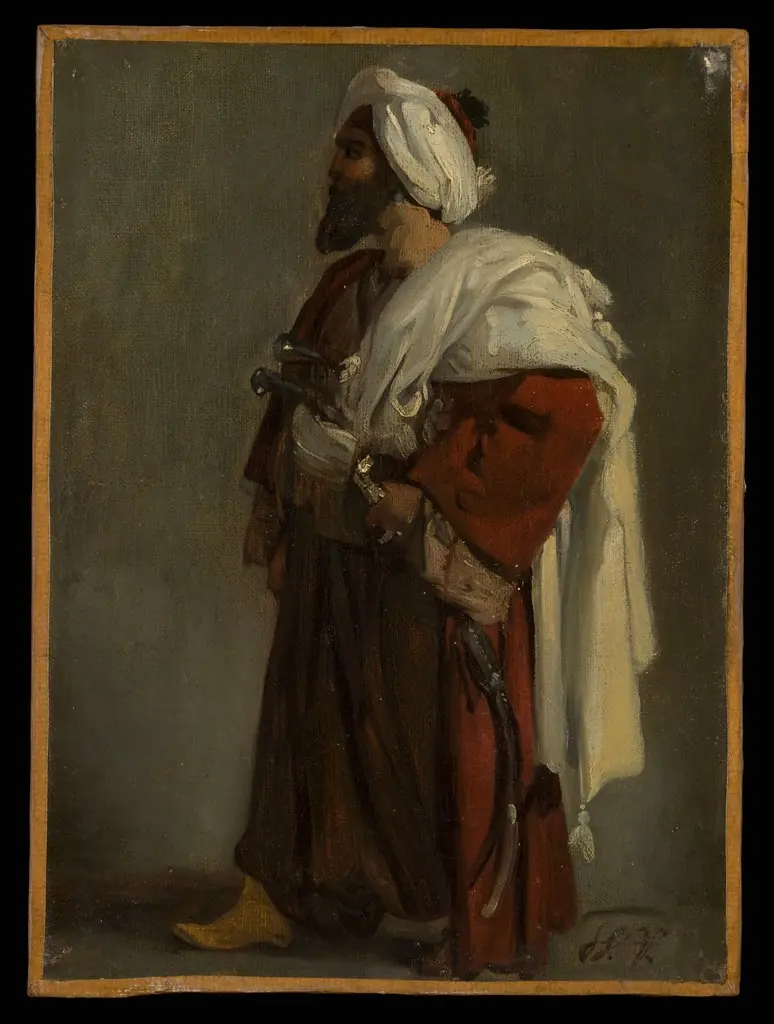 Arab Warrior
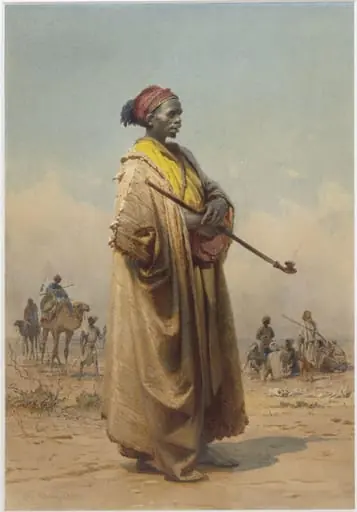 In the Desert
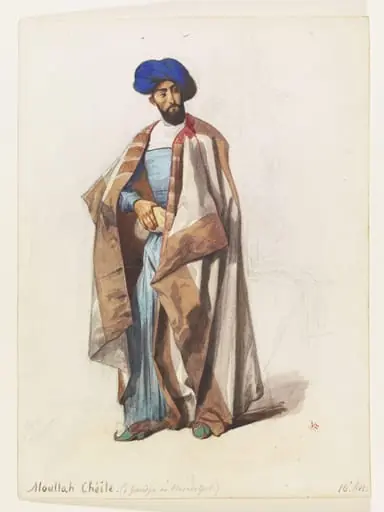 Moullah Chéite - (à Gandjà ou Elisavetopol.)
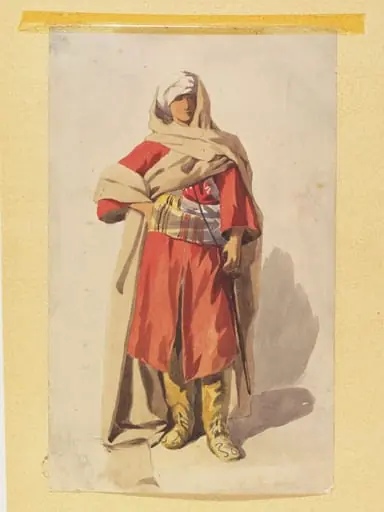 Soldier
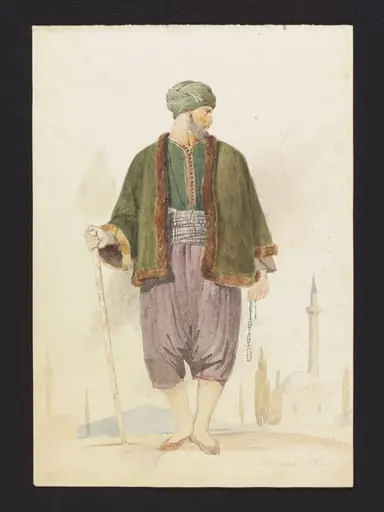 Mahmoud - Athens -
 A Young Black Woman Fetching Water