Artwork
View of the Bridges at Hawick
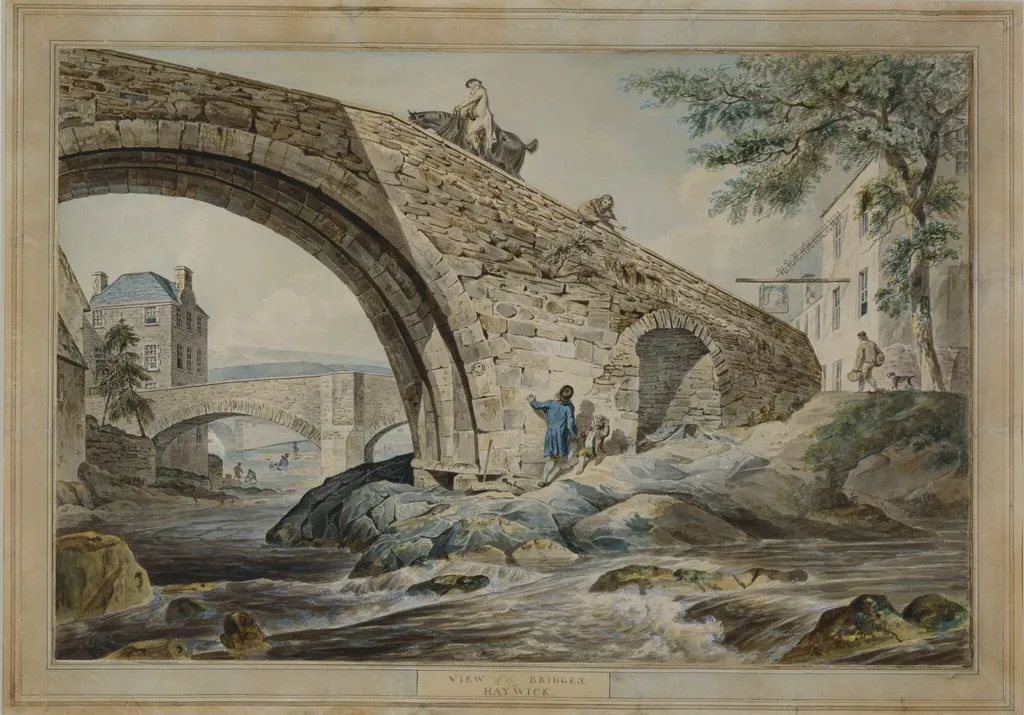
View of the Bridges at Hawick is a watercolor work on paper by the Rococo painting artist Charles Catton senior. It dates from 1776 and is held in the collection of the Victoria and Albert Museum. This watercolour depicts the confluence of the Slitrig Water and the River Teviot in Hawick, a textile town in the Scottish Borders.
About this work
The older bridge sits in the foreground, while the newer one, built in 1776, sits downstream.
This watercolor shows a quiet moment by the Slitrig Water in Hawick, Scotland. Two bridges—one old, one new—cross the river where it meets the Teviot. The older bridge sits in the foreground, while the newer one, built in 1776, sits downstream.
We don’t know for sure if Charles Catton senior painted it. It might be his son, who made several prints of Scottish border scenes in the 1790s.
Check out the Victoria and Albert Museum for more topographical watercolors.
Overview
This watercolour depicts the confluence of the Slitrig Water and the River Teviot in Hawick, a textile town in the Scottish Borders. Two stone bridges span the rivers: the older Auld Brig in the foreground and the New Bridge, constructed in 1776, farther downstream. The scene captures a quiet, unembellished view of local infrastructure, rendered with precision typical of topographical art of the period.
Subject & Meaning
The painting documents the physical layout of Hawick’s river crossings, emphasizing the functional relationship between the town and its waterways. The presence of both bridges reflects civic development in the late 18th century, with the New Bridge representing community-funded progress. The composition offers no human figures or dramatic elements, focusing instead on the quiet integration of architecture into the natural landscape.
Technique & Style
Executed in watercolour, the work employs delicate washes and restrained detail to convey texture and spatial depth. The bridges are rendered with architectural clarity, while the surrounding terrain is suggested through soft gradients. The style aligns with topographical traditions of the time, prioritizing accuracy over expressive flourish, likely intended for documentation or reproduction as a print.
History & Provenance
Attribution remains uncertain, with the work possibly by Charles Catton senior or his son, Charles Catton junior. The latter produced a series of Scottish border views in the early 1790s, some of which were published by Francis Jukes under the title Six Scottish Views. Catton junior emigrated to the United States in 1804, and the painting’s origin likely predates this move, placing its creation in the late 18th century.
Context
In the late 1700s, topographical watercolours served as records of place, often commissioned by local patrons or publishers seeking to document regional landscapes. Hawick, as a thriving mill town, was a subject of interest for its infrastructure and economic activity. This work fits within a broader trend of documenting Scottish towns during a period of industrial and civic growth.
Legacy
Though not widely known today, the painting contributes to a body of work that preserved the appearance of Scottish border towns before widespread industrial change. Its association with the Catton family and Jukes’ print series links it to early efforts in commercializing topographical art, offering insight into how local landscapes were visually catalogued and disseminated in the pre-photographic era.
Artist & collection
Artist
Catton was the kind of man who carried a little sketchbook everywhere—even on walks with his dogs.

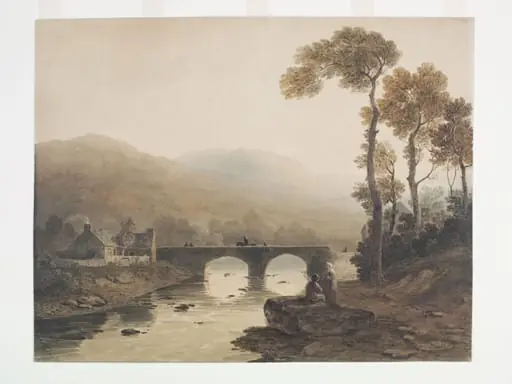 Beddgelert Bridge
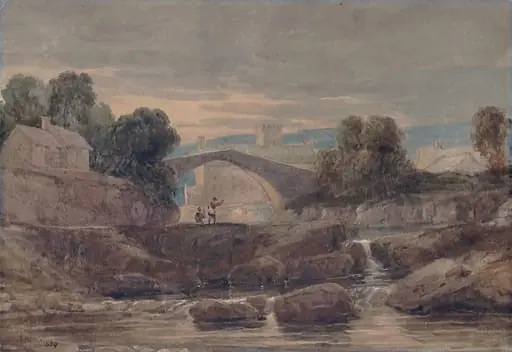 Landscape with Bridge
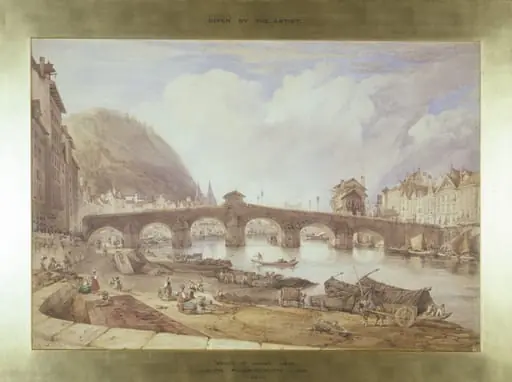 Liege: the Bridge of Arches
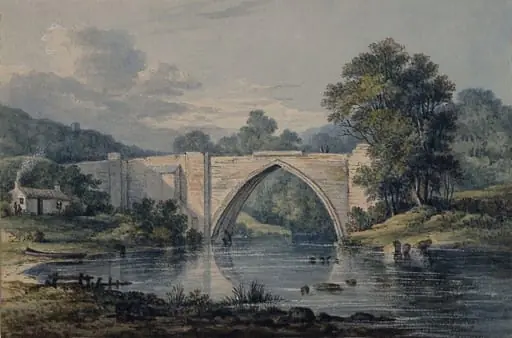 A bridge, perhaps the old bridge of Don, Aberdeen
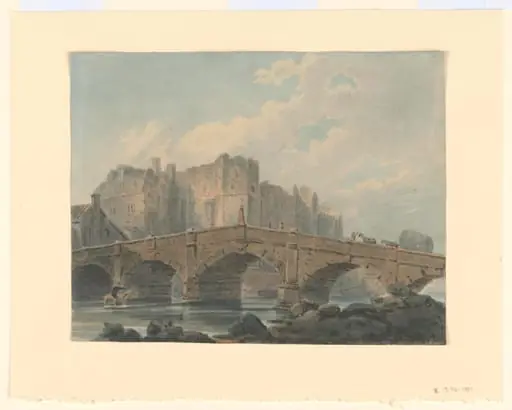 Newark Castle with the Old Trent Bridge
 Untitled
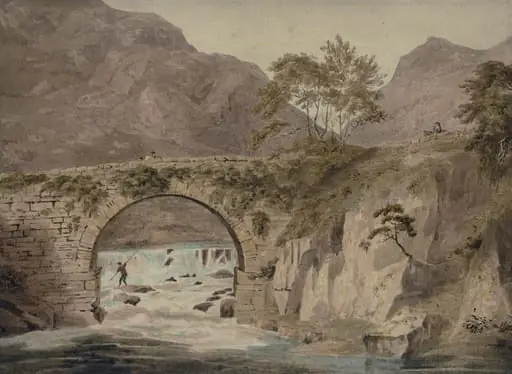 Pont Aberglaslyn
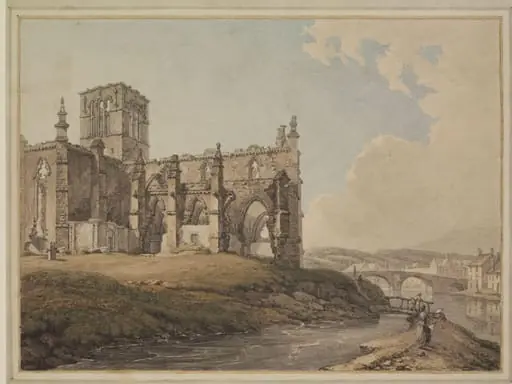 Untitled
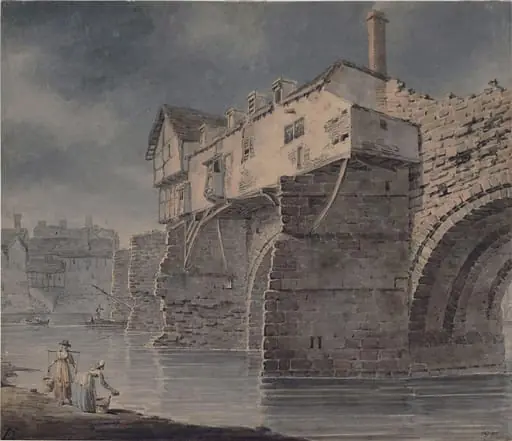 Bewdley, Worcestershire - Old Bridge with Houses
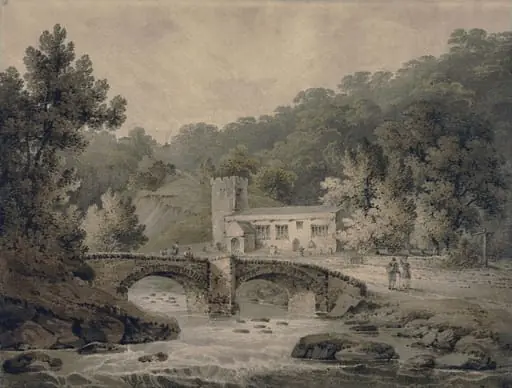 Church and bridge at Hubberholme, Yorkshire
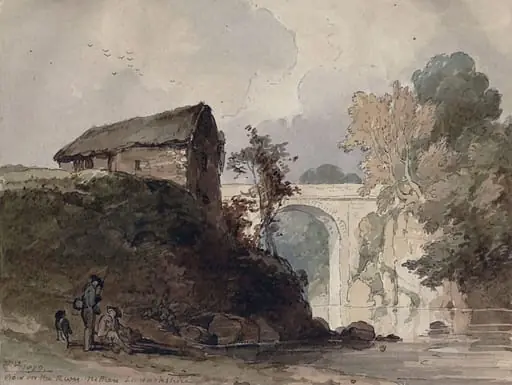 View on the River Nethan, Lanarkshire
 Wetheral Priory, Cumberland, with figures and cattle