Artwork
Untitled
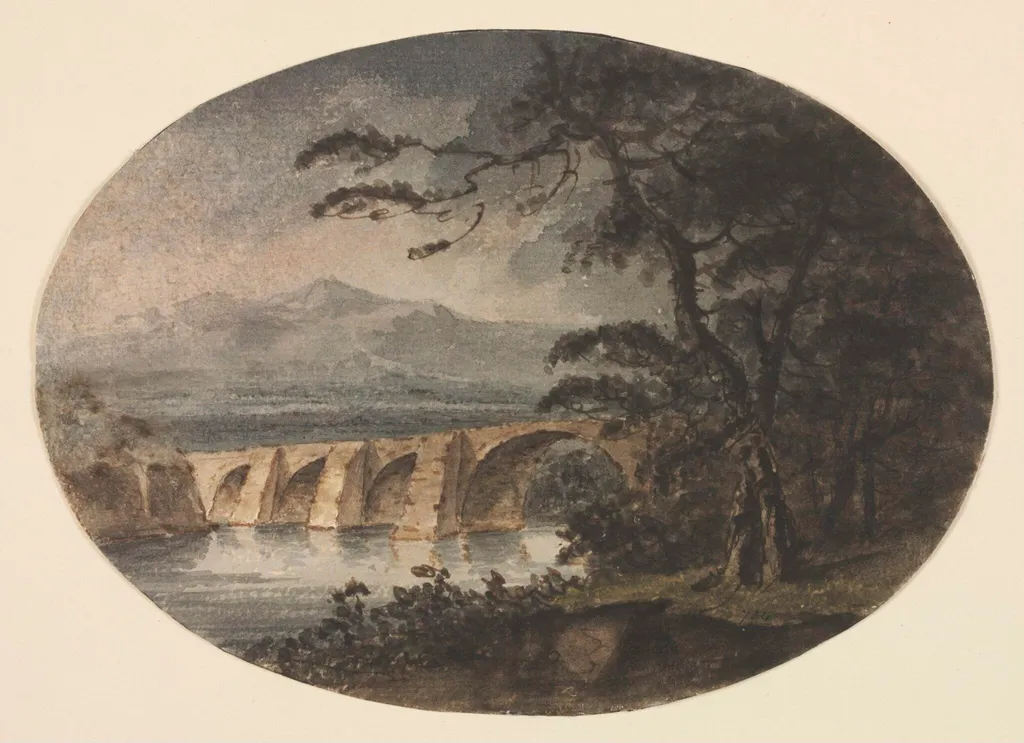
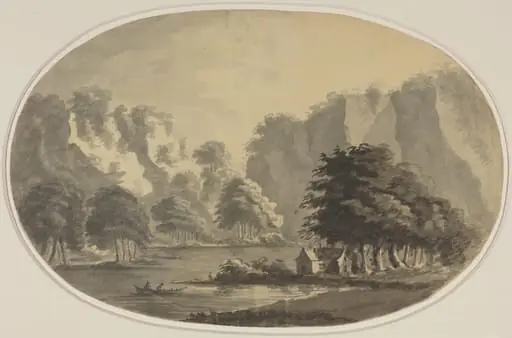
Untitled is a watercolor work on paper by William Gilpin. It dates from 1850 and is held in the collection of the Victoria and Albert Museum.
About this work
Overview
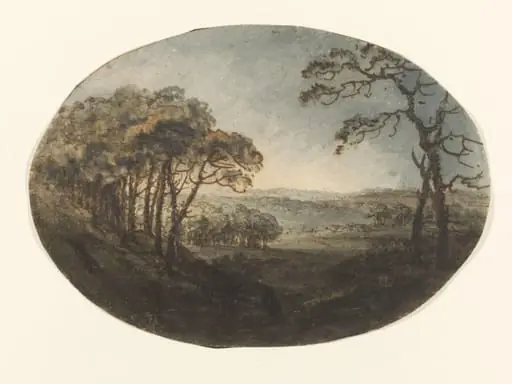
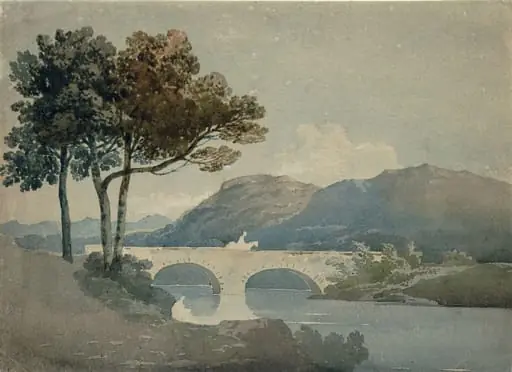
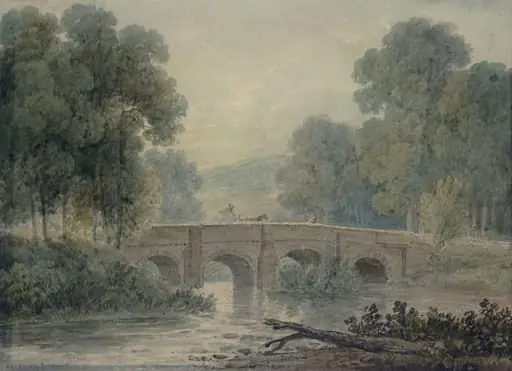
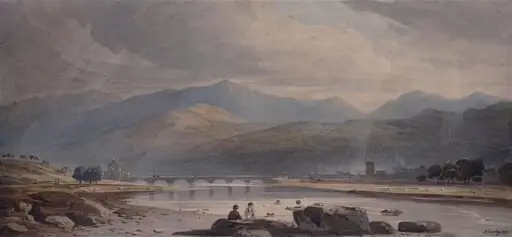
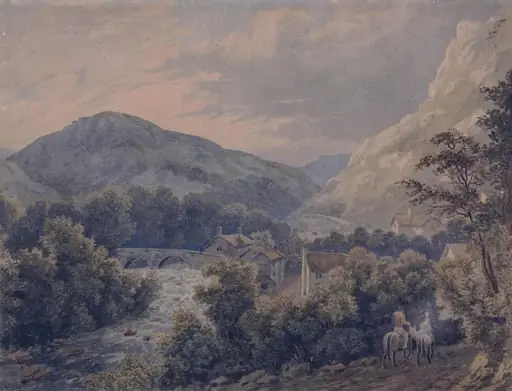
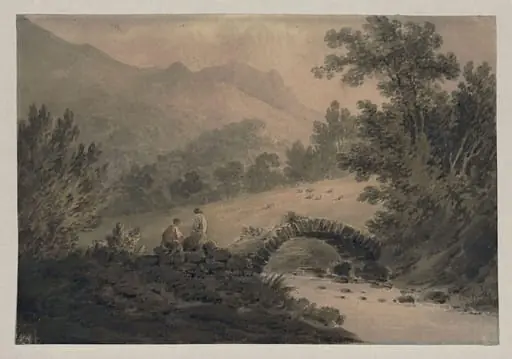
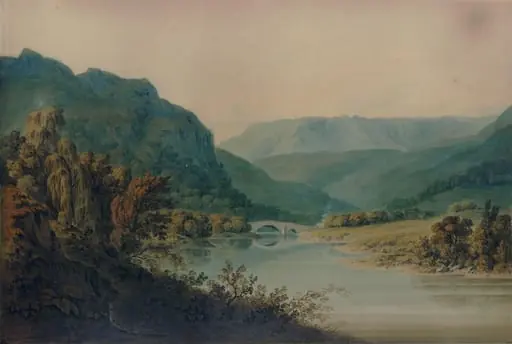
It features a three-arched stone bridge spanning a still stream, flanked by bare trees on the left and rolling hills receding into a pale sky.
This watercolor, dated circa 1850, is a small, oval-format study by William Gilpin that captures a tranquil riverscape. It features a three-arched stone bridge spanning a still stream, flanked by bare trees on the left and rolling hills receding into a pale sky. Executed with light, transparent washes, the piece reflects Gilpin’s interest in capturing atmospheric effects rather than detailed realism. Its intimate scale and informal handling suggest it was made for personal or preparatory use.
Subject & Meaning
The scene presents a quiet, unpopulated landscape, emphasizing natural harmony over human activity. The bridge serves as a structural anchor, linking foreground and distance, while the sparse vegetation and muted tones evoke a sense of stillness. Gilpin, known for his writings on picturesque aesthetics, likely intended this study to embody ideals of balanced composition and subtle tonal variation—qualities he promoted as essential to pleasing landscape representation.
Technique & Style
Gilpin employed loose, fluid brushwork and diluted watercolor washes to suggest form without definition. Light and shadow are implied through gradations of tone rather than sharp contrasts, creating a soft, hazy atmosphere. The oval frame directs the viewer’s attention inward, enhancing the sense of a contained, contemplative moment. The sketch-like quality reveals the work’s function as a rapid observational study, prioritizing mood over finish.
History & Provenance
The watercolor was part of Gilpin’s personal collection, as confirmed by his ownership stamp. It was likely created as a reference for his published illustrated works, which disseminated his theories on landscape aesthetics. Though not intended for public exhibition, its preservation suggests Gilpin valued it as a working document. Its survival offers insight into his creative process beyond printed plates and written texts.
Context
In mid-19th century Britain, watercolor studies like this were common among amateur and professional artists engaged with landscape theory. Gilpin’s work aligned with the picturesque movement, which sought to identify and replicate natural scenes that resembled idealized paintings. This piece reflects a broader cultural interest in observing and documenting nature as a source of aesthetic order, distinct from the dramatic sublime or industrial modernity.
Legacy
Though not widely exhibited during his lifetime, Gilpin’s studies contributed to the development of British watercolor practice and landscape theory. This work exemplifies how preparatory sketches informed published compositions and shaped public perceptions of natural beauty. Today, such pieces are valued for their insight into artistic methodology and the quiet, observational ethos of 19th-century topographical art.
Artist & collection