Artwork
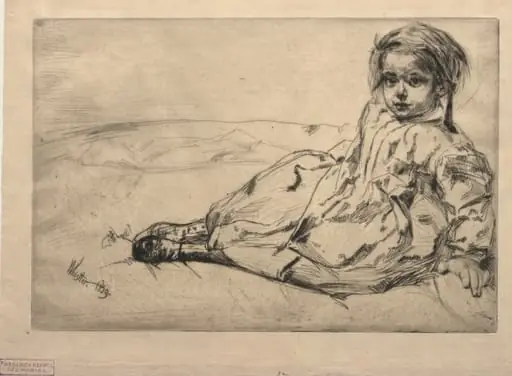
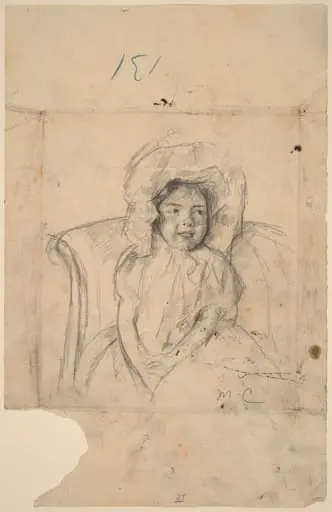
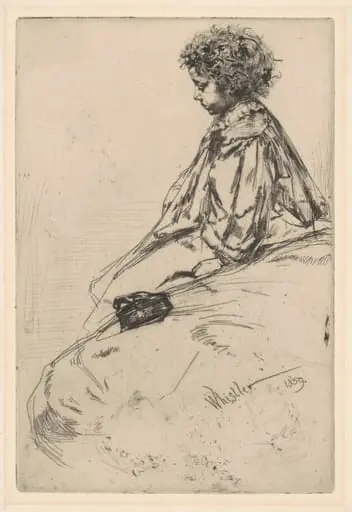
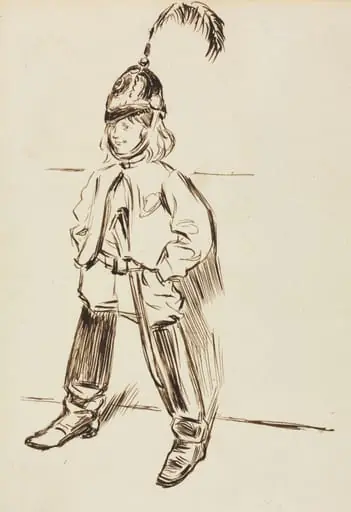
Study of a kneeling child
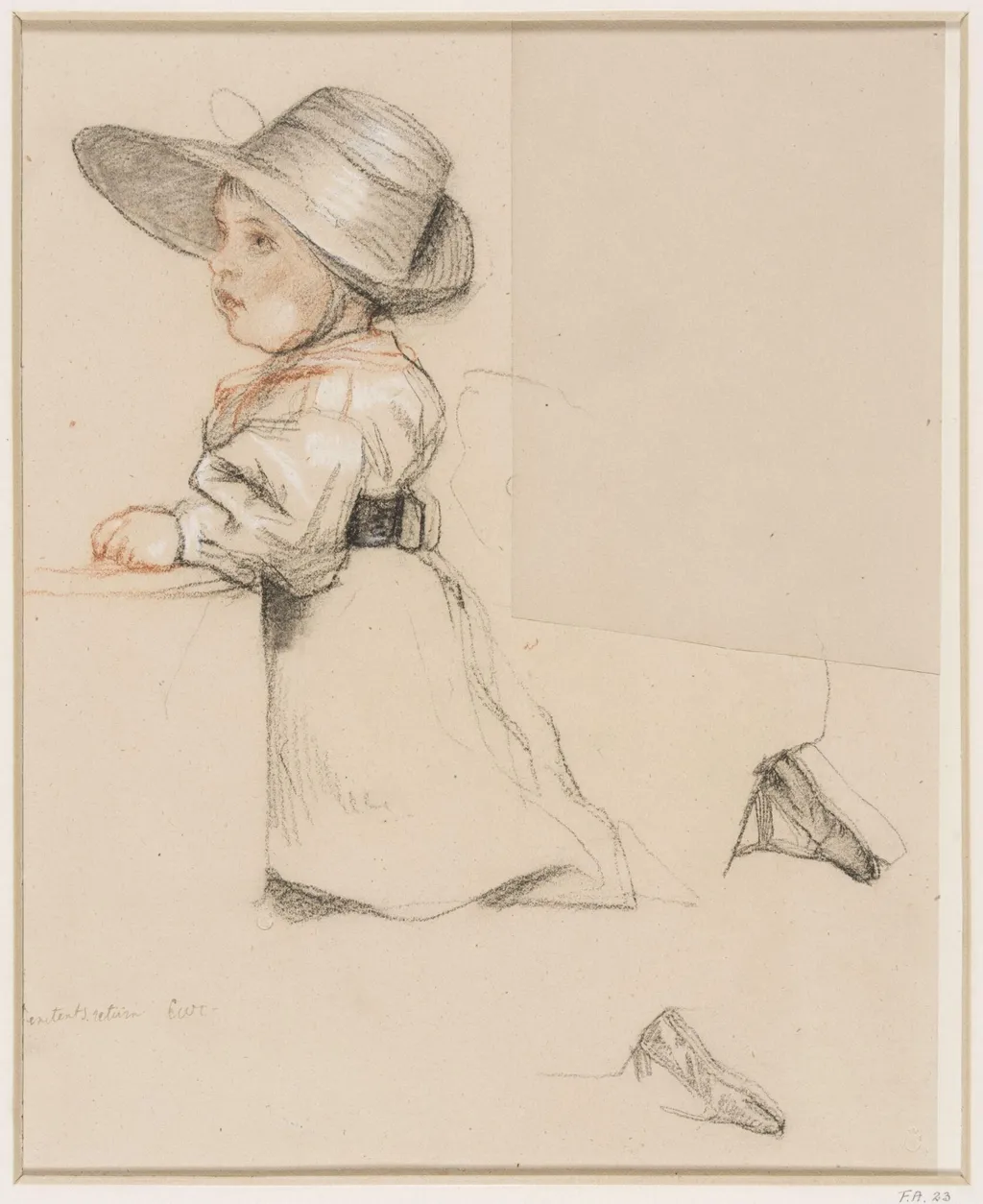
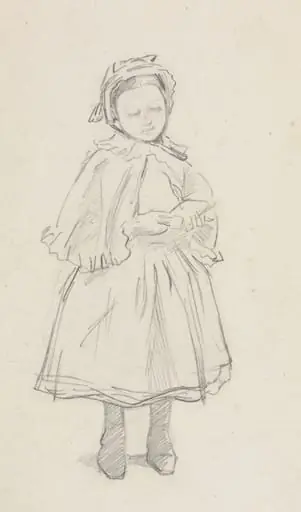
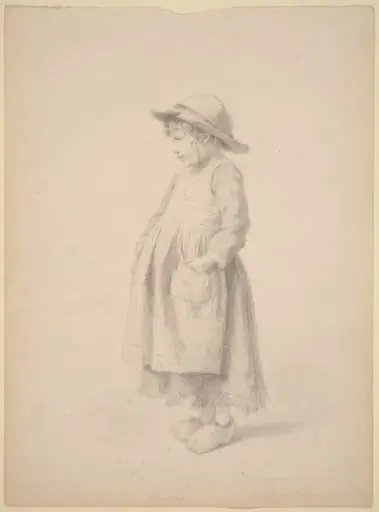
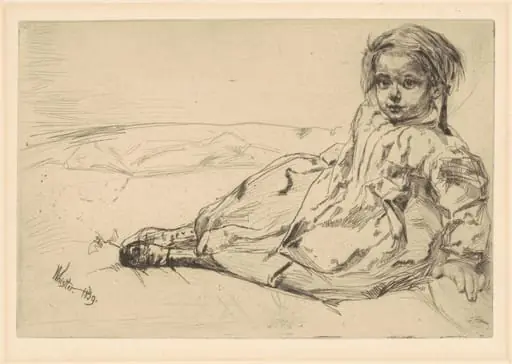
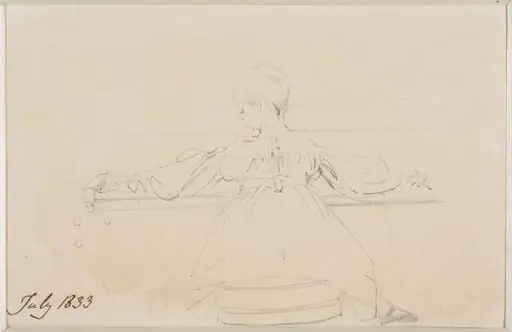
Study of a kneeling child is a chalk drawing by Charles West Cope. It dates from 1850 and is held in the collection of the Victoria and Albert Museum.
About this work
Overview
Executed during the height of the Victorian era, it reflects Cope’s interest in everyday human forms, distinct from his larger historical paintings.
Created around 1850, this chalk drawing by Charles West Cope captures a fleeting moment of a child in repose. Executed during the height of the Victorian era, it reflects Cope’s interest in everyday human forms, distinct from his larger historical paintings. The work is a preparatory study, likely made for a more finished composition, yet it holds value for its immediacy and observational clarity.
Subject & Meaning
The subject is a child kneeling on one leg, dressed in a loose shirt and wide-brimmed hat, suggesting rural or modest urban life. The pose is unposed, conveying quiet stillness rather than formal posture. Two small sketches of shoes in the corner imply the artist’s attention to detail in attire and footwear, possibly indicating the child’s social context or the artist’s process of refining costume elements.
Technique & Style
Cope employed soft chalk strokes to suggest form with minimal lines, blending areas of the face and fabric while leaving others deliberately rough. The drawing’s spontaneity is evident in its loose contours and varied pressure, creating texture without heavy shading. The inclusion of auxiliary sketches of shoes reveals a methodical approach to costume, treating the sheet as a working space rather than a polished final piece.
History & Provenance
The drawing originates from Cope’s personal sketchbook or study collection, likely made during his time in London before his fresco commissions for the House of Lords. Its survival suggests it was retained as a reference or personal record. No public record of early ownership exists, but it remains within the corpus of Cope’s known graphic works, preserved in institutional or private collections.
Context
In mid-19th century Britain, artists increasingly turned to direct observation of ordinary life, influenced by emerging realism and the rise of sketching as a disciplined practice. Cope’s study aligns with this trend, valuing naturalism over idealization. While his large-scale works focused on historical narratives, this drawing reveals a quieter engagement with the human figure in unguarded moments.
Legacy
Though not widely exhibited, this drawing exemplifies Cope’s skill in capturing transient gestures with economy. It contributes to understanding how academic artists of the period used preparatory studies to refine composition and anatomy. Its preservation offers insight into the working methods of Victorian illustrators, bridging the gap between studio practice and finished art.
Artist & collection
Artist
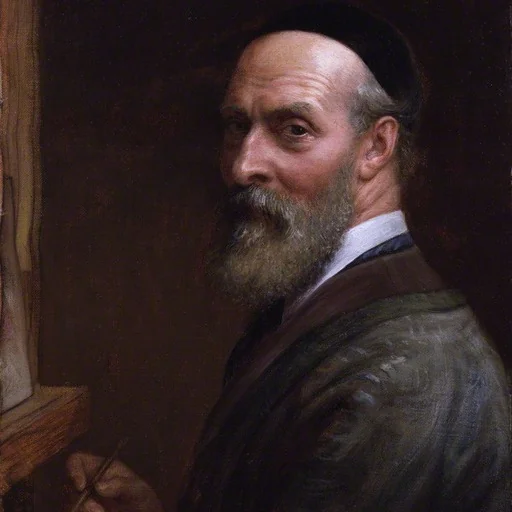
Charles West Cope (28 July 1811– 21 August 1890) was an English, Victorian era painter of genre and history scenes, and an etcher. He was responsible for painting several frescos in the House of Lords in London.