Artwork
L'allegro
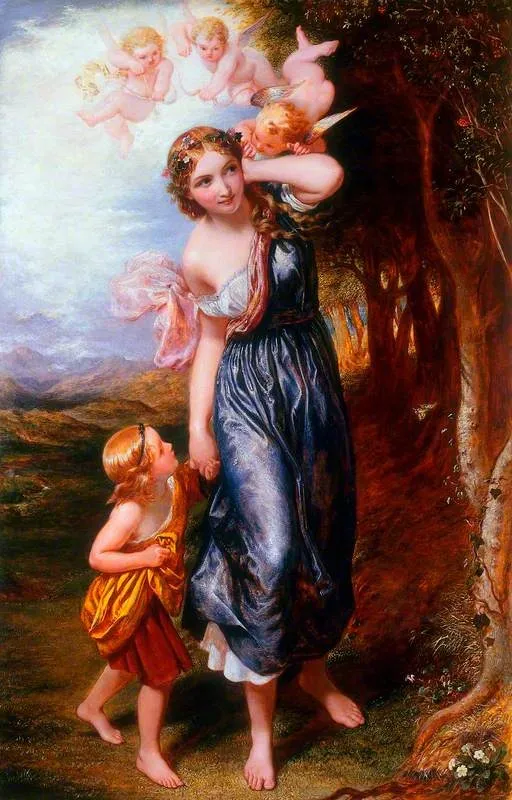
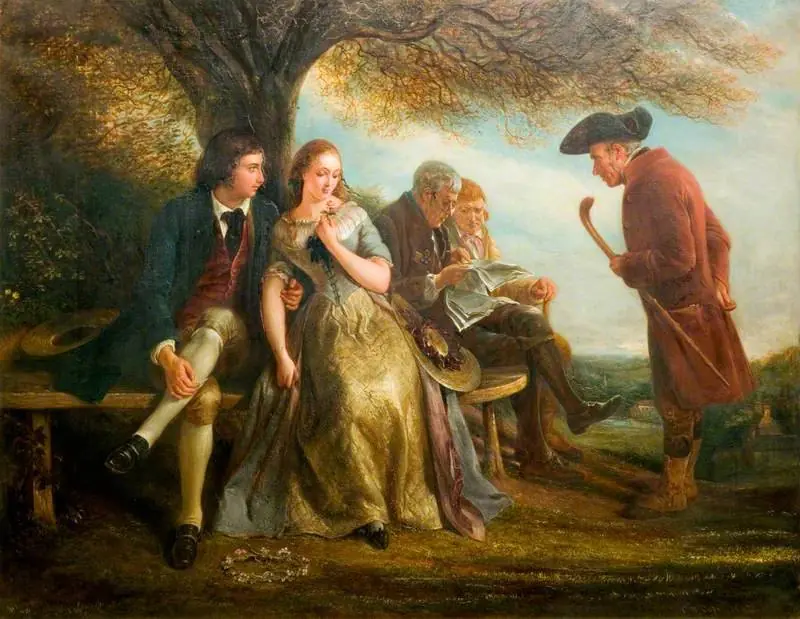
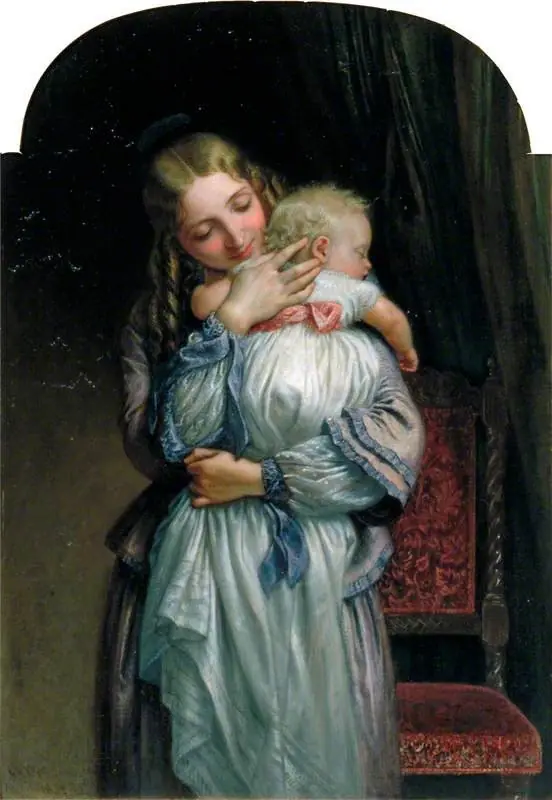
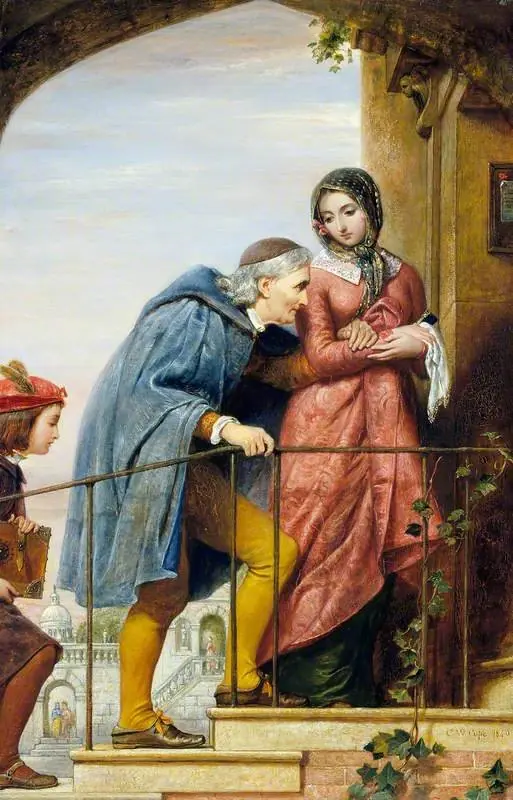
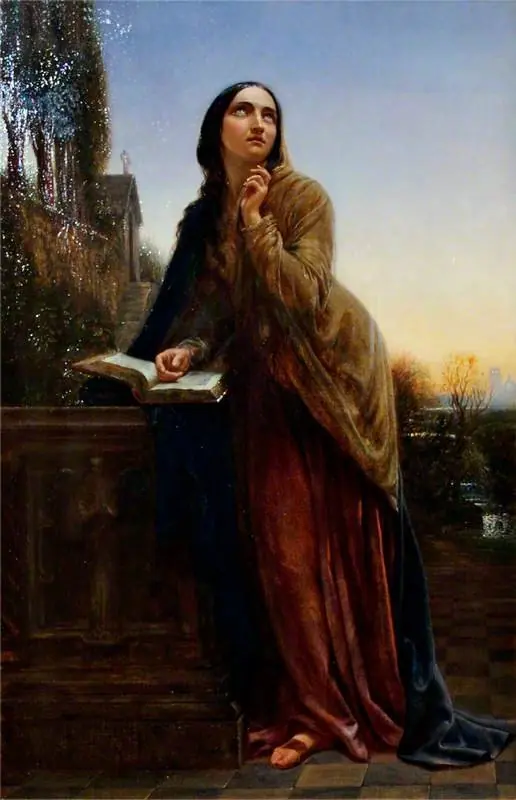
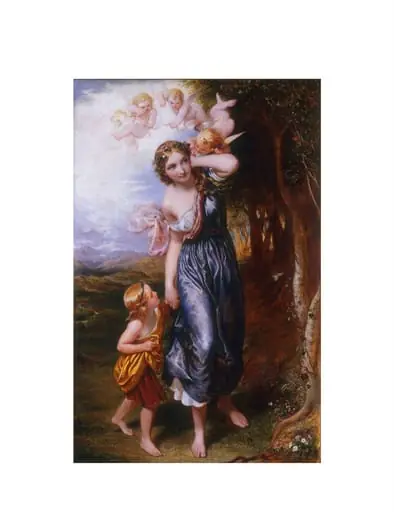
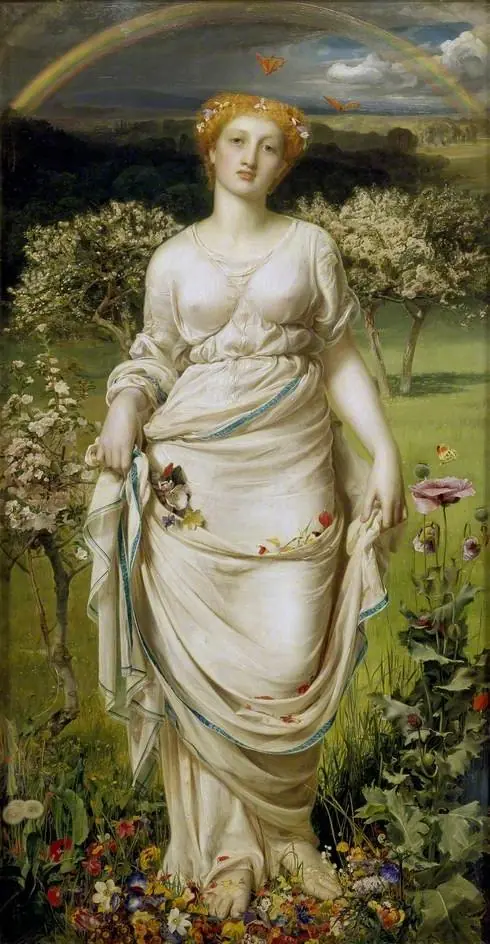
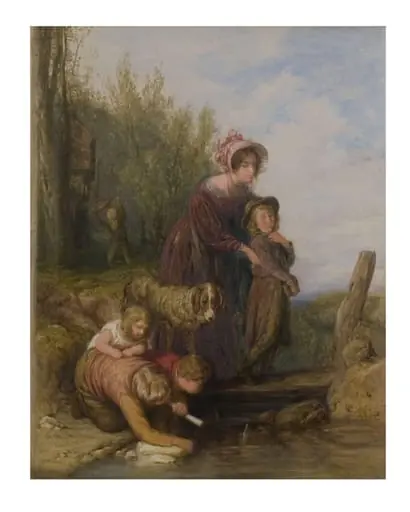
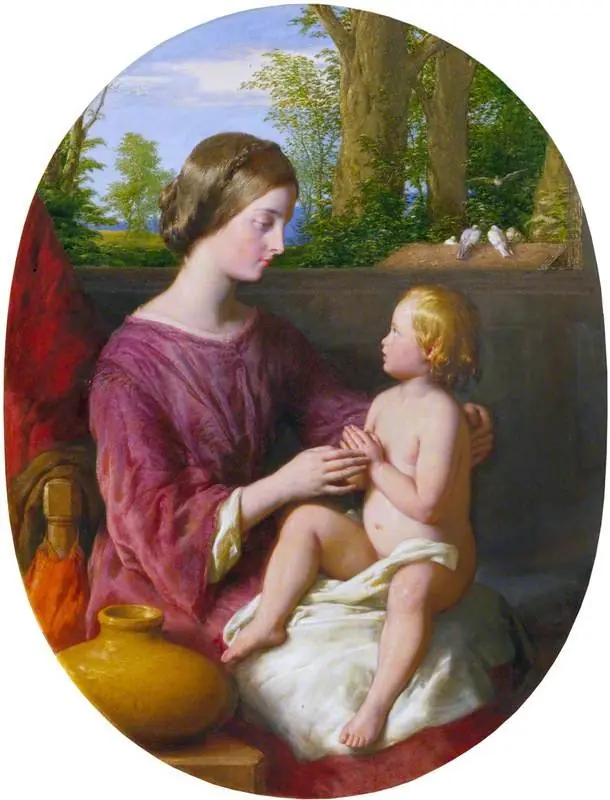
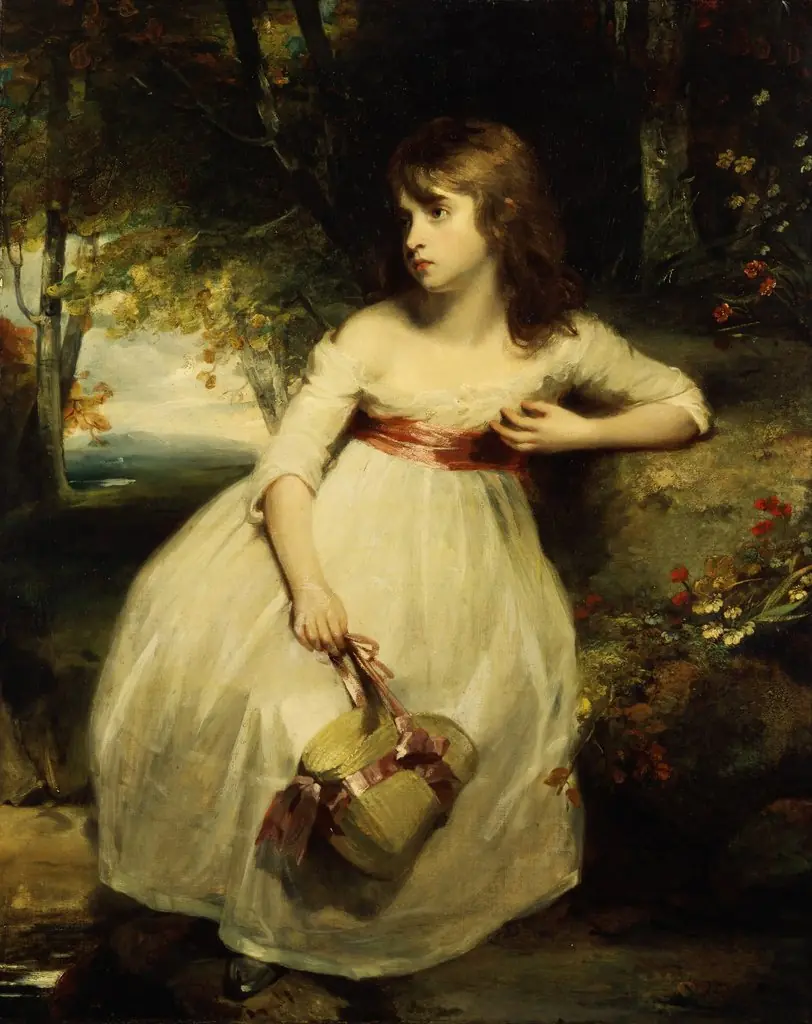
L'allegro is an oil painting by the British Romanticist artist Charles West Cope. It dates from 1848 and is held in the collection of the Victoria and Albert Museum.
About this work
Overview
It resides in the Victoria and Albert Museum’s collection, reflecting Cope’s engagement with narrative and emotional tone in domestic and allegorical subjects.
Painted in 1848 by English artist Charles West Cope, *L'allegro* is an oil-on-canvas work that belongs to the broader current of British Romanticism. Though not a direct illustration of Milton’s poem of the same name, the painting evokes a lyrical, pastoral mood through its composition. It resides in the Victoria and Albert Museum’s collection, reflecting Cope’s engagement with narrative and emotional tone in domestic and allegorical subjects.
Subject & Meaning
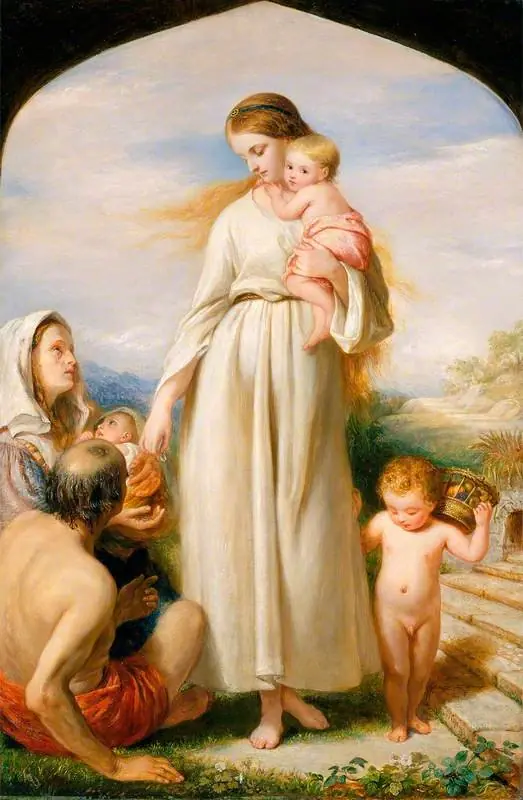
The scene portrays a woman in a blue dress and pink sash, carrying one child on her shoulders and guiding another by the hand. Their clothing—vivid oranges, yellows, and blues—contrasts with the soft landscape behind them. The presence of cherubs in the sky and the gentle interaction between figures suggest an idealized vision of maternal care and innocent joy, aligning with Romantic ideals of nature and emotional purity.
Technique & Style
Cope employs chiaroscuro to model the figures with subtle gradations of light and shadow, lending volume and realism to their forms. The textures of fabric are rendered with careful attention to folds and sheen, while the background landscape recedes with atmospheric perspective. The composition balances intimate human detail with a dreamlike sky, merging naturalism with symbolic elements to enhance emotional resonance.
History & Provenance
Completed in 1848, the painting entered the Victoria and Albert Museum’s collection, where it remains today. Cope, known for both easel paintings and large-scale murals—including those in the House of Lords—often blended historical and domestic themes. *L'allegro* reflects his interest in conveying moral and emotional narratives through carefully composed scenes, typical of mid-Victorian artistic values.
Context
In mid-19th-century Britain, artists frequently turned to literary and allegorical subjects to express ideals of virtue, family, and nature. Cope’s work emerged alongside a broader cultural fascination with pastoral imagery and emotional sincerity. While not overtly political, *L'allegro* aligns with contemporary tastes for art that celebrated domestic harmony and the sublime in everyday life.
Legacy
Though less widely known today than some of his contemporaries, Cope’s *L'allegro* exemplifies the quiet ambition of Victorian narrative painting. Its preservation in a major national collection underscores its role as a representative work of its time—neither radical nor conventional, but thoughtful in its synthesis of technique, sentiment, and visual poetry.
Artist & collection
Artist
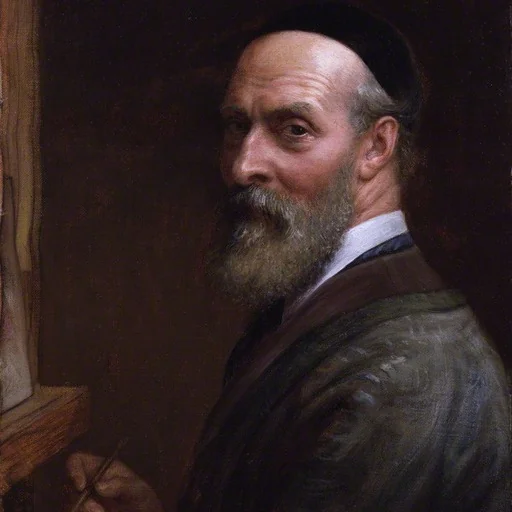
Charles West Cope (28 July 1811– 21 August 1890) was an English, Victorian era painter of genre and history scenes, and an etcher. He was responsible for painting several frescos in the House of Lords in London.