Artwork
Ingo, San Martin, Cuba
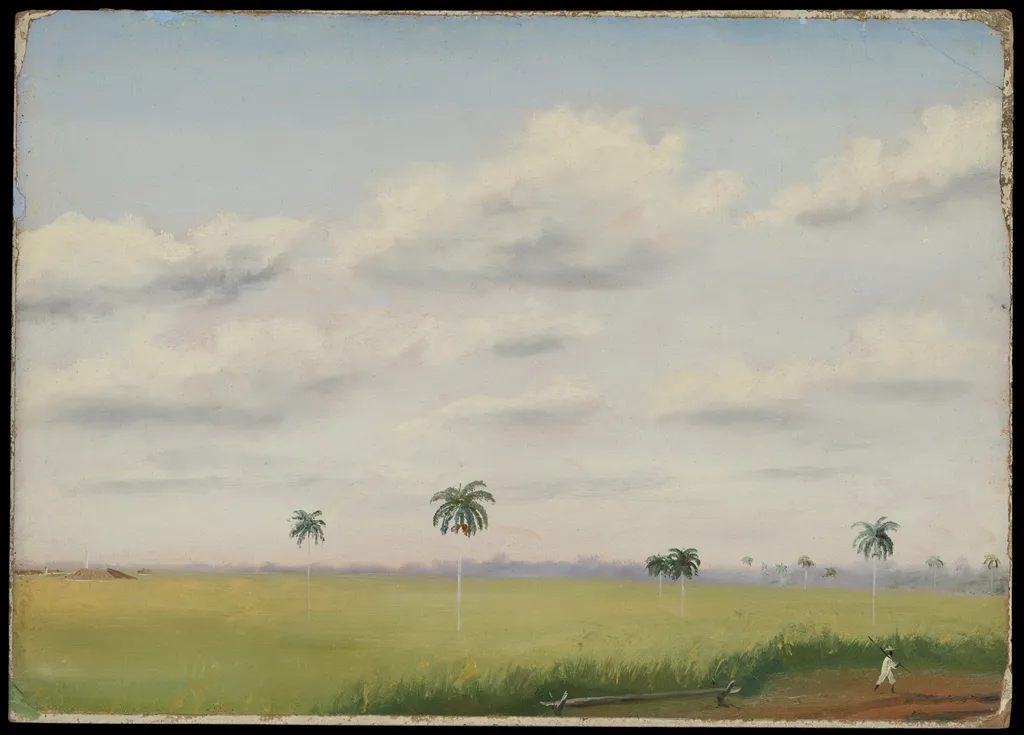
Ingo, San Martin, Cuba is an unspecified painting by the Realist artist Charles de Wolf Brownell. It dates from 1859 and is held in the collection of the Metropolitan Museum of Art.
About this work
Overview
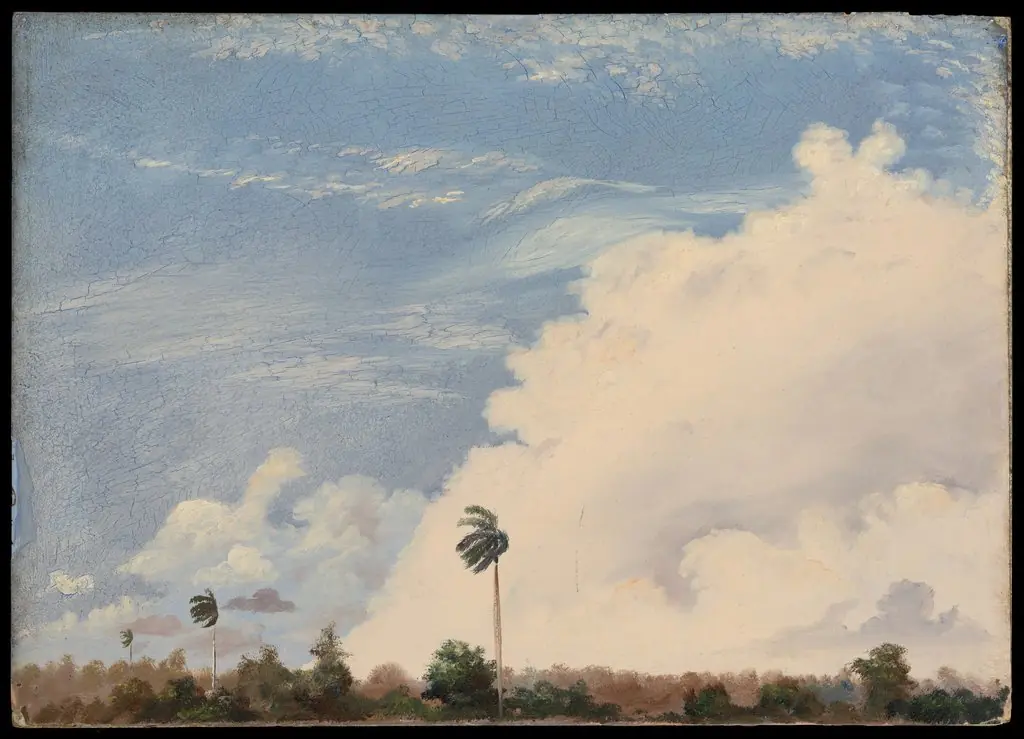
Charles De Wolf Brownell’s 1859 oil painting titled Ingo, San Martin, Cuba presents a tranquil, expansive landscape. A lone figure in white traverses a dirt track that cuts across a broad, open field, while a distant line of palm trees punctuates the horizon beneath a clear, softly clouded sky. The composition invites contemplation of quiet, rural life in a tropical setting.
Subject & Meaning
The central figure, carrying a long object on the shoulder, suggests a moment of travel or labor within an unspoiled environment. The juxtaposition of the solitary human presence against the vastness of the field and the distant palms may reflect themes of isolation, the relationship between man and nature, or the everyday experience of 19th‑century Cuban countryside.
Technique & Style
The overall style aligns with mid‑19th‑century American landscape painting, emphasizing realism and a calm, balanced composition.
Brownell employs a restrained palette of muted earth tones and gentle blues, rendering the sky and foliage with delicate brushwork that conveys atmospheric depth. The figure is rendered with modest detail, allowing the surrounding landscape to dominate the visual field. The overall style aligns with mid‑19th‑century American landscape painting, emphasizing realism and a calm, balanced composition.
History & Provenance
Created in 1859, Ingo, San Martin, Cuba entered the collection of The Metropolitan Museum of Art, where it remains on view. The work exemplifies Brownell’s interest in Caribbean subjects during a period when American artists increasingly traveled abroad, documenting foreign locales for domestic audiences.
Artist & collection

Artist
Charles de Wolf Brownell (1822–1909) was an artist, born in Providence.