Artwork
Théodore Géricault on His Deathbed
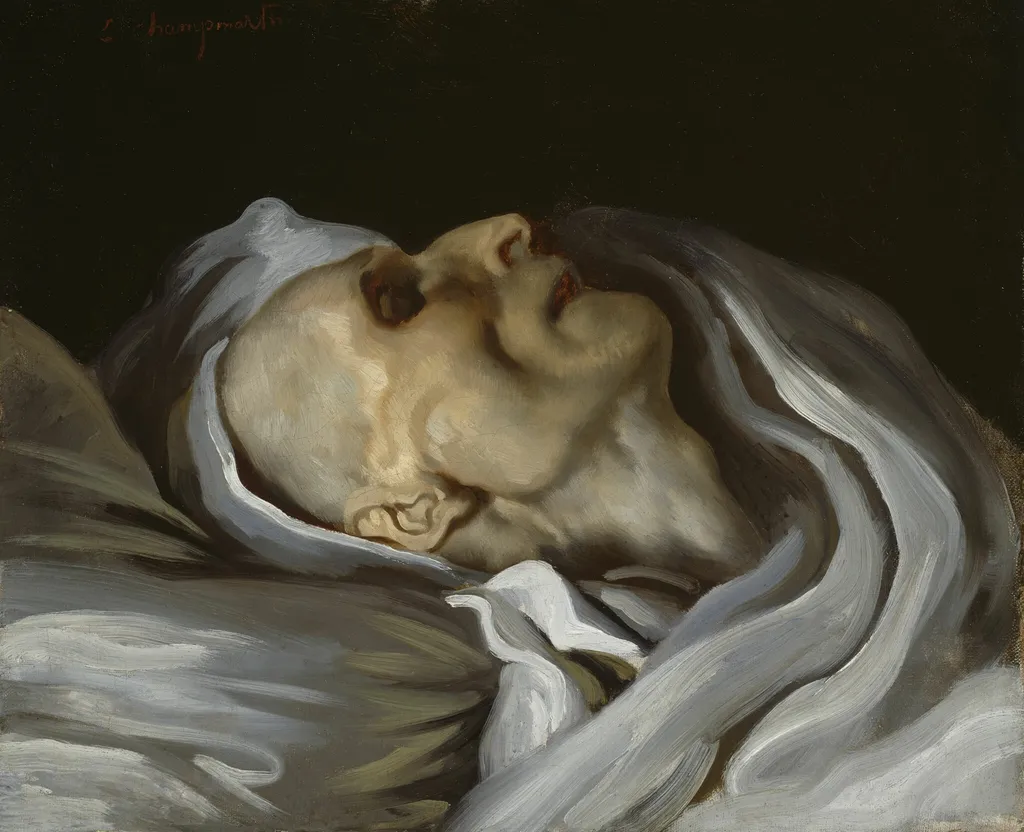
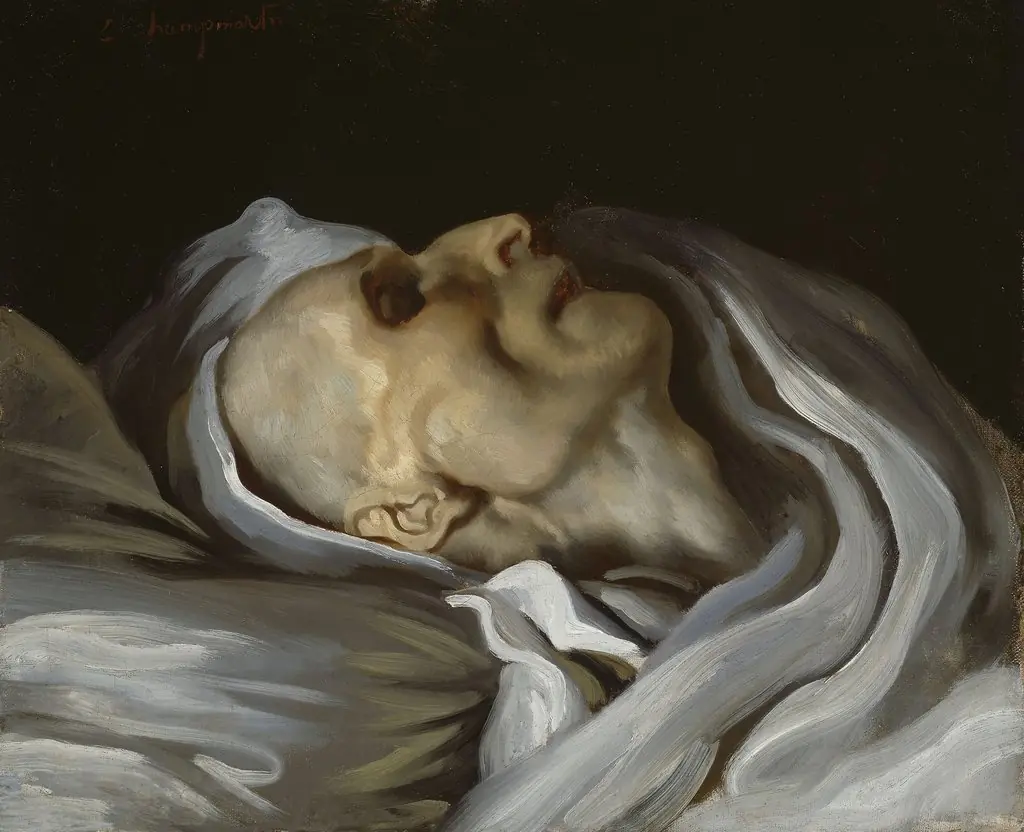
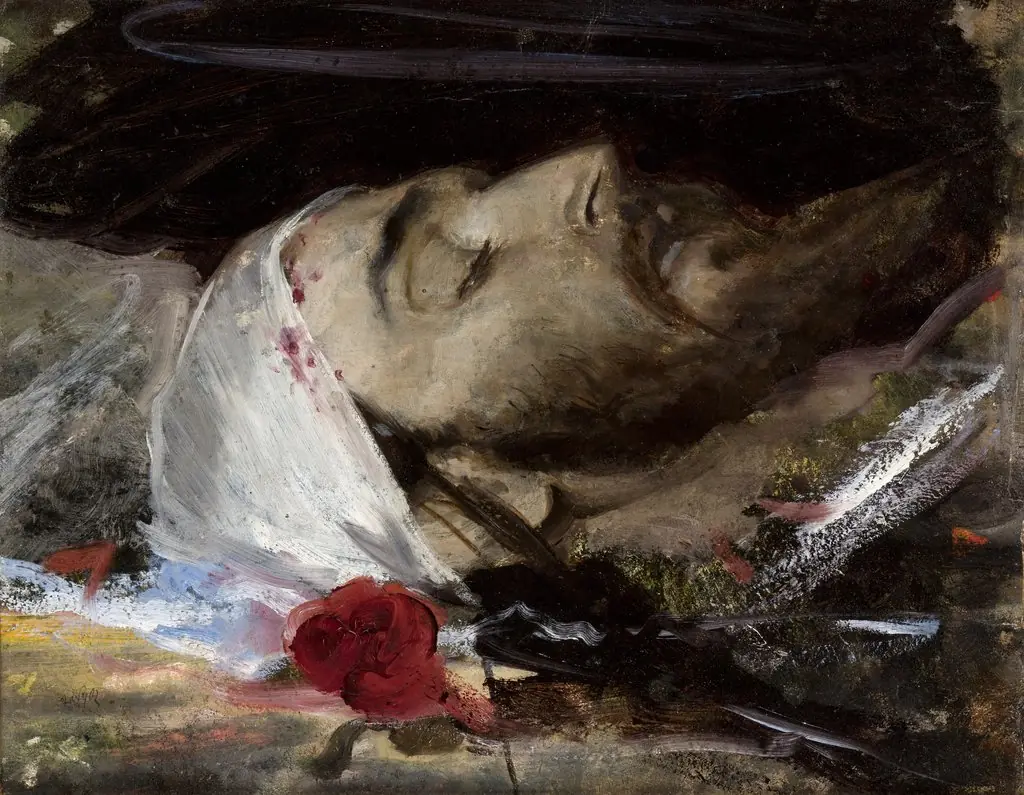
Théodore Géricault on His Deathbed is an oil painting by the Romanticist artist Charles-Émile-Callande de Champmartin. It dates from 1824 and is held in the collection of the Art Institute of Chicago.
About this work
Overview
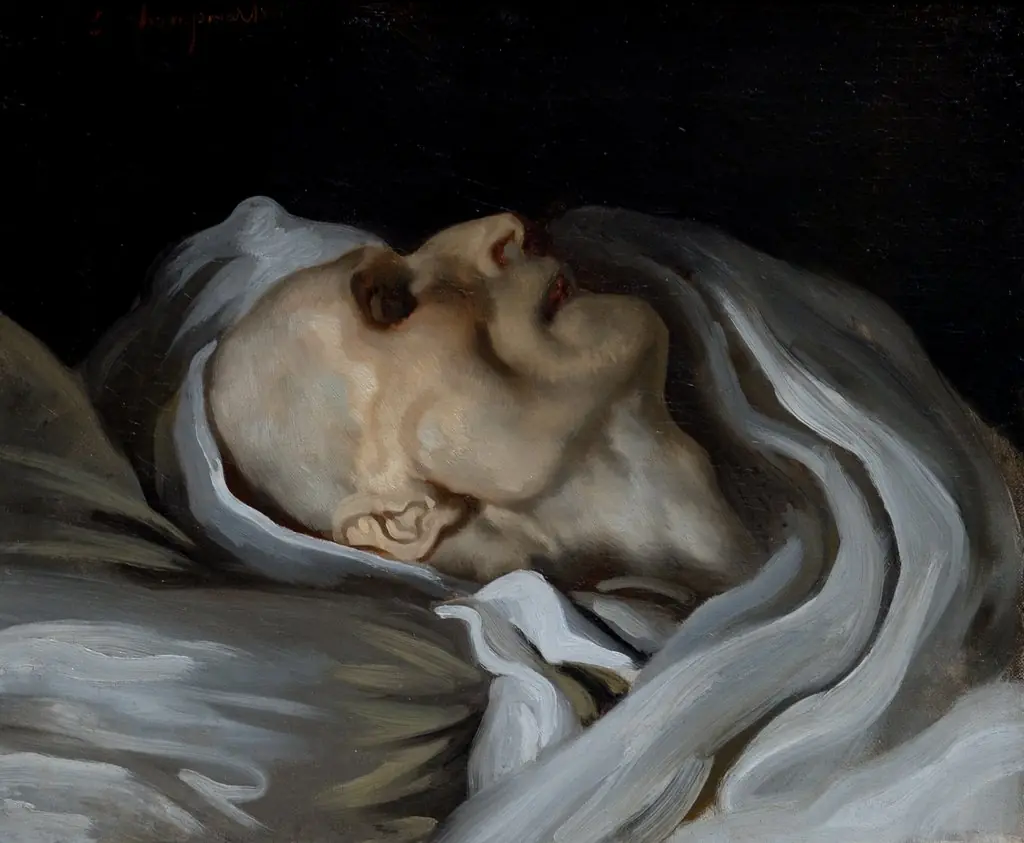
This painting depicts a lifeless figure shrouded in white sheets, identified as the French artist Théodore Géricault on his deathbed, succumbing to tuberculosis at 32.
Subject & Meaning
The subject is Géricault himself, captured in the finality of death. The image embodies the Romantic era's notion of the tragic artist, cut down in youthful prime, and reflects the emotional impact of his early demise on his contemporaries.
Technique & Style
The work employs chiaroscuro, a strong contrast between light and dark, to convey the solemnity and intimacy of the moment, drawing the viewer's focus to the serene yet poignant figure.
History & Provenance
Initially attributed to Géricault, the painting was later found to be signed by Charles Emile Champmartin, a friend and follower. Recent research confirmed the subject as Géricault, clarifying the artwork's origins and intent.
Context
Created amidst the Romantic movement, the painting taps into the era's fascination with mortality, artistic genius, and the cult of the suffering creator. It aligns with the period's emphasis on emotional depth and the personal struggle of the artist.
Legacy
The image contributed to the widespread circulation of Géricault's tragic narrative throughout the 19th century, inspiring younger artists who revered him as a symbol of artistic sacrifice. Replicas of his death mask were kept in studios as talismans.
Own this work as a print
Artist & collection

Artist
Charles-Émile-Callande de Champmartin
Charles-Émile-Callande de Champmartin (1797 in Bourges – 1883 in Paris) was a French painter, noted for his Orientalist works.