Artwork
The Head of Saint John the Baptist
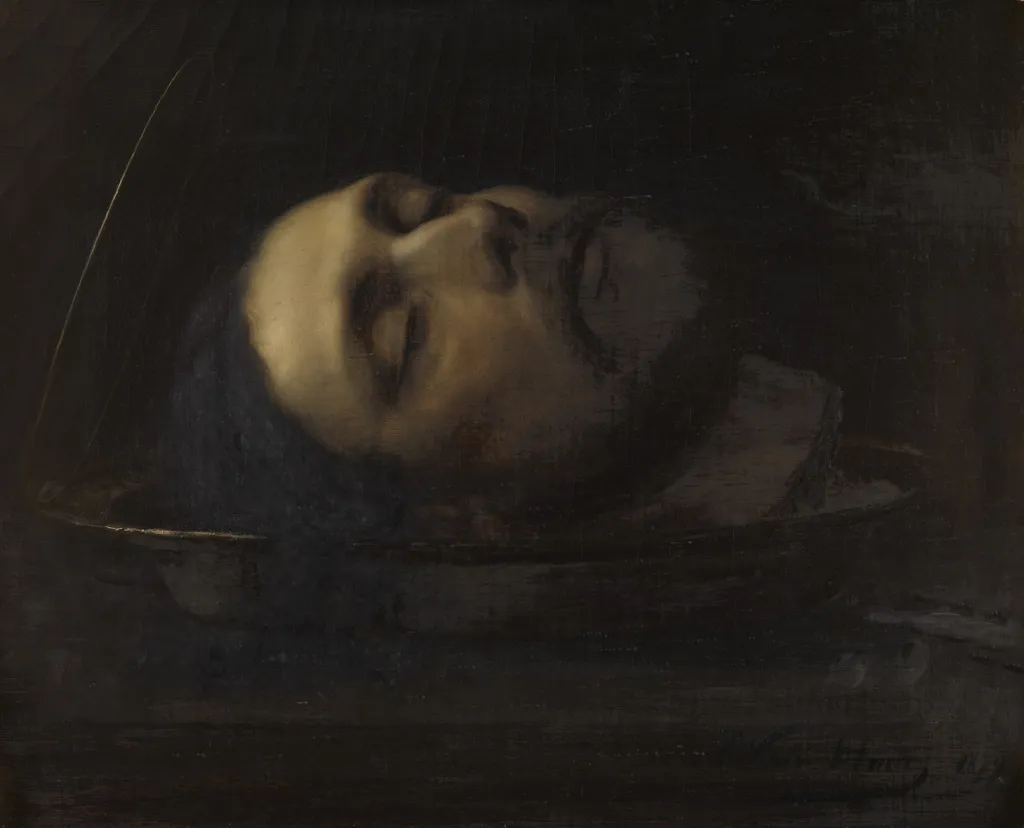
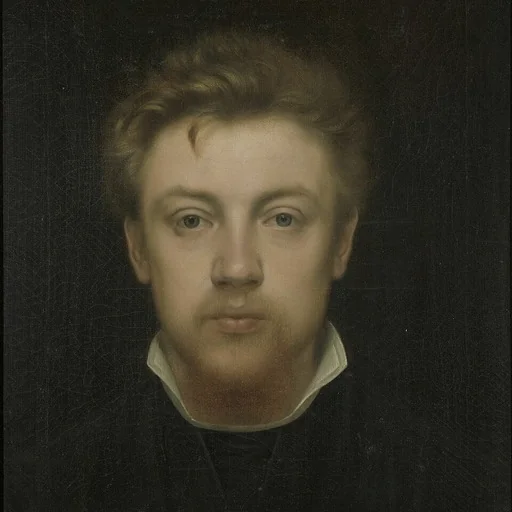
The Head of Saint John the Baptist is an oil painting by the Realist artist Edmond Van Hove. It dates from 1890 and is held in the collection of the Royal Museum of Fine Arts Antwerp.
About this work
Overview
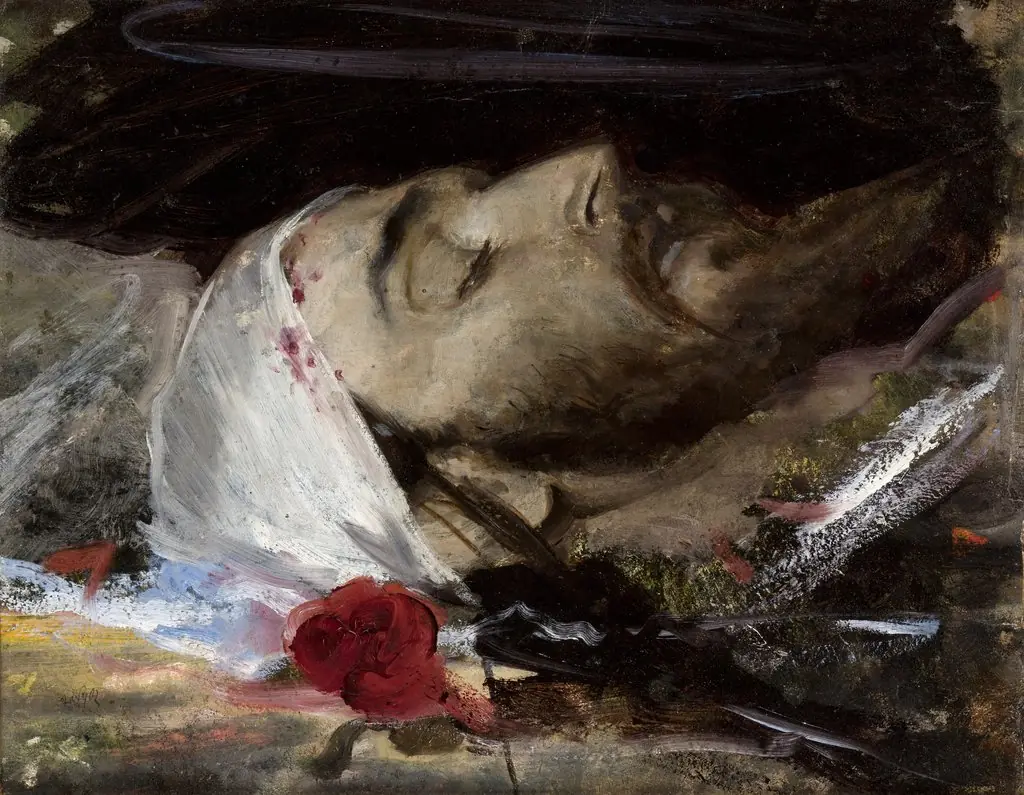
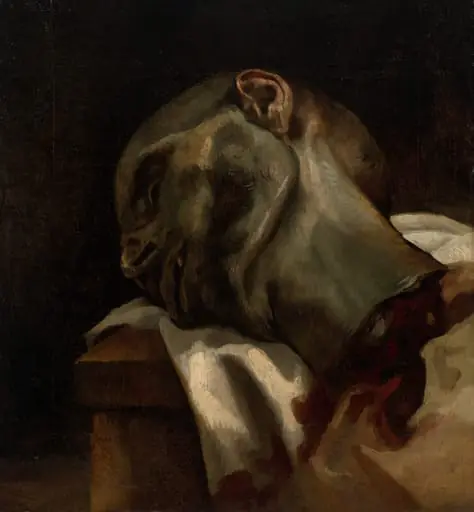
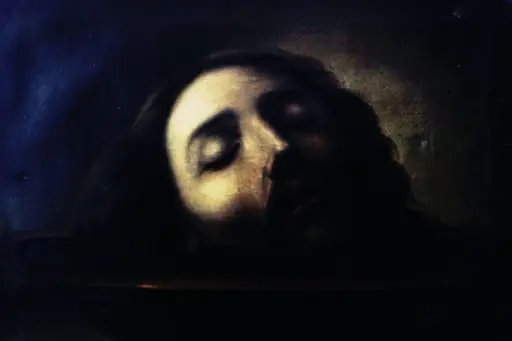
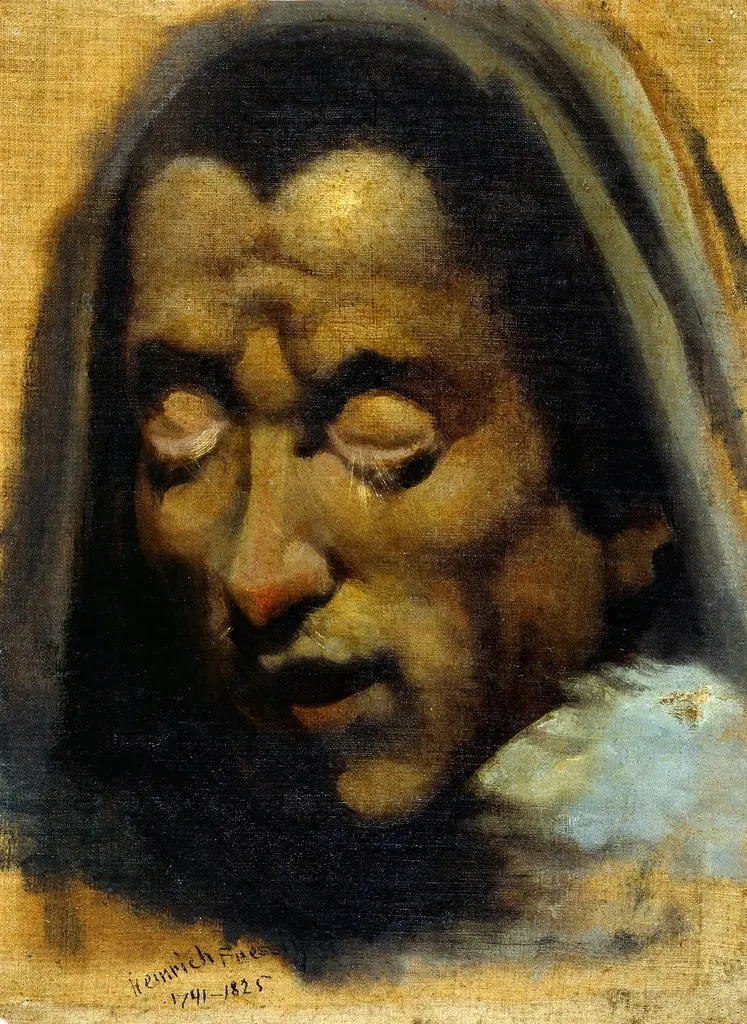
The composition is restrained, focusing solely on the head resting on its side, with no background or contextual elements to distract from the central subject.
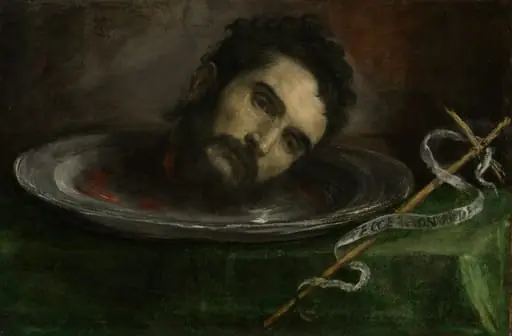
Painted in 1890 by Edmond Van Hove, this oil-on-canvas work portrays the severed head of Saint John the Baptist. It resides in the collection of the Royal Museum of Fine Arts Antwerp. The composition is restrained, focusing solely on the head resting on its side, with no background or contextual elements to distract from the central subject. The tone is quiet and introspective, inviting quiet contemplation rather than dramatic spectacle.
Subject & Meaning
The depiction of Saint John the Baptist’s head references the biblical account of his execution, a moment of martyrdom and divine witness. By isolating the head and rendering it with closed eyes and parted lips, Van Hove emphasizes stillness and resignation. The absence of violence or blood shifts focus from the act of death to the spiritual weight of the martyr’s passing, suggesting inner peace amid tragedy.
Technique & Style
Van Hove employs a muted palette and subtle gradations of light to model the face with quiet realism. The skin is rendered with delicate transitions between shadow and tone, creating a tactile sense of volume. Light falls gently across the forehead and cheek, enhancing the three-dimensionality of the form without theatrical contrast. This restrained use of illumination reflects a preference for psychological depth over overt drama.
History & Provenance
The painting was completed in 1890 and entered the collection of the Royal Museum of Fine Arts Antwerp shortly thereafter. It has remained in the museum’s holdings since, with no documented public exhibitions or ownership changes in the intervening decades. Its consistent presence in the collection suggests early institutional recognition of its quiet power and technical precision.
Context
Created during a period when religious themes persisted in European art despite rising secularism, Van Hove’s work aligns with a late 19th-century trend of intimate, psychologically nuanced biblical imagery. Unlike the grand narratives of earlier religious painting, this piece reflects a more personal, inward-looking spirituality, echoing broader cultural shifts toward individual contemplation in art.
Legacy
Though not widely reproduced or cited in major art historical texts, the painting endures as a quiet example of late 19th-century Belgian religious portraiture. Its emphasis on restraint and emotional subtlety distinguishes it from more sensational treatments of the same subject. It continues to be studied for its sensitive handling of light and its understated evocation of mortality and reverence.
Artist & collection