Artwork
Autumn
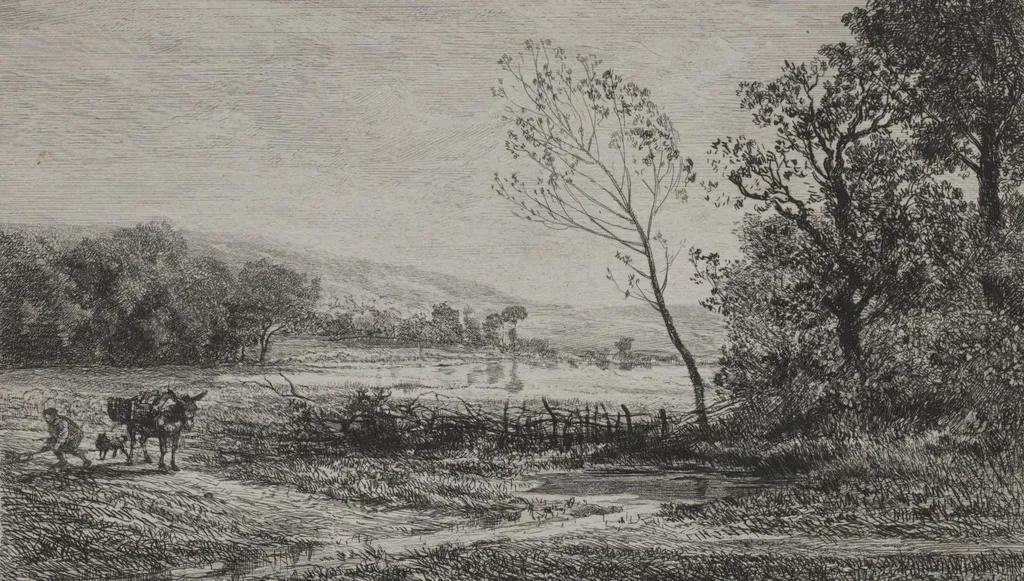
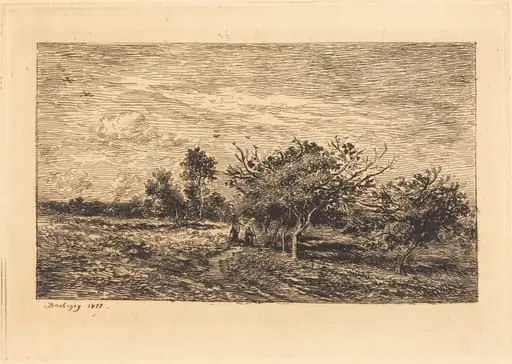
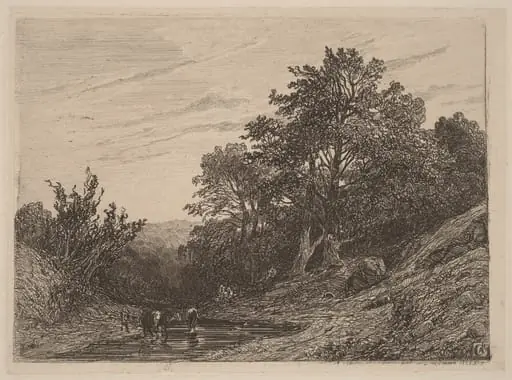
Autumn is a print by the Romanticist artist Charles François Daubigny. It dates from 1848 and is held in the collection of the Cleveland Museum of Art.
About this work
Overview
Unlike his oil paintings, this work engages with the quiet intimacy of rural life through the medium of printmaking.
Created in 1848, *Autumn* is a print by Charles-François Daubigny, a French artist linked to the Barbizon school. Unlike his oil paintings, this work engages with the quiet intimacy of rural life through the medium of printmaking. Daubigny’s focus on seasonal transitions and unidealized countryside settings positioned him as a bridge between Romantic landscape traditions and the emerging realism of later 19th-century art.
Subject & Meaning
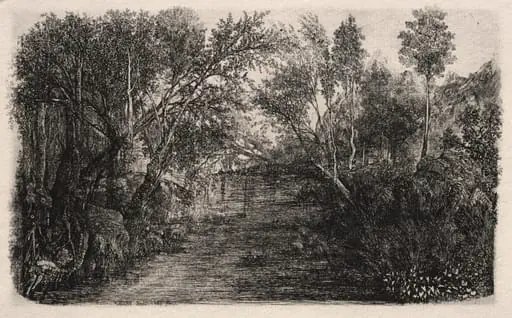
The scene depicts a tranquil autumnal landscape with a winding path, tall trees, and scattered figures. A lone ox pulls a cart, accompanied by a walker, while other distant figures and animals suggest quiet rural activity. There is no narrative drama—instead, the work conveys a sense of daily rhythm and harmony with nature, reflecting a quiet reverence for the ordinary rhythms of peasant life.
Technique & Style
Daubigny employed soft, delicate lines to model light and shadow, creating a hazy, atmospheric effect. The tonal gradations suggest the diffused quality of autumn light without heavy contrast. His approach avoids dramatic emphasis, favoring subtle textures and gentle contours that evoke a meditative mood. The print’s restrained palette and fluid draftsmanship align with contemporary interest in naturalism over idealization.
History & Provenance
Produced in 1848, *Autumn* emerged during a period when Daubigny was deepening his engagement with printmaking as a means to explore landscape beyond canvas. Though less documented than his paintings, this work was likely circulated among artists and collectors interested in the Barbizon circle’s aesthetic. Its survival reflects its role in the broader dissemination of rural realism in mid-century France.
Context
In the mid-19th century, French artists increasingly turned to the countryside as a subject worthy of serious attention. Daubigny’s work responded to this shift, rejecting mythological or grand historical themes in favor of observed, unembellished scenes. His prints contributed to a growing visual culture that valued authenticity in nature, influencing later movements like Impressionism.
Legacy
Daubigny’s *Autumn* exemplifies his quiet influence on landscape representation. Through his emphasis on direct observation and atmospheric nuance, he helped redefine how nature could be rendered in print. While not widely celebrated in his time, his approach laid groundwork for artists who sought to capture transient light and everyday rural life with sincerity and restraint.
Artist & collection
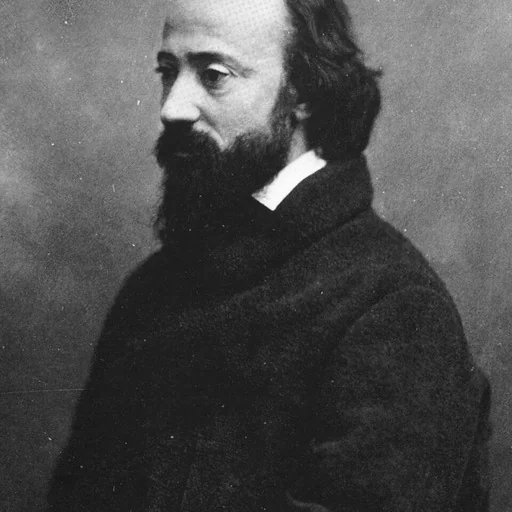
Artist
Charles-François Daubigny ( DOH-bin-yee, US: DOH-been-YEE, doh-BEEN-yee, French: ; 15 February 1817 – 19 February 1878) was a French painter, one of the members of the Barbizon school, and is considered an important precursor of…

![Forest on Lago Maggiore [Foresta sul Lago Maggiore], by Giberto Borromeo](https://artifactworldgallery.com/img/giberto-borromeo--forest-on-lago-maggiore-foresta-sul-lago-maggiore--6d25270befdb299f-w320.webp)