Artwork
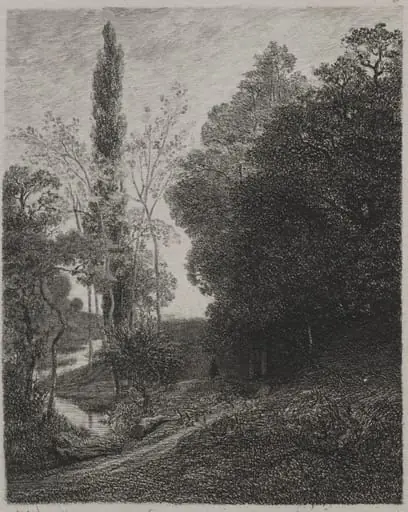
Stags at the water's edge
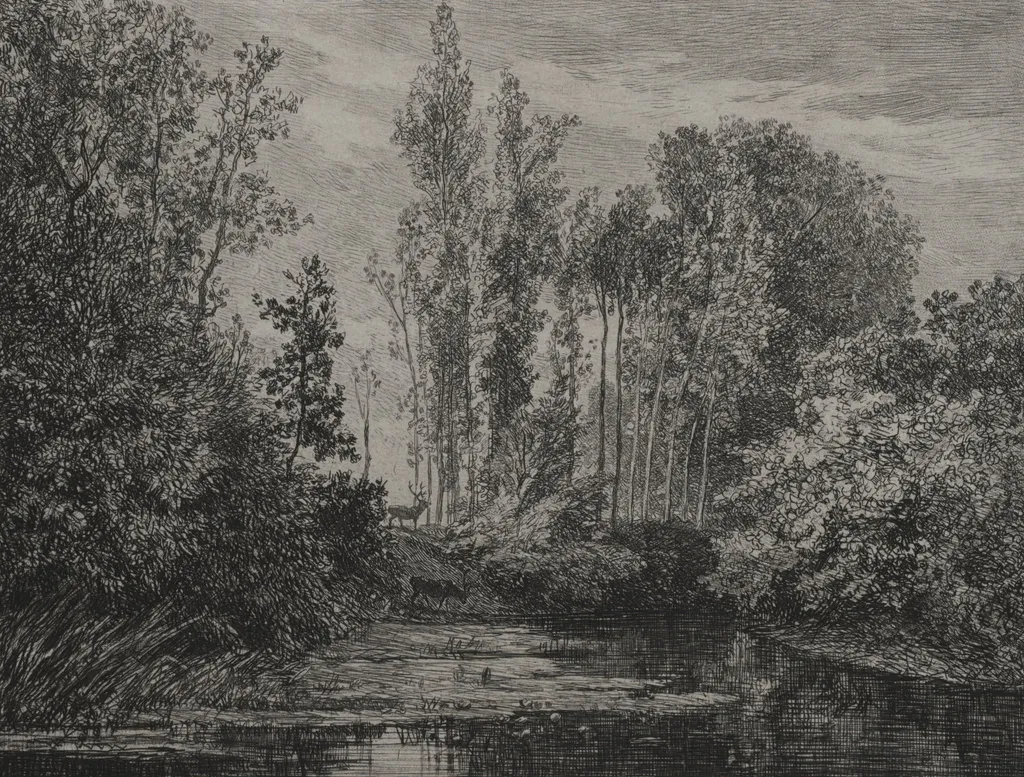
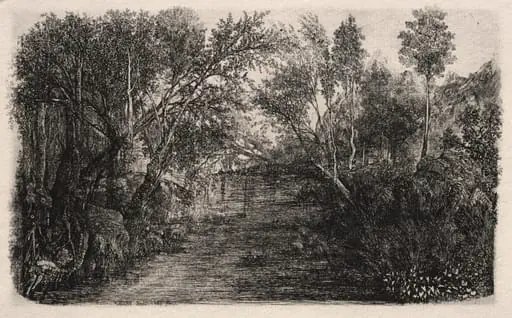
Stags at the water's edge is a print by the Impressionist artist Charles François Daubigny. It dates from 1850 and is held in the collection of the Cleveland Museum of Art.
About this work
Overview
Stags at the water's edge, a print by Charles-François Daubigny, dates to 1850. Associated with the Barbizon school and an influence on Impressionism, the artist is known for innovative printmaking and capturing natural light and atmosphere.
Subject & Meaning
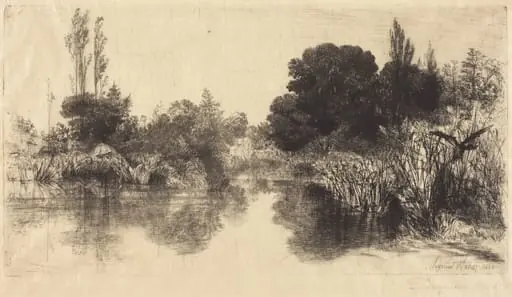
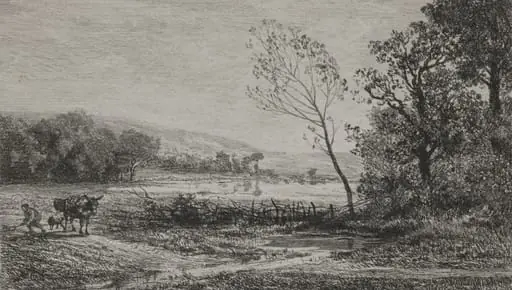
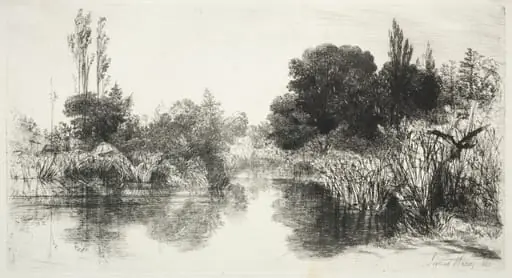
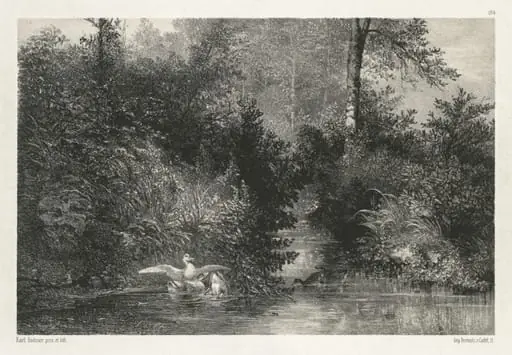
The print depicts a serene forest scene by a river, with tall, tangled trees, a calm deer at the water's edge, and textured brush and river surface. It embodies the Barbizon emphasis on realistic rural landscapes evoking emotional resonance with nature.
Technique & Style
Characterized by quick, sketchy lines, the work suggests outdoor execution, effectively conveying light and shadow. Daubigny's use of etching or cliché verre techniques (though the specific one here is not identified) aligns with his pioneering approach to printmaking.
History & Provenance
Created in 1850 by Charles-François Daubigny, the print's provenance details are not provided here.
Context
Part of the Barbizon school, this work precedes Impressionism, reflecting a transitional moment in French art history focused on naturalism and outdoor observation.
Legacy
Stags at the water's edge contributes to the broader legacy of the Barbizon school's influence on subsequent art movements, notably Impressionism, through its emphasis on natural light and everyday rural scenes.
Own this work as a print
Artist & collection

Artist
Charles-François Daubigny ( DOH-bin-yee, US: DOH-been-YEE, doh-BEEN-yee, French: ; 15 February 1817 – 19 February 1878) was a French painter, one of the members of the Barbizon school, and is considered an important precursor of…





![Forest on Lago Maggiore [Foresta sul Lago Maggiore], by Giberto Borromeo](https://artifactworldgallery.com/img/giberto-borromeo--forest-on-lago-maggiore-foresta-sul-lago-maggiore--6d25270befdb299f-w320.webp)