Artwork
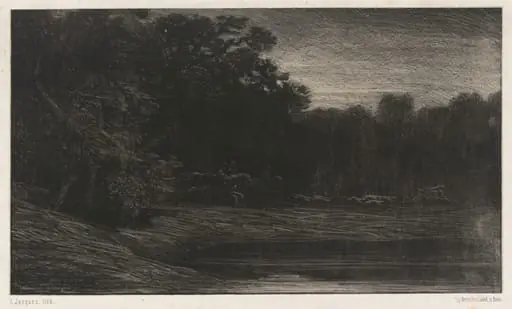
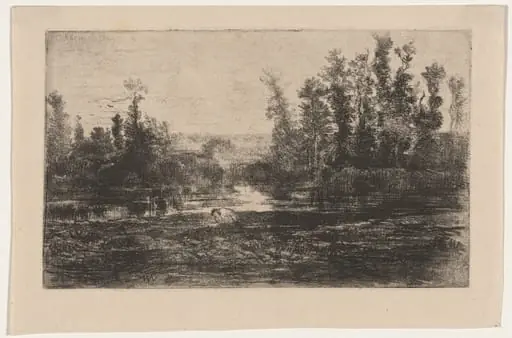
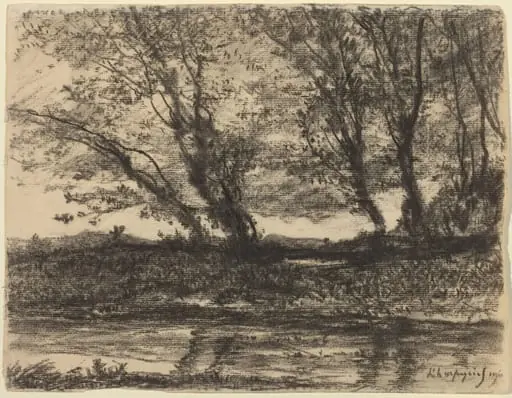
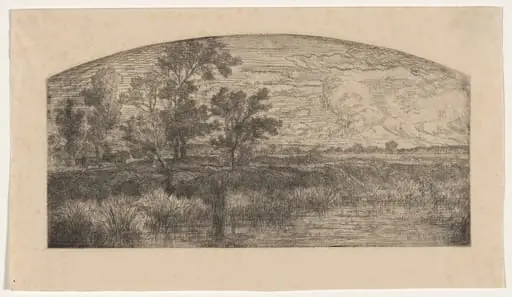
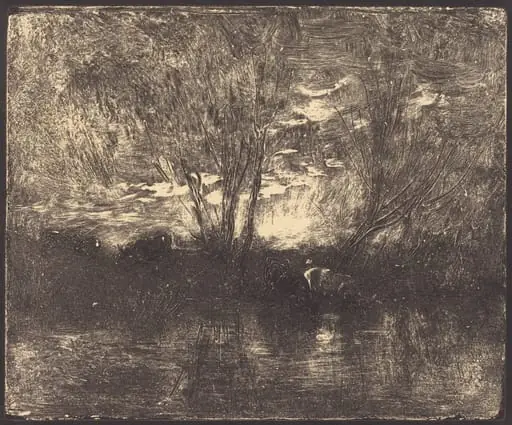
Cows at a Watering Place
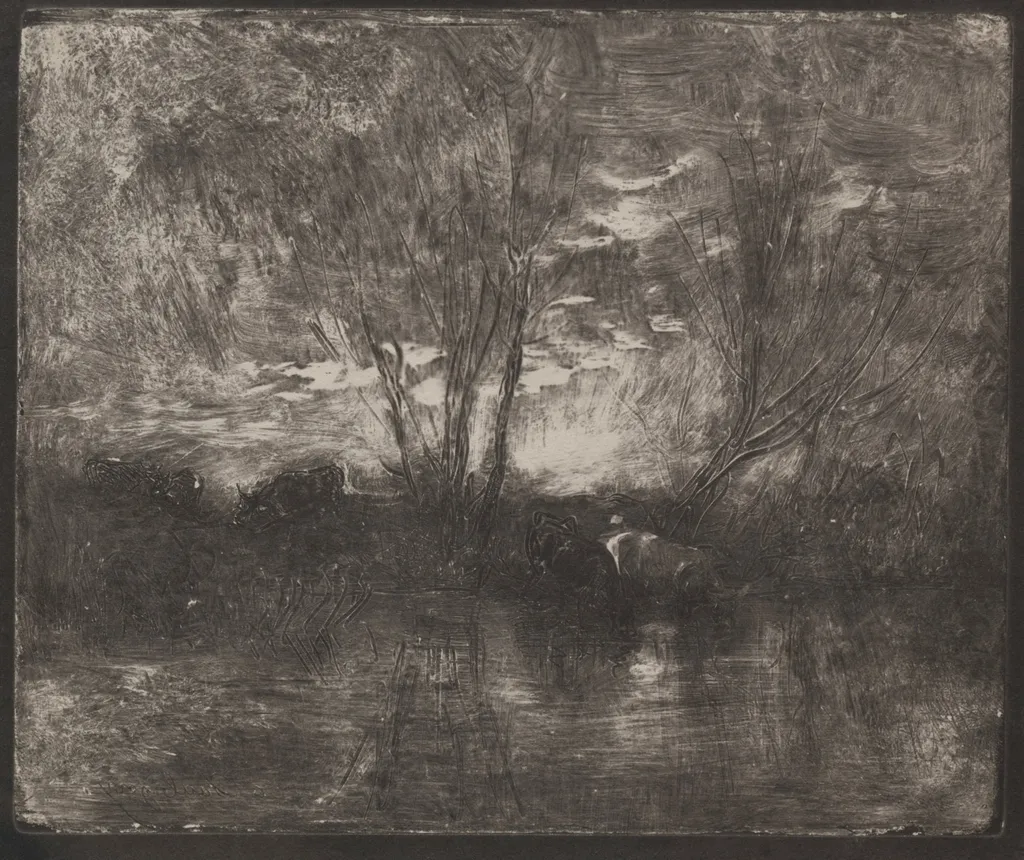
Cows at a Watering Place is a print by Charles François Daubigny. It dates from 1862 and is held in the collection of the Cleveland Museum of Art.
About this work
Overview
This work reflects his shift toward more immediate, sensory depictions of the countryside, foreshadowing later developments in landscape art.
Created in 1862, *Cows at a Watering Place* is a print by Charles-François Daubigny, a French artist linked to the Barbizon school. Known for his quiet observations of rural life, Daubigny used printmaking to explore atmosphere and light in natural settings. This work reflects his shift toward more immediate, sensory depictions of the countryside, foreshadowing later developments in landscape art.
Subject & Meaning
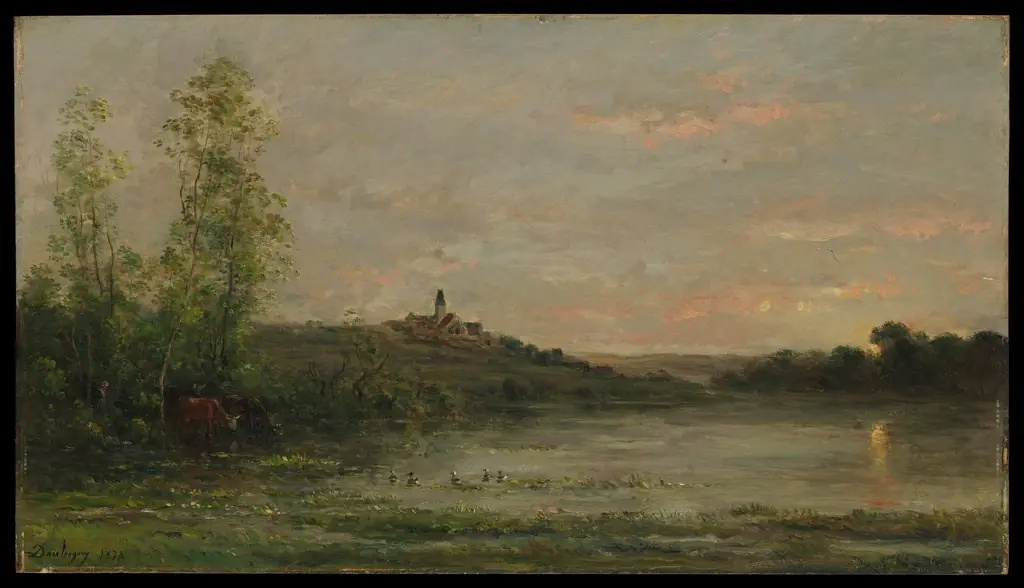
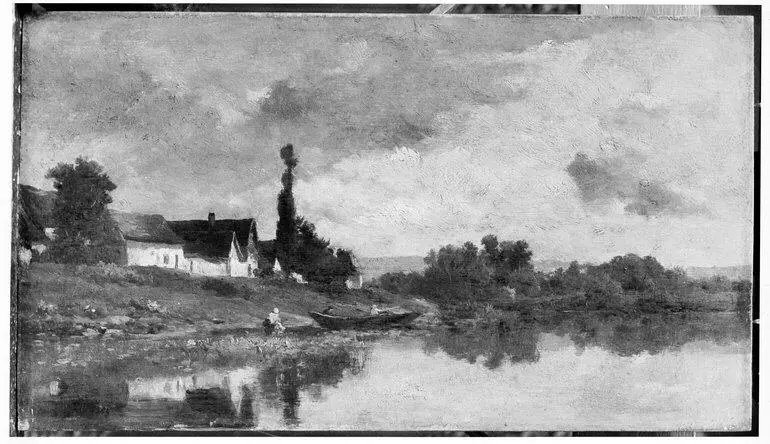
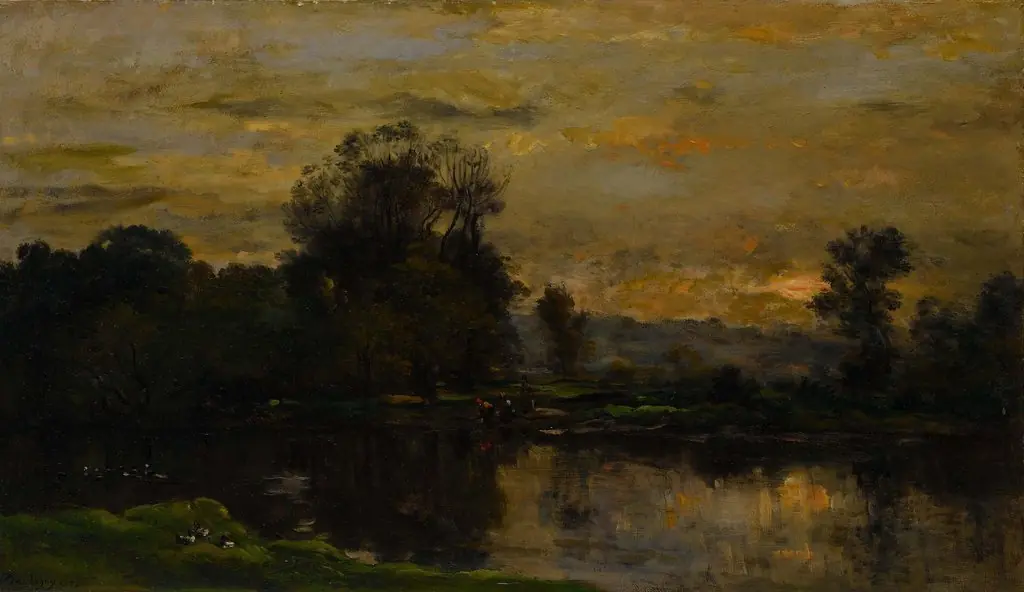
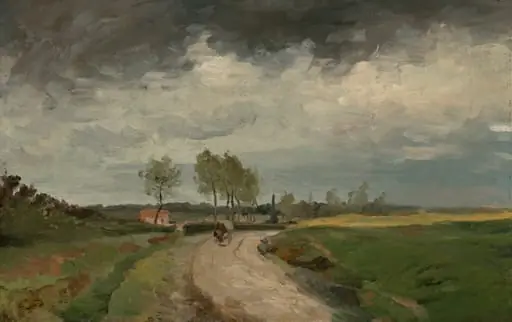
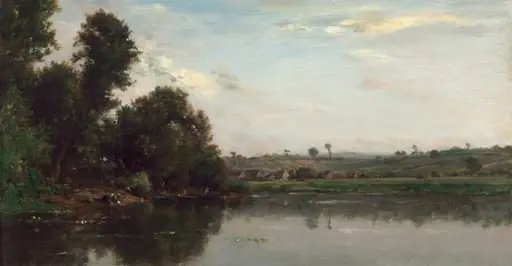
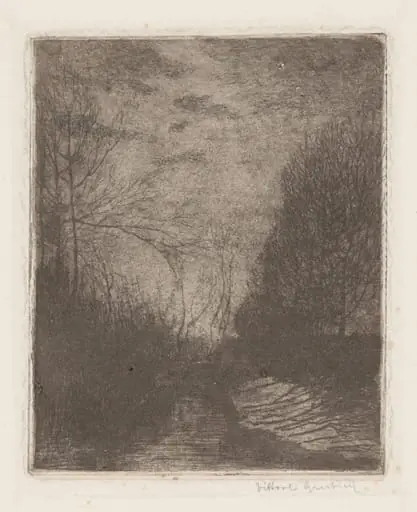
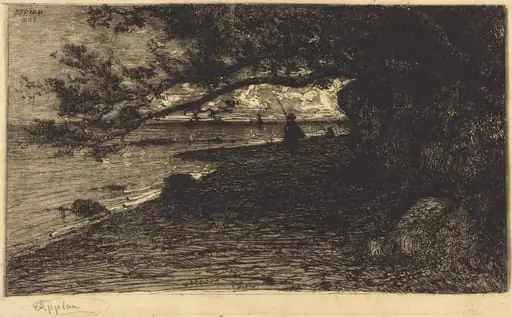
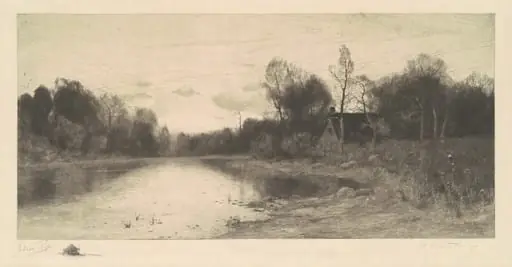
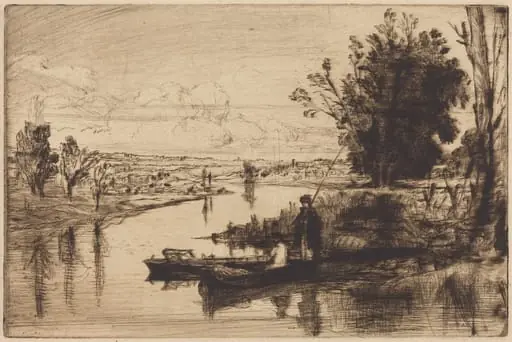
The scene depicts two cattle drinking at the edge of a slow-moving river, surrounded by tall reeds and a brooding sky. There is no human presence, emphasizing the solitude and rhythm of rural nature. The animals are rendered simply, integrated into the landscape rather than highlighted as subjects, suggesting a quiet reverence for the everyday rhythms of farm life.
Technique & Style
Daubigny employed dense, textured brushwork and a restricted palette dominated by grays and blacks to evoke a somber, twilight mood. The thick application of pigment creates a tactile surface, enhancing the sense of damp earth and rustling vegetation. This approach prioritizes mood over detail, using tone and texture to convey the weight of the atmosphere rather than precise form.
History & Provenance
The work emerged during a period when Daubigny was increasingly focused on printmaking as a means to capture fleeting natural effects. Though less documented than his paintings, this print was likely produced for a limited audience of collectors and fellow artists. Its survival reflects its significance within his experimental phase, bridging his Barbizon roots and the emerging interest in direct observation.
Context
In the 1860s, French artists were moving away from idealized landscapes toward scenes of unembellished rural life. Daubigny, working near the Forest of Fontainebleau, joined this trend, rejecting academic conventions in favor of direct study from nature. His use of dark tonalities and loose handling aligned with contemporaries like Millet, though his focus remained on environmental mood rather than social narrative.
Legacy
Daubigny’s emphasis on atmospheric effect and spontaneous brushwork influenced younger painters, including the Impressionists, who admired his ability to convey transient light and weather. While *Cows at a Watering Place* is not widely exhibited, it exemplifies his contribution to shifting landscape art toward emotional immediacy and material experimentation, paving the way for modern approaches to nature in art.
Artist & collection
Artist
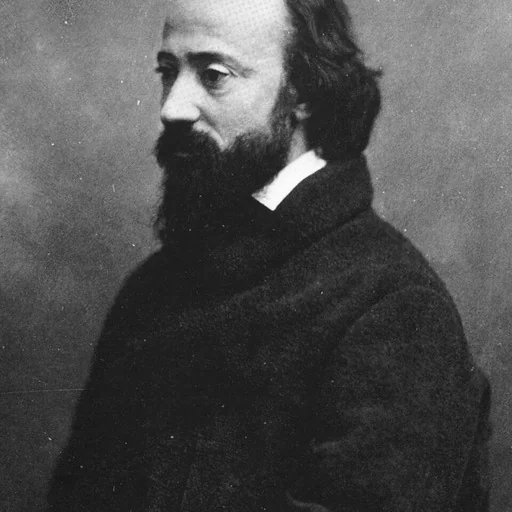
Charles-François Daubigny ( DOH-bin-yee, US: DOH-been-YEE, doh-BEEN-yee, French: ; 15 February 1817 – 19 February 1878) was a French painter, one of the members of the Barbizon school, and is considered an important precursor of…