Artwork
Crouching Man (L’Homme accroupi)
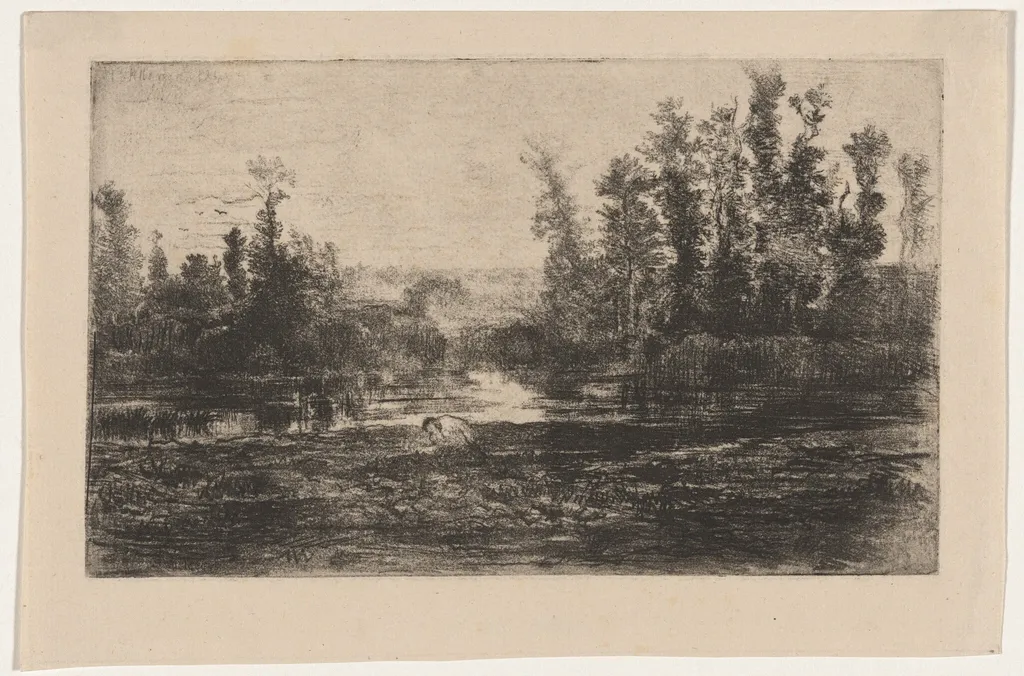
Crouching Man (L’Homme accroupi) is an ink print by the Romanticist artist Louis Hector François Allemand. It dates from 1849 and is held in the collection of the National Gallery of Art.
About this work
Overview
Crouching Man (L’Homme accroupi) is a softground etching by Louis Hector François Allemand, dated 1849.
Crouching Man (L’Homme accroupi) is a softground etching by Louis Hector François Allemand, dated 1849. Executed on laid paper, the work is part of the National Gallery of Art’s collection in Washington, D.C. Unlike typical figure studies, the print presents a landscape dominated by dense vegetation and a winding waterway, with a human form subtly integrated into the scene. The technique emphasizes texture and atmosphere over detail.
Subject & Meaning
The figure of a crouching man is barely discernible amid the thick undergrowth, suggesting isolation or contemplation. The surrounding forest, rendered with heavy shading and tangled branches, evokes a sense of enclosure and mystery. Rather than depicting action, the scene invites quiet reflection, aligning with Romantic ideals that valued nature’s emotional weight and the individual’s smallness within it.
Technique & Style
Allemand employed softground etching to achieve soft, atmospheric lines and varied tonal gradations. The technique allowed him to mimic the texture of foliage and the roughness of water with subtle ink deposits. Dark, overlapping shadows create depth, while the river’s faint, indistinct forms suggest movement without clarity. The style prioritizes mood over precision, characteristic of mid-19th-century Romantic printmaking.
History & Provenance
Created in 1849, the print entered the National Gallery of Art’s collection through established acquisition channels, likely as part of a broader effort to document European graphic arts of the period. Its provenance prior to institutional ownership is not widely documented, but its preservation suggests it was valued by collectors interested in Romantic-era prints and lesser-known French artists.
Context
In the mid-1800s, French artists increasingly turned to nature as a subject imbued with psychological and spiritual resonance. Allemand’s work reflects this trend, aligning with contemporaries who used etching to explore solitude and the sublime. While less famous than his peers, his prints contributed to a growing body of work that redefined landscape as a vehicle for inner experience rather than topographical record.
Legacy
Crouching Man remains a quiet example of Romantic printmaking, illustrating how technical restraint could convey emotional depth. Though not widely exhibited, it endures as a testament to the era’s interest in nature’s ambiguity and the human presence within it. The work contributes to scholarly understanding of minor figures in 19th-century French graphic arts and the evolving role of etching beyond illustration.
Artist & collection
Artist
Louis Hector François Allemand
Louis Hector François Allemand (1809–1886) was a French artist, born in Lyon.

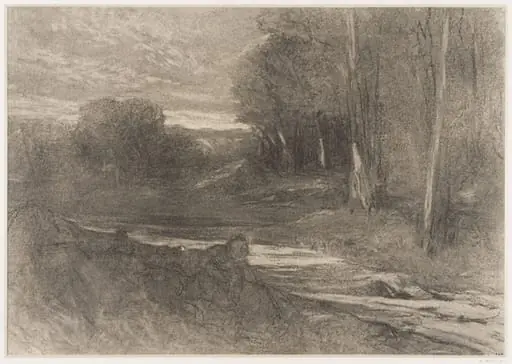 By the Waters of Babylon.
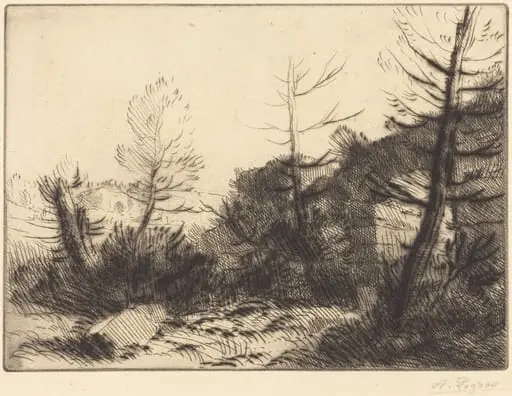 Roman Ruin (Ruine romaine)
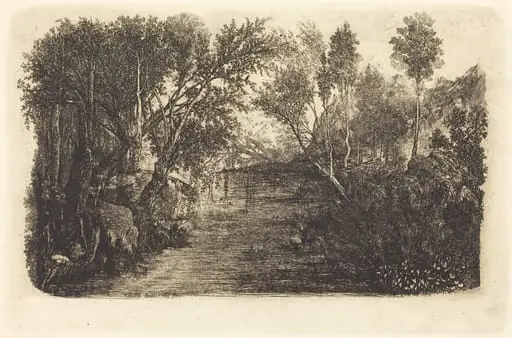 The Water's Course
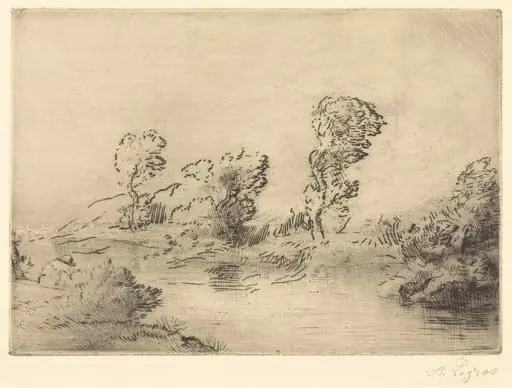 Banks of the Marne (Bord de la Marne)
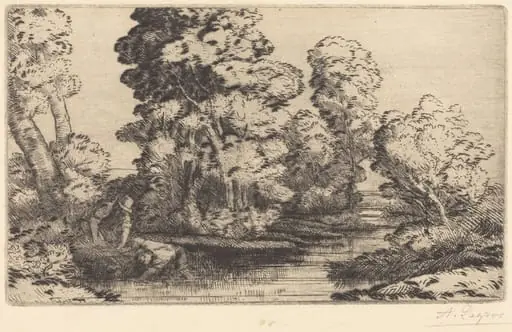 Valley in Bourgogne (Une vallee en Bourgogne)
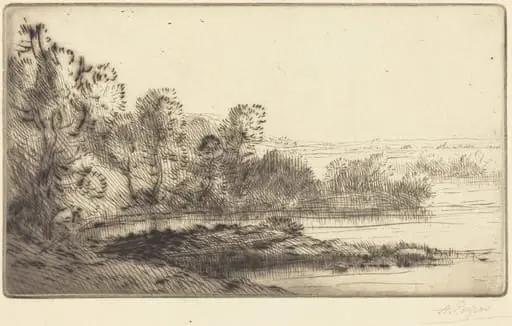 Along the Terne (Sur la terne)
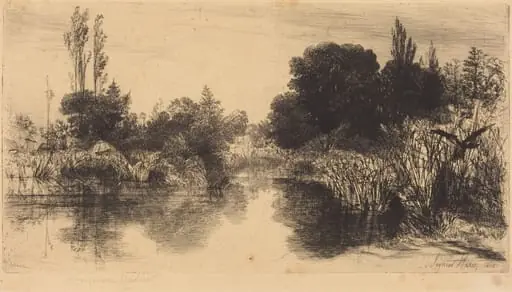 Shere Mill Pond (The Larger Plate)
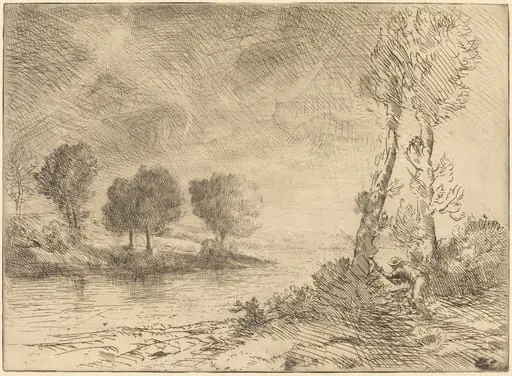 Salmon Fisher (Le pecheur de saumon)
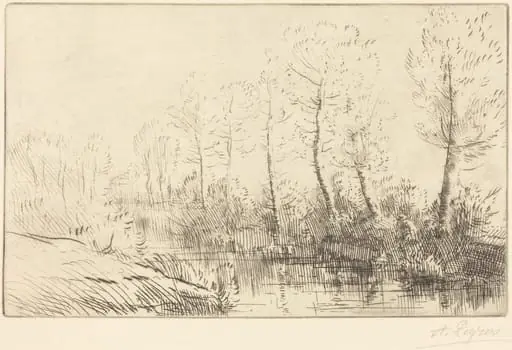 Birch Trees: Water's Edge Seen in Morning Light (Les bouleaux: Bord de l'eau, effet du matin
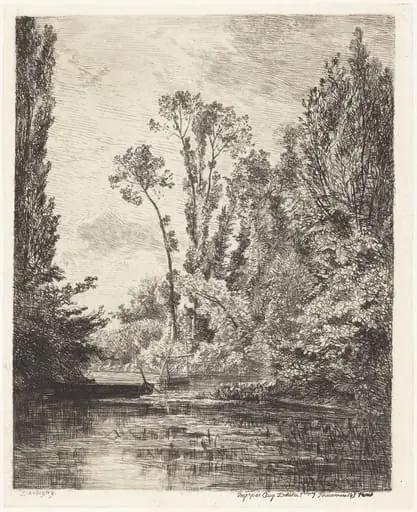 The Virgin Islands in Bezons (Les Iles vierges a Bezons)
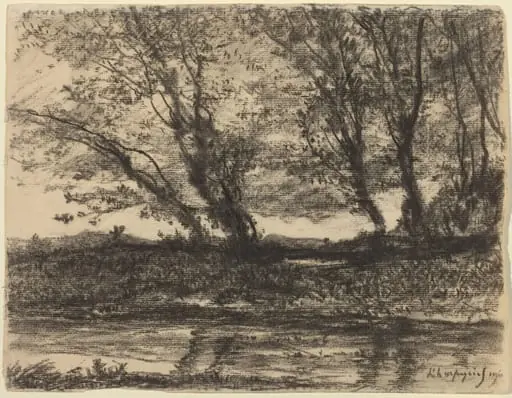 Landscape
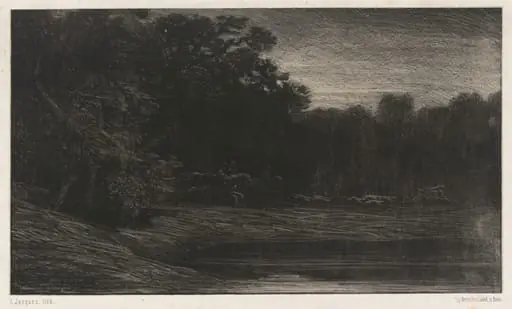 Deer Hunt (La chasse au cerf)