Artwork
The Ford
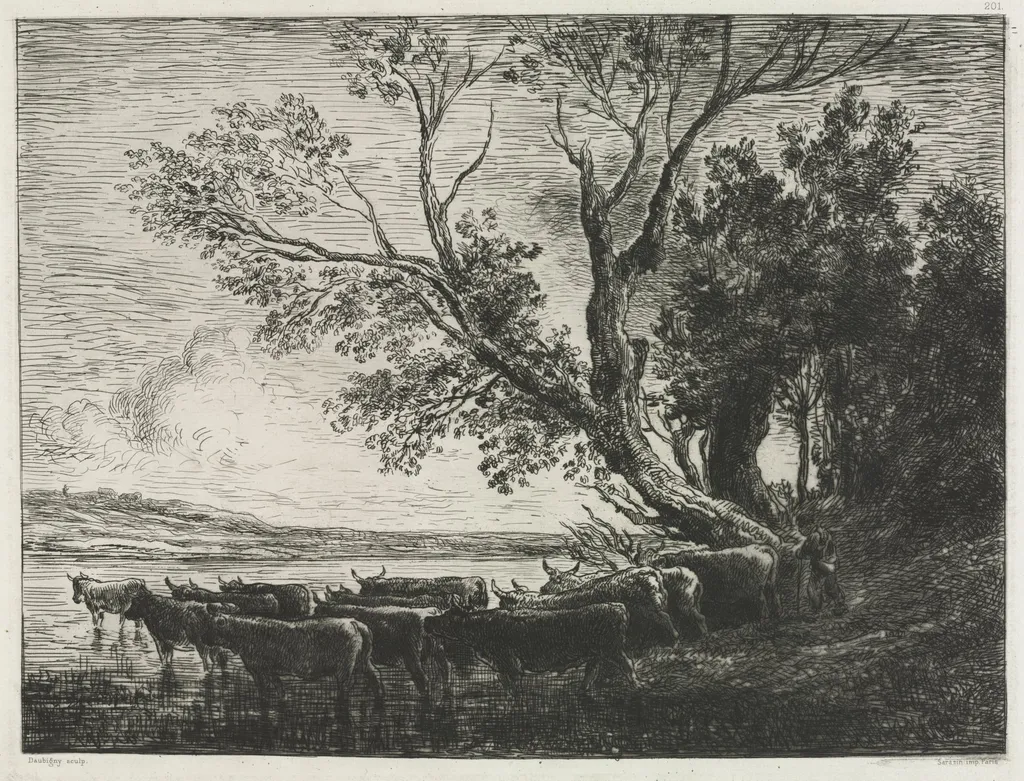
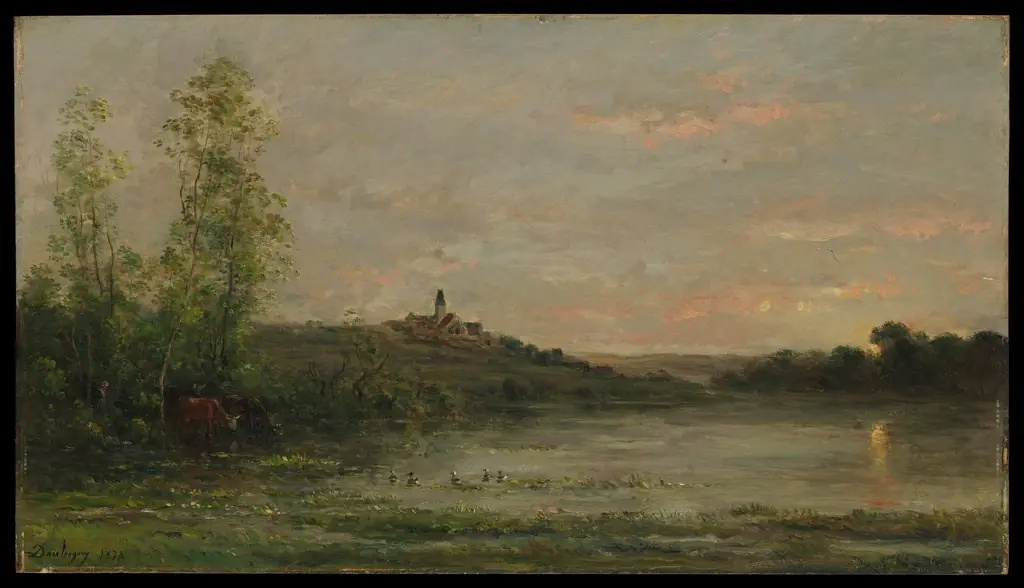
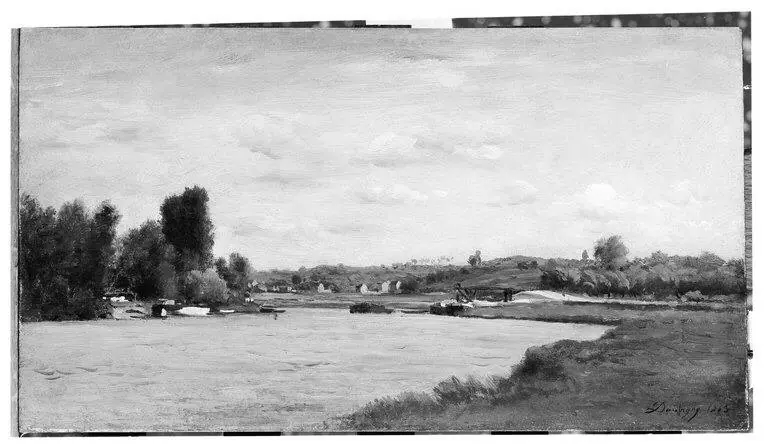
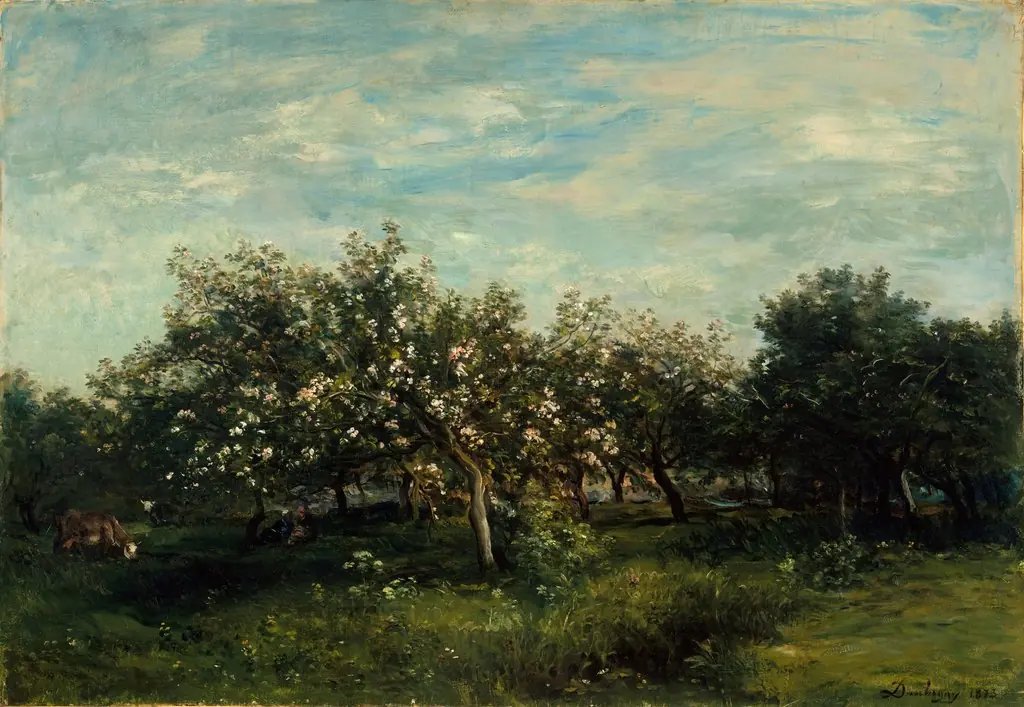
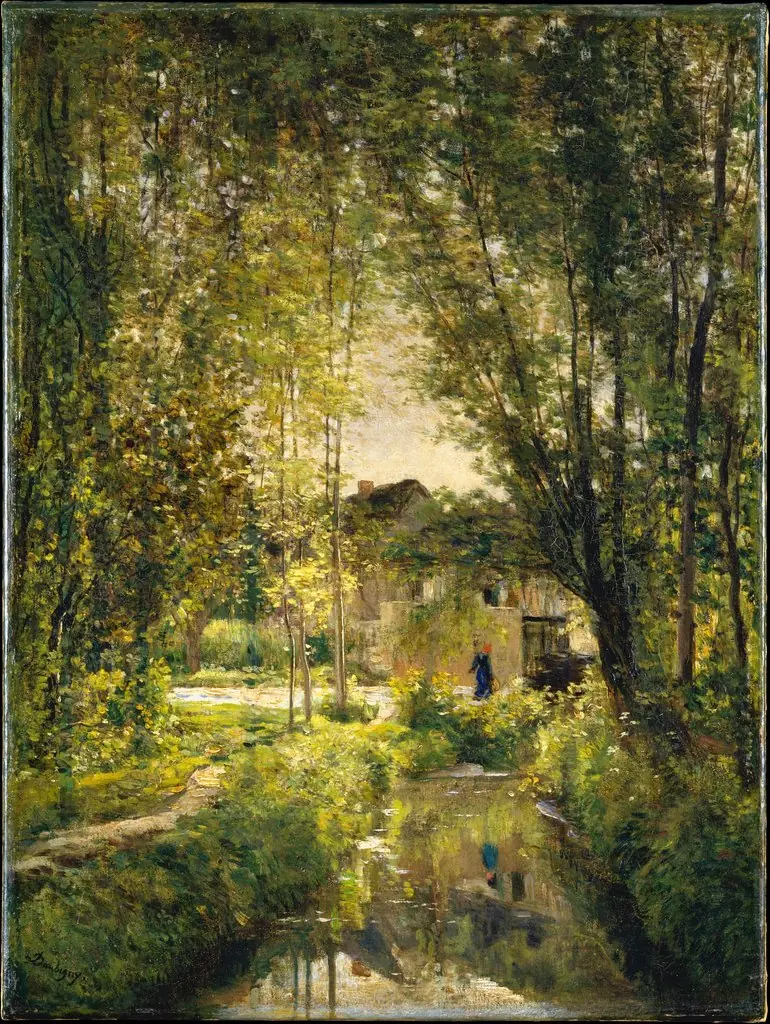
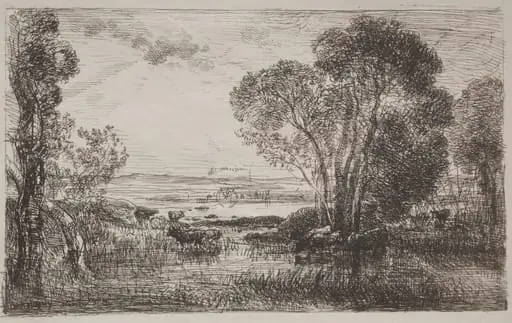
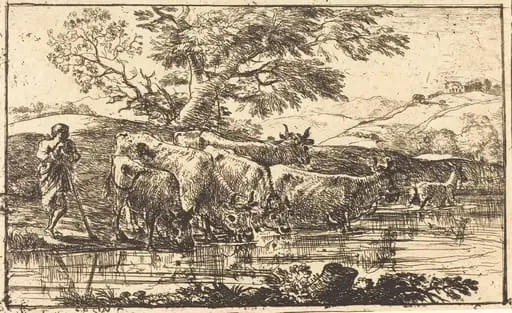
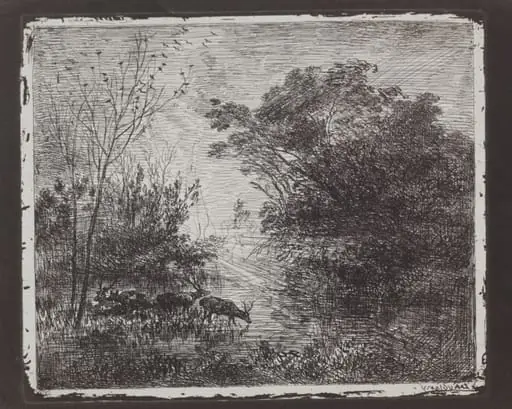
The Ford is a print by the Impressionist artist Charles François Daubigny. It dates from 1865 and is held in the collection of the Cleveland Museum of Art.
About this work
Overview
Created in 1865, *The Ford* is a print by French artist Charles François Daubigny, who worked primarily in etching and cliché verre. Though often linked to the Barbizon school, his approach to landscape emphasized direct observation and atmospheric nuance. This work exemplifies his shift toward capturing transient natural conditions, laying groundwork for later developments in landscape painting.
Subject & Meaning
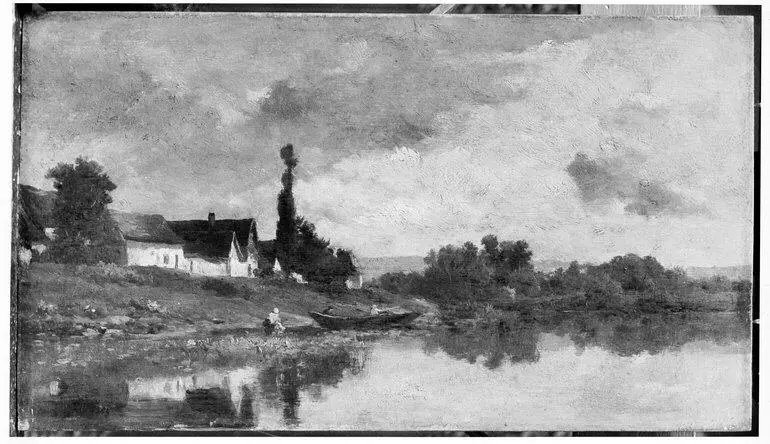
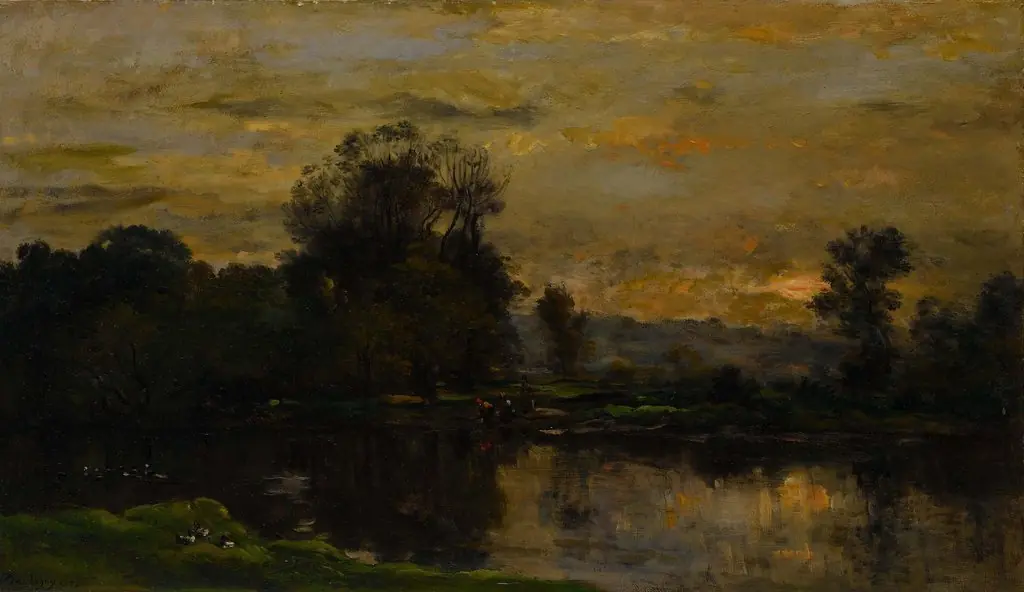
The scene depicts a quiet riverbank where a flock of sheep rests beneath bare trees, their forms clustered near the water’s edge. The stillness of the water, marked by subtle ripples, and the sparse foliage suggest a moment of pause in the daily rhythm of rural life. There is no narrative drama—only the quiet presence of animals and land, inviting contemplation of nature’s unembellished rhythms.
Technique & Style
Daubigny employed fine, controlled lines to render texture: the wool of the sheep, the smooth surface of water, and the skeletal branches of trees. Through delicate etching and tonal gradations, he achieved a sense of depth without heavy shading. The composition is restrained, with a horizontal emphasis that mirrors the calm of the landscape, avoiding theatricality in favor of quiet realism.
History & Provenance
*The Ford* was produced during a period when Daubigny was increasingly focused on printmaking as a means to explore light and form outside the constraints of oil painting. It was likely made for private circulation among artists and collectors, reflecting his engagement with the growing interest in original prints as autonomous works rather than reproductive tools.
Context
His work resonated with younger artists, including the Impressionists, who admired his commitment to capturing transient effects of light and weather.
In mid-19th century France, landscape art was shifting from idealized compositions toward direct observation of the natural world. Daubigny’s practice aligned with this trend, particularly through his plein air sketches and experimental print techniques. His work resonated with younger artists, including the Impressionists, who admired his commitment to capturing transient effects of light and weather.
Legacy
Though less celebrated than his oil paintings, Daubigny’s prints like *The Ford* influenced a generation of artists seeking to translate the immediacy of nature into graphic form. His technical innovations in etching and his emphasis on atmosphere over detail helped redefine printmaking as a medium for personal expression, not just reproduction.
Own this work as a print
Artist & collection
Artist
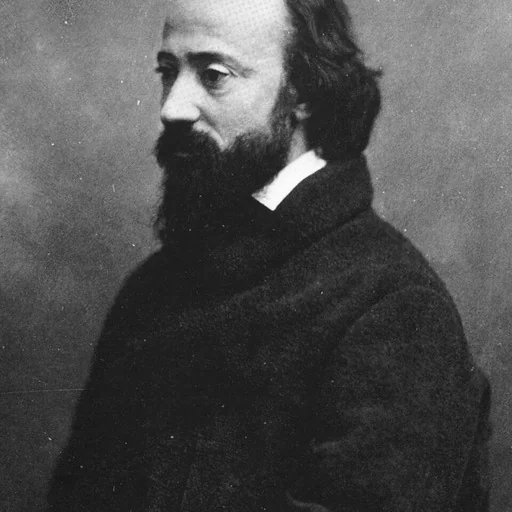
Charles-François Daubigny ( DOH-bin-yee, US: DOH-been-YEE, doh-BEEN-yee, French: ; 15 February 1817 – 19 February 1878) was a French painter, one of the members of the Barbizon school, and is considered an important precursor of…