Artwork
Moonrise
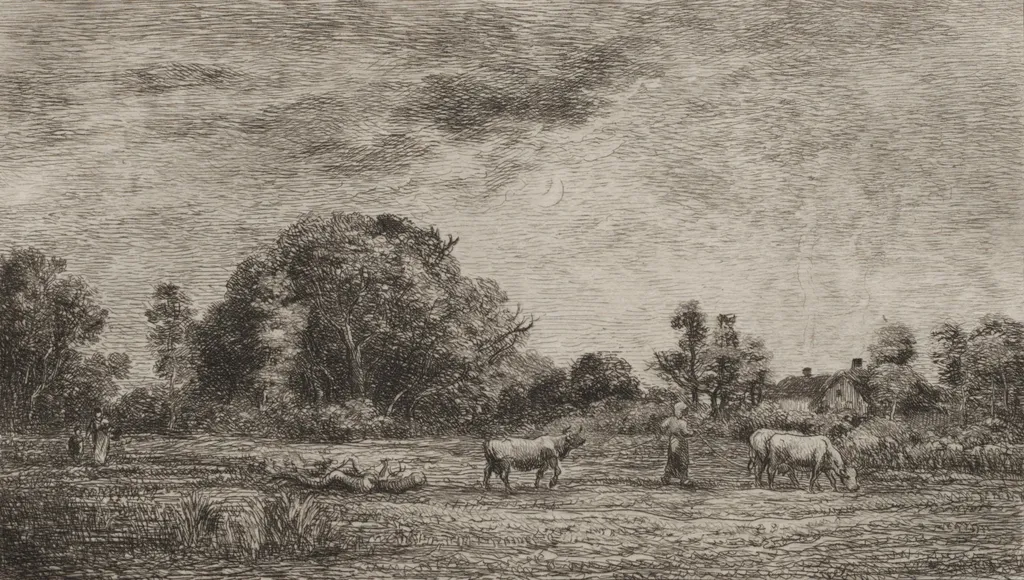
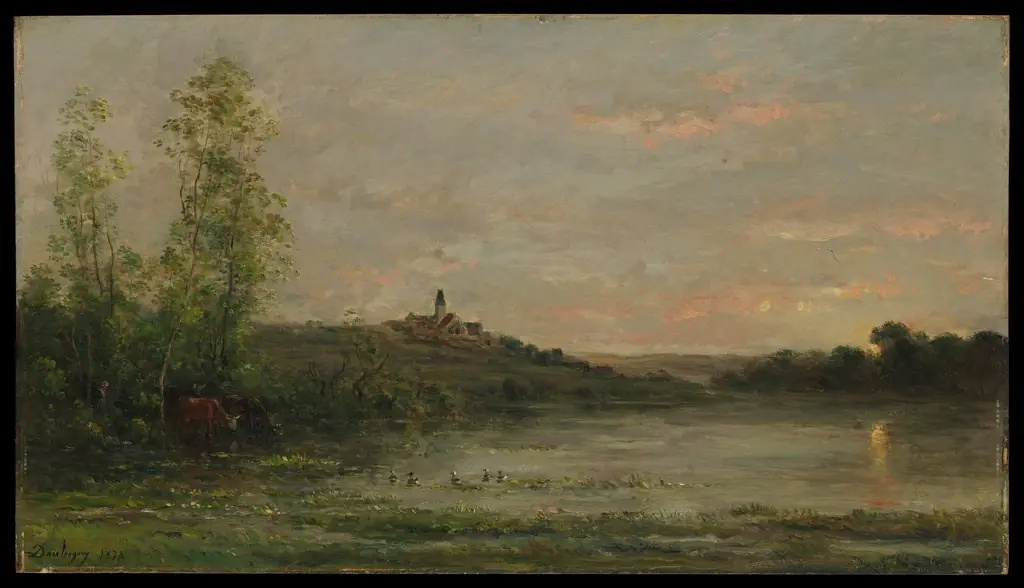
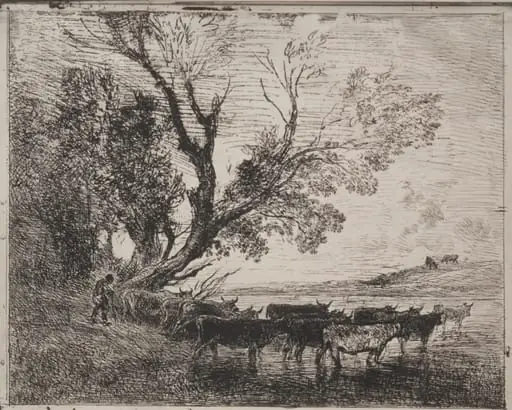
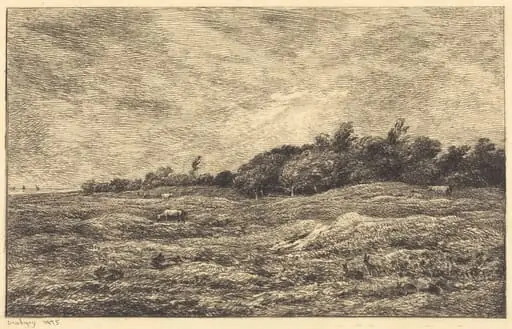
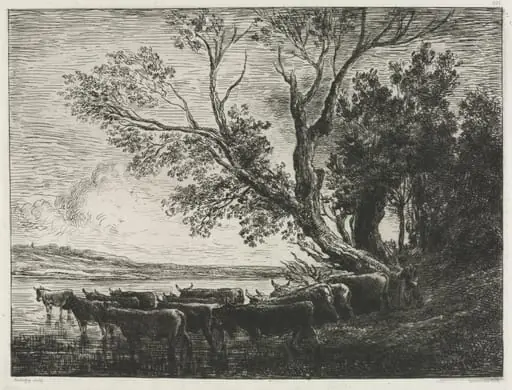
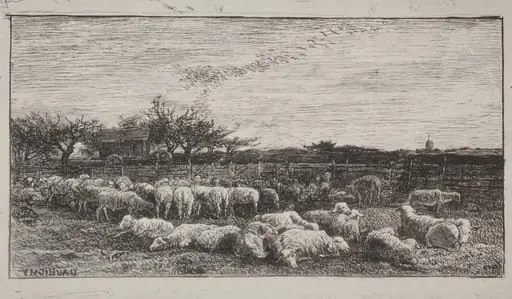
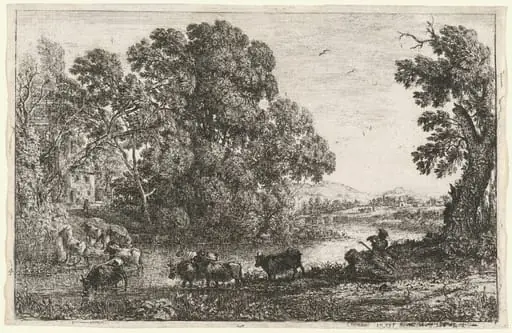
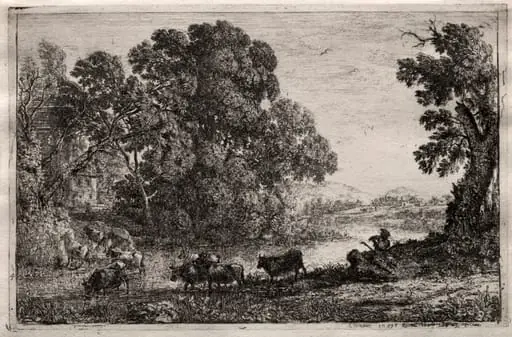
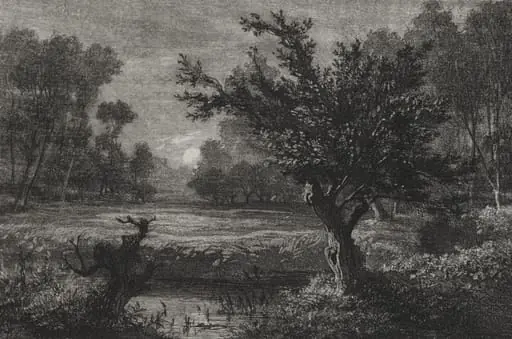
Moonrise is a print by the Impressionist artist Charles François Daubigny. It dates from 1861 and is held in the collection of the Cleveland Museum of Art.
About this work
Overview
Charles-François Daubigny produced *Moonrise* in 1861 as a print reflecting his deep engagement with rural French landscapes. Associated with the Barbizon school, he prioritized direct observation of nature over idealized composition. His approach to printmaking emphasized spontaneity, using loose, fluid lines to convey the transient qualities of light and atmosphere at day’s end.
Subject & Meaning
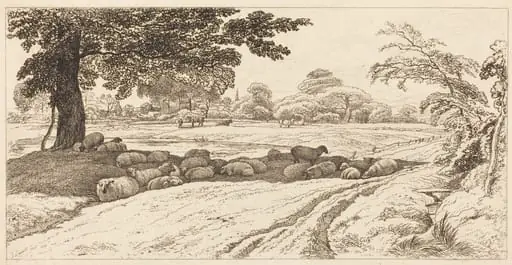
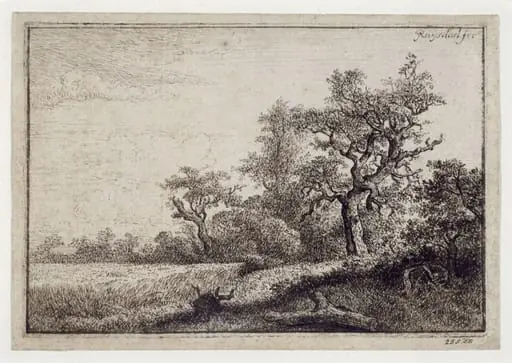
The scene depicts a quiet pastoral moment just after sunset, with grazing sheep, silhouetted trees, and a still body of water under a pale sky. No human figures are present, reinforcing a sense of solitude and natural rhythm. The work suggests contemplation of nature’s quiet cycles, inviting attention to subtle shifts in light rather than narrative or symbolism.
Technique & Style
Daubigny employed etching and drypoint to achieve a sketchlike quality, with minimal detail and expressive, rapid strokes.
Daubigny employed etching and drypoint to achieve a sketchlike quality, with minimal detail and expressive, rapid strokes. The water is rendered with agitated lines, while the sky fades through soft gradations. Trees appear as dark, simplified forms, contrasting with the luminous horizon. This restrained technique prioritizes mood over precision, anticipating the immediacy later embraced by Impressionists.
History & Provenance
Created during Daubigny’s most productive period, *Moonrise* emerged from his practice of making prints to explore landscape themes outside of oil painting. It was likely produced in limited editions for collectors and fellow artists. The work remained within French artistic circles, reflecting his influence on contemporaries who valued direct observation over academic convention.
Context
In the 1860s, French artists increasingly turned away from historical and mythological subjects toward everyday nature. Daubigny’s focus on twilight scenes aligned with a broader shift toward capturing transient effects. His prints circulated among emerging painters, including those who would form the Impressionist circle, offering a model for rendering light and atmosphere with immediacy.
Legacy
Though less widely known than his oil paintings, *Moonrise* exemplifies Daubigny’s role in expanding printmaking as a medium for expressive landscape. His loose, observational style influenced later artists seeking to capture fleeting moments without studio refinement. The work stands as a quiet bridge between Barbizon realism and the atmospheric concerns of Impressionism.
Artist & collection
Artist
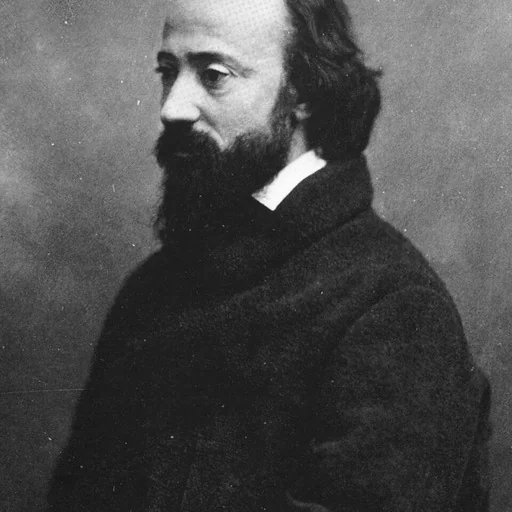
Charles-François Daubigny ( DOH-bin-yee, US: DOH-been-YEE, doh-BEEN-yee, French: ; 15 February 1817 – 19 February 1878) was a French painter, one of the members of the Barbizon school, and is considered an important precursor of…