Artwork
The Herd at the Watering Place (Le troupeau à l'abreuvoir)
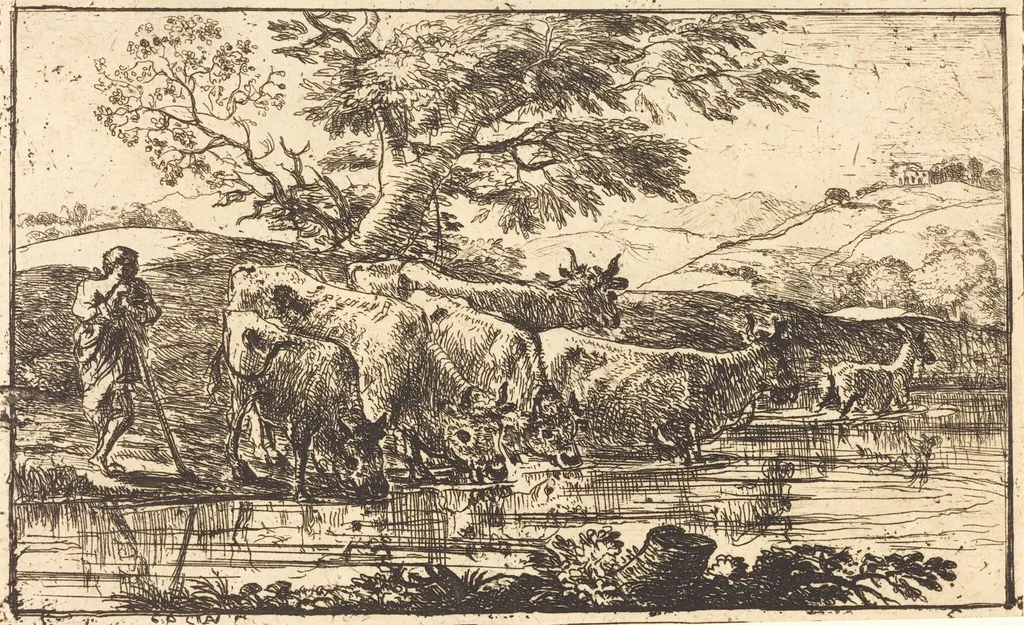
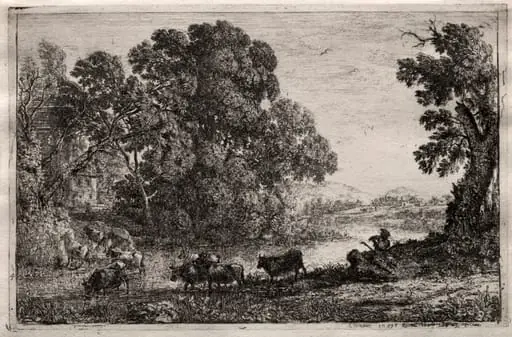
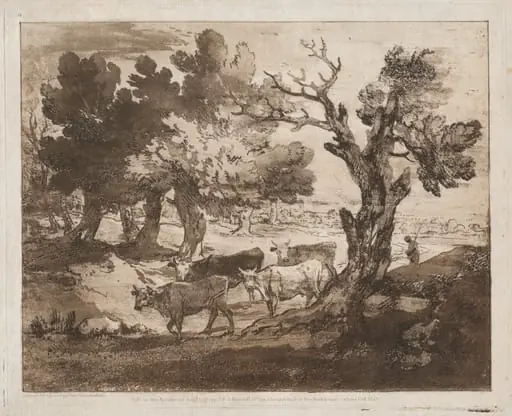
The Herd at the Watering Place (Le troupeau à l'abreuvoir) is an ink print by the Baroque artist Claude Lorrain. It dates from 1635 and is held in the collection of the National Gallery of Art.
About this work
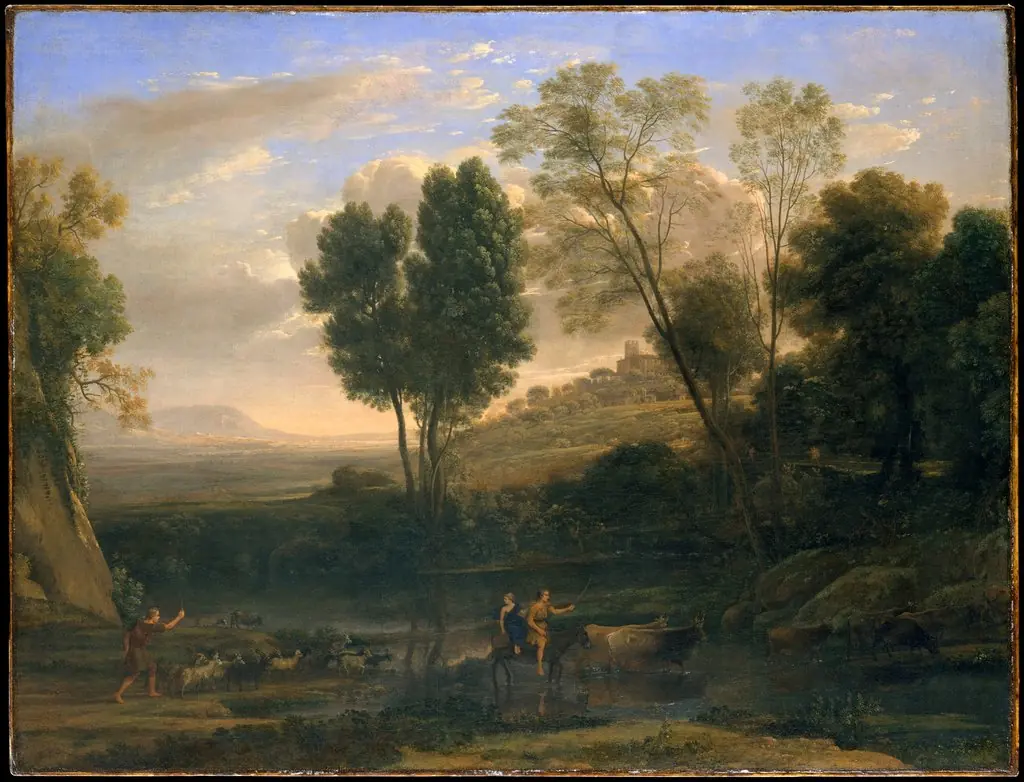
Sunlight filters through trees on the left, casting long shadows.
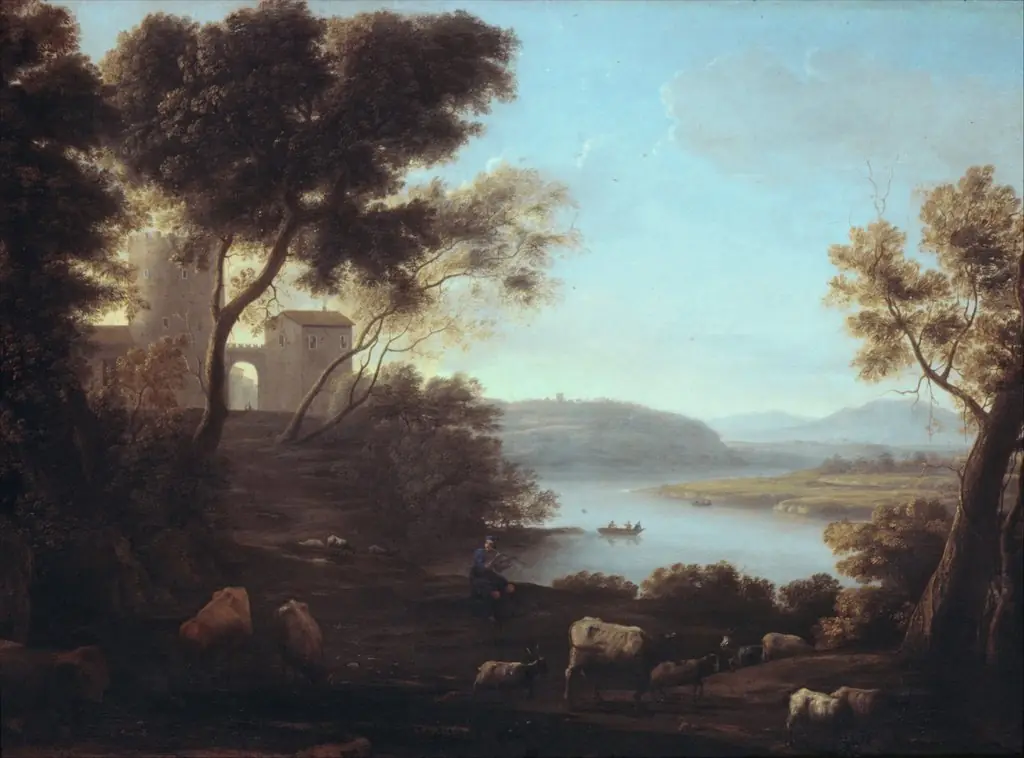
This etching shows cattle drinking from a calm pond. Sunlight filters through trees on the left, casting long shadows. A small figure in the distance watches the animals.
Claude Lorrain made this in 1640. He etched it on copper, then inked the plate. The lines are soft in places, dark in others. That mix gives it a dreamy feel.
It feels quiet and timeless. Look for the way he balanced light and shade. Check out the National Gallery of Art, Washington to see it.
Overview
The Herd at the Watering Place is an etching by Claude Lorrain, a French artist active in Italy during the Baroque period. Created in 1640, it is a representative example of his work in printmaking.
Subject & Meaning
The etching depicts a serene pastoral scene with cattle gathered around a pond, illuminated by sunlight filtering through trees. A distant figure observes the animals, adding a human element to the natural setting.
Technique & Style
Claude Lorrain etched the image on a copper plate, achieving a range of tonal values through varying line densities. The resulting print has a dreamy quality, with soft and dark areas balancing to create a sense of depth and atmosphere.
History & Provenance
The etching was created in 1640, a date that differs from the sometimes-cited 1635. One of the impressions is held by the National Gallery of Art, Washington.
Own this work as a print
Artist & collection
Artist
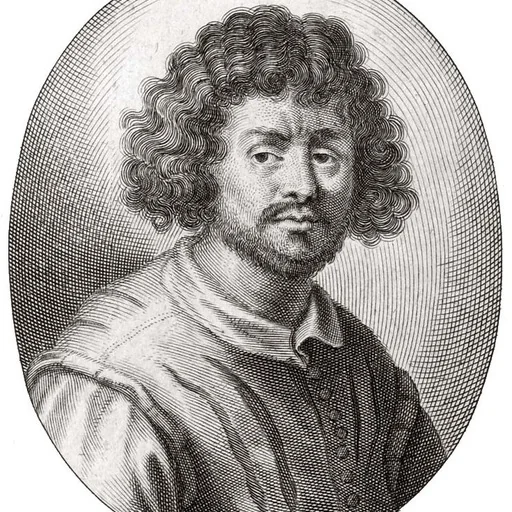
Claude Lorrain (French: ; born Claude Gellée , called le Lorrain in French; traditionally just Claude in English; c.