Artwork
Landscape with Sheep
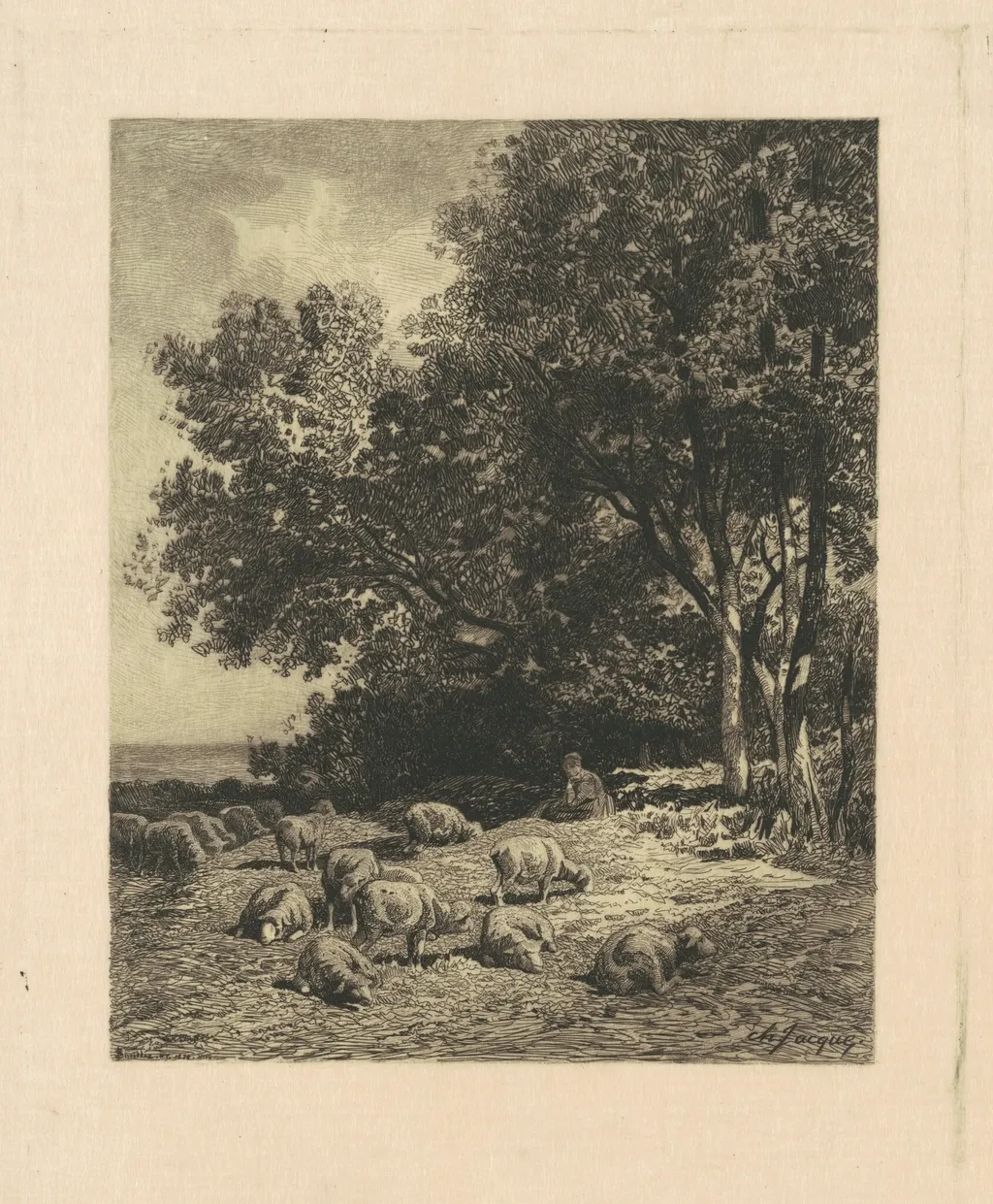
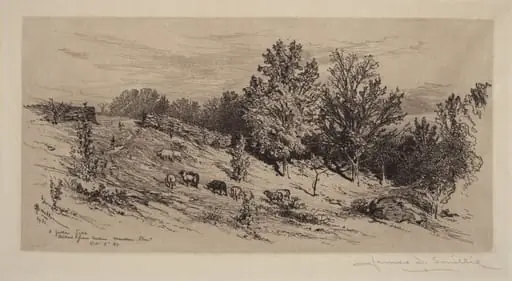
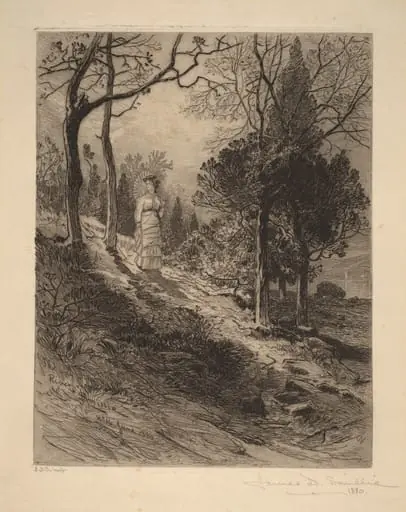
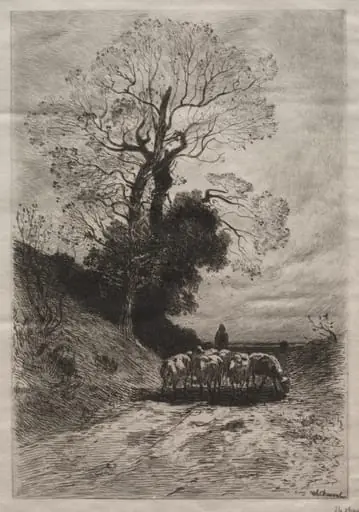
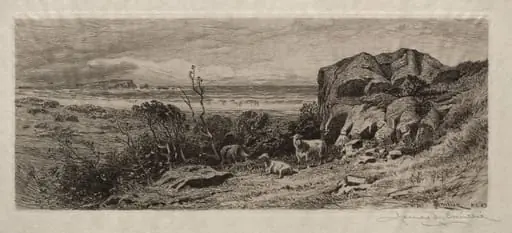
Landscape with Sheep is an ink print by the Impressionist artist James David Smillie. It dates from 1879 and is held in the collection of the National Gallery of Art.
About this work
Overview
Landscape with Sheep is an 1879 etching by American artist James David Smillie, rendered in black ink on laid paper.
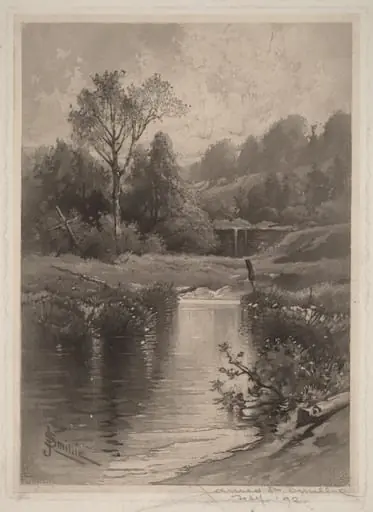
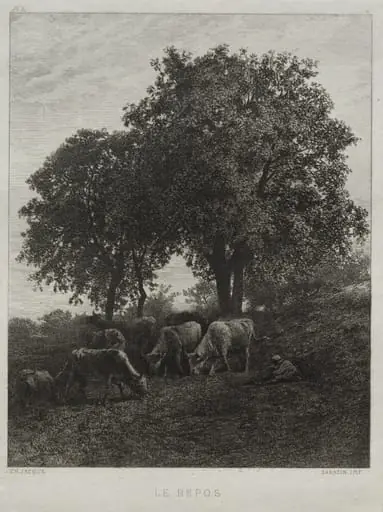
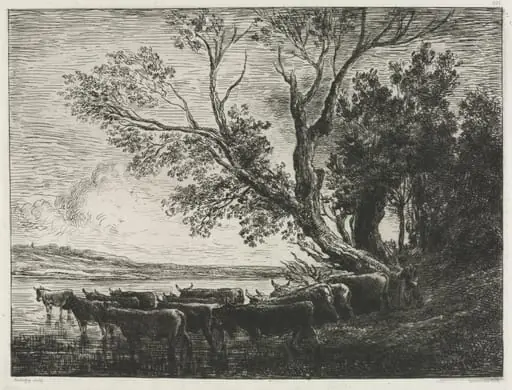
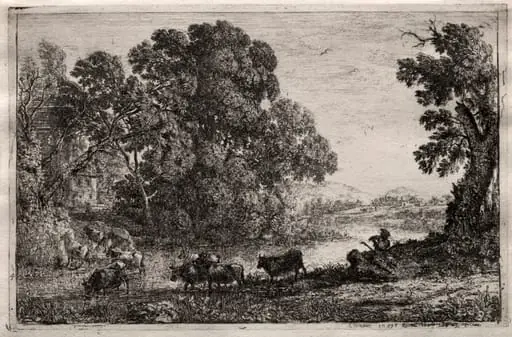
Landscape with Sheep is an 1879 etching by American artist James David Smillie, rendered in black ink on laid paper. The composition captures a quiet rural scene: a group of sheep grazes beneath a broad tree, while uneven terrain of rocks and grass stretches across the foreground. A solitary figure is visible in the distance, near a body of water, suggesting stillness and solitude. The work exemplifies Smillie’s skill in translating natural observation into the delicate medium of etching.
Subject & Meaning
The scene presents an unidealized pastoral moment, free from romantic embellishment. The sheep, the lone watcher, and the weathered landscape convey a sense of quiet routine and harmony with nature. There is no narrative drama—only the subtle rhythm of daily life in the countryside. The figure’s passive posture and the sheep’s undisturbed grazing imply a contemplative, almost meditative relationship between humans and the land.
Technique & Style
Smillie employed fine, controlled etched lines to model light and texture, creating depth without heavy shading. The uneven ground, leafy foliage, and distant horizon are suggested through varying line density and direction, not solid tones. The use of laid paper, with its subtle texture, enhances the tactile quality of the scene. The etching process allowed for precise detail, capturing the softness of grass and the solidity of rock with equal clarity.
History & Provenance
Created in 1879, the print belongs to Smillie’s later period, when he focused on landscape etchings after a career in portraiture and illustration. It was likely produced for private collectors or art societies interested in American printmaking. No documented exhibition or ownership history is widely recorded, but the work aligns with the growing 19th-century American interest in etching as a fine art medium.
Context
In the late 19th century, American artists increasingly turned to etching as a means of personal expression, moving away from mass-produced illustrations. Smillie was part of this revival, influenced by European traditions but committed to depicting American scenery. Landscape with Sheep reflects a broader cultural shift toward valuing quiet, observed nature over grand historical or mythological themes.
Legacy
Though not widely exhibited today, the print remains a representative example of Smillie’s contribution to American printmaking. It illustrates the quiet dignity of everyday rural life and the technical precision possible in etching. The work contributes to the historical record of how American artists used print media to explore landscape as a subject worthy of intimate, detailed attention.
Own this work as a print
Artist & collection

Artist
James David Smillie was an American artist, cofounder of the American Watercolor Society and New York Etching Club. His brother was painter George Henry Smillie.