Artwork
The Large Sheepfold
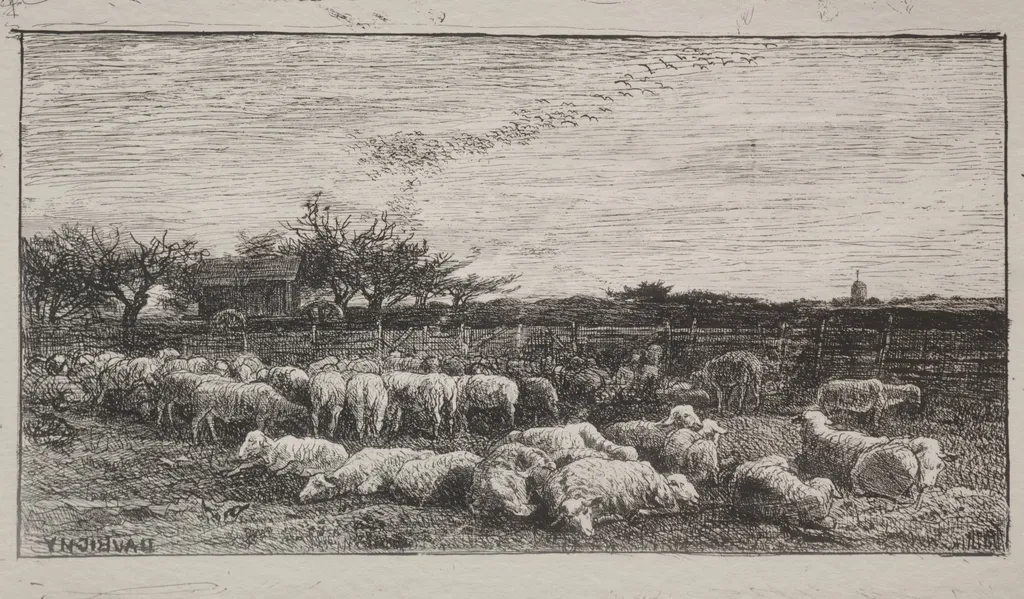
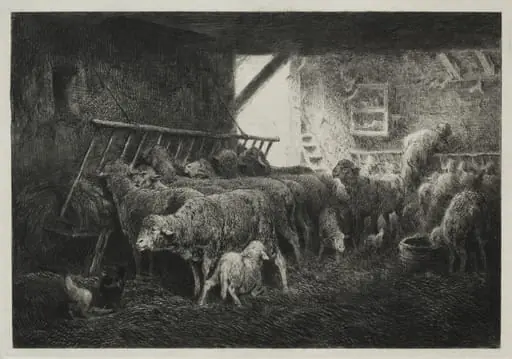
The Large Sheepfold is a print by Charles François Daubigny. It dates from 1862 and is held in the collection of the Cleveland Museum of Art.
About this work
Overview
As a key figure in the Barbizon school, Daubigny turned to printmaking to explore landscape themes with precision.
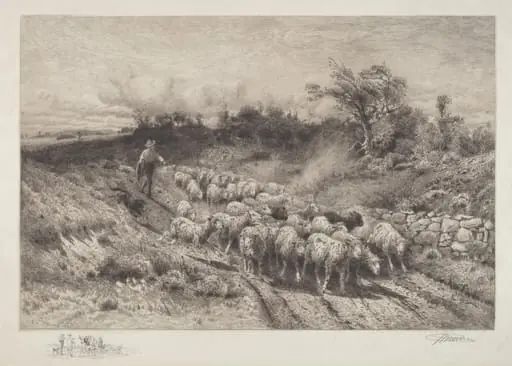
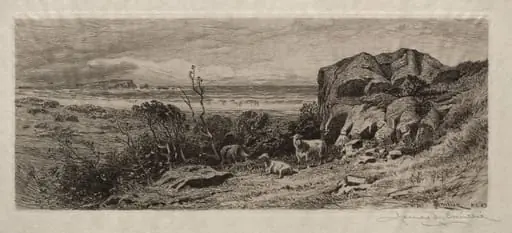
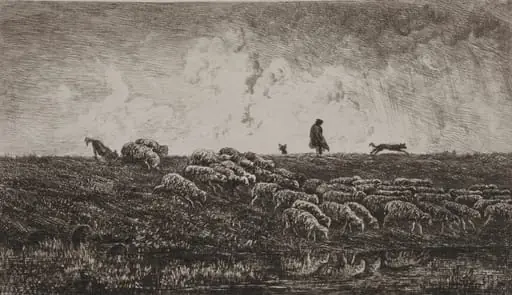
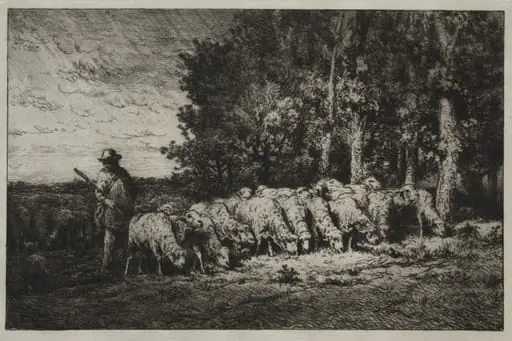
Created in 1862, *The Large Sheepfold* is a black-and-white print by French artist Charles-François Daubigny. As a key figure in the Barbizon school, Daubigny turned to printmaking to explore landscape themes with precision. This work captures a quiet rural scene—sheep gathered in a fenced enclosure—rendered through delicate line work that emphasizes texture and spatial depth without color, reflecting his interest in the quiet rhythms of the countryside.
Subject & Meaning
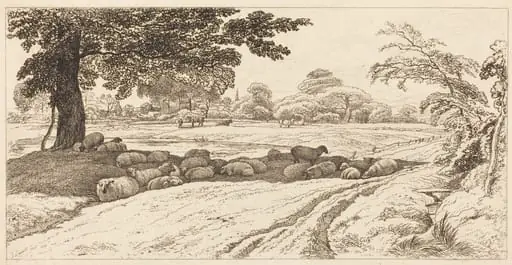
The scene depicts a flock of sheep resting in a fenced pasture, some standing, others reclining, arranged with naturalistic disorder. Behind them, bare trees and a distant spire suggest a modest agricultural setting. The composition avoids narrative drama, instead inviting contemplation of daily rural life. Daubigny’s focus on ordinary moments aligns with the Barbizon ethos: finding dignity and quiet beauty in unidealized landscapes.
Technique & Style
Daubigny employed fine, controlled etching lines to model form and atmosphere. The sheep are defined by crisp outlines against a dark ground, while the sky and grass are built from layered, subtle hatchings that suggest texture and distance. The absence of tone or wash heightens the graphic clarity, creating a sense of stillness. His method prioritizes structure and detail over dramatic contrast, enhancing the scene’s meditative quality.
History & Provenance
Produced in 1862, the print emerged during a period when Daubigny was actively experimenting with etching as a medium for landscape expression. It entered the collection of the Cleveland Museum of Art through documented acquisition, though earlier ownership details remain limited. As part of his broader print oeuvre, this work circulated among collectors and artists interested in the evolving language of naturalistic printmaking in mid-19th-century France.
Context
Daubigny worked alongside other Barbizon painters who rejected academic idealism in favor of direct observation of nature. While his paintings often used loose brushwork, his prints reveal a more disciplined approach, suited to the medium’s precision. *The Large Sheepfold* reflects a broader cultural shift toward valuing rural life as worthy artistic subject matter, distinct from urban or historical themes dominant in official salons.
Legacy
Though less known than his paintings, Daubigny’s prints influenced later artists exploring tonal landscapes and intimate naturalism. His technical innovations in etching contributed to the revival of printmaking as a serious artistic medium in France. *The Large Sheepfold* remains a quiet example of how everyday rural scenes, rendered with care, could convey emotional resonance without sentimentality.
Artist & collection
Artist
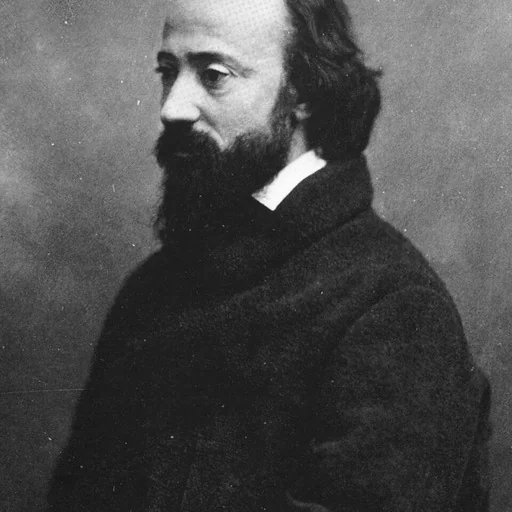
Charles-François Daubigny ( DOH-bin-yee, US: DOH-been-YEE, doh-BEEN-yee, French: ; 15 February 1817 – 19 February 1878) was a French painter, one of the members of the Barbizon school, and is considered an important precursor of…