Artwork
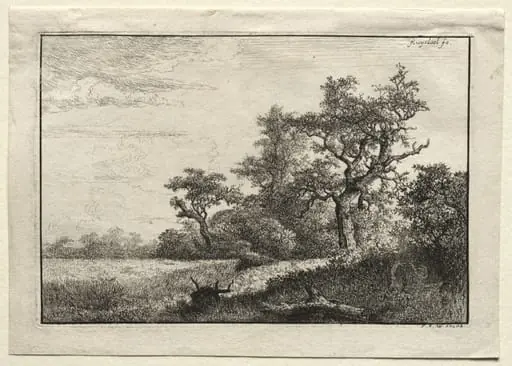
The Thicket
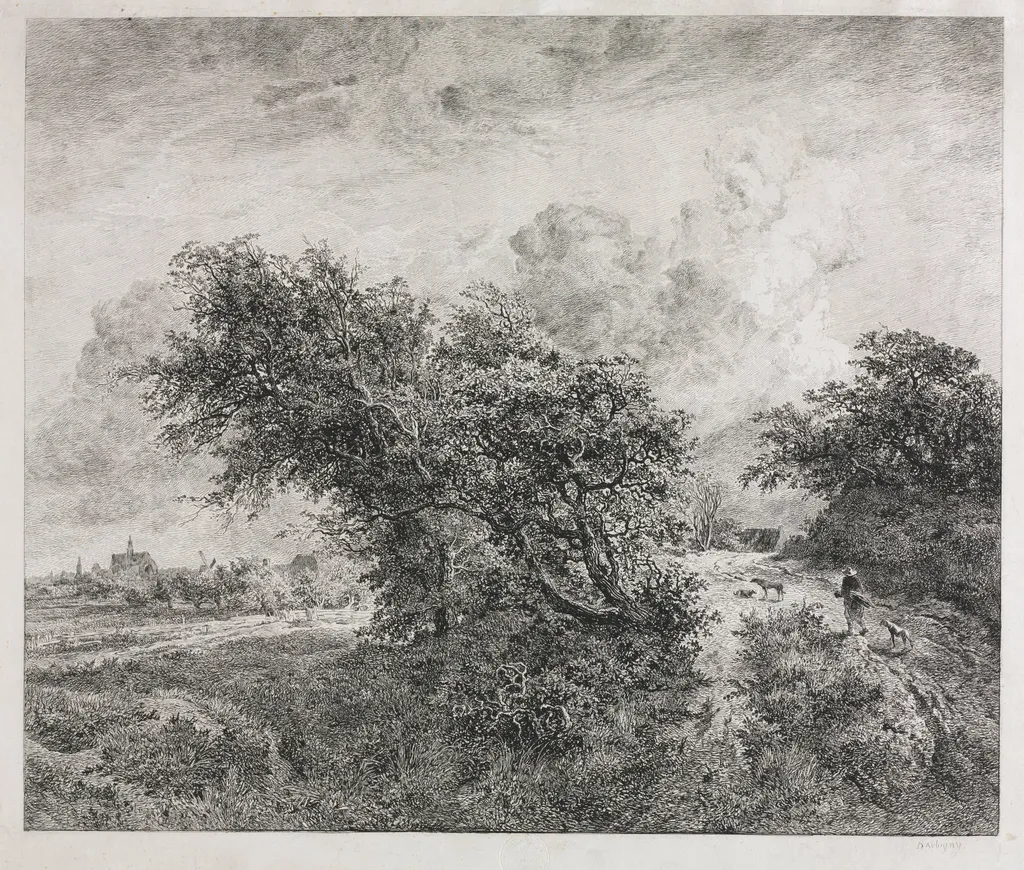
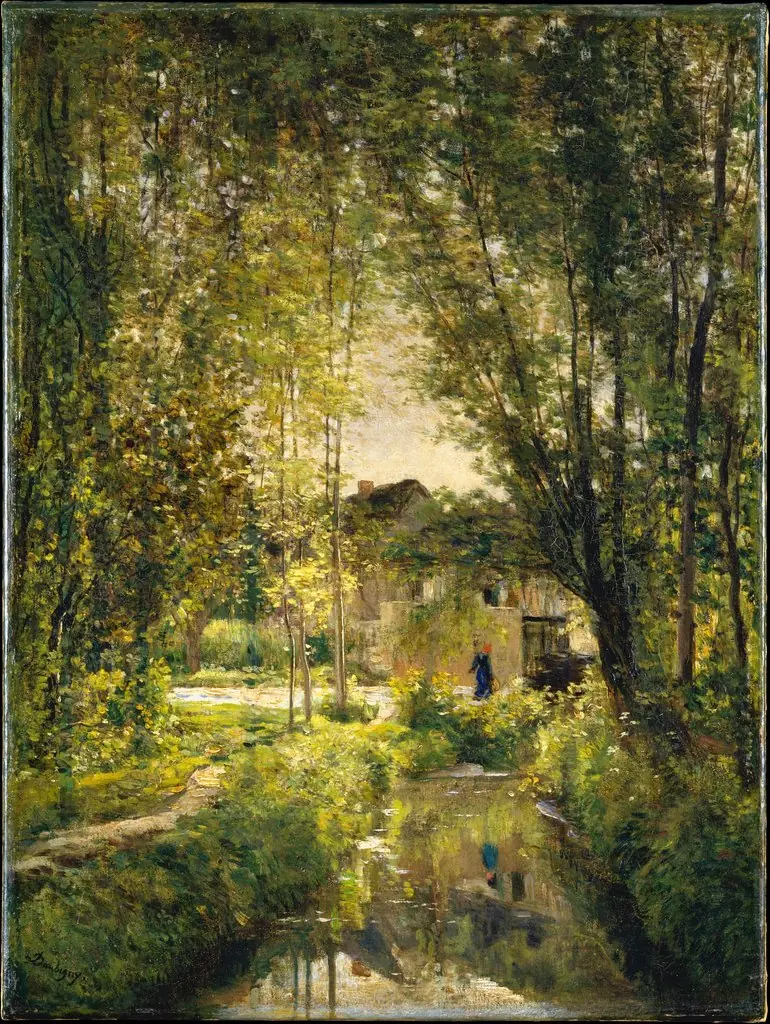
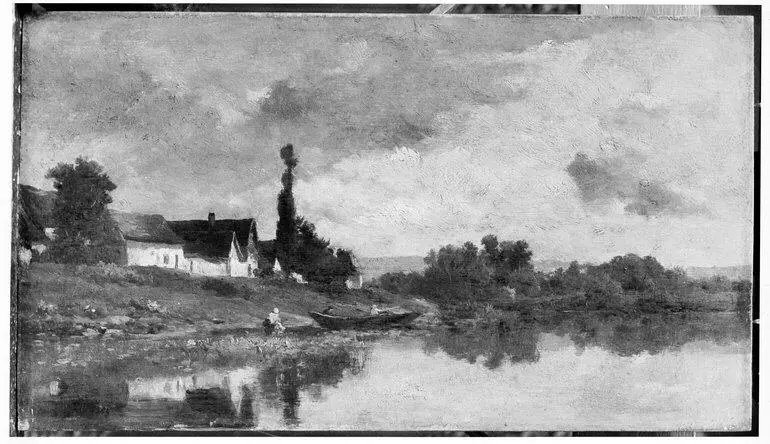
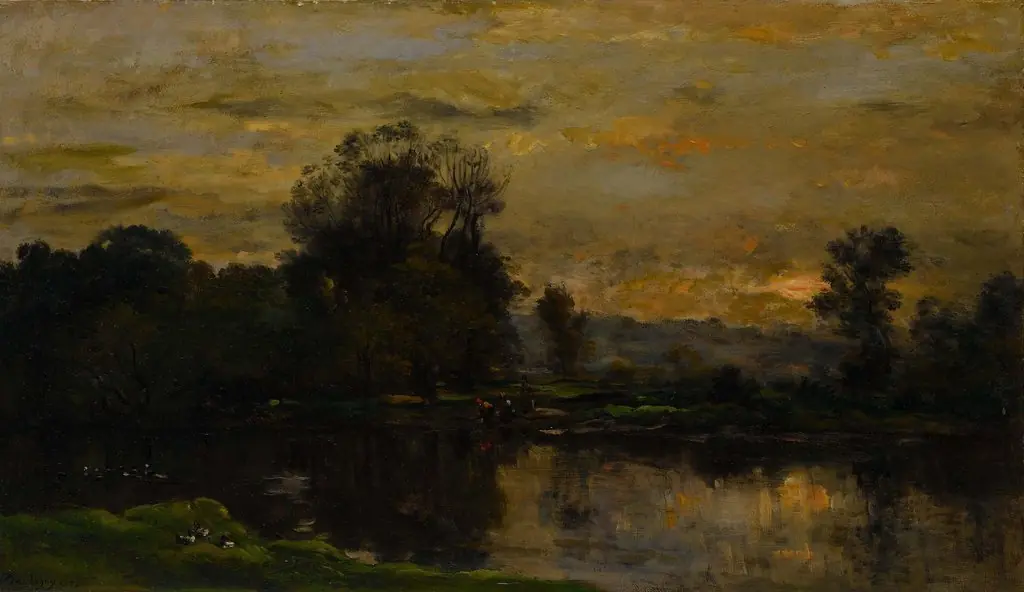
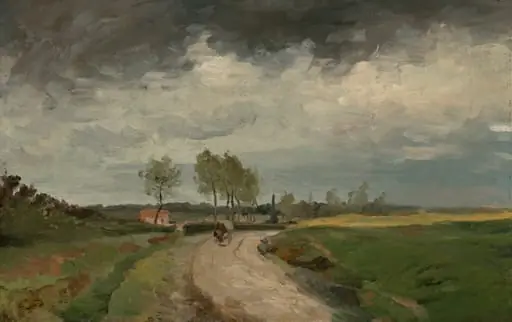
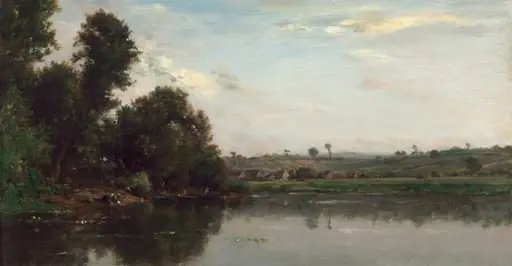
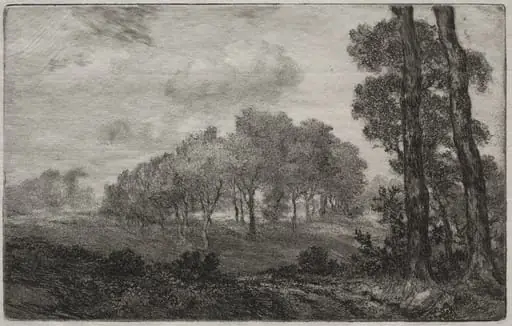
The Thicket is a print by the Impressionist artist Charles François Daubigny. It dates from 1855 and is held in the collection of the Cleveland Museum of Art.
About this work
Overview
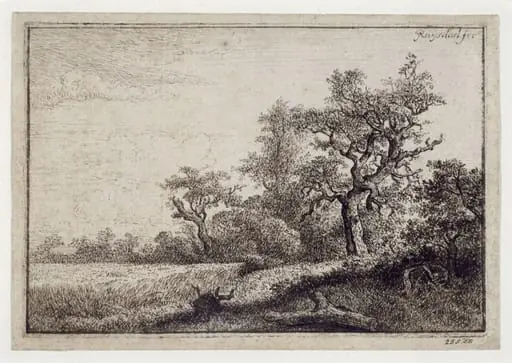
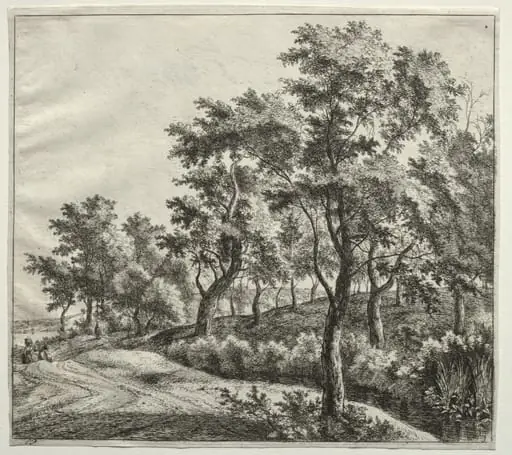
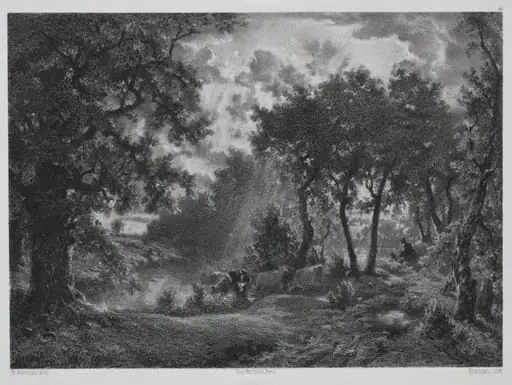
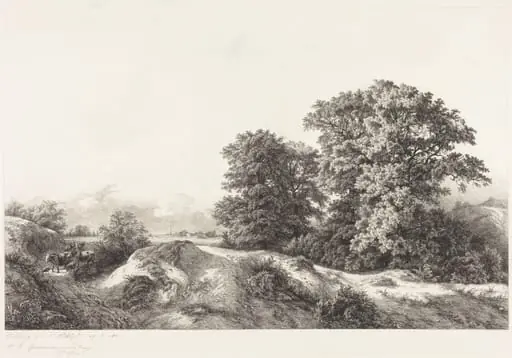
Created in 1855 by French artist Charles-François Daubigny, *The Thicket* is a print that captures a quiet woodland scene. Daubigny, linked to the Barbizon school, used etching and cliché verre to explore natural light and texture. Unlike academic traditions that favored polished detail, his work embraced atmospheric suggestion, laying groundwork for later landscape approaches.
Subject & Meaning
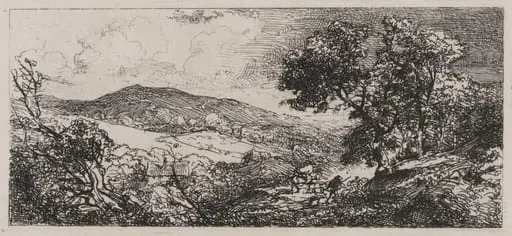
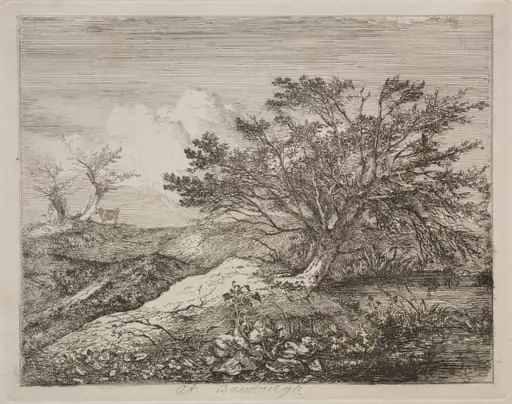
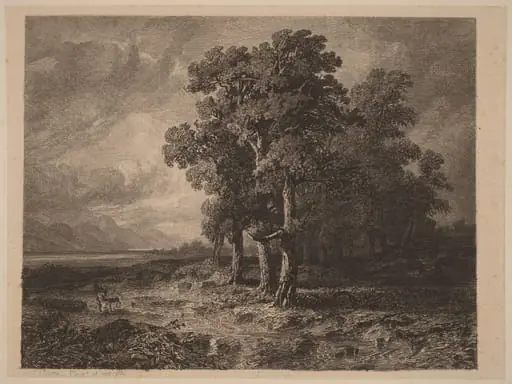
The scene depicts a secluded forest path winding between towering trees, with a solitary figure moving along it, burdened by an unseen object. In the distance, a village emerges faintly beyond the foliage, its spires and rooftops barely visible. The composition invites contemplation rather than narrative, emphasizing solitude and the quiet rhythm of rural life.
Technique & Style
Daubigny employed etching and cliché verre to achieve subtle gradations of tone, avoiding sharp outlines in favor of soft transitions between light and shadow. The dense foliage is rendered through layered ink marks, while the path gains presence through negative space. This method prioritized mood over precision, diverging from the clarity demanded by traditional landscape conventions.
History & Provenance
Produced in 1855, *The Thicket* emerged during Daubigny’s most active period of printmaking, when he was refining his direct observation of nature. The work was likely made for private circulation among artists and collectors, not mass reproduction. Its survival reflects its significance within the Barbizon circle, though its early ownership remains undocumented.
Context
At mid-century, French landscape painting shifted from idealized compositions toward direct study of the countryside. Daubigny’s work aligned with this Realist turn, rejecting studio conventions in favor of sketches made outdoors. His prints, like this one, contributed to a broader redefinition of what a landscape could express—quiet, unembellished, and deeply observed.
Legacy
*The Thicket* exemplifies Daubigny’s role in bridging Barbizon realism and Impressionist sensibilities. His emphasis on transient light and informal composition influenced younger artists, including Monet. Though less celebrated than his paintings, his prints helped normalize the idea that landscape could be rendered with immediacy and emotional resonance, not just grandeur.
Own this work as a print
Artist & collection
Artist
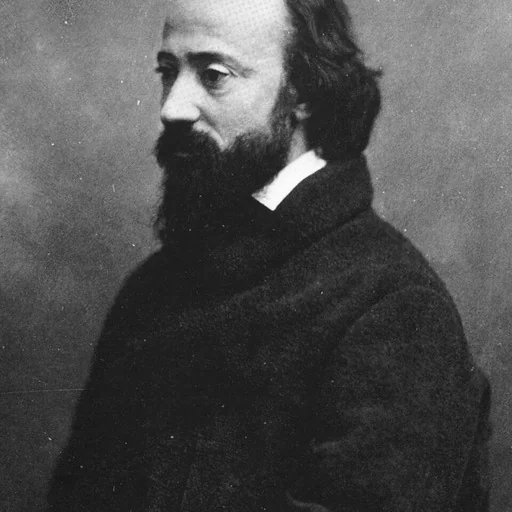
Charles-François Daubigny ( DOH-bin-yee, US: DOH-been-YEE, doh-BEEN-yee, French: ; 15 February 1817 – 19 February 1878) was a French painter, one of the members of the Barbizon school, and is considered an important precursor of…