Artwork
Oaks in the Vaux de Cernay
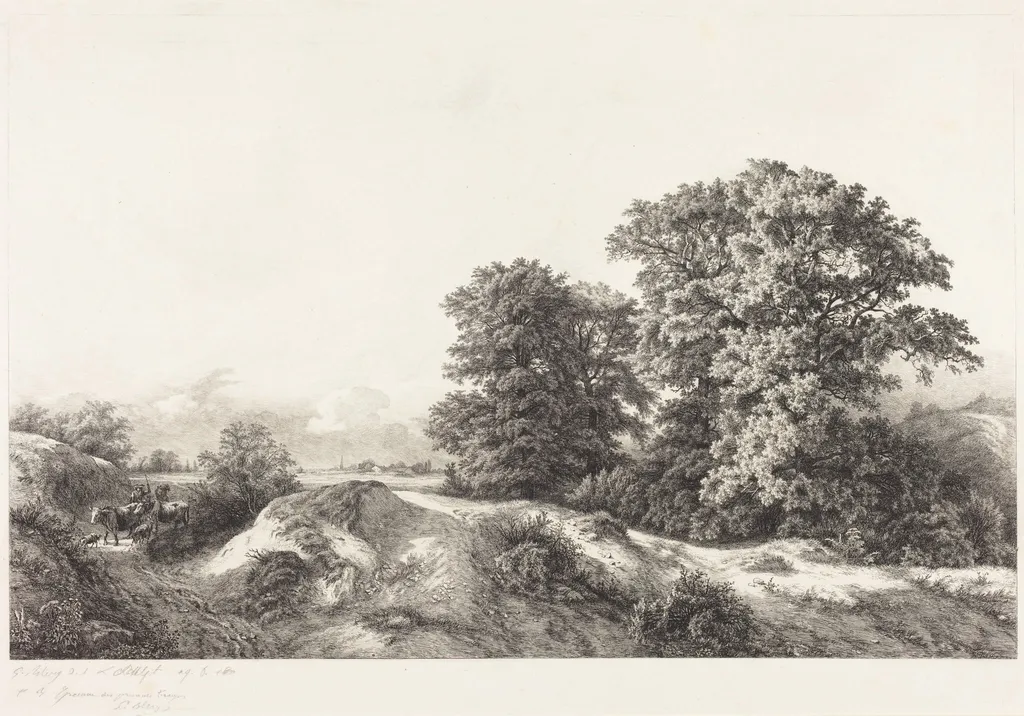
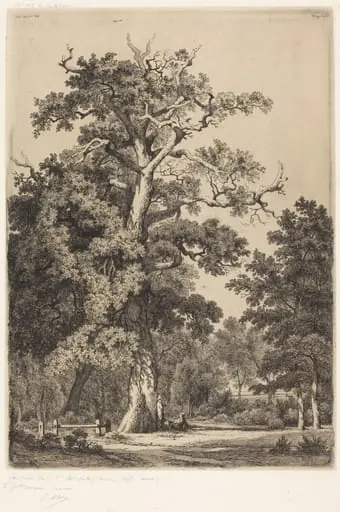
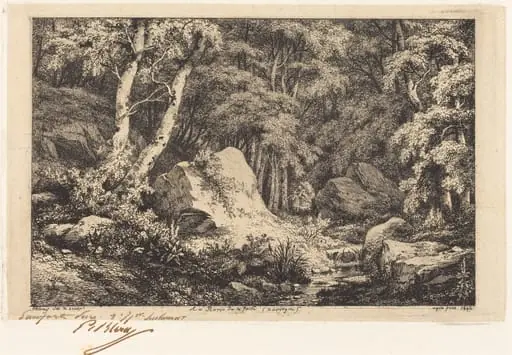
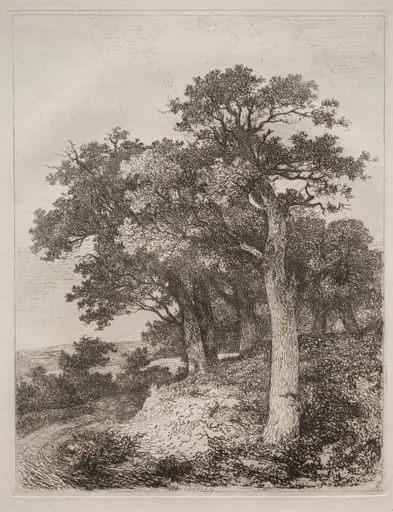
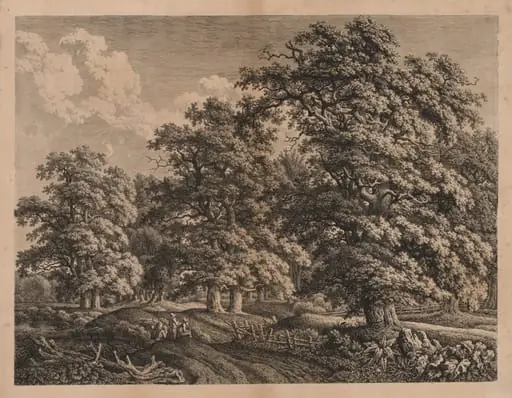
Oaks in the Vaux de Cernay is an ink print by the Romanticist artist Eugène Bléry. It dates from 1840 and is held in the collection of the National Gallery of Art.
About this work
Overview
Eugène Bléry’s 1840 etching titled *Oaks in the Vaux de Cernay* presents a quiet woodland scene. A central oak dominates the foreground, flanked by smaller trees and shrubbery that recede toward a gently rising hill. The composition balances foreground foliage with a muted background, creating a sense of depth within a compact format.
Subject & Meaning
The work captures a specific stretch of the Vaux de Cernay forest, emphasizing the natural vigor of mature oaks and their surrounding understory. By focusing on the ordinary yet sturdy elements of the landscape, the image reflects a Romantic interest in the sublime qualities of everyday nature, inviting contemplation of the forest’s enduring presence.
Technique & Style
Executed as an etching on chine collé, the print combines copperplate incising with a paper backing adhered to a thin support, allowing fine line work and subtle tonal variations. Bléry’s handling of line conveys texture in bark and leaf clusters, while delicate cross‑hatching renders atmospheric depth, characteristic of mid‑19th‑century French landscape printmaking.
History & Provenance
Created in 1840, the piece exists as a proof, indicating it was part of the artist’s trial impressions before the final edition. While specific ownership records are limited, the work has been referenced in catalogues of Romantic-era prints and remains associated with collections that specialize in 19th‑century French graphic art.
Own this work as a print
Artist & collection