Artwork
Shaldon, near Teignmouth
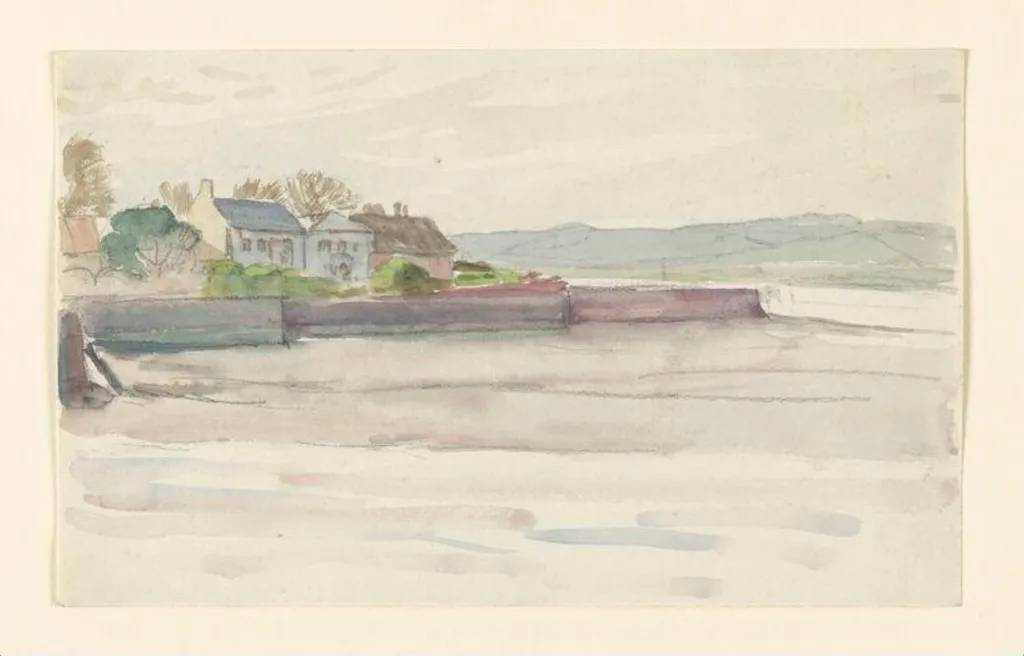
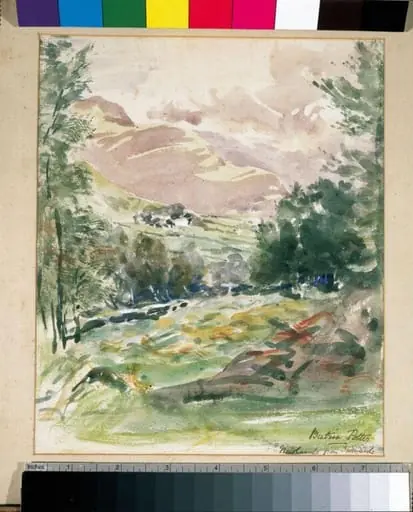
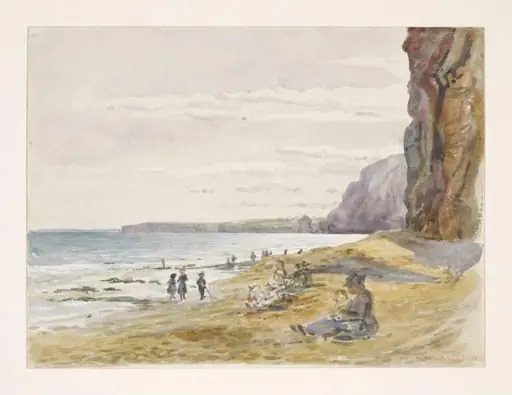
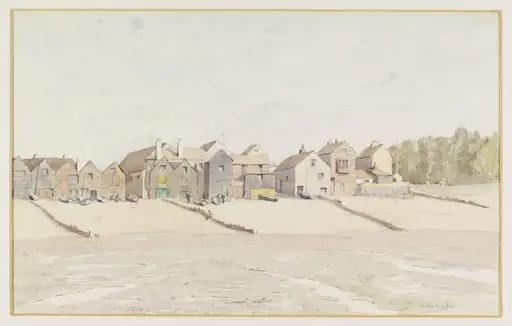
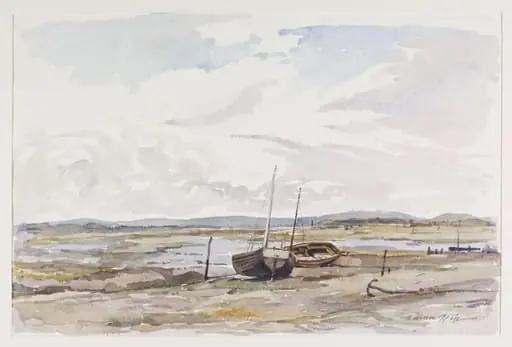
Shaldon, near Teignmouth is a watercolor work on paper by the Impressionist artist Beatrix Potter. It dates from 1901 and is held in the collection of the Victoria and Albert Museum.
About this work
This watercolour shows a stretch of the Teign estuary near Shaldon. Beatrix Potter painted it between 1892 and 1910, switching between Impressionist light and Realist detail.
Potter visited the spot in 1892, 1909 and 1910. She noted in her journal the river’s shifting tides and the spot where Fanny Burney once wrote.
See more of her landscapes at the Victoria and Albert Museum.
Overview
This watercolour by Beatrix Potter depicts a stretch of the Teign estuary near Shaldon, a coastal village in south Devon.
This watercolour by Beatrix Potter depicts a stretch of the Teign estuary near Shaldon, a coastal village in south Devon. Created between 1892 and 1910, it reflects her sustained engagement with the landscape during multiple visits. Though best known for her children’s books, Potter produced a significant body of observational watercolours, capturing the subtle shifts of light and water in this region with quiet precision.
Subject & Meaning
The painting centers on the estuary’s tidal waters, marshy banks, and distant horizon, evoking a sense of quiet transience. Potter’s journal entries reveal her awareness of literary history at the site—specifically Fanny Burney’s 18th-century writings—linking the landscape to past voices. The work is less a topographical record than a contemplative response to place, blending natural observation with personal reflection.
Technique & Style
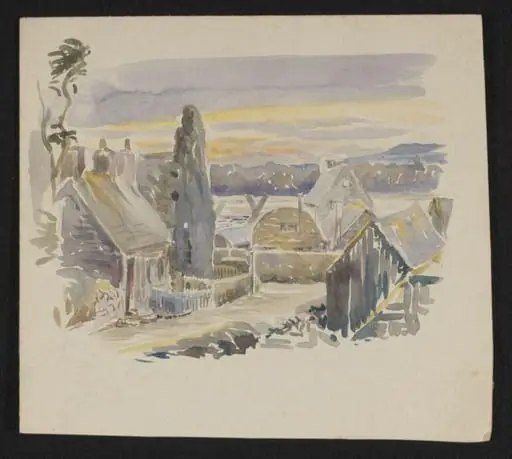
Potter employed loose, fluid washes to suggest atmospheric light, echoing Impressionist approaches, while retaining precise details in foliage, buildings, and water’s edge. Her technique balances spontaneity with careful observation, avoiding romantic embellishment. The watercolour medium allowed her to capture fleeting conditions of weather and tide, reinforcing the immediacy of her experience on site.
History & Provenance
Potter visited Shaldon and Teignmouth in 1892, 1909, and 1910, each trip deepening her connection to the area. The watercolour likely stems from one of these excursions, though its exact date remains uncertain. Many of her landscape studies were retained in her personal collection and later entered institutional holdings, including the Victoria and Albert Museum, where her non-literary work is preserved.
Context
During the late 19th and early 20th centuries, watercolour painting was a common pursuit among middle-class amateurs, particularly women. Potter’s work aligns with this tradition but distinguishes itself through its disciplined observation and emotional restraint. Her landscapes reflect a broader Victorian interest in natural history and regional topography, informed by scientific curiosity rather than picturesque convention.
Legacy
While Potter’s literary fame overshadows her visual art, her watercolours offer insight into her artistic discipline and sensitivity to place. They reveal a keen eye for ecological detail and a quiet reverence for the English countryside. Today, these works are valued as documents of both personal and regional history, enriching understanding of her creative life beyond the world of Peter Rabbit.
Artist & collection
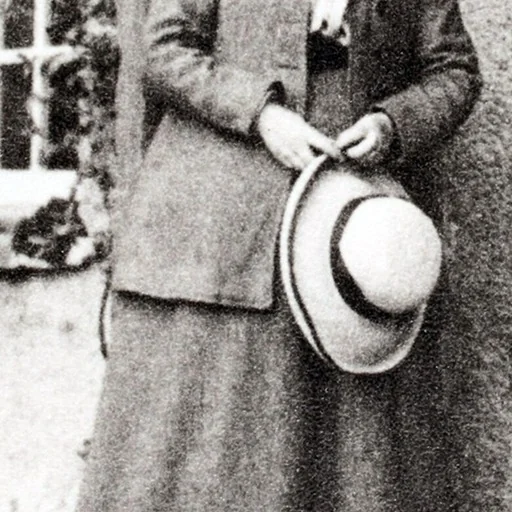
Artist
Helen Beatrix Heelis (née Potter; 28 July 1866 – 22 December 1943), usually known as Beatrix Potter ( BEE-ə-triks), was an English writer, illustrator, natural scientist, and conservationist.